
HIV Drug Interaction Risk Assessor
Your Medication Profile
Risk Analysis Result
Key Metrics:
Did You Know?
Even stopping the supplement takes up to two weeks for your liver enzymes to normalize. If you switch formulations, verify the Certificate of Analysis for Hyperforin content.
The Hidden Risk in Your Medicine Cabinet
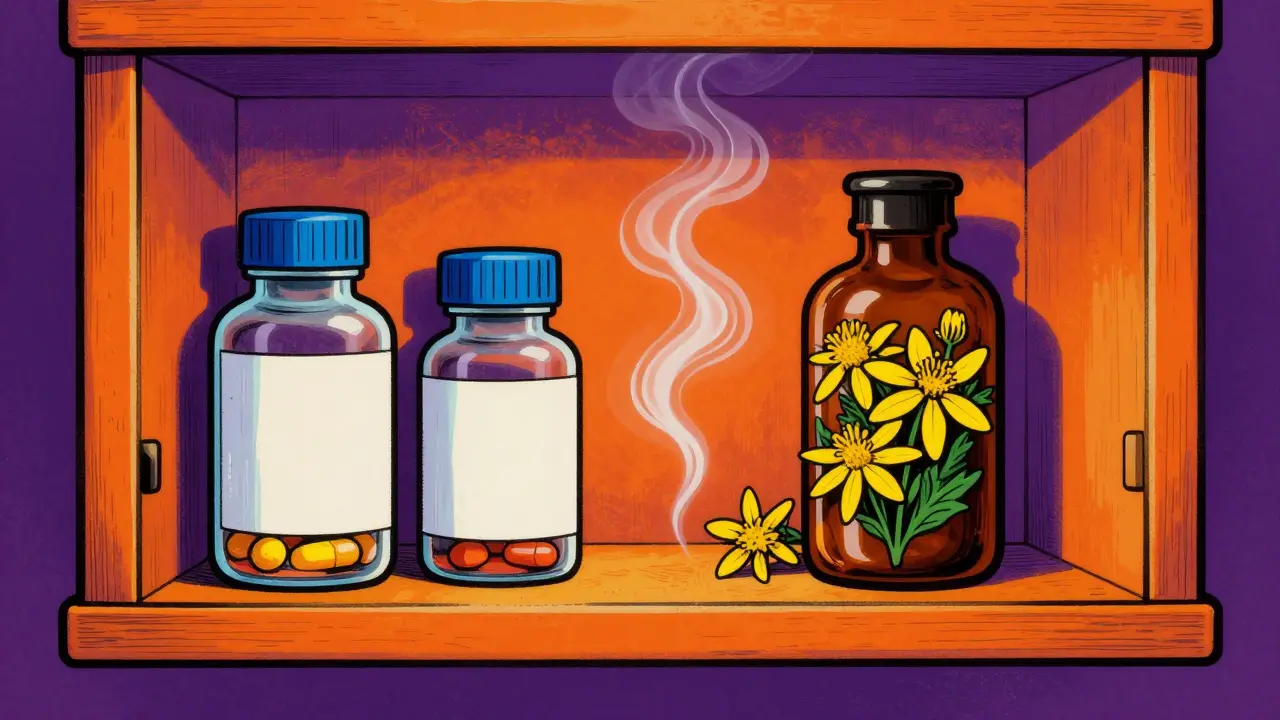
You might treat your health conditions with precision, following every prescription letter perfectly. But did you know a herbal supplement sitting on the same shelf could quietly undo months of progress? St. John's Wort is a popular remedy for mood issues, yet mixing it with Protease Inhibitorsare antiretroviral medications used to treat HIV by blocking viral replication enzymes creates a dangerous gap in protection. This isn't just a minor glitch; it can lead to Therapeutic Failurethe loss of drug effectiveness leading to viral rebound and potential resistance. If you rely on HIV medication to stay healthy, understanding this conflict is non-negotiable.
How the Body Breaks Down Medication
To understand why this mix fails, we need to look inside your liver and gut. Your body has a cleaning crew known as cytochrome enzymes. The biggest worker here is CYP3A4an enzyme system responsible for metabolizing over half of all drugs. Protease inhibitors depend on stable blood levels to work. When you take standard doses, this enzyme breaks them down slowly enough to keep levels steady.
St. John's Wort changes the game completely. It contains a substance called Hyperforinthe active constituent in St. John's Wort responsible for inducing CYP3A4 enzymes. Think of hyperforin as hitting the gas pedal on that cleaning crew. It tells your body to produce way more CYP3A4 enzymes than usual. Suddenly, your medication gets processed too fast. Research shows plasma concentrations can drop by 57%, meaning your blood holds less medicine than needed to stop the virus.
| Parameter | Without St. John's Wort | With Standard St. John's Wort |
|---|---|---|
| Area Under Curve (AUC) | 100% | Decreased by 57% |
| Max Plasma Concentration | Normal | Reduced by 81% |
| Resistance Risk | Minimal | High |
| Enzyme Induction Duration | - | At least 14 days after stopping |
Why "Sub-Optimal Levels" Matter
It sounds technical, but here is what happens when your drug levels are too low. The virus doesn't just vanish because it sees fewer defenders. Instead, it keeps copying itself. When antiviral pressure drops below a certain threshold, the virus mutates. These mutations adapt to survive even the small amount of medicine present in your blood. That leads to drug resistance.
This isn't theoretical. The University of Liverpool HIV Drug Interactions database, updated in October 2025, flags this as a "Do Not Coadminister" scenario. They classify the evidence quality as moderate to high because we have seen patients lose virologic response repeatedly. If you take lopinavir/ritonavir and add St. John's Wort, you aren't just lowering protection; you might burn through an entire class of drugs. Future treatments become harder to find if resistance builds up.

What Happens If You Already Mixed Them
Maybe you didn't realize the risk until you ran out of supplements. Good news exists here: the enzyme boost reverses. However, your liver remembers the instruction. If you stop taking St. John's Wort today, the induction effect lasts for at least two weeks. During this window, your protease inhibitor levels will creep back up. Doctors warn you might end up with too much medicine in your system if they don't adjust the dose.
Here is the safe path forward:
- Stop the supplement immediately: Do not taper off gradually; cut it out now.
- Check your viral load: Confirm the virus is suppressed before the interaction fully resolves.
- Monitor symptoms: Watch for side effects from rising PI levels during the washout period.
- Contact your prescriber: They may need to tweak your regimen temporarily.
Ignoring this timeline risks toxicity. Some patients report nausea and fatigue spikes when the herb stops working its enzyme-inducing magic while the drug dose remains high.
A Nuanced Shift: Low-Hyperforin Formulations
Medical science rarely stays static. For years, the advice was a hard "no." But in 2023, researchers found a loophole involving formulation specifics. Most store-bought bottles contain 2-5% hyperforin. That concentration triggers the reaction. However, newer products exist with significantly lower amounts.
The HIV Drug Interactions database now suggests coadministration might be considered if you verify the label strictly. The rule is strict: total daily hyperforin must be 1 mg or less. This tiny amount doesn't trigger the massive enzyme production spike. A study referenced by the database showed only a 12.3% reduction in lopinavir exposure with these low-formulations compared to 57% with standard ones.
Catch 22 applies here. Only about 37% of St. John's Wort products accurately disclose hyperforin content on their labels as of 2022. Trusting the bottle is risky unless you see a certificate of analysis. If you cannot prove the hyperforin is under 1mg, the default assumption must be unsafe.

Global Warnings and Labeling
This isn't just an academic debate anymore. Regulators stepped in early. The U.S. Food and Drug Administration mandated black box warnings for protease inhibitors regarding this herb starting in 2004. By 2005, the European Medicines Agency followed suit. These warnings appear directly on the patient information leaflet inside your pharmacy box.
Despite this, people still mix them. Surveys indicate about 15% of HIV patients using complementary therapies attempt to use St. John's Wort despite contraindications. Why? Often because depression symptoms are real and the herb feels natural. Clinicians face the task of asking specifically about herbs during visits, not just prescriptions. The International Association of Providers of AIDS Care issued 2024 guidelines recommending clinicians ask about St. John's Wort use during every visit.
Finding Safe Alternatives for Mood Support
If you need help with mood swings or mild depression while on HIV meds, you have better options. Several antidepressants do not interfere with CYP3A4 in the same way. Selective serotonin reuptake inhibitors often fit better within HIV care plans. Always run the specific brand name by your pharmacist before switching.
Natural does not mean harmless in this context. Even vitamins can compete for absorption pathways. If you decide St. John's Wort is essential for your mental well-being, prioritize finding the specific low-hyperforin version. Otherwise, accept that keeping your viral load suppressed takes precedence over herbal supplements right now.
How long does the interaction last after stopping St. John's Wort?
The enzyme-inducing effect persists for at least 14 days after cessation of treatment. You should monitor your medication levels during this time to avoid toxicity from rebounding drug concentrations.
Can I take any form of St. John's Wort safely?
Standard formulations are unsafe. You may consider low-hyperforin versions only if they clearly state the content is 1 mg or less per day. Verify this with lab reports, as many labels do not disclose this accurately.
Does this interaction affect other HIV drugs?
Yes, it affects non-nucleoside reverse transcriptase inhibitors (NNRTIs) similarly. St. John's Wort induces the same metabolic pathways used by these classes, lowering their effectiveness too.
Will my doctor know if I am taking this herb?
Only if you tell them. Pharmacists cannot detect herbal intake through standard blood work. You must voluntarily disclose supplement use during medical appointments to prevent silent failures.
What are the signs of therapeutic failure?
Rising viral loads are the main sign. Other indicators include developing new resistance markers or experiencing flu-like symptoms associated with immune decline, though these can happen weeks after the initial interaction.
Amber Armstrong
March 31, 2026 AT 23:34I read through all of this and honestly I feel so bad for anyone who accidentally did this without knowing.
It feels like we try our best to stay healthy but these hidden interactions sneak up on us when we least expect them.
You really have to trust the medical advice even if natural sounds better on paper sometimes.
It scares me that something so common could ruin months of hard progress in treatment plans.
We need more support groups discussing supplement safety specifically because fear prevents people from asking questions properly.
Seeing the stats about resistance building up makes my hands shake a little bit thinking about how vulnerable everyone gets.
Please look at your labels before you grab anything off the shelf for mood support today.
Your liver is doing heavy lifting and it needs accurate chemical signals to function correctly without errors.
If you love yourself enough to take your HIV meds then protect those levels with extreme care always.
I want everyone to feel safe managing their health without worrying about invisible enemies in the bottle.
Knowledge is power in these situations and sharing posts like this saves actual lives out there.
We should encourage doctors to talk openly about supplements during every single appointment visit too.
It breaks my heart when people suffer because they thought they were helping themselves with herbs instead.
Medical guidelines exist for protection reasons and skipping them puts everything at huge unnecessary risk daily.
Take this advice seriously and double check everything with your specialist pharmacist team.
sanatan kaushik
April 2, 2026 AT 15:16Stop taking herbal nonsense if you want to live and stay protected.
Debbie Fradin
April 2, 2026 AT 22:32Thanks for the lecture master sage telling us to stop breathing wrong.
People are allowed to feel confused about complex biology without your judgment thrown around here constantly.
RONALD FOWLER
April 3, 2026 AT 02:00This is a very serious issue regarding drug metabolism enzymes and liver processing functions.
It helps to know what interacts badly so you avoid major mistakes later on.
Jonathan Sanders
April 3, 2026 AT 18:22Wow such a thrilling way to put it dry bones keep going nobody cares about facts here really.
You sound like a boring manual written by robots pretending to care about humanity feelings.
emma ruth rodriguez
April 3, 2026 AT 19:15The clinical implications of this interaction are severe and demand immediate attention from all patients involved in care.
Hyperforin acts as a potent inducer which significantly accelerates the breakdown of necessary therapeutic agents within the bloodstream.
Without proper intervention levels drop below efficacy thresholds leading to potential viral rebound phenomena.
Physicians must educate clients regarding the persistence of enzyme induction even after cessation of the herb occurs.
Standard dosages become insufficient due to metabolic acceleration causing systemic failure of the intended regimen.
Patients requiring mood stabilization must consult regarding SSRIs rather than unregulated botanical extracts causing harm.
Monitoring protocols require adjustment during the washout period to prevent toxicity spikes from occurring later.
Safety warnings issued by agencies reflect decades of observed adverse outcomes in clinical practice settings.
Compliance with guidance protects the integrity of the antiretroviral therapy regimen against emerging resistance patterns.
Always prioritize verified laboratory data over anecdotal claims found on unverified internet sources regularly.
Verification steps include checking certificates of analysis before consuming any product labeled as herbal.
The window for recovery spans two weeks minimum where caution remains paramount for survival rates.
Interactions affecting NNRTIs show similar risks meaning scope extends beyond protease inhibitors alone.
Disclosure habits need improvement across the board to maintain high quality standard of care.
Ignorance is not accepted as a valid defense for poor health management decisions made privately.
Trust only in regulated medical channels providing accurate and safe pharmacological guidance consistently.
Your well-being depends on understanding these intricate biological pathways fully now.
Rick Jackson
April 5, 2026 AT 04:33Nature provides tools but misuse creates danger zones quickly.
Balance is key in modern medicine.
We evolve by learning lessons from past failures in trials.
Beccy Smart
April 5, 2026 AT 07:01Finally someone speaking sense 🩺 doctors know best 🤷♀️ dont play games with your life ❌ follow rules 💪🏼💊 #HealthFirst 🙅♀️
Jonathan Alexander
April 6, 2026 AT 03:40Honestly reading this gave me anxiety attacks immediately.
My chest tightened thinking about accidental mixing scenarios.
It feels irresponsible to sell herbs near prescriptions now.
I am calling out the lack of clear warnings everywhere.
We need transparency before buying anything else.
Charles Rogers
April 7, 2026 AT 23:25Your panic is understandable but useless without action taken immediately.
Why wait until sickness arrives before asking simple questions earlier.
Most people ignore basic checks due to laziness or arrogance.
Responsibility lies with the individual primarily regardless of external confusion.
Stop blaming systems and check your own cabinet inventory right away.
Adryan Brown
April 9, 2026 AT 22:00It is important to remain calm and process this information slowly without freaking out unnecessarily.
Many people use herbs without malice and simply lack access to complete data sets previously.
Education bridges the gap between intention and outcome in healthcare management effectively.
We should encourage open dialogue with providers rather than hiding supplement usage in shame.
Understanding enzyme systems helps demystify why certain combinations fail in clinical observations today.
Patience during the washout phase ensures safety margins remain intact throughout the recovery timeline.
Listening to experts builds a foundation of trust essential for maintaining long term wellness goals.
Communication skills improve relationships between patients and doctors significantly over repeated visits together.
Avoiding rash decisions prevents complications that could have been managed differently with care.
Respecting the limits of natural products respects the power of prescribed pharmaceutical interventions equally.
We all want to heal and supporting each other through knowledge sharing strengthens communities greatly.
Fear leads to isolation whereas knowledge fosters connection and safer practices moving forward.
Please remember that healing journeys require patience and rigorous adherence to tested scientific methods always.
Keep checking with specialists whenever new additions are considered for your daily routine plan.
A unified approach protects everyone involved in the care network surrounding health challenges.