

Side Effect Onset Estimator
Enter your medication details to see when side effects are most likely to occur for that specific drug class.
Typical Onset Window
Current Status Assessment
You start a new prescription on Monday. By Wednesday, you feel weird. Is it the pill, or did you just eat something sketchy at lunch? This is one of the most common headaches in medicine, and for decades, we’ve mostly guessed. But there’s actually a science to this chaos called Time-to-Onset (TTO). It’s the study of exactly when side effects hit after you take your first dose. Knowing these patterns doesn’t just satisfy curiosity; it helps doctors distinguish between a bad reaction and the disease itself.
The Science Behind the Clock
TTO isn’t just about counting days. It uses statistical models, specifically the Weibull distribution, to predict risk over time. Think of it as a curve that tells you whether the danger spikes immediately, stays steady, or builds up slowly. Most adverse drug reactions (ADRs) follow an "early failure" pattern, meaning the highest risk is right at the start. In fact, research suggests that nearly 78% of analyzed side effects show this early spike. If you’re feeling dizzy or nauseous in the first few days, your body is likely reacting to the sudden chemical change rather than a long-term buildup.
This distinction matters because background noise-like stress, diet, or other illnesses-can mimic drug side effects. Without TTO data, a doctor might stop a life-saving drug because they think it’s causing muscle pain, when the pain was actually from a viral infection that happened to coincide with the prescription. The goal is to separate signal from noise using math, not just intuition.
Antibiotics: The Sprinters
If you’ve ever taken ciprofloxacin, you know the drill. Gastrointestinal issues or tendon pain can appear surprisingly fast. Recent studies analyzing millions of records found that the median time-to-onset for ciprofloxacin-induced peripheral neuralgia is just two days. That’s incredibly quick. The statistical shape parameter here is low, indicating a sharp drop-off in risk after the initial exposure. Essentially, if you haven’t felt any nerve tingling or stomach upset within the first 48 to 72 hours, you’re probably in the clear for those specific acute reactions.
This rapid onset contrasts sharply with how we often treat infections. We expect antibiotics to work slowly, but their side effects can be immediate. Patient forums reflect this reality; discussions on platforms like Reddit show that nearly half of users reporting antibiotic side effects experienced them within two days. This aligns perfectly with clinical data, suggesting that if you’re worried about fluoroquinolone toxicity, the first week is your critical observation window.
Statins: The Nocebo Effect Mystery
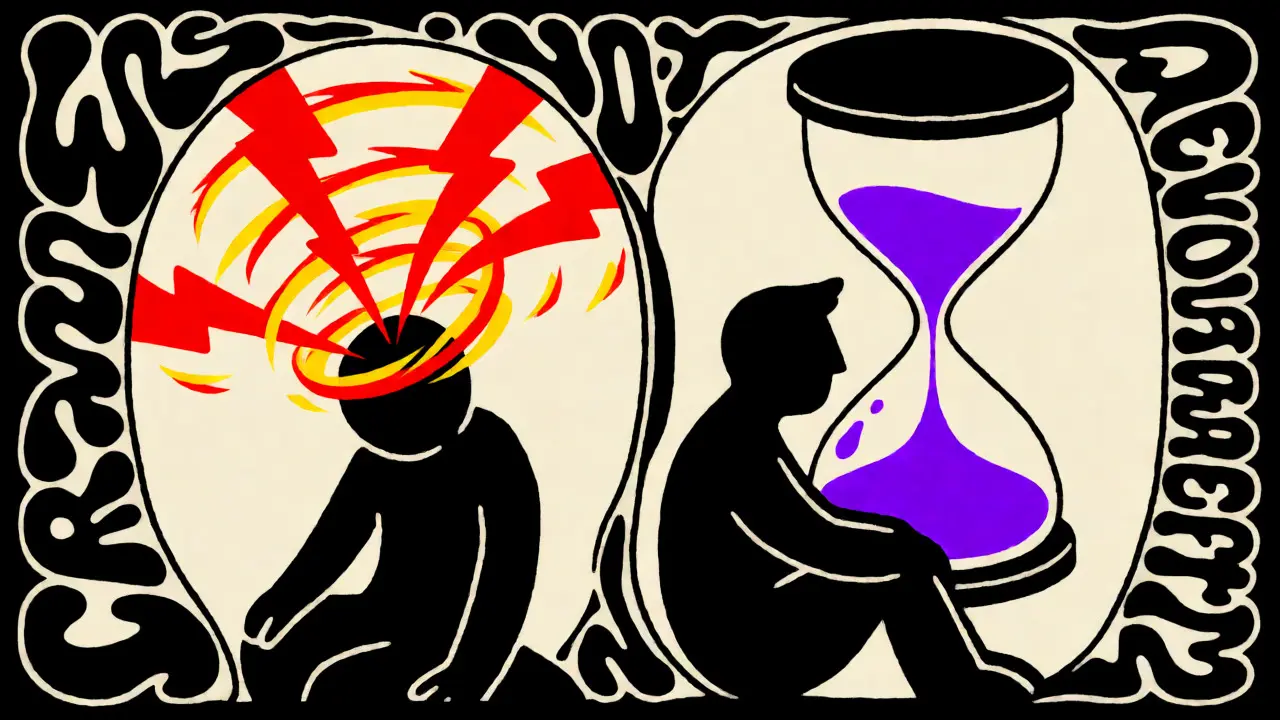
Then there are statins, used for cholesterol. For years, patients complained of muscle pain (myalgia), leading many to quit therapy. But a landmark crossover trial published in JACC flipped the script. Researchers gave patients either a statin or a placebo, then switched them. The result? Symptom relief occurred rapidly regardless of which pill they were taking. Scores for pain dropped by more than 50% within three days of stopping the tablets, whether it was the real drug or sugar.
This suggests a strong nocebo effect-where expecting harm causes actual symptoms. While statins do have rare serious side effects, the common complaint of mild muscle ache often appears within days to weeks but resolves quickly upon cessation, even without medical intervention. The TTO pattern here is tricky because the perceived onset is tied closely to psychological expectation and minor physiological adjustments, rather than deep tissue damage accumulating over months.
ACE Inhibitors: The Slow Burn
Not all side effects rush in. Take ACE inhibitors like lisinopril. They are notorious for causing angioedema (swelling under the skin). Unlike histamine-driven allergies that happen in minutes, ACE inhibitor-induced angioedema is bradykinin-mediated. This type can strike anywhere from the first week up to six months after starting the drug. Some patients develop severe swelling four months into treatment, confusing both themselves and their doctors.
| Drug Class | Typical Onset Window | Risk Pattern |
|---|---|---|
| Fluoroquinolones | 1-3 Days | High early risk, drops quickly |
| Statins | Days-Weeks | Variable, often influenced by nocebo |
| ACE Inhibitors | Weeks-Months | Delayed, unpredictable peak |
| Gabapentinoids | 1-4 Weeks | Gradual increase, then plateau |
This delayed timeline makes diagnosis hard. A patient might blame their new detergent or a food allergy for lip swelling, missing the connection to blood pressure meds started months ago. Clinical guidelines now suggest keeping ACE inhibitors in mind for unexplained swelling for up to a year after initiation.
Neuropathic Pain Meds: The Adjustment Period
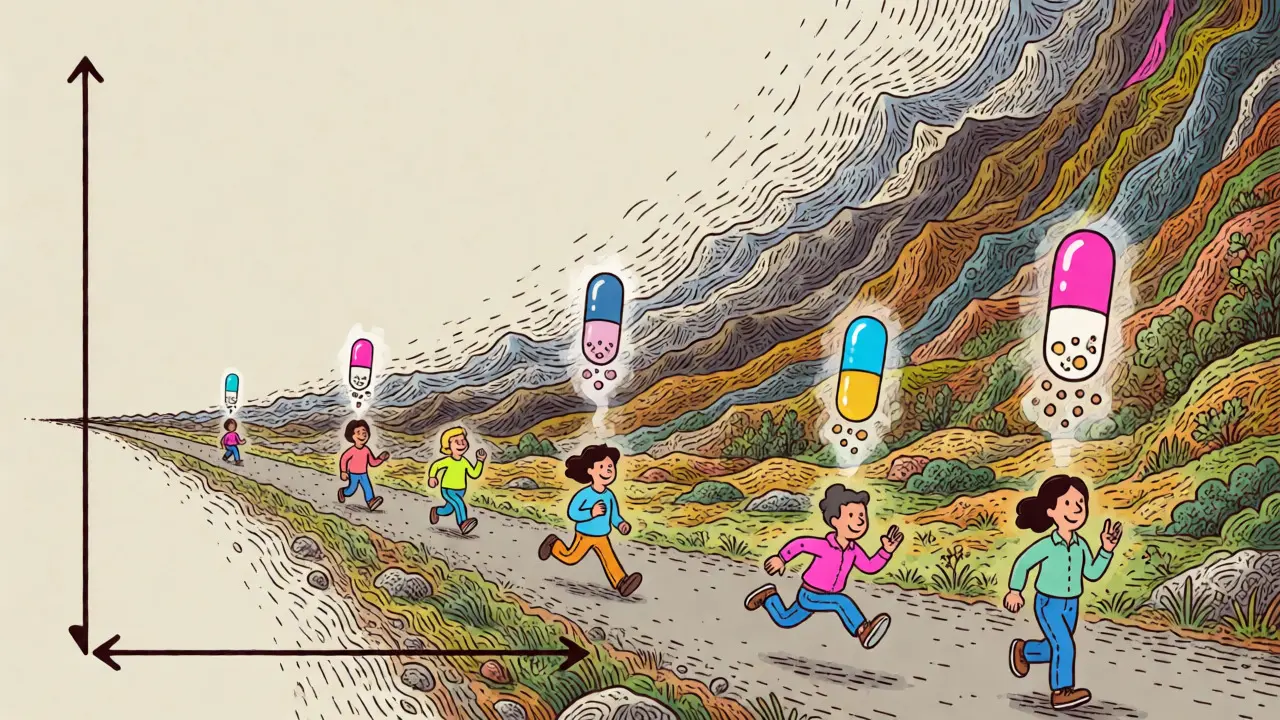
Drugs like pregabalin and gabapentin, used for nerve pain and anxiety, have a different clock. The median time-to-onset for dizziness and fatigue is around 19 to 31 days. This isn’t an immediate shock to the system but a gradual accumulation as the brain adjusts to altered neurotransmitter levels. Reviews on Drugs.com confirm this, with over half of users mentioning side effects within the first month.
Because the onset is slower, patients often push through the first week thinking, "I’m fine," only to hit a wall in week three. This pattern requires patience. Doctors usually recommend titrating doses slowly precisely because the side effects lag behind the dosage increases. If you ramp up too fast, you skip the warning signs until they become overwhelming.
Why Timing Matters for Your Health
Understanding these windows empowers you. If you start an antibiotic and feel nausea on day one, it’s likely the drug. If you start a statin and feel muscle pain on day one, it might be psychosomatic or unrelated. If you’re on an ACE inhibitor and get swollen lips in month five, don’t ignore it-it could still be the med.
Electronic health records are catching on. Systems like Epic now use algorithms to flag potential reactions based on these known timelines. Mayo Clinic reported a 22% improvement in detecting adverse events after implementing such tools. This means your doctor is increasingly likely to catch a delayed reaction before it becomes dangerous, provided you report symptoms accurately and note when they started relative to your first pill.
Can side effects start years after taking a medication?
Yes, though less common. While most acute side effects occur within weeks, some chronic conditions or immune-mediated reactions can emerge later. For example, certain autoimmune responses triggered by drugs may not manifest until months or even years of continuous use, making TTO analysis crucial for long-term monitoring.
Why do some people get side effects faster than others?
Genetics play a huge role. Liver enzymes that metabolize drugs vary between individuals. Fast metabolizers might clear a drug quickly, reducing side effect duration, while slow metabolizers accumulate higher concentrations, potentially triggering reactions sooner. Sex also influences onset; studies show women often experience certain neurological side effects faster than men due to differences in body composition and hormonal interactions.
Does stopping a drug immediately fix side effects?
It depends on the drug's half-life and the mechanism of injury. For short-acting drugs like some antibiotics, relief can come within 24-48 hours. For drugs with long half-lives or those causing structural changes (like some nerve toxicities), recovery can take weeks or months even after discontinuation. The 'washout' period varies significantly by class.
How can I track my own time-to-onset?
Keep a simple log. Note the date you started the medication and the exact date any new symptom appeared. Use a calendar app or a dedicated health journal. If a symptom appears within the typical window for that drug class (e.g., 2 days for antibiotics), mention it to your pharmacist. This data helps them rule out other causes and adjust your treatment plan more effectively.
Are all side effects predictable by time?
No. Idiosyncratic reactions-those unique to individual biology-are notoriously unpredictable. They don't always follow standard Weibull distributions. However, statistical models cover the majority of common adverse events. Rare, severe reactions require vigilance throughout the entire course of treatment, regardless of typical timing patterns.
Somnath Thombre
September 4, 2026 AT 23:36honestly this is super useful info. i always wondered why my meds hit me at diff times. the statin part was wild to read lol. good post
Rebecca Makayla Crane
September 6, 2026 AT 13:48Oh, darling, finally someone who understands that pharmacology isn't just throwing pills at a problem! 🙄 The Weibull distribution mention? Chef's kiss. 💋 Most people are too lazy to look up basic kinetics and just blame their food when it's clearly the half-life kicking in. It’s almost embarrassing how much medical illiteracy there is out there. 😒 But hey, kudos for actually using data instead of anecdotal garbage from your aunt’s Facebook group. 📉✨
Neil Martin
September 7, 2026 AT 16:48The reliance on Weibull distributions here is somewhat reductive given the heterogeneity of CYP450 polymorphisms across populations. While the early failure pattern holds for many ADRs, ignoring the idiosyncratic nature of hepatotoxicity or immune-mediated responses creates a false sense of security. One must consider that the 'signal' is often drowned out by background physiological noise, especially in polypharmacy patients where drug-drug interactions alter metabolic clearance rates significantly. This article simplifies complex toxicokinetics into digestible narratives, which risks oversimplifying clinical decision-making protocols.
Rob Alderman
September 8, 2026 AT 12:29I find the section on statins particularly illuminating regarding the nocebo effect. It is fascinating how psychological expectation can manifest as genuine somatic pain. However, I remain skeptical about the universality of these timelines without accounting for genetic metabolizer status. As an introvert, I prefer observing these patterns rather than engaging in the chaotic discourse of patient forums, but the data presented is certainly robust enough to warrant serious consideration in clinical practice.
Kimberley Odish
September 9, 2026 AT 08:45This analysis is fundamentally flawed in its dismissal of long-term toxicity risks. You cannot simply wave away the concerns of patients with a statistical curve. The assertion that 78% of side effects follow an early failure pattern ignores the cumulative burden of chronic exposure. Patients are not data points; they are suffering individuals whose quality of life is diminished by both actual and perceived adverse events. To suggest that stopping therapy leads to rapid relief regardless of mechanism is dangerously misleading for those with structural tissue damage. We need rigorous, longitudinal studies, not just crossover trials that favor short-term metrics over long-term health outcomes.
Shu Chowdhury
September 11, 2026 AT 05:29this makes so much sense actually. i had a friend who quit her bp meds because she thought they caused her anxiety but it turned out to be unrelated stress. timing really does matter. hope everyone finds the right balance
Jim Bisesi
September 12, 2026 AT 08:41Ugh. Another article trying to explain away symptoms with math. If I feel bad, I am bad. Period. Who cares if it's day 2 or month 5? My body doesn't care about your Weibull curves. I'm tired of being told my pain is 'psychosomatic' just because the timeline doesn't fit a neat little box. Just let us suffer in peace without judging our reaction times. 🙄💀
Neil Sahli
September 13, 2026 AT 10:28Wow, what a refreshing take on medical uncertainty! 🌟 It’s amazing how much power we have when we understand the 'why' behind the wait. Don’t let the initial jitters scare you off-knowledge is your best friend here! Keep pushing through those adjustment periods, your future self will thank you for sticking with the process. You’ve got this! 💪🚀
Kim Pender
September 14, 2026 AT 14:43mostly true but kinda annoying how it glosses over rare stuff. still good read tho
Amanda SF
September 15, 2026 AT 18:08It is absolutely imperative that we recognize the gravity of Time-to-Onset patterns in modern pharmacotherapy. The distinction between acute adverse reactions and coincidental morbidity is not merely academic; it is a critical determinant of patient safety and therapeutic adherence. When we fail to acknowledge the specific kinetic profiles of drug classes such as fluoroquinolones versus ACE inhibitors, we risk misdiagnosis and inappropriate discontinuation of vital therapies. Furthermore, the integration of electronic health record algorithms represents a paradigm shift in our ability to predict and mitigate risk before catastrophic outcomes occur. We must advocate for more comprehensive education on these temporal dynamics to empower both clinicians and patients alike. Ignoring these patterns is tantamount to practicing medicine in the dark, a luxury we can no longer afford in an era of precision healthcare. Let us commit to a more nuanced understanding of drug chronopharmacology to enhance clinical efficacy and reduce unnecessary patient distress. This approach ensures that every symptom is evaluated within its proper temporal context, thereby optimizing treatment plans for improved health outcomes. Ultimately, the goal is to harmonize biological reality with clinical intuition through rigorous scientific application.