
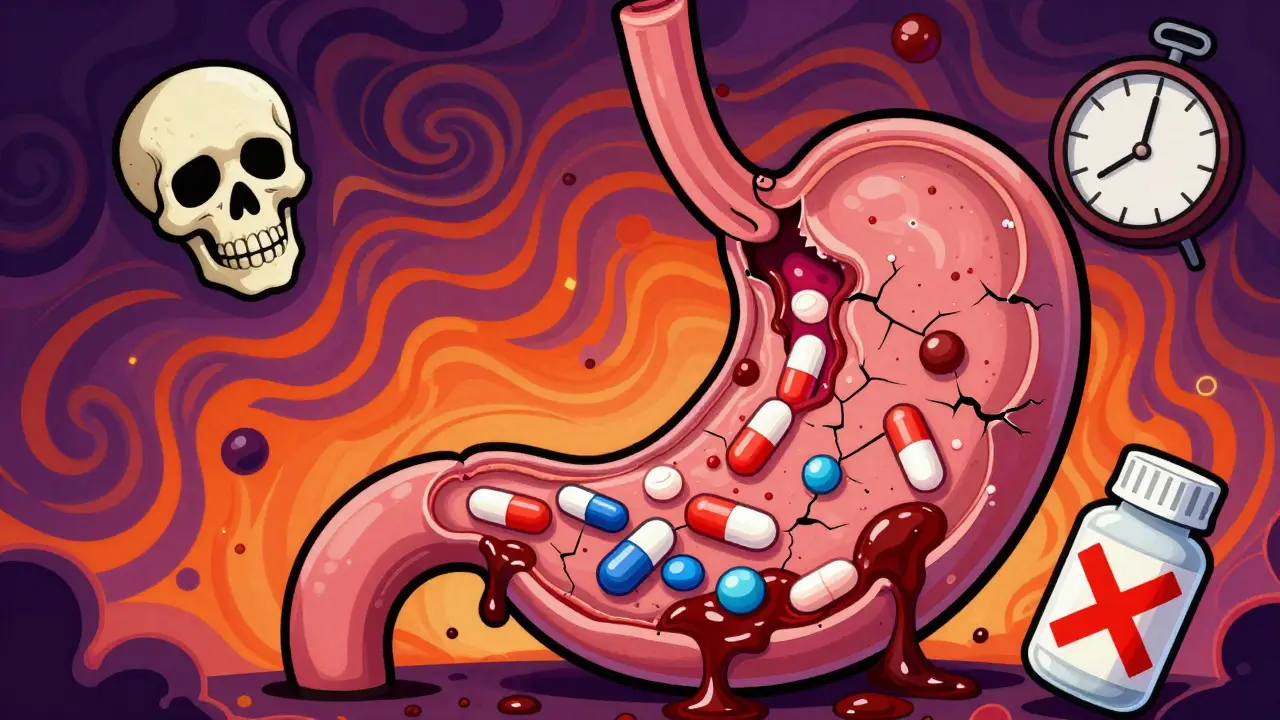
NSAID Gastrointestinal Bleeding Risk Calculator
This calculator assesses your risk of gastrointestinal bleeding when taking NSAIDs (like ibuprofen, naproxen, or diclofenac). Based on your risk factors, it provides personalized recommendations for safer NSAID use.
Low Risk
You have 0-1 risk factors. Continue monitoring your symptoms and always follow your doctor's recommendations.
Important: This calculator is for informational purposes only. It does not replace professional medical advice. If you experience symptoms like black stools, vomiting blood, or unexplained fatigue, seek medical attention immediately.
Every year, millions of people take NSAIDs for back pain, arthritis, or a bad headache. But few realize that these common painkillers can silently damage their stomach and intestines-sometimes with life-threatening results. If you’ve been taking ibuprofen, naproxen, or diclofenac regularly, especially over 65 or with other health conditions, you’re at risk. And the worst part? Many don’t know they’re in danger until it’s too late.
How NSAIDs Damage the Gut
NSAIDs work by blocking enzymes called COX-1 and COX-2. COX-2 causes inflammation and pain, so blocking it helps. But COX-1 protects the stomach lining by producing mucus and blood flow. When NSAIDs shut down COX-1, the stomach loses its natural defense. That’s when acid starts eating away at the lining, creating erosions, ulcers, or worse-bleeding.
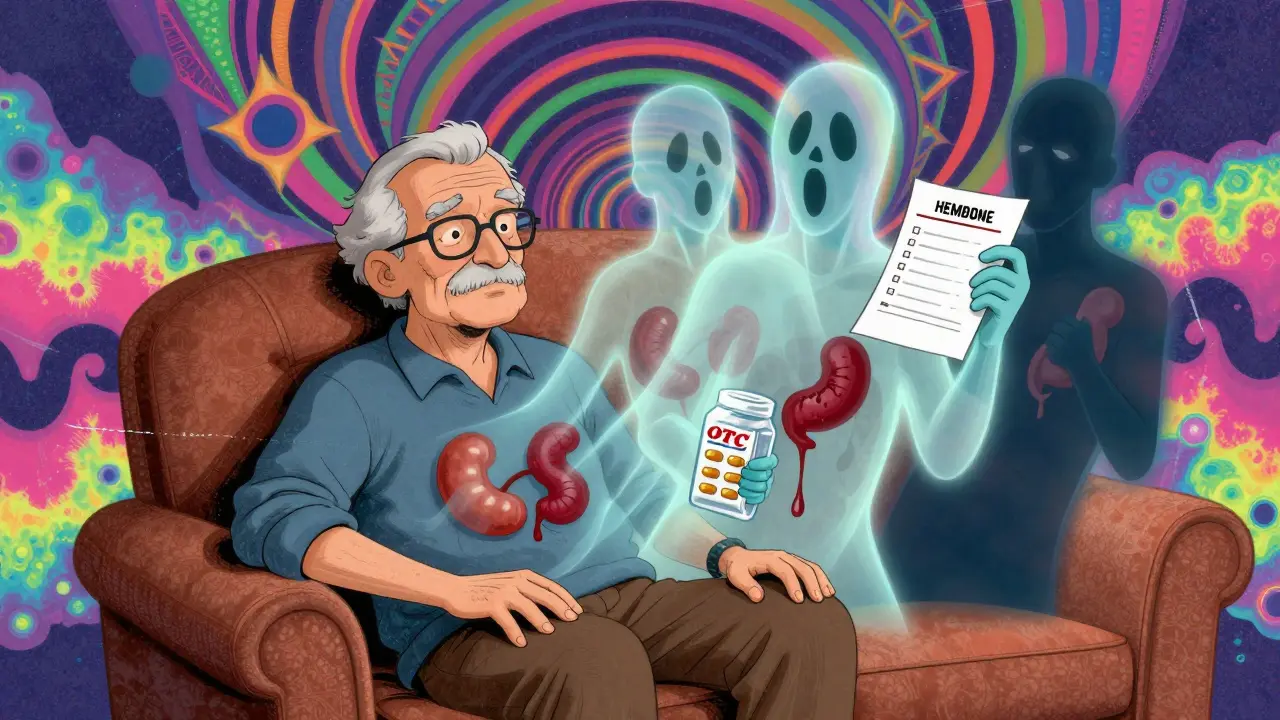
This isn’t just about stomach pain. Bleeding can be obvious-black, tarry stools or vomiting blood-or silent. Many people don’t feel a thing until they’re anemic, weak, or in the ER. A 2021 review found that 86% of patients with lower GI bleeding had taken NSAIDs, even without a peptic ulcer. That means damage isn’t always visible on a scope. It’s happening in the small intestine, too.
Who’s at Highest Risk?
Not everyone who takes NSAIDs gets hurt. But some people are far more vulnerable. The biggest risk factors, backed by decades of research, include:
- Age over 65 (risk doubles every decade)
- History of ulcers or prior GI bleeding
- Taking blood thinners like warfarin or aspirin
- Using corticosteroids (like prednisone)
- Taking more than one NSAID at once
- Using NSAIDs at high doses-over 1,200 mg of ibuprofen daily
- Having serious illnesses like heart failure, kidney disease, or liver cirrhosis
One study found that people with just two of these factors had a 4.5 times higher chance of bleeding. And yet, many patients never tell their doctor they’re taking over-the-counter NSAIDs. A 2022 survey on HealthUnlocked showed 63% of users had GI symptoms but only 37% mentioned them to a clinician. That silence is deadly.
Not All NSAIDs Are Equal
Some NSAIDs are safer than others. Non-selective ones like naproxen, ibuprofen, and diclofenac hit both COX-1 and COX-2. That means more stomach damage. Selective COX-2 inhibitors like celecoxib (Celebrex) spare COX-1, so they’re gentler on the gut. A 2000 Lancet study found celecoxib cut complicated ulcers in half compared to ibuprofen.
But here’s the trade-off: COX-2 drugs raise heart attack risk. Rofecoxib (Vioxx) was pulled from the market in 2004 after the APPROVe trial showed it doubled heart attack risk. Celecoxib still carries a warning, but it’s considered safer than older COX-2 drugs.
Then there’s the new kid on the block: naproxen/esomeprazole (Vimovo). Approved in 2023, this combo pill delivers naproxen with a built-in PPI. In the PRECISION-2 trial, it cut ulcer complications from 25.6% to just 7.3%. That’s a game-changer for high-risk patients who need strong pain relief.
The Real Solution: PPIs and More
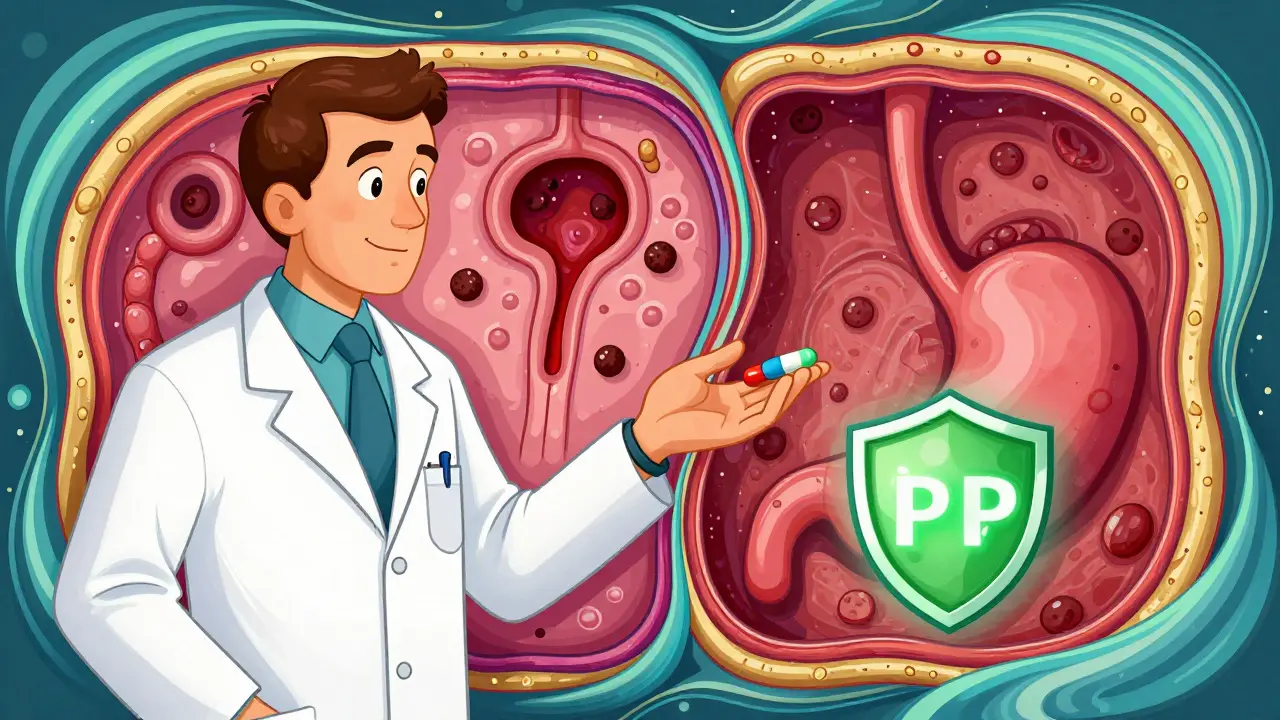
The most effective way to prevent NSAID-related bleeding isn’t to stop the painkiller-it’s to protect the gut. Proton pump inhibitors (PPIs) like omeprazole, pantoprazole, or esomeprazole block acid production, letting the stomach heal. A 2017 Cochrane review of over 13,000 patients showed PPIs cut ulcer complications by 75%. That’s not a small benefit-it’s life-saving.
For high-risk patients, guidelines from the American College of Gastroenterology say: start the PPI before the NSAID. Don’t wait for symptoms. If you’re over 70, have a past ulcer, or take blood thinners, your doctor should be prescribing a PPI alongside your NSAID.
Misoprostol is another option-it helps rebuild the stomach lining. But it causes diarrhea in up to 20% of users and can trigger contractions in women. That makes it a last-resort choice.
Real Stories, Real Consequences
Reddit user u/ElderCareHelper described their 78-year-old mother who became severely anemic from a hidden NSAID bleed. She had no stomach pain. No black stools. Just fatigue. By the time she was diagnosed, she needed three blood transfusions. The doctor found multiple small bowel ulcers-no peptic ulcer, just chronic NSAID damage.
On Drugs.com, 78% of celecoxib users reported no GI issues. But 42% of arthritis patients surveyed by the Arthritis Foundation quit NSAIDs because of nausea, bloating, or bleeding. The disconnect? Many don’t realize their symptoms are drug-related. They blame diet, stress, or aging.
And it’s not just older adults. A 2021 survey found 17.4% of U.S. adults use NSAIDs weekly. That number jumps to 34.2% for people with arthritis. These are not occasional users-they’re long-term. And long-term use = long-term risk.
What Should You Do?
If you’re taking NSAIDs regularly, here’s what matters:
- Know your risk. Are you over 65? Do you take blood thinners or steroids? Have you had an ulcer before? If yes to two or more, you’re high-risk.
- Ask for a PPI. Don’t wait for symptoms. If you’re on NSAIDs long-term, ask your doctor if you need omeprazole or another PPI.
- Check your dose. More isn’t better. Stick to the lowest dose that works. For ibuprofen, that’s usually 400-600 mg three times a day-not 800 mg four times.
- Consider alternatives. For joint pain, acetaminophen (Tylenol) is safer for the gut. Physical therapy, weight loss, or braces can reduce reliance on pills.
- Watch for signs. Black stools, vomiting blood, unexplained fatigue, or dizziness? Go to the ER. Don’t wait.
For people with arthritis or chronic pain, the 2023 American College of Rheumatology guidelines say: if you have one risk factor, use the lowest NSAID dose for the shortest time. If you have two or more, use a COX-2 inhibitor like celecoxib with a PPI. That’s the gold standard.
The Bigger Picture
NSAID-related GI bleeding causes 107,000 hospitalizations and 16,500 deaths in the U.S. every year. That’s more than traffic accidents in some years. The cost? $2.2 billion annually. And yet, these deaths are largely preventable.
The FDA added black box warnings to all NSAIDs in 2005. That’s the strongest warning they can give. But warnings alone don’t change behavior. Education does. Screening does. Proactive prescribing does.
Future drugs are coming. CINODs-drugs that release nitric oxide to protect the gut while blocking pain-are in phase III trials. Naproxcinod showed 50% fewer ulcers than naproxen in 2021. But even if these drugs arrive, they won’t replace the need for awareness today.
NSAIDs aren’t evil. They’re powerful tools. But like any tool, they’re dangerous in the wrong hands-or the wrong body. The key isn’t to avoid them. It’s to use them wisely.
Can I take ibuprofen if I’ve had a peptic ulcer before?
No, not without protection. If you’ve had a peptic ulcer or GI bleed, taking NSAIDs like ibuprofen again carries a very high risk of recurrence. The American College of Gastroenterology recommends using a COX-2 inhibitor (like celecoxib) combined with a proton pump inhibitor (PPI) if you must use an NSAID. Even then, it should be at the lowest effective dose and for the shortest time possible. Avoid NSAIDs entirely if you can-use acetaminophen or non-drug therapies instead.
Do over-the-counter NSAIDs cause bleeding too?
Yes. A 2021 review found that 26% of people take OTC NSAIDs at doses higher than recommended, and most don’t tell their doctors. The risk of bleeding doesn’t disappear just because the drug is sold without a prescription. In fact, many people assume OTC means safe, so they take more, for longer. That’s exactly when complications happen. If you’re using ibuprofen or naproxen daily for months, you’re at risk-even if you bought it at the pharmacy.
How do I know if I’m bleeding from NSAIDs?
Bleeding can be obvious or hidden. Overt signs include black, tarry stools (melena), vomiting blood, or bright red blood in stool. But many cases are silent-called occult bleeding. That means no symptoms until you’re anemic: tired, pale, short of breath, dizzy. A simple blood test can reveal low iron or hemoglobin. If you’ve been on NSAIDs for more than a few weeks and feel unusually fatigued, ask your doctor for a CBC and iron panel. Don’t wait for vomiting blood.
Is celecoxib safer than ibuprofen for my stomach?
Yes, for the gut. A 2000 Lancet study showed celecoxib caused 50% fewer serious ulcers than ibuprofen. That’s because it doesn’t block COX-1, the enzyme that protects the stomach lining. But celecoxib isn’t risk-free. It increases heart attack risk, especially in people with existing heart disease. If you’re young and healthy with no heart issues, celecoxib with a PPI is often the best choice for long-term pain. If you have heart disease, your doctor may recommend avoiding it altogether.
Can I stop taking a PPI if my pain improves?
Only if you stop the NSAID. If you’re still taking ibuprofen, naproxen, or any NSAID, stopping the PPI puts you right back at risk. The stomach doesn’t heal overnight. Even if you feel fine, the protective lining is still thin. Guidelines say to keep the PPI as long as you’re on NSAIDs. If you’re using them short-term (a week or two), you can stop the PPI after. But for chronic use-like arthritis-you need ongoing protection.
Scott Easterling
March 7, 2026 AT 16:11Mantooth Lehto
March 8, 2026 AT 03:28Melba Miller
March 8, 2026 AT 04:09Katy Shamitz
March 8, 2026 AT 07:07Mary Beth Brook
March 10, 2026 AT 04:27Neeti Rustagi
March 11, 2026 AT 13:31Dan Mayer
March 12, 2026 AT 20:02Janelle Pearl
March 14, 2026 AT 10:31Ray Foret Jr.
March 14, 2026 AT 23:16