
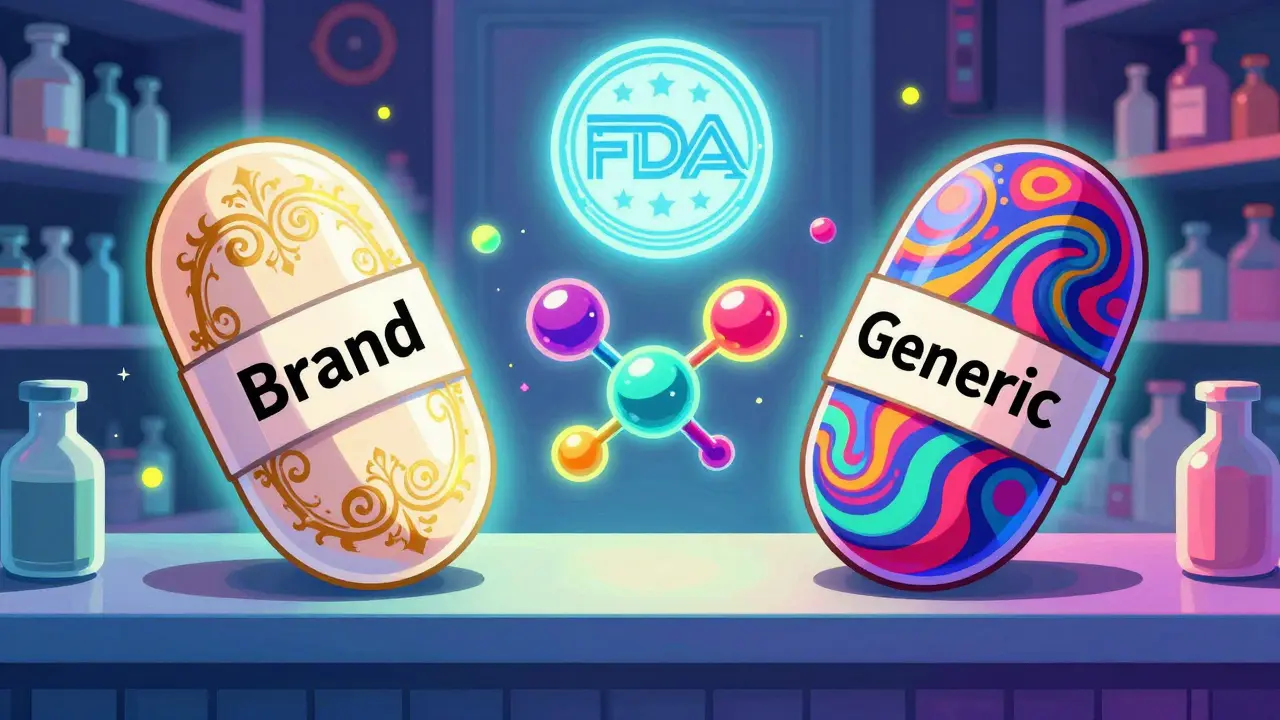
When you pick up a prescription, you might see a different name on the bottle than what your doctor wrote. That’s because most prescriptions today are filled with generic drugs. They cost less, often a fraction of the price, and your insurance usually prefers them. But a quiet worry lingers: Are they really just as safe and effective as the brand-name version?
The short answer? For most people, most of the time - yes. But it’s not that simple. There’s real science behind this, and some situations where the difference matters more than others.
What makes a generic drug "the same"?
A generic drug isn’t a copycat. It’s required by law to be identical in one crucial way: the active ingredient. That’s the part that actually treats your condition. Whether it’s atorvastatin for cholesterol or levothyroxine for thyroid issues, the generic version must contain the exact same chemical compound, in the exact same amount, as the brand-name drug.
It also has to come in the same form - pill, capsule, injection - and be taken the same way. If your brand drug is a 10mg tablet swallowed once daily, the generic must be too.
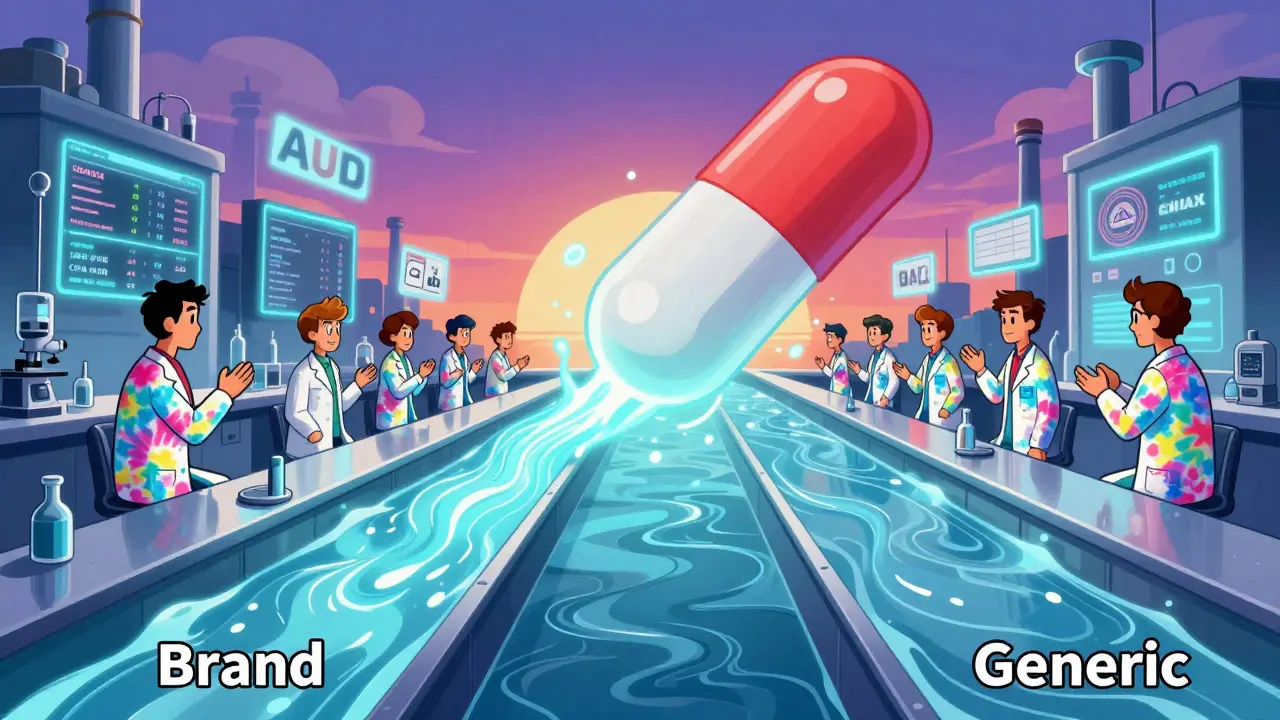
The real test, though, is bioequivalence. This means your body absorbs the generic drug at nearly the same rate and to nearly the same extent as the brand. The U.S. Food and Drug Administration (FDA) requires this to be proven through studies measuring how much of the drug enters your bloodstream and how quickly. The acceptable range? The amount of drug absorbed (AUC) must fall within 80% to 125% of the brand. The peak concentration (Cmax) must be in the same ballpark. That’s not a wide gap - it’s a tight one.
That’s why over 90% of U.S. prescriptions are for generics today. They’re not cheaper because they’re lower quality. They’re cheaper because the company didn’t have to spend hundreds of millions on original research. The FDA reviews every generic before it hits the market. In 2022 alone, more than 1,100 were approved.
The science says: generics work
Large, real-world studies back this up. One of the most compelling came from Austria, published in Nature Scientific Reports in 2020. Researchers looked at over 1.5 million people taking 17 different medications - everything from blood pressure pills to antidepressants. They compared outcomes between people who got the brand-name version and those who got the generic.
The results? Generics were linked to fewer deaths in 10 of the 17 drugs. For heart attacks and strokes, the reduction was even more striking. People on generics had 40% fewer major cardiac and cerebrovascular events than those on brands. The study controlled for income, age, and other factors. The researchers concluded generics were "at least similar, and in some cases superior."
Another large U.S. study from the FDA’s own adverse event database (FAERS) from 2018 to 2022 found no meaningful difference in reports of side effects between brand and generic versions of 15 common drugs. On average, there were 12.7 reports per million generic prescriptions versus 13.2 for brands. That’s practically a tie.
And then there’s the cost. Generics make up 90% of prescriptions but only about 18% of total drug spending. That’s because they’re 80-85% cheaper on average. If you’re paying out of pocket, that’s hundreds - sometimes thousands - of dollars saved per year.
When things get tricky
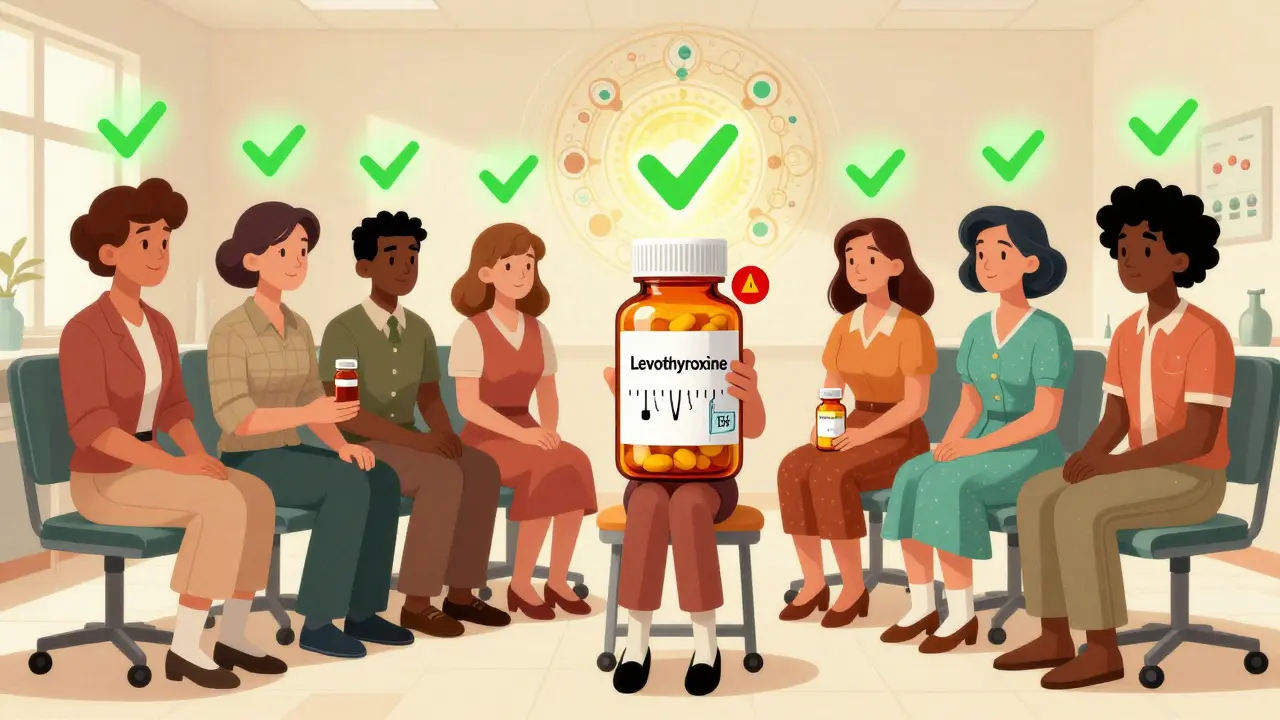
There’s a small group of drugs where even tiny differences in how the body absorbs the medicine can cause real problems. These are called narrow therapeutic index (NTI) drugs. With these, the difference between a dose that works and one that’s toxic is razor-thin.
Examples include:
- Warfarin (blood thinner)
- Levothyroxine (thyroid hormone)
- Phenytoin and carbamazepine (anti-seizure meds)
- Cyclosporine (organ transplant drug)
For these, even a 5% change in absorption could mean your blood clots, your thyroid stops working, or you have a seizure.
That’s why some studies show trouble here. A 2017 Canadian study tracked over 136,000 seniors over 65 after generic versions of three blood pressure drugs entered the market. In the month after the switch, there was an 8% rise in adverse events for losartan, 12% for valsartan, and 14% for candesartan. The increase was small, but statistically significant.
And patient stories? They’re real. On forums like Reddit, users report switching from brand Synthroid to generic levothyroxine and seeing their TSH levels jump from 1.2 to 8.7 - a sign their thyroid isn’t getting enough hormone. One user said they had to go back to the brand because they felt "like a zombie" on the generic.
These aren’t rare. A 2021 survey of U.S. pharmacists found 67% had seen patients report reduced effectiveness or new side effects after switching to generics - especially with thyroid, seizure, and psychiatric meds.
Why does this happen?
It’s not because generics are fake. They’re still FDA-approved. The issue lies in the inactive ingredients - the fillers, dyes, and binders that hold the pill together. These don’t treat your condition, but they can affect how fast the drug dissolves in your stomach.
Two pills can have the same active ingredient and pass bioequivalence tests - but one might dissolve 10% slower. For most drugs, that’s fine. For a thyroid patient, it might mean not enough hormone gets absorbed. Or it might cause a buildup that leads to jitteriness or heart palpitations.
Manufacturing processes also vary. A brand-name company might use a single, well-established factory. A generic might be made in multiple plants, some overseas. While the FDA inspects these, quality control isn’t perfect. In 2022, the FDA issued 17 import alerts against generic drug makers for quality issues.
What should you do?
Most people can take generics without worry. If you’re on statins, antibiotics, or diabetes meds, the evidence is overwhelming: generics are safe and effective.
But if you’re on a narrow therapeutic index drug - especially levothyroxine, warfarin, or an anti-seizure medicine - here’s what to do:
- Stick with one version. If your doctor prescribed brand-name Synthroid, ask to keep it. If you started on generic, stay on that same generic. Don’t switch back and forth.
- Ask your pharmacist. They can tell you if a new batch is from a different manufacturer. Some pharmacies will notify you if the generic changes.
- Monitor your levels. If you’re on warfarin, get your INR checked more often after a switch. If you’re on levothyroxine, ask for a TSH test 6-8 weeks after changing brands.
- Speak up. If you feel different - more tired, more anxious, more shaky - tell your doctor. It might not be in your head.
The American Thyroid Association and other medical groups recommend avoiding switches for thyroid patients unless absolutely necessary. The FDA agrees: for these drugs, consistency matters.
Bottom line
Generic drugs aren’t a gamble. They’re one of the most rigorously tested products in medicine. For the vast majority of people, they’re just as safe and effective as the brand - and they save billions of dollars every year.
But medicine isn’t one-size-fits-all. For a small group of patients on critical medications, even small differences can matter. That’s why awareness, communication, and monitoring are key. Don’t assume all generics are the same. Don’t assume you’ll feel no difference. And don’t be afraid to ask questions - your health is worth it.
Are generic drugs FDA-approved?
Yes. Every generic drug must be approved by the FDA before it can be sold. The FDA requires that generics have the same active ingredient, strength, dosage form, and route of administration as the brand-name drug. They must also prove bioequivalence through strict testing, showing the body absorbs the drug at nearly the same rate and amount. The FDA reviews each generic application, and as of 2023, over 90% of prescriptions in the U.S. are for FDA-approved generics.
Can generic drugs cause different side effects?
Yes - but not because the active ingredient is different. Side effects can occur due to differences in inactive ingredients, like dyes, fillers, or coatings. These can affect how fast the drug dissolves or how your body reacts to it. For most people, this causes no issue. But for those sensitive to certain substances (like lactose or gluten) or those on narrow therapeutic index drugs (like levothyroxine or warfarin), switching generics might lead to new symptoms. If you notice changes after a switch, talk to your doctor or pharmacist.
Why are generics cheaper if they’re the same?
Generics are cheaper because they don’t have to repeat expensive clinical trials. The original brand-name drug company spent years and hundreds of millions developing and testing the drug. Once the patent expires, other companies can make the same drug using the existing data. They only need to prove bioequivalence - a much faster and cheaper process. This competition drives prices down. On average, generics cost 80-85% less than the brand-name version.
Should I avoid generics for thyroid medication?
You don’t have to avoid them, but consistency is key. Levothyroxine is a narrow therapeutic index drug - even small changes in absorption can affect your thyroid hormone levels. The American Thyroid Association recommends sticking with either the brand or a single generic version and avoiding switches. If you do switch, ask your doctor to check your TSH level 6 to 8 weeks later. Many patients do fine on generics, but others notice symptoms like fatigue or weight gain. Listen to your body and communicate with your provider.
How do I know if my generic drug is from a different manufacturer?
Check the label on your pill bottle - it should list the manufacturer’s name. If you notice a change in the shape, color, or markings on your pills, or if the manufacturer name is different from your last refill, it’s a new version. Your pharmacist can tell you if a substitution occurred. If you’re on a critical medication like warfarin or levothyroxine, ask your pharmacist to notify you before switching manufacturers. You can also ask your doctor to write "Dispense as Written" on your prescription to prevent automatic substitutions.
Marie Fontaine
February 10, 2026 AT 02:09Generics saved me $300/month on my blood pressure med. No side effects, no issues. My doctor said I’m doing better than when I was on the brand. Why overpay when science says it’s the same? 🙌
Brandon Osborne
February 11, 2026 AT 06:54Oh please. I switched to generic levothyroxine and became a walking corpse for three months. My TSH went from 2.1 to 9.8. My endocrinologist said ‘it happens’ like it’s some weird glitch. No, it’s not a glitch-it’s the FDA letting sketchy overseas factories pump out inconsistent pills. I’m going back to Synthroid and I’m never trusting a generic again. 🤬
Karianne Jackson
February 12, 2026 AT 22:43My grandma took generic statins for 5 years and never had a problem. She says she feels better now she’s not broke. End of story.
Simon Critchley
February 13, 2026 AT 16:05Let’s not pretend bioequivalence = clinical equivalence. The 80-125% AUC window is a legal loophole disguised as science. For NTI drugs, that’s a 45% swing in systemic exposure. That’s not ‘close enough’-that’s playing Russian roulette with your endocrine system. And don’t get me started on manufacturing variance across 12 different plants in India. 🧪
Joseph Charles Colin
February 14, 2026 AT 12:15As a clinical pharmacist, I’ve reviewed 300+ generic substitutions. The data is clear: for 95% of patients, no difference. But for NTI drugs, consistency is non-negotiable. If a patient is stable on a specific generic, don’t switch. If they’re on brand and doing fine, don’t force a switch. The real issue isn’t the generic-it’s pharmacy automation pushing interchangeability without clinician input. We need better alerts in EHRs. Not more fear-mongering.
Tatiana Barbosa
February 15, 2026 AT 05:25My mom switched from brand to generic warfarin and had a pulmonary embolism. She’s fine now, but it took 6 weeks to stabilize her INR. We learned the hard way: never switch without testing. I now keep a spreadsheet of every med she takes, the manufacturer, and the batch number. I know it sounds obsessive but when your life depends on a pill dissolving at the right speed, you become a detective. 📋
Random Guy
February 16, 2026 AT 13:43so like… i took generic xanax for 2 years. felt fine. then one batch i got this weird lil yellow pill that made me feel like i was underwater. turned out it was made by a different factory. i called my pharmacy and they were like ‘oh yeah we switched’ and i was like ‘oh so i’m basically a lab rat?’ lol. now i only take the blue ones. the ones with the ‘a’ on them. don’t judge. i’m just trying to live.
John Sonnenberg
February 17, 2026 AT 13:41Let me get this straight: the FDA approves generics based on a 20% absorption variance… and we’re supposed to trust this? That’s not science-that’s corporate lobbying disguised as public health policy. Meanwhile, the brand-name companies are making billions off patents they’ve already milked dry. This isn’t about safety-it’s about profit margins. And you wonder why people are losing faith in institutions?
Kathryn Lenn
February 19, 2026 AT 07:21Of course generics are safe. Just like how all vaccines are safe. Just like how all food is safe. Just like how all government data is accurate. 😏 The real question is: who benefits? Big Pharma? Big Pharmacy? Big Insurance? The patient? Nah. The patient’s just the guy holding the bag. And the bill. And the side effects. And the mystery pill with no name on it. 🤔
Andrew Jackson
February 19, 2026 AT 10:42It is an affront to American medical innovation that foreign manufacturers, operating under lax regulatory oversight, are permitted to distribute pharmaceuticals into our domestic supply chain under the guise of equivalence. The FDA’s bioequivalence standards are not merely inadequate-they are a betrayal of the scientific rigor this nation once championed. We must demand domestic production of all critical medications. National security is not a buzzword-it is a pharmacological imperative.