
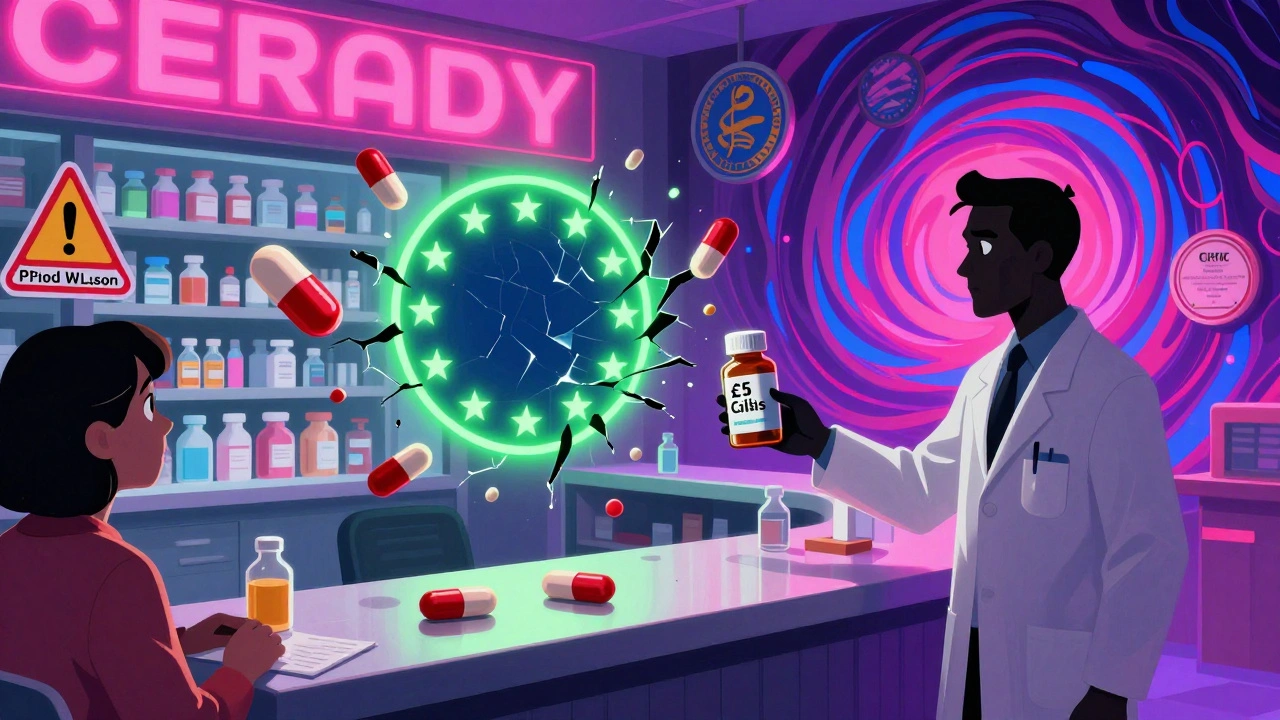
Buying medicine online sounds convenient-until you realize you might be ordering pills from a scammer who doesn’t even know what’s in them. Every year, thousands of people in the UK and across Europe buy drugs from websites that look real but are dangerously fake. The truth? Most online pharmacies aren’t safe. In fact, a 2023 study found that nearly half of all online pharmacy sites were outright illegal. And the ones that look the most professional? Those are often the worst.
What Makes an Online Pharmacy Legit?
A real online pharmacy doesn’t just sell pills-it follows the law. In the UK, it must be registered with the General Pharmaceutical Council (GPhC). In the US, it needs VIPPS accreditation. These aren’t just logos you can copy. They’re official checks that prove the pharmacy has a physical address, licensed pharmacists on staff, and follows strict rules about prescriptions. Legit sites require a valid prescription for anything that’s prescription-only-like antibiotics, blood pressure meds, or Viagra. They don’t let you pick a dose from a dropdown menu. They don’t offer "instant approval" without a doctor’s note. And they don’t ship from a warehouse in a country with no drug laws. If you’re buying from a legitimate site, you’ll find:- A physical address you can verify on Google Maps
- A phone number that connects to a real person, not a voicemail
- A licensed pharmacist available to answer questions
- A clear link to their regulatory registration (like GPhC or VIPPS)
- The EU common logo (if targeting Europe) that links to an official verification page
Red Flag #1: No Prescription Required
This is the biggest warning sign. If a website lets you buy antibiotics, insulin, or antidepressants without asking for a prescription, it’s illegal. Period. In the UK, prescription-only medicines (POMs) are controlled for a reason-they can kill you if misused. A 2023 study found that 98.2% of rogue pharmacies didn’t require prescriptions. Legitimate ones? 100% do. If a site says "no doctor visit needed," it’s not helping you-it’s endangering you.Red Flag #2: Prices That Are Too Good to Be True
You see a bottle of Cialis for £5? Or generic Lipitor for £10? That’s not a deal. That’s a death sentence. Legit pharmacies pay for licensed drugs, storage, shipping, and trained staff. They can’t undercut the market by 90%. If the price seems suspiciously low, the pills are likely fake, expired, or laced with something dangerous. One study found 76.4% of rogue pharmacies used ultra-low pricing to lure customers. The FDA has found counterfeit drugs containing rat poison, paint thinner, and even cement in fake pills.Red Flag #3: No Physical Address or Fake Location
A real pharmacy has a real place you can visit. If the website lists an address like "123 Online Street, London," that’s a red flag. Even worse? If the address is real but the pharmacy isn’t there. A 2021 analysis found that 67.7% of rogue sites used fake addresses-sometimes even copying the real address of a legitimate pharmacy. Check the address on Google Maps. If it’s a residential house, a warehouse with no signage, or a PO box, walk away.Red Flag #4: No Licensed Pharmacist Available
Legit pharmacies have pharmacists on call. Not chatbots. Not automated replies. Real people who can answer your questions about side effects, interactions, or dosage. If the site only has a "contact us" form that takes three days to reply-or worse, no contact info at all-that’s a huge red flag. A 2023 study showed 93.1% of rogue pharmacies didn’t have a licensed pharmacist available. That means you’re taking medication without any professional oversight.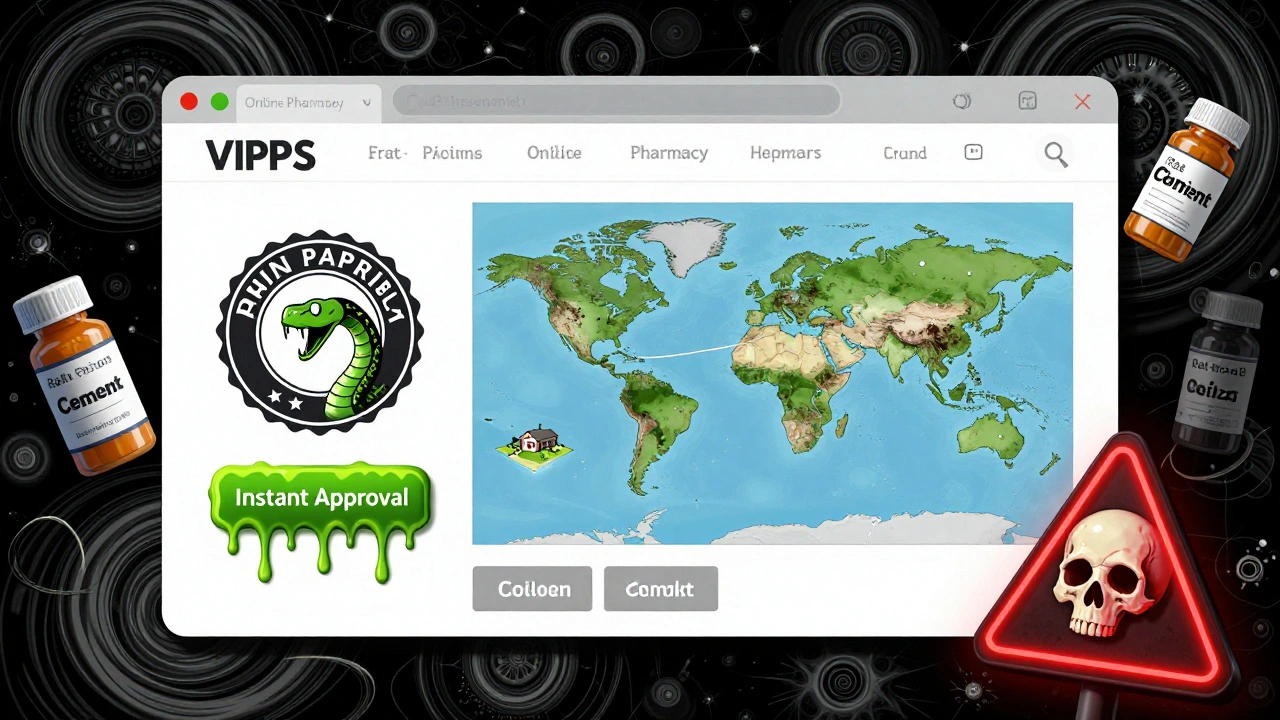
Red Flag #5: Fake Accreditation Seals
You’ll see logos for VIPPS, LegitScript, or GPhC. But they’re fake. Rogue pharmacies copy these seals to trick you. In one study, 41.8% of illegal sites used counterfeit accreditation badges. Click on them. If it doesn’t take you to the official verification page (like gphc.uk.com), it’s a scam. Real seals are clickable and verified by the regulator. Fake ones just link to the pharmacy’s homepage.Red Flag #6: Poor Website Design and Grammar
Yes, even websites can look professional and still be fake. But many rogue pharmacies have sloppy design: broken links, misspelled words, awkward phrasing, or stock photos of people holding pills with unnatural smiles. Legit pharmacies invest in clean, clear websites because they’re regulated and accountable. If the site looks like it was made in 2008 and the text reads like Google Translate, trust your gut.Red Flag #7: Spam Emails and Unsolicited Offers
If you get an email saying, "Hi, we noticed you were looking at Viagra online-here’s 70% off!"-delete it. Legit pharmacies don’t spam. They don’t cold-call. They don’t advertise on social media with before-and-after photos of people "cured" of diabetes. The FDA and NABP say unsolicited emails are a hallmark of rogue operations. In fact, 68.9% of illegal pharmacy sites use spam to reach customers.Red Flag #8: No EU Common Logo (For European Buyers)
If you’re in the UK or EU and buying medicine online, look for the official EU common logo. It’s a green cross with a white background. Click it. It should take you to a page showing the pharmacy’s license number and country of registration. A 2022 report found that nearly all top Google search results for "buy ibuprofen online" showed sites without this logo. That means they’re not legally allowed to sell in Europe.Red Flag #9: Shipping from High-Risk Countries
Legit pharmacies ship from within regulated countries-like the UK, US, Canada, or EU members. Rogue ones? They ship from Eastern Europe, Southeast Asia, or even offshore islands. A 2021 LegitScript report found 62% of rogue pharmacy servers were based in countries with weak drug enforcement. If the checkout page says "shipped from India" or "dispatched from Bulgaria," that’s a major red flag. Even if the website claims to be "UK-based," check the domain’s WHOIS data. Many fake sites use UK addresses but host servers overseas.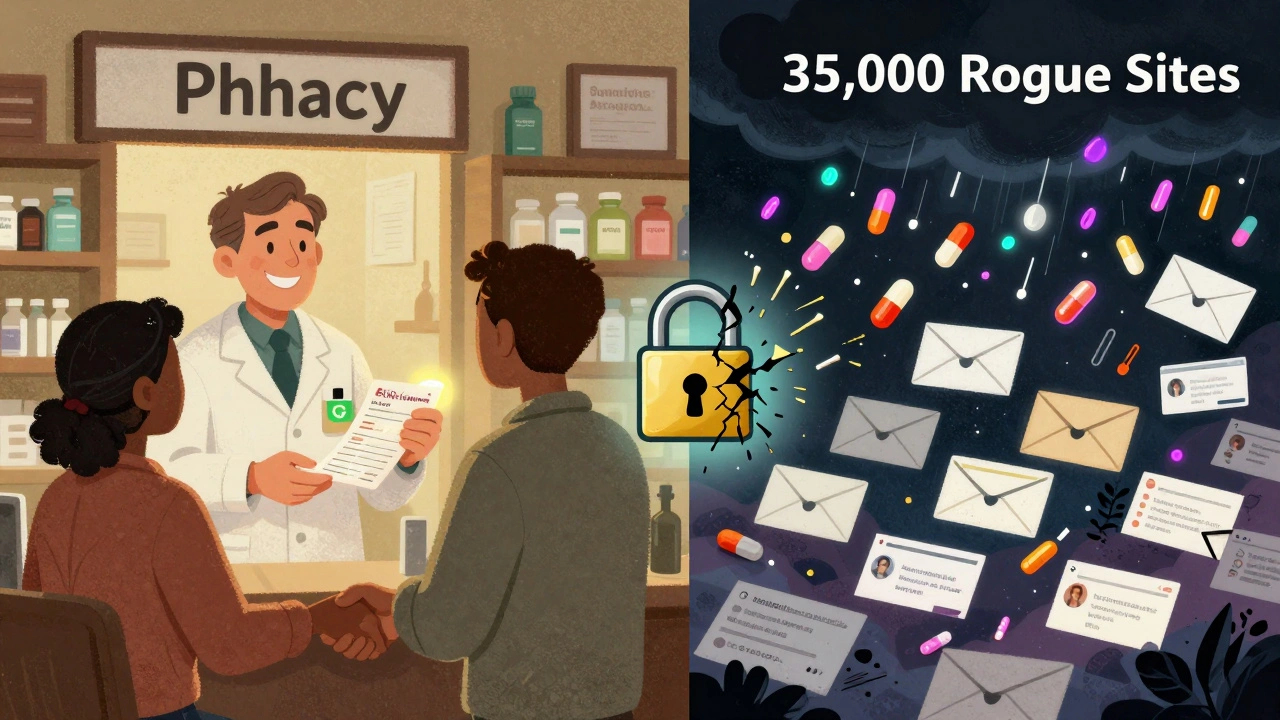
Red Flag #10: No Way to Verify Their License
This is the final test. If you can’t find a way to verify the pharmacy’s license, don’t buy. In the UK, go to the GPhC website and search by the pharmacy’s name or registration number. In the US, use the NABP’s VIPPS directory. If the site doesn’t make this easy-if you have to dig through 10 pages or call customer service to ask for their license-then they’re hiding something. The Independent Pharmacy’s 2023 guide says: "If verification info isn’t easily found, there’s likely some suspicious activity going on."What to Do If You’ve Already Bought From a Rogue Site
If you’ve taken pills from a suspicious site:- Stop taking them immediately
- Keep the packaging and any receipts
- Report the site to your country’s health regulator (GPhC in the UK, FDA in the US)
- See your doctor and mention you took unverified medication
- Check your bank statement for repeated charges
How to Find a Safe Online Pharmacy
Stick to these steps:- Search your national pharmacy regulator’s website (GPhC for the UK, NABP for the US)
- Only buy from pharmacies that require a prescription
- Verify the physical address and phone number
- Look for the EU common logo if you’re in Europe
- Call the pharmacy. Ask to speak to a pharmacist
- Never buy from a site that emails you first
Why This Matters More Than You Think
Rogue pharmacies aren’t just a financial scam-they’re a public health crisis. During the 2022 infant formula shortage, rogue sites sold fake, dangerous formulas. During the pandemic, fake COVID treatments flooded the web. And now, with rising drug costs, more people are tempted by cheap online deals. But the cost isn’t just money. It’s your health. Your life. The truth? There are thousands of rogue sites out there. But there are also thousands of safe, licensed ones. You just have to know how to find them.Can I trust online pharmacies that claim to be "UK-based"?
Not necessarily. Many rogue pharmacies use UK addresses to appear trustworthy, but their servers, staff, and drugs come from countries with no drug regulations. Always verify their registration number on the GPhC website. If you can’t find them there, they’re not legitimate.
Are all websites with SSL encryption safe?
No. SSL encryption just means your payment details are encrypted-it doesn’t mean the pharmacy is legal or the drugs are safe. In fact, 78% of rogue pharmacies use SSL to trick people into thinking they’re secure. Look for regulatory seals, not just the padlock icon.
What should I do if I find a fake pharmacy website?
Report it immediately. In the UK, use the GPhC’s reporting tool. In the US, file a complaint with the FDA’s MedWatch system. You can also report to Action Fraud in the UK or the FTC in the US. These agencies track rogue sites and work with internet providers to shut them down.
Can I get medicine from a legitimate online pharmacy without seeing a doctor?
Only for over-the-counter (OTC) drugs like paracetamol or antihistamines. For anything prescription-only-antibiotics, blood pressure meds, antidepressants-you need a valid prescription. Even if a site says "online consultation," make sure it’s a real doctor reviewing your history-not an automated form.
Why are rogue pharmacies still online if they’re illegal?
Because they move fast. When one site gets shut down, another pops up within days-often with a new domain, new logo, and new address. They use cryptocurrency to avoid tracing, and they target people during health crises when demand is high. Regulators are fighting back, but the scale is massive: over 35,000 rogue sites operate globally.
Elliot Barrett
December 8, 2025 AT 19:11Bro, I bought cheap Viagra from a site that looked legit. Got pills that tasted like chalk and made me dizzy for three days. Don't be that guy.
Larry Lieberman
December 9, 2025 AT 01:59LOL I just googled 'buy Cialis cheap' and got 12 sites with the same fake GPhC logo. 😅 The padlock icon is literally the only thing they all have in common. Stay safe out there, folks.
Sabrina Thurn
December 10, 2025 AT 09:02Legitimate online pharmacies are regulated under the EU Falsified Medicines Directive and the UK’s GPhC framework-this isn’t just bureaucracy, it’s a pharmacovigilance safeguard. The absence of a verifiable registration number or licensed pharmacist consultation constitutes a Class II safety violation under WHO guidelines. Don’t gamble with your liver.
Nikhil Pattni
December 10, 2025 AT 13:30Listen, I’ve been doing this for years-bought blood pressure meds from India, saved 80%, and never had an issue. You think the UK government cares if you save money? Nah. They care about control. These ‘red flags’ are just gatekeeping disguised as safety. I’ve been on the same meds for 7 years, and my BP is better than my doctor’s. If you’re not willing to take a risk, you’re part of the problem. 😎
Tejas Bubane
December 10, 2025 AT 15:58Wow, another clickbait listicle from someone who’s never seen a real pharmacy. The EU logo? Please. That’s only for retail outlets, not mail-order. And ‘no prescription needed’? That’s how you get access to meds in countries where healthcare is broken. You’re not protecting people-you’re enforcing elitist access. Also, ‘rat poison’? That’s a 2012 FDA anecdote. Grow up.
Lisa Whitesel
December 11, 2025 AT 14:45If you’re buying meds online without a prescription, you deserve what you get. No excuses.
Chris Marel
December 11, 2025 AT 23:22I live in Nigeria and I’ve seen people die because they couldn’t afford insulin. I get the risks-but I also get why someone would risk it. Maybe the real issue isn’t the websites, it’s that medicine is a luxury and not a right.
Courtney Black
December 12, 2025 AT 08:26We’ve turned healthcare into a marketplace, then acted shocked when people shop for deals. The red flags aren’t about the sites-they’re about the system that made them necessary. We don’t need more warnings. We need better access.
Evelyn Pastrana
December 14, 2025 AT 07:04Oh honey, you think you’re saving money? You’re just funding a criminal syndicate that sells chalk, rat poison, and your dignity. 😘
Arun Kumar Raut
December 16, 2025 AT 03:15My grandma used to get her diabetes meds from a local online pharmacy in Delhi. No fancy seals, but she’d call them every week and they’d talk to her like family. She’s 82 and still walking. Sometimes safety isn’t about logos-it’s about care.
Michael Robinson
December 16, 2025 AT 14:36It’s not about trust. It’s about consequences. One bad pill can end your life. No one’s coming to save you after you click ‘buy’.
ian septian
December 16, 2025 AT 21:51You got this. Always check the GPhC. Always call the pharmacist. You’re smarter than the scam sites.
iswarya bala
December 17, 2025 AT 21:44i just found a site that sells metformin for $3 a bottle and they ship to my door in 2 days 😍 i think im gonna try it
precious amzy
December 19, 2025 AT 07:25One must interrogate the epistemological foundations of pharmaceutical legitimacy: is the GPhC’s authority not itself a construct of capitalist medical hegemony? The very notion of a ‘legitimate’ pharmacy presupposes a regulatory framework that pathologizes autonomy. The rogue pharmacy, then, becomes a site of ontological resistance-a quiet rebellion against the commodification of bodily integrity.
Ajit Kumar Singh
December 19, 2025 AT 18:50My cousin died from fake insulin bought online in 2021. No one warned him. No one cared. Don't be my cousin. If you're reading this, you know what to do. Just don't do it. Please.