
What drugs are actually hard to find right now?
If you or someone you know is on chemotherapy, IV fluids, or even ADHD meds, you’ve probably heard whispers of shortages. And it’s not just rumors. As of January 2026, over 270 medications are still in short supply across the U.S., with some shortages lasting more than four years. These aren’t rare specialty drugs - they’re the ones hospitals and clinics rely on every single day.
Top 5 medications still in critical shortage
The most urgent gaps are in generic injectables - the kind you get in the ER, the ICU, or during cancer treatment. Here are the five most critical shortages still active:
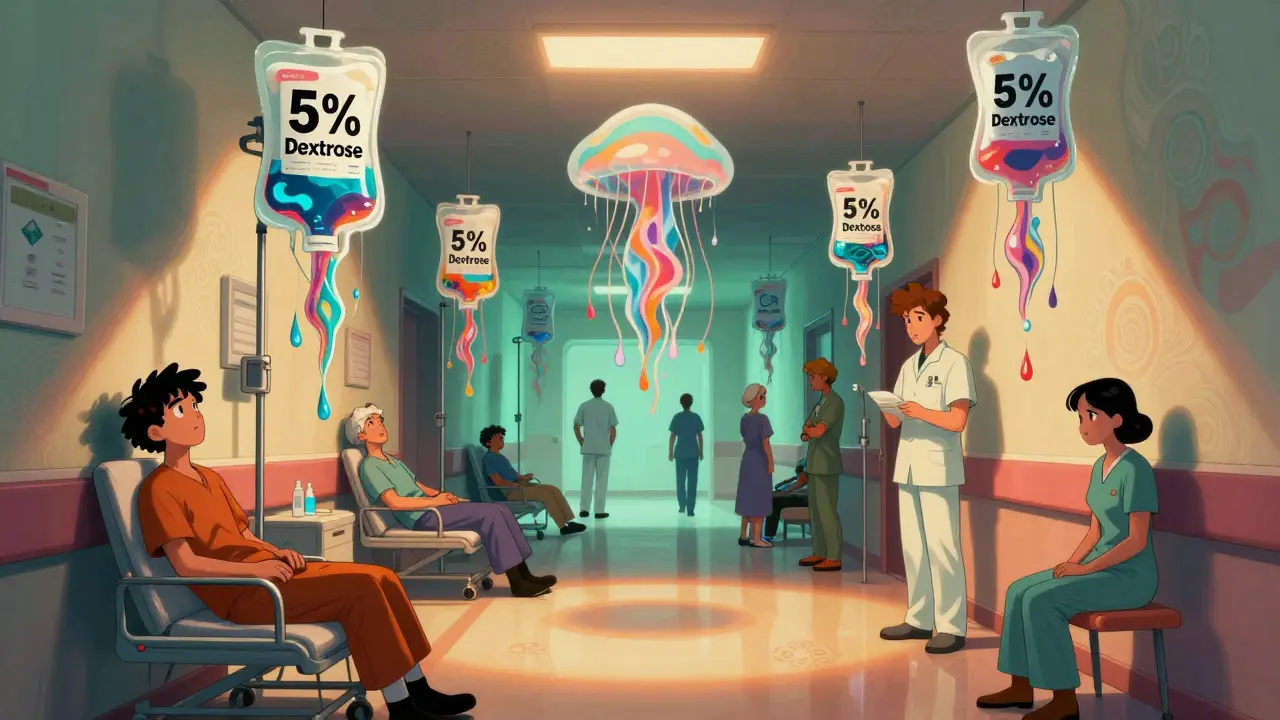
- 5% Dextrose Injection (small bags) - This is the most common IV fluid used to deliver meds, hydrate patients, or stabilize blood sugar. It’s been in shortage since February 2022. Hospitals are rationing it, and some are switching to larger bags or oral rehydration when possible.
- 50% Dextrose Injection - Used for severe low blood sugar emergencies. This one’s been scarce since late 2021. Without it, diabetic emergencies become harder to treat quickly.
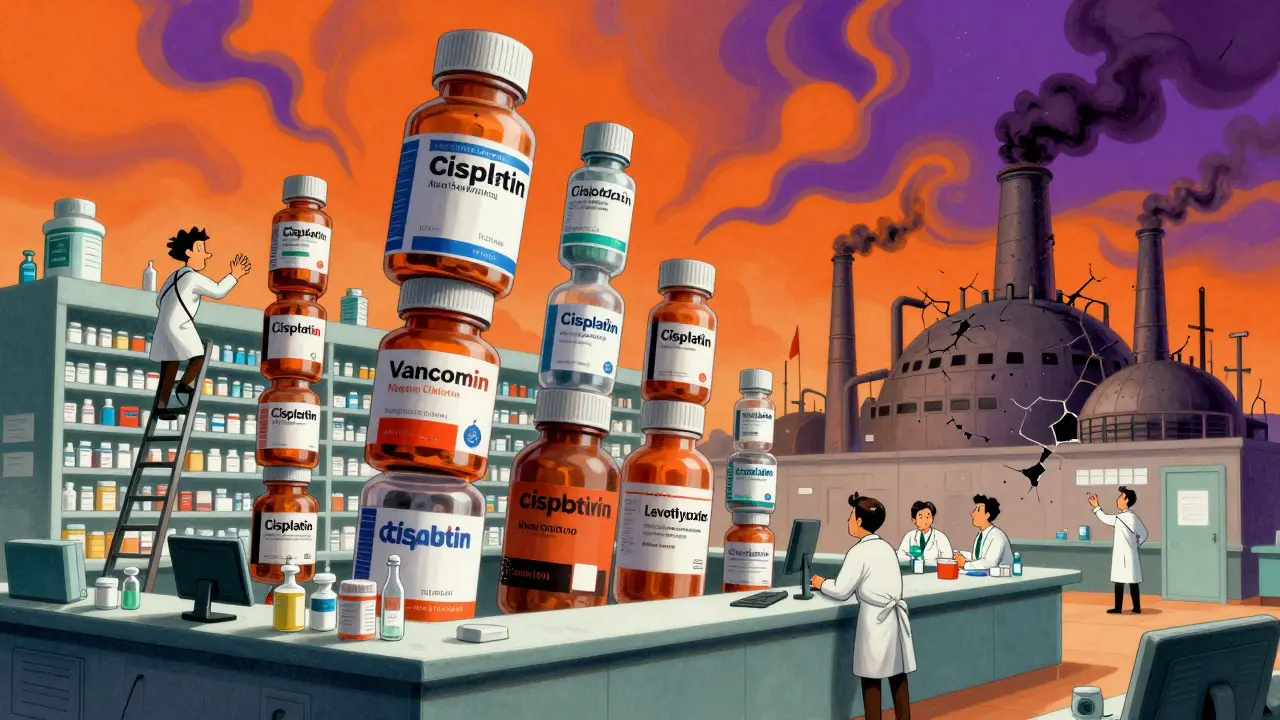
- Cisplatin - A frontline chemotherapy drug for testicular, ovarian, and lung cancers. A single Indian factory that made half the U.S. supply shut down in 2022 after FDA inspections found contamination. The shortage still hasn’t fully resolved, and hospitals are forced to prioritize patients with the best chance of survival.
- Vancomycin - A go-to antibiotic for serious infections like MRSA. With over 40% of its active ingredients coming from India, quality control issues and export delays keep this drug tight.
- Levothyroxine - The most common thyroid medication in the U.S. Demand has spiked 35% since 2020, and production can’t keep up. Patients are reporting inconsistent dosing or being switched to less reliable brands.
Why are these shortages lasting so long?
It’s not one problem - it’s a chain of failures. Most of these drugs are generics. That means they’re cheap. And when profit margins are only 5-8%, manufacturers don’t invest in backup equipment, extra staff, or domestic production. A single machine breakdown or FDA inspection can knock out a supplier for months.
Over 80% of the raw ingredients (APIs) for U.S. drugs come from just two countries: India and China. India makes about 45% of the supply. China makes 25%. If a factory in Hyderabad fails an inspection, or if trade tensions hit a port in Shanghai, the ripple effect hits U.S. hospitals within weeks.
And it’s not just production. Demand has exploded. GLP-1 weight-loss drugs like Ozempic and Wegovy are now prescribed to over 12 million Americans - up from 2 million in 2020. ADHD prescriptions have jumped 35% in the same period. When demand spikes, manufacturers who barely break even on generics can’t scale fast enough.
Who’s affected the most?
It’s not just patients. Healthcare workers are drowning in the fallout.
Pharmacists spend over 10 hours a week just tracking down alternatives. A 2025 ASHP survey found 67% of hospital pharmacists have made a medication error because of a substitution during a shortage. That’s not theoretical - it’s real. Someone gets the wrong dose. A drug that works for one condition doesn’t work for another. Side effects change. Outcomes suffer.
Cancer patients are hit hardest. A 2024 study by Patients for Affordable Drugs found 31% of cancer patients had their treatment delayed because cisplatin or doxorubicin wasn’t available. The average delay? Nearly 15 days. For someone with aggressive cancer, that’s life or death.
And it’s not just hospitals. Rural clinics and smaller pharmacies don’t have the same buying power. They’re the last to get what’s left - if they get anything at all.
What’s being done to fix this?
The FDA says it stops about 200 potential shortages every year by nudging manufacturers to fix issues early. But they can’t force anyone to make more. They don’t have the power to mandate production.
In January 2025, the FDA launched a new public reporting portal. Since then, over 1,200 new shortages have been reported by doctors and pharmacists who saw gaps the official list missed. That’s progress - but it’s reactive, not preventative.
Some states are stepping up. New York is building a real-time online map showing which pharmacies still have drugs in stock. Hawaii now allows Medicaid to cover foreign-approved versions of U.S. drugs during shortages. That’s smart. If a drug is safe in Europe or Canada, why not use it here?
The U.S. Pharmacopeia is pushing for three big changes: financial incentives for companies to make APIs in the U.S., mandatory stockpiles of critical drugs, and a national early-warning system that connects manufacturers, distributors, and hospitals in real time. None of it’s law yet.
What can you do if your medication is out of stock?
If you’re on a drug that’s in shortage, don’t panic - but don’t wait either.
- Call your pharmacy early - Don’t wait until your last pill is gone. Ask if they’ve received a shipment or can get it from a distributor.
- Ask your doctor about alternatives - Many shortages have therapeutically equivalent options. For example, if cisplatin isn’t available, carboplatin may be used instead - though it’s not always as effective.
- Check the ASHP Drug Shortages Database - It’s free, updated daily, and lists expected resolution dates. You can search by drug name or category.
- Don’t switch brands without talking to your provider - Some generic versions aren’t interchangeable. A change in fillers or coatings can affect absorption.
Pharmacists in 47 states can now substitute certain drugs during shortages - but only 19 states let them do it without calling your doctor first. If you’re in one of those 19, you might get a replacement faster. In the others, you’ll need a new prescription.
What’s the long-term outlook?
Without major policy changes, the number of shortages won’t drop. The Congressional Budget Office predicts we’ll stay above 250 active shortages through 2027. If proposed tariffs on Chinese and Indian pharmaceuticals go through, that number could jump to 350+.
The system is built on cheapness. But cheap drugs don’t mean cheap consequences. When a cancer patient waits 15 days for treatment, or a diabetic goes into a coma because 50% dextrose isn’t available, the cost isn’t just financial - it’s human.
For now, the best defense is awareness. Know what drugs you’re on. Know if they’re in shortage. Talk to your care team. And push for change - because this isn’t just a supply chain problem. It’s a public health emergency.
Which drugs are currently in the worst shortage?
As of January 2026, the most critical shortages are 5% and 50% Dextrose injections, cisplatin (a chemotherapy drug), vancomycin (an antibiotic), and levothyroxine (a thyroid medication). These are not rare drugs - they’re used daily in hospitals and clinics across the country. Cisplatin shortages have lasted over four years, and IV fluids remain rationed in many facilities.
Why are generic drugs more likely to be in shortage?
Generic drugs make up 90% of prescriptions but only 20% of pharmaceutical revenue. Manufacturers make just 5-8% profit margins on them, compared to 30-40% for brand-name drugs. That means they can’t afford to invest in backup production lines, quality controls, or domestic manufacturing. One factory failure can knock out a drug nationwide.
Can I get a different brand if my drug is out of stock?
Sometimes. Many drugs have therapeutically equivalent alternatives - for example, carboplatin instead of cisplatin, or sodium chloride instead of dextrose in some cases. But not all generics are interchangeable. Always talk to your doctor or pharmacist before switching. Some formulations have different fillers or release profiles that can affect how your body uses the drug.
Are drug shortages getting better or worse?
They’re slightly better than last year - 63 shortages were resolved in Q1 2025 - but new ones keep popping up, especially in ADHD meds, weight-loss drugs, and hormonal treatments. The total number has dropped from 323 in early 2024 to 270 now, but the root causes haven’t changed. Without major policy changes, shortages will stay high through 2027.
How can I check if my medication is in shortage?
The American Society of Health-System Pharmacists (ASHP) maintains a free, publicly accessible Drug Shortages Database that’s updated daily. You can search by drug name, manufacturer, or category. Many hospitals and pharmacies also post alerts on their websites. If your pharmacy says a drug is out, ask them to check the ASHP site for expected restock dates.
What’s next for patients and providers?
The real fix won’t come from pharmacies or doctors - it’ll come from policy. We need financial incentives to bring drug manufacturing back to the U.S. We need mandatory stockpiles of critical medications. We need a real-time national alert system that tells hospitals before a shortage hits.
Until then, staying informed is your best tool. Know your meds. Ask questions. Push for alternatives. And don’t accept silence as an answer. This isn’t just about pills on a shelf - it’s about whether people get the care they need when they need it.