
Medication Dizziness Risk Calculator
Medication Dizziness Risk Calculator
Assess your risk of dizziness from medications based on your current prescriptions and health factors.
Add Your Medications
Your Medications
Your Dizziness Risk Assessment
How this works: This tool calculates your risk based on medication type, age, and number of medications taken. Remember, this is an estimate - always discuss your symptoms with your healthcare provider.
Risk Factors
Recommendations
When to See a Doctor
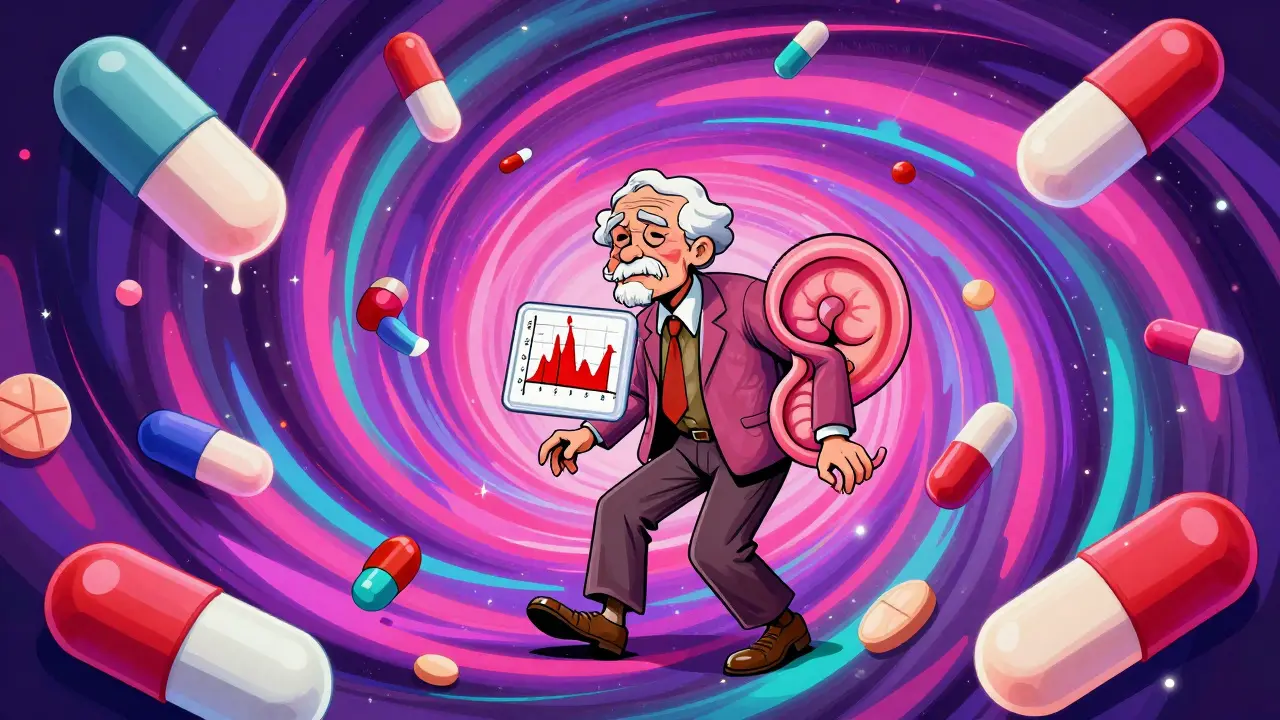
Feeling dizzy or lightheaded after taking a new medication? You’re not alone. About 1 in 5 adults experiences dizziness each year, and nearly a quarter of those cases are directly linked to medications. It’s not just a nuisance-it can lead to falls, hospital visits, and even long-term balance problems, especially in older adults. The good news? You can often manage or prevent it if you know what to look for and what to do next.
Why Do Medications Make You Dizzy?
Dizziness isn’t one thing. It can mean feeling faint, spinning, unsteady, or just off-balance. Medications cause it by interfering with three key systems in your body: your inner ear (vestibular system), your blood pressure regulation, and your brain’s processing of balance signals.Some drugs directly damage the hair cells in your inner ear-those tiny sensors that tell your brain which way is up. Antibiotics like gentamicin can cause permanent hearing and balance loss in up to 40% of patients on long-term treatment. Chemotherapy drugs like cisplatin are even more aggressive, leading to permanent vestibular damage in nearly half to two-thirds of users.
Other medications lower your blood pressure too much, especially when you stand up. This is called orthostatic hypotension. Blood pressure pills-like ACE inhibitors, diuretics, and beta-blockers-are common culprits. When your brain doesn’t get enough blood fast enough, you feel lightheaded or like you might pass out.
Then there are drugs that mess with brain chemicals. Antidepressants, especially tricyclics and SSRIs, can cause dizziness in up to 28% of people during the first few weeks. Even common drugs like proton pump inhibitors (for heartburn) can trigger it in a small but significant number of users simply because so many people take them.
Which Medications Are Most Likely to Cause Dizziness?
Not all drugs are created equal when it comes to dizziness. Some have a much higher risk than others.Antiepileptic drugs top the list. Carbamazepine causes dizziness in nearly 30% of patients. Pregabalin and phenytoin aren’t far behind. If you’re on one of these and feel off, it’s not just "getting used to it"-it’s a known side effect.
Blood pressure meds vary by class:
- Diuretics (like furosemide): 22.1% risk
- ACE inhibitors (like lisinopril): 14.2% risk
- Beta-blockers (like propranolol): 19.7% risk
Antidepressants show a big difference by type:
- Tricyclics (amitriptyline, nortriptyline): 26-28% risk
- SSRIs (fluoxetine, sertraline): 22-25% risk
Antibiotics like gentamicin are dangerous for your balance, while macrolides like erythromycin cause milder but still noticeable dizziness in nearly 9% of users. Even OTC antihistamines-often taken for allergies or sleep-can increase fall risk by 42% in older adults.
The American Geriatrics Society’s 2023 Beers Criteria lists 17 high-risk medications for seniors, including benzodiazepines, muscle relaxants, and first-gen antihistamines. These aren’t just "possible" side effects-they’re well-documented dangers.
Who’s Most at Risk?
Age is the biggest factor. One in three adults over 65 falls each year, and medication-induced dizziness is a major contributor. The risk skyrockets with polypharmacy-taking five or more medications. Studies show this increases dizziness risk by 300% compared to people on just one drug.Older adults are more sensitive because their bodies process drugs slower, their blood pressure regulation weakens, and their vestibular system naturally declines. But it’s not just seniors. People with existing balance disorders, migraines, or inner ear conditions are also more vulnerable.
Genetics might play a role too. A 2023 study identified 17 gene variants linked to higher risk of dizziness from blood pressure meds. While genetic testing isn’t routine yet, it’s likely to become part of personalized prescribing in the next few years.
What Should You Do If You Feel Dizzy?
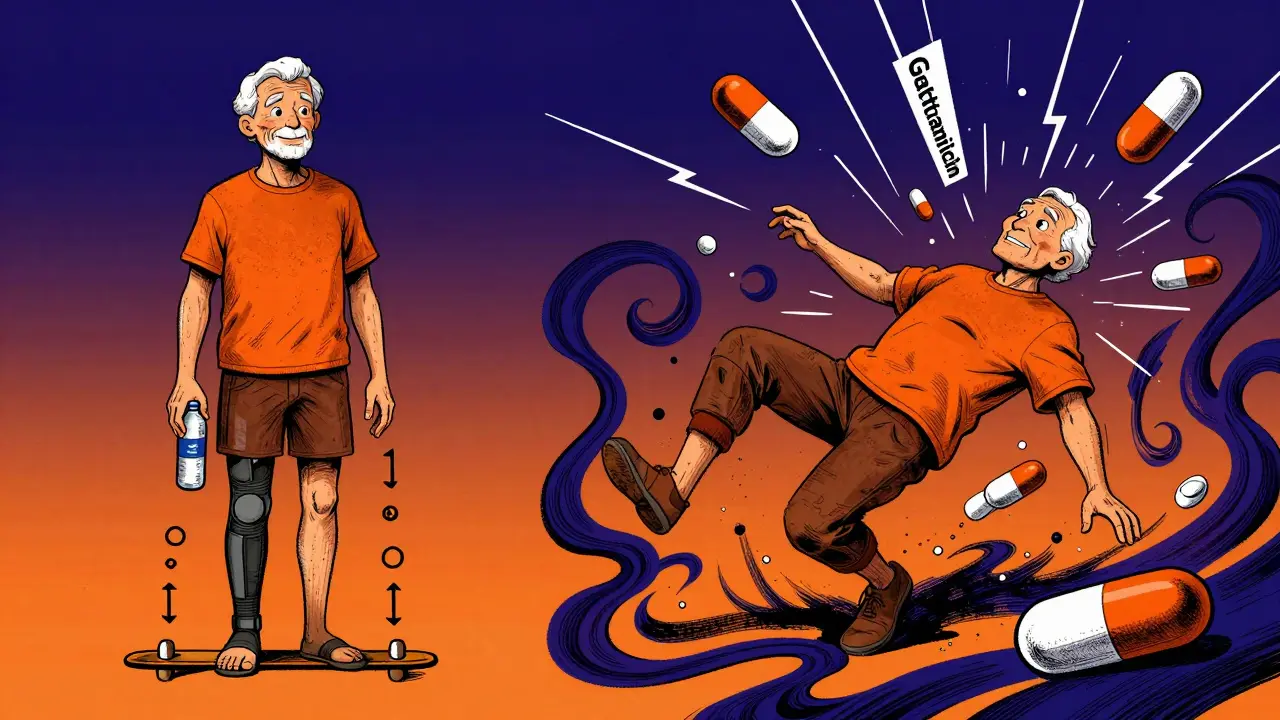
Don’t ignore it. Don’t assume it’s "just aging." Don’t stop your meds cold turkey-that can be dangerous, especially for seizure or heart medications.Start with a symptom diary. Write down when you feel dizzy, how long it lasts, what you were doing, and when you took your meds. Many people find a clear pattern: dizziness hits 30 minutes after taking a pill, or right after standing up. This helps your doctor connect the dots.
Your doctor may use the Naranjo Scale-a tool that rates how likely a drug caused the reaction. A score of 9 or higher means it’s "definitely" the medication.
Then comes the next step: figuring out what to do. Here’s what works:
- Check if you can switch to a different drug in the same class with fewer side effects.
- Adjust the dose. Sometimes lowering it reduces dizziness without losing effectiveness.
- Try non-drug fixes. For orthostatic dizziness, slow down when standing, wear compression stockings, and drink more water. Studies show this cuts symptoms by 45%.
- Consider vestibular rehabilitation therapy. This is physical therapy for your balance system. Done with a certified therapist, it’s 70-80% effective for persistent dizziness. New virtual reality programs are boosting results even further, with one 2023 trial showing 82% improvement.
Never stop a medication without talking to your doctor. Stopping seizure meds suddenly can triple your risk of seizures. Stopping beta-blockers cold can trigger heart attacks. Your doctor will help you taper safely.
When Should You Worry?
Most dizziness from meds is mild and temporary. But call your doctor right away if you have:- Sudden, severe dizziness with headache, vision changes, or trouble speaking
- Loss of balance so bad you can’t walk without holding on
- Dizziness that doesn’t improve after a week or gets worse
- Ringling in your ears or hearing loss
These could signal something more serious-a stroke, a tumor, or irreversible inner ear damage. Early action matters.

What’s Changing in 2026?
Medicine is catching up. The American Heart Association updated its guidelines in January 2024 to define orthostatic hypotension more clearly: a drop of 20 mmHg systolic or 10 mmHg diastolic within 3 minutes of standing-plus symptoms.The International Headache Society now officially recognizes "medication-induced vestibular syndrome" as a distinct diagnosis. That means doctors can code it properly, track it better, and research it more effectively.
And the big shift? Personalized medicine. The NIH’s All of Us program is collecting balance and genetic data from 1 million people. In the next 5 years, we may be able to predict who’s likely to get dizzy from a certain drug-before they even take it.
Also watch for new warnings. SGLT2 inhibitors, a class of diabetes drugs, showed 9.3% dizziness rates in recent FDA data. The 2024 update to the Beers Criteria may add them to the list of drugs to avoid in older adults.
Bottom Line
Dizziness from medication is common, often preventable, and rarely harmless. It’s not something you just have to live with. Track your symptoms, talk to your doctor, and don’t be afraid to ask: "Could this drug be causing this?"With the right adjustments-switching meds, lowering doses, or adding balance therapy-you can get back to feeling steady and safe. Your balance matters. So does your safety. Don’t wait until you fall to take action.
Can dizziness from medication go away on its own?
Sometimes, yes. If the dizziness is caused by starting a new drug, your body may adjust within a week or two. But if it persists beyond that, or if it’s from a drug like gentamicin or cisplatin, the damage may be permanent. Don’t wait-talk to your doctor if it doesn’t improve.
Is it safe to stop a medication if it makes me dizzy?
No, not without medical supervision. Stopping seizure meds, blood pressure drugs, or antidepressants suddenly can cause seizures, spikes in blood pressure, or severe withdrawal symptoms. Always work with your doctor to taper off safely.
What’s the difference between dizziness and vertigo?
Dizziness is a general term-it can mean feeling faint, woozy, or unsteady. Vertigo is a specific type of dizziness where you feel like you or your surroundings are spinning. Medications like aminoglycosides or vestibular suppressants often cause vertigo. Both need attention, but vertigo usually points to inner ear or brain involvement.
Can over-the-counter drugs cause dizziness?
Absolutely. Antihistamines (like diphenhydramine in sleep aids or allergy pills), motion sickness meds (like meclizine), and even some herbal supplements can cause dizziness. Many people don’t realize these count as medications. Always check labels and talk to your pharmacist.
How effective is vestibular rehabilitation therapy?
Very. Studies show 70-80% of people with persistent medication-induced dizziness see major improvement after 6-8 sessions with a certified vestibular therapist. New virtual reality programs are pushing that to 82%. It’s one of the most effective non-drug treatments available.
Are older adults more affected by medication-induced dizziness?
Yes. Older adults process drugs slower, have weaker blood pressure control, and their balance systems naturally decline. Taking five or more medications increases dizziness risk by 300%. That’s why the American Geriatrics Society has a special list of drugs to avoid in seniors.
Can genetic testing predict if I’ll get dizzy from a drug?
Not yet for routine use, but research is advancing fast. A 2023 study found 17 gene variants linked to higher risk of dizziness from blood pressure meds. Programs like NIH’s All of Us are collecting data to build predictive models. In the next 5-10 years, genetic screening could help doctors pick safer drugs for you.
How do I know if my dizziness is from my meds or something else?
Start by timing it. Does it happen right after you take a pill? Does it get worse when you stand? Does it improve after skipping a dose? A symptom diary helps. Your doctor may use the Naranjo Scale to rate the likelihood. If you have other symptoms like hearing loss, numbness, or vision changes, you may need imaging or specialist testing.
kenneth pillet
January 16, 2026 AT 18:55Kristin Dailey
January 17, 2026 AT 11:10Praseetha Pn
January 18, 2026 AT 03:24Max Sinclair
January 18, 2026 AT 22:24Danny Gray
January 20, 2026 AT 21:05Robert Cassidy
January 21, 2026 AT 18:03Stacey Marsengill
January 22, 2026 AT 02:17Andrew Qu
January 23, 2026 AT 14:55Aysha Siera
January 23, 2026 AT 22:46Ryan Otto
January 24, 2026 AT 00:04Zoe Brooks
January 24, 2026 AT 06:49