
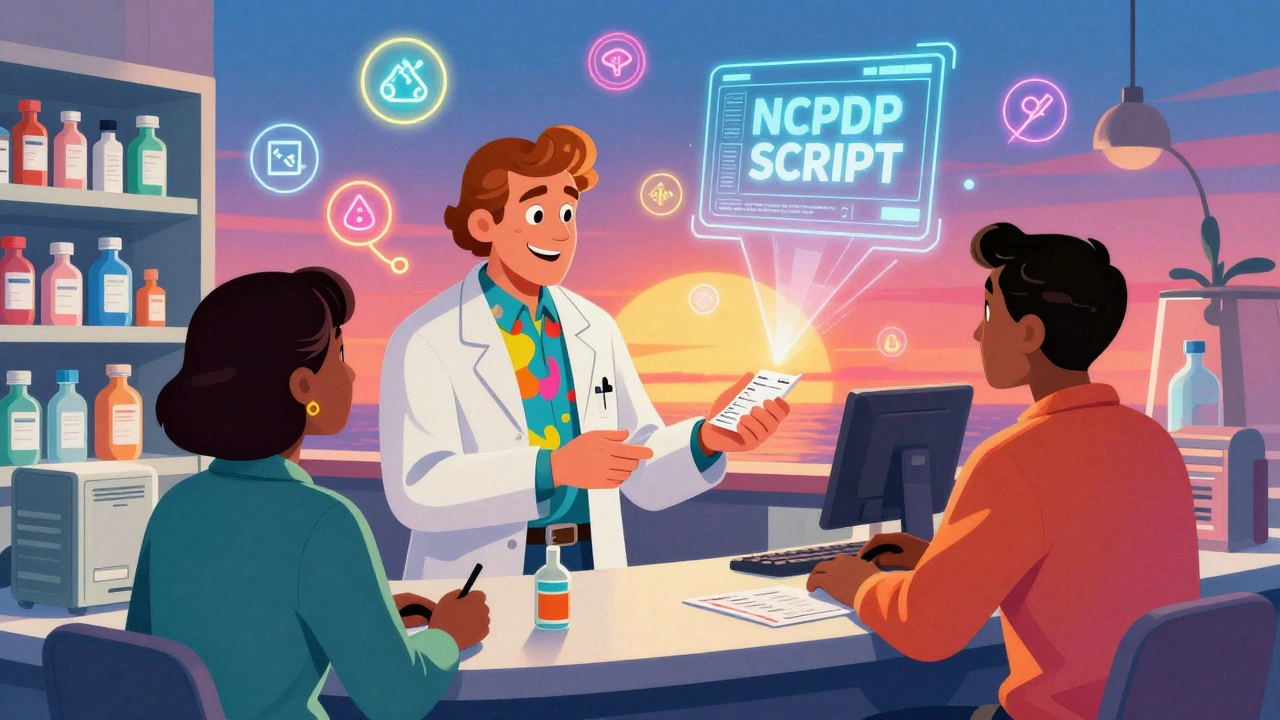
Imagine this: your doctor writes a new prescription for your blood pressure medication. You take it to your local pharmacy, but instead of waiting 15 minutes while they call your doctor for clarification, the pharmacist already sees your full medication list, recent lab results, and even a note from your cardiologist-all in real time. No phone calls. No fax machines. No errors. That’s not science fiction. It’s what EHR integration makes possible today.
Why EHR Integration Matters for Prescriptions
For decades, prescribing and dispensing medications happened in silos. Doctors wrote prescriptions on paper or sent them electronically to pharmacies, but that was the end of the line. Pharmacists had no access to the patient’s full medical history, no visibility into lab results, and no way to flag dangerous drug interactions unless they guessed based on what the patient told them. That’s a recipe for mistakes. EHR integration changes that. It connects the electronic health record used by doctors, nurses, and specialists directly with the pharmacy’s management system. This isn’t just about sending a prescription. It’s about sharing the full clinical picture: allergies, kidney function, other medications, recent hospital stays, even notes from social workers. When a pharmacist sees that a patient is on warfarin and just got a new prescription for ibuprofen, they can intervene before the patient even walks out the door. The numbers speak for themselves. Studies show integrated systems reduce medication errors by 48%, cut prescription processing time from 15 minutes to under 6 minutes, and lower hospital readmissions linked to medication issues by 31%. Patients on chronic medications are 23% more likely to stick to their regimen when pharmacists have real-time access to their health data.How the System Actually Works
It sounds complex, but the backbone is built on two key standards: NCPDP SCRIPT and HL7 FHIR. NCPDP SCRIPT (version 2017071) handles the actual transmission of the prescription-from doctor’s office to pharmacy. Think of it like a digital version of the old paper script, but faster and more secure. It’s used in over 76% of U.S. pharmacies today. But SCRIPT alone doesn’t tell the whole story. That’s where HL7 FHIR (Fast Healthcare Interoperability Resources) comes in. FHIR is the modern language that lets different systems talk to each other beyond just prescriptions. It lets the pharmacy system pull in lab results, allergy lists, previous prescriptions from other providers, and even care plans. The Pharmacist eCare Plan (PeCP), built on FHIR, lets pharmacists document their interventions-like adjusting dosages or catching a drug interaction-and send that information back to the doctor’s EHR. It’s a two-way street. For this to work securely, systems use OAuth 2.0 for login verification and TLS 1.2+ encryption to protect data while it’s moving. All access is logged, as required by the 21st Century Cures Act. If a pharmacist looks up a patient’s record, that action is recorded. No sneaky snooping.Who’s Using It-and Who’s Not
There’s a huge gap in adoption. If you’re getting your prescriptions filled at a pharmacy inside a hospital or a big health system like Kaiser or Mayo Clinic, chances are you’re already benefiting from full EHR integration. About 89% of these institutional pharmacies have it. But if you go to your neighborhood independent pharmacy? Only about 12% do. That’s not because they don’t want to. It’s because the cost is brutal. Setting up the system can cost between $15,000 and $50,000 upfront. Then there’s $5,000 to $15,000 a year just to keep it running. For a small pharmacy making $2 million a year, that’s a massive investment. Even if they can afford it, they face technical headaches. There are over 120 different EHR systems in use across U.S. clinics and 50+ pharmacy software platforms. Getting them to talk to each other isn’t plug-and-play. Data doesn’t always map correctly. One system calls a blood pressure reading “BP,” another calls it “Systolic/Diastolic.” Someone has to manually fix those mismatches-and that takes hours per integration.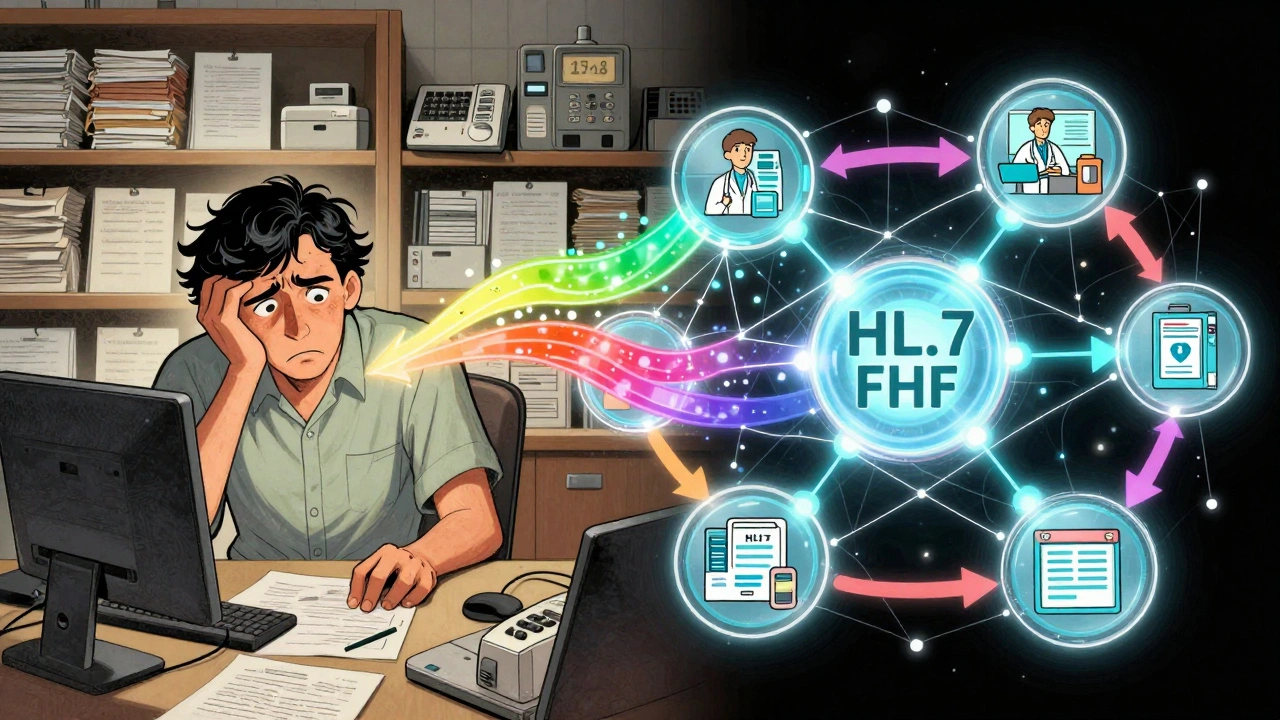
Real Benefits, Real Stories
In East Tennessee, a pilot project connected 12 independent pharmacies with three primary care clinics using Epic and PioneerRx software. Over 1,800 clinical interventions were documented in just a few months. Pharmacists caught 127 cases where patients were taking two drugs that shouldn’t be mixed. They adjusted doses for kidney patients. They flagged missed refills before patients ran out. Providers accepted 92% of the pharmacist’s recommendations. One pharmacist in Wisconsin told researchers she caught a dangerous interaction between a new antidepressant and a heart medication the patient hadn’t mentioned. The patient was admitted to the ER the week before-but the EHR integration showed the full history. She called the doctor. The prescription was changed. The patient didn’t return to the hospital. On the flip side, a small pharmacy owner in Ohio spent $18,500 and seven months getting integrated. He said the system works great now-but the initial setup nearly broke him. “I had to hire a consultant just to figure out why the lab values wouldn’t sync,” he said. “I didn’t even know what FHIR was before this.”Barriers That Still Exist
Money isn’t the only problem. Time is, too. The average pharmacist spends just 2.1 minutes with each patient. Even if they have access to a patient’s full EHR, they don’t have time to dig through it all during a busy shift. One survey found 68% of pharmacists feel overwhelmed by the amount of data they’re expected to review. Then there’s reimbursement. In 48 states, pharmacists can legally prescribe certain medications. But in only 19 states can they get paid for the time they spend reviewing records, adjusting therapy, or coordinating care through EHR integration. If you can’t get paid for the work, you can’t justify the cost. And there’s still no universal system. Surescripts handles 22 billion transactions a year and is the most common bridge between providers and pharmacies. But even they don’t connect with every EHR. Smaller vendors often lack the resources to build integrations. Patients end up with fragmented care-sometimes getting the same medication from two different pharmacies because neither system knew about the other.
The Future Is Here (But Not Everywhere)
The good news? Change is accelerating. The Centers for Medicare & Medicaid Services now require Medicare Part D plans to integrate medication therapy management by 2025. California passed a law in 2023 requiring EHR integration for pharmacists to bill for medication reviews by 2026. The Office of the National Coordinator for Health IT has set a goal: 50% of community pharmacies will have bidirectional EHR integration by 2027. New tools are emerging. AI is being tested to scan integrated data and flag high-risk patients before problems happen. CVS and Walgreens are piloting machine learning models that analyze medication histories and lab trends to predict which patients are likely to miss refills or have adverse reactions. Early results show a 37% improvement in identifying at-risk patients. The next version of the Pharmacist eCare Plan (PeCP 2.0), set for release in late 2024, will include smarter clinical decision support-like auto-suggesting alternatives when a drug is too expensive or when a patient has a known allergy.What This Means for You
If you’re a patient, this means fewer calls to your doctor, fewer trips to the ER, and medications that actually work because they’re tailored to your full health picture. Your pharmacist isn’t just handing out pills anymore-they’re part of your care team. If you’re a pharmacist, this is your chance to step out of the back room and into the spotlight. With the right tools and reimbursement, you can be the one catching errors, saving money, and improving outcomes. If you’re a provider, you’re getting better data, fewer phone calls, and a partner who’s just as invested in your patient’s success. The technology exists. The evidence is clear. The question isn’t whether EHR integration works-it’s whether we’ll make it accessible to every pharmacy, everywhere. Because right now, your health shouldn’t depend on which pharmacy you happen to walk into.What is EHR integration in pharmacy?
EHR integration in pharmacy connects a patient’s electronic health record-used by doctors and clinics-with the pharmacy’s management system. This allows pharmacists to see a patient’s full medication history, allergies, lab results, and other clinical notes in real time. It also lets pharmacists send back recommendations, like dosage changes or drug interaction alerts, directly to the provider’s system. It’s a two-way exchange that improves safety and coordination.
How does electronic prescribing work with EHR integration?
Electronic prescribing uses the NCPDP SCRIPT standard to send prescriptions directly from a provider’s EHR to a pharmacy’s system. With full EHR integration, that prescription comes with extra context: recent lab values, other medications the patient is taking, and even notes from specialists. The pharmacy system can then check for interactions, refill eligibility, and insurance coverage before the patient even arrives. The system can also send alerts back to the provider if something looks wrong.
Why don’t all pharmacies have EHR integration?
Cost is the biggest barrier. Independent pharmacies face $15,000-$50,000 to set up integration and $5,000-$15,000 per year to maintain it. Many also struggle with technical compatibility-there are over 120 different EHR systems and 50 pharmacy software platforms, and they don’t always talk to each other. Plus, only 19 states currently reimburse pharmacists for the time spent using EHR data, making it hard to justify the investment.
What standards are used for pharmacy-EHR communication?
The two main standards are NCPDP SCRIPT (version 2017071) for sending prescriptions, and HL7 FHIR Release 4 (R4) for sharing broader clinical data like lab results, allergies, and care plans. The Pharmacist eCare Plan (PeCP), built on FHIR, lets pharmacists document their interventions and send them back to the provider’s system. These standards ensure secure, structured data exchange between different systems.
Can pharmacists prescribe medications through EHR integration?
Yes, in 48 U.S. states, pharmacists have prescriptive authority for certain medications, like nicotine replacement therapy or emergency contraceptives. EHR integration makes this safer and more effective by giving pharmacists full access to the patient’s history. They can see what drugs the patient is already taking, check for interactions, and document their prescribing decisions directly in the EHR. Some states are now starting to pay pharmacists for these services, but reimbursement remains limited.
What’s the biggest benefit of EHR integration for patients?
The biggest benefit is safety. Patients are 48% less likely to experience a medication error when their pharmacy has access to their full EHR. They’re also 23% more likely to take their medications as prescribed because pharmacists can catch missed refills and follow up. In one study, hospital readmissions due to medication problems dropped by 31% in integrated systems. It means fewer ER visits, fewer side effects, and better outcomes.
Is EHR integration secure and private?
Yes. All data exchanged must comply with HIPAA and the 21st Century Cures Act. Systems use AES-256 encryption for data at rest and TLS 1.2 or higher for data in transit. Every access to a patient’s record is logged and auditable. Only authorized providers and pharmacists with a legitimate need to know can view the information. Patient consent is required for data sharing in most cases.
Constantine Vigderman
December 11, 2025 AT 21:07Cole Newman
December 12, 2025 AT 12:00Tyrone Marshall
December 13, 2025 AT 22:17Emily Haworth
December 14, 2025 AT 23:21Tom Zerkoff
December 15, 2025 AT 16:28Yatendra S
December 16, 2025 AT 12:22Himmat Singh
December 17, 2025 AT 13:44