
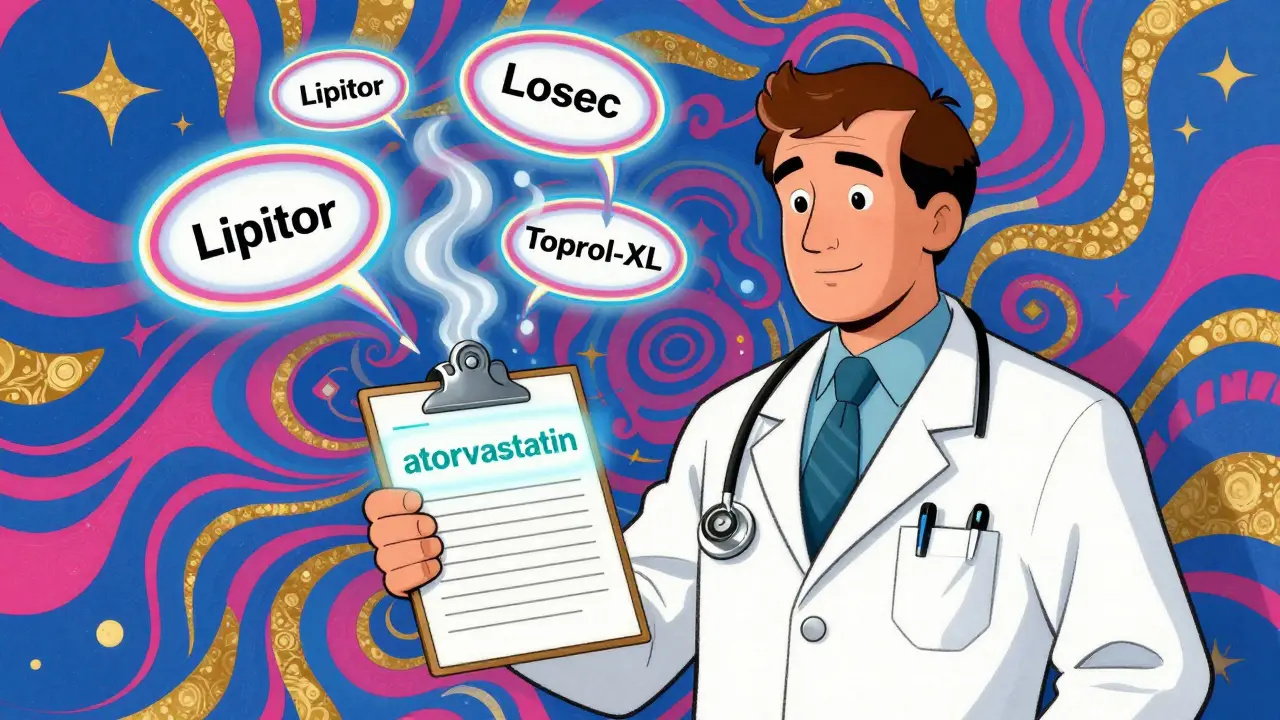
When a doctor writes a prescription, the choice between a brand-name drug and its generic version isn’t just about cost-it’s about safety, consistency, and patient outcomes. For over 70 years, global health systems have pushed for generic prescribing as the standard, and today, the evidence is clear: for most patients, it’s the smarter, safer, and more affordable option. But not all drugs are created equal. Some require brand-name continuity. Knowing when to switch-and when not to-is what separates good prescribing from great prescribing.
What Generic Prescribing Actually Means
Generic prescribing means writing prescriptions using the International Non-proprietary Name (INN) of a drug-like atorvastatin instead of Lipitor, or omeprazole instead of Losec. This isn’t a new idea. The World Health Organization started the INN program in 1950 to standardize drug names across borders. Since then, nearly every country has adopted it. In England, the NHS began pushing for it in the 1990s. By 2023, 89.7% of all prescriptions in England were written generically, up from 86.2% just seven years earlier.
The reason? Cost. Generic drugs cost, on average, 80-85% less than their brand-name equivalents. A month’s supply of generic atorvastatin costs £2.50. The brand version? £30. Omeprazole? £1.80 versus £15. That’s not a small difference-it’s life-changing for patients on fixed incomes, and it frees up billions for the health system. The NHS estimates generic prescribing saves £1.3 billion every year. In the U.S., generic drugs saved $313 billion in 2019 alone.
But here’s the catch: generics aren’t cheaper because they’re weaker. They’re cheaper because manufacturers don’t pay for advertising, clinical trials, or patent protection. Every generic drug must meet the same strict standards as the brand. The FDA requires generics to have the same active ingredient, strength, dosage form, and route of administration. They must also prove they’re bioequivalent-meaning they deliver the same amount of drug into the bloodstream within 80-125% of the brand’s rate. The European Medicines Agency and the UK’s MHRA enforce the same rules.
When Generic Prescribing Is the Clear Choice
For the vast majority of medications, switching to generic doesn’t just save money-it improves outcomes. A 2017 JAMA study found that patients on generic drugs for chronic conditions like hypertension or diabetes had 15% fewer hospitalizations. Why? Lower out-of-pocket costs mean people actually take their meds. The American College of Physicians found generic prescribing improves adherence by 8-12%. That’s not a minor uptick. That’s fewer heart attacks, fewer strokes, fewer ER visits.
Another underrated benefit? Fewer medication errors. Brand names change by country and even by pharmacy. One drug might be sold under 10 different brand names in different markets. But the generic name? Always the same. The Institute for Safe Medication Practices found that using generic names cuts prescribing errors by half. Imagine a nurse checking a chart and seeing metoprolol instead of Lopressor, Toprol-XL, and Metoprolol Succinate ER all mixed in. That’s clarity.
And it’s not just about pills. The NHS and FDA both recommend defaulting to generic for antibiotics, statins, antidepressants, antihypertensives, and diabetes drugs. For these, the evidence is overwhelming: generics work just as well. In fact, a 2022 NHS survey of 12,500 GPs found that 78% strongly agreed that generic prescribing reduces costs without compromising care.
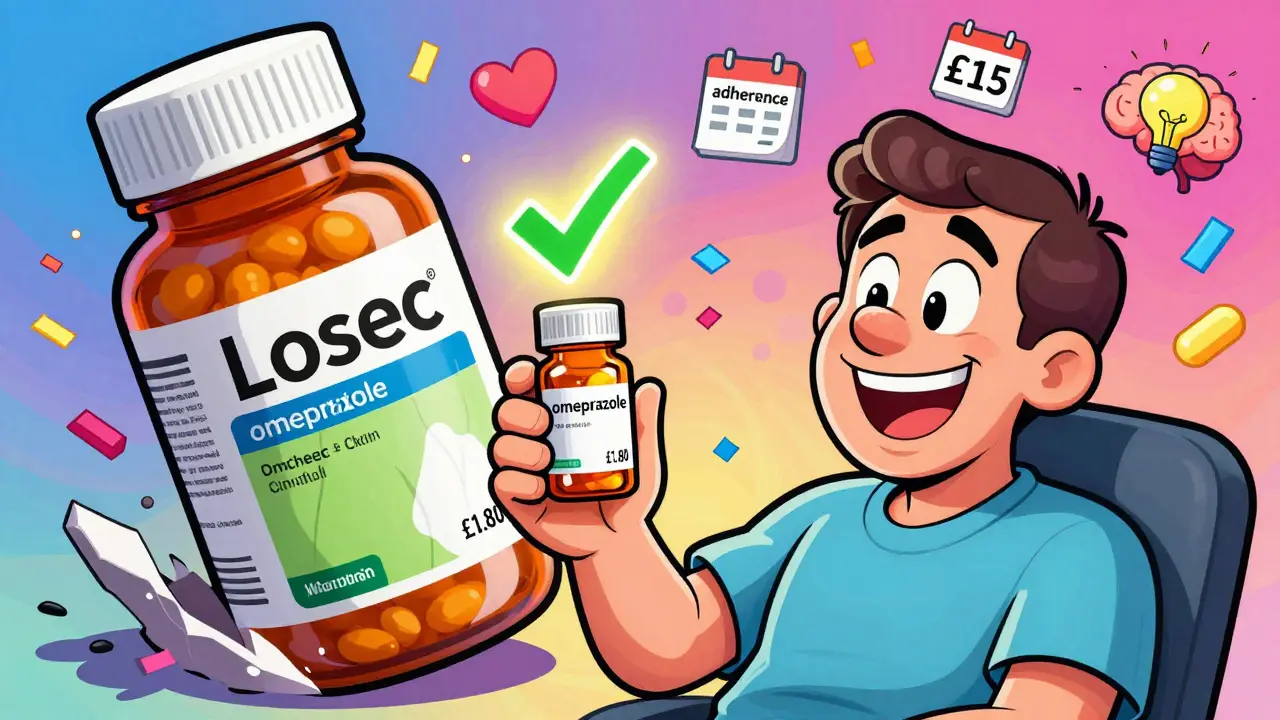
The Exceptions: When Brand Matters
Not every drug is a candidate for switching. Some medications have what’s called a narrow therapeutic index-meaning the difference between an effective dose and a toxic one is tiny. For these, even small variations in how the drug is absorbed can be dangerous.
The British National Formulary (BNF) identifies three categories where brand-name prescribing is recommended:
- Category 1: Narrow therapeutic index drugs-like warfarin, phenytoin, carbamazepine, digoxin, and levothyroxine. A 2018 meta-analysis in Epilepsia found that switching antiepileptic generics led to a 1.5-2.3% increase in seizure recurrence. For warfarin, even small changes in bioavailability can cause dangerous INR fluctuations. The MHRA explicitly advises against automatic substitution here.
- Category 2: Modified-release formulations-like theophylline or certain extended-release versions of diltiazem. These rely on complex coatings or matrices to release the drug slowly. Generic versions may look identical but behave differently. Pharmacists report that 41% of community pharmacies face issues with substitution for these, because the release profile isn’t always identical.
- Category 3: Biologics and biosimilars-drugs like adalimumab, etanercept, or insulin glargine. These are made from living cells, not chemicals. Even tiny differences in manufacturing can trigger immune responses. The MHRA and FDA both require biologics to be prescribed by brand name to prevent automatic switching. The Biosimilars Council notes that only 27% of eligible biologic prescriptions are filled with biosimilars-partly because of this rule.
That’s about 2% of all prescriptions. But for those patients, getting the same brand every time isn’t optional-it’s essential.
How to Implement Generic Prescribing Right
Switching to generic prescribing isn’t just about changing your writing habit. It’s about systems, education, and communication.
The NHS England Generic Prescribing Toolkit outlines a simple four-step process:
- Audit your prescribing-Use tools like the Prescribing Analytics Dashboard to see what percentage of your scripts are generic. You might be surprised.
- Learn the exceptions-Memorize the 50+ drugs that need brand names. Keep the BNF handy. Don’t rely on memory alone.
- Set defaults in your e-prescribing system-Most systems now auto-fill the generic name. Make sure yours does.
- Monitor results-Track adherence, hospitalizations, and patient feedback. If your rates are below 90%, dig into why.
For new prescribers, it takes 2-3 months to get comfortable. The biggest mistake? Forgetting the exceptions. A doctor might switch a patient from branded carbamazepine to generic without realizing the risk. That’s how complications start.
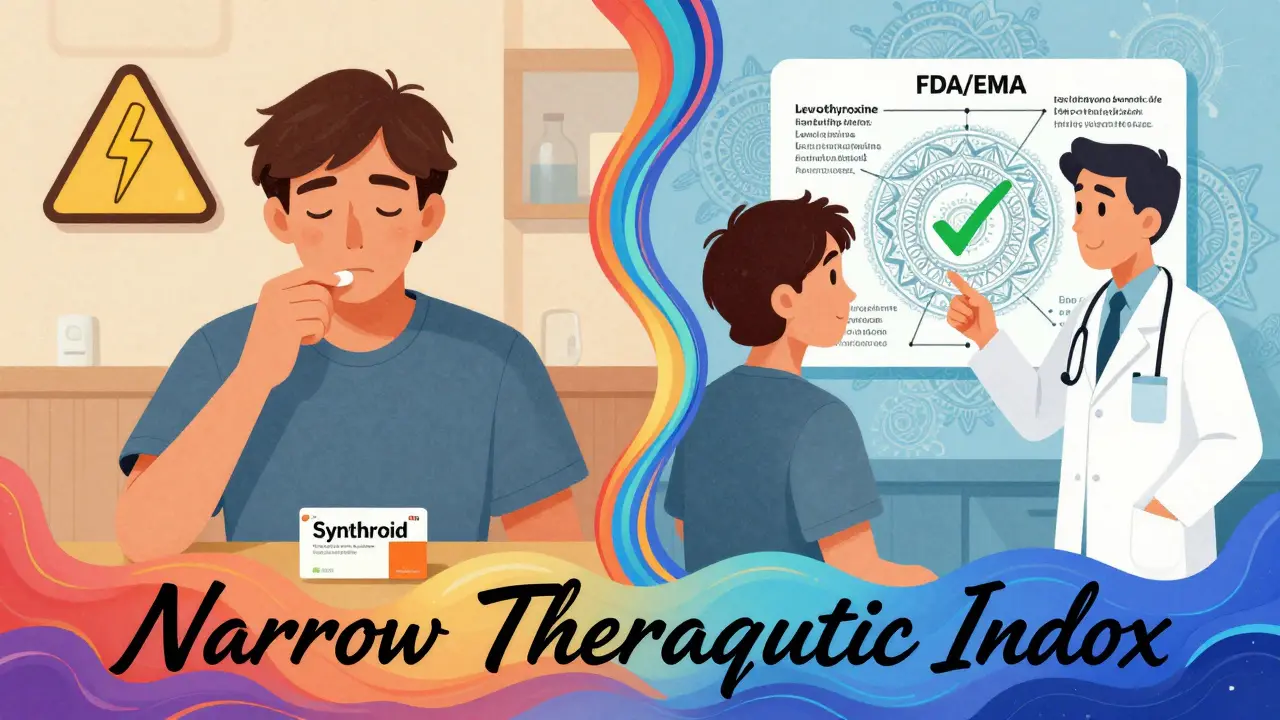
Talking to Patients: The Nocebo Effect
Here’s the hardest part: patients are scared. They’ve been told for years that brand-name drugs are better. Some believe generics are “cheap” or “inferior.” A 2021 study in Patient Education and Counseling found that 30% of patients who said their generic didn’t work were actually experiencing the nocebo effect-negative expectations leading to real symptoms.
But there’s a fix. When doctors explain the science, acceptance jumps from 67% to 89%. Use simple language:
“This generic version has the exact same active ingredient as the brand you’ve been taking. It’s been tested to work the same way. The only difference? It costs about £12 less per month-and there’s no drop in effectiveness.”
Patients on sertraline or levothyroxine are especially skeptical. One Reddit user, DrJones_MD, shared: “95% of my patients do fine with generics. The 5% who have issues? Usually thyroid or epilepsy meds. We monitor them closely.”
Don’t assume resistance. Ask. Listen. Educate. That’s how you turn skeptics into believers.
The Bigger Picture: Cost, Access, and the Future
Generic prescribing isn’t just a cost-saving tactic. It’s a public health tool. In the U.S., 84% of prescriptions are for generics-but they account for only 15% of total drug spending. In England, 89.7% of prescription items are generic, but they make up just 26% of drug costs. That’s the power of scale.
Looking ahead, the landscape is changing. The FDA’s GDUFA III rules, launched in 2023, now require manufacturers to report adverse events tied to formulation differences. The MHRA updated its guidance in 2023 to include complex generics like glatiramer acetate, which require brand-name prescribing due to manufacturing sensitivity.
By 2025, 75% of small-molecule drugs will have generics. But biologics? Only 40% will have biosimilar options. That means the need for clear, evidence-based prescribing rules will only grow.
The future isn’t about eliminating brand names. It’s about intelligent substitution-using real-world data to know when to switch and when to stay. But for 98% of prescriptions? Start with the generic. It’s safe. It’s effective. And it’s the right thing to do.
Are generic drugs as effective as brand-name drugs?
Yes, for the vast majority of medications. Generic drugs must prove bioequivalence to the brand-meaning they deliver the same amount of active ingredient into the bloodstream within a tightly controlled range (80-125%). Regulatory agencies like the FDA, EMA, and MHRA require this before approval. Studies show no meaningful difference in effectiveness for drugs like statins, antidepressants, or blood pressure medications. The exception is drugs with narrow therapeutic indices, like warfarin or levothyroxine, where even small changes can matter.
Why do some doctors still prescribe brand-name drugs?
There are two main reasons. First, for about 2% of drugs-like antiepileptics, modified-release formulations, and biologics-brand continuity is clinically necessary to avoid risks like seizure recurrence or immune reactions. Second, some doctors prescribe brands out of habit, patient pressure, or lack of awareness about the guidelines. But evidence shows that when clinicians are trained and systems are set to default to generics, prescribing rates climb without compromising safety.
Can I switch a patient from a brand-name drug to a generic?
For most drugs, yes-and you should. But check the BNF or your local guidelines first. Avoid switching for drugs with narrow therapeutic indices (e.g., carbamazepine, digoxin, warfarin) or complex formulations (e.g., extended-release theophylline). For biologics, brand-name prescribing is required to prevent substitution. Always monitor patients closely after switching, especially if they’re on long-term therapy for epilepsy, thyroid disease, or heart failure.
Do generic drugs have different side effects?
The active ingredient is identical, so the core side effect profile is the same. However, generics may contain different inactive ingredients-like fillers or coatings-which can rarely cause reactions in sensitive patients. For example, someone allergic to a dye in one brand might tolerate a different generic. This is uncommon, but if a patient reports new side effects after switching, investigate the formulation. It’s not the drug-it’s the excipient.
What should I do if a patient refuses a generic?
Don’t force it. Instead, explain why the generic is safe: same active ingredient, same effectiveness, same safety profile, just cheaper. Use a simple script: “This medicine has the same active ingredient as your old one. It’s been tested to work the same way. The only difference is the price-it saves you £12 a month.” If they still refuse, document their preference. For non-critical drugs, it’s okay to honor it. For high-risk drugs, consider a trial period with close monitoring.
Christina VanOsdol
February 22, 2026 AT 19:46Okay but like… have you SEEN the fillers in some generics?? 😩 I had a patient go into anaphylaxis from a generic sertraline because of a dye they didn’t warn us about. Same active ingredient? Sure. Same pill? Absolutely not. 🤯
Alfred Noble
February 23, 2026 AT 01:28generics are great for most stuff but i’ve had way too many patients come in with weird side effects after switching. not because the drug doesn’t work, but because their body just… reacts differently. like, maybe it’s the coating? who knows. but i always check first. 🤷♂️
Matthew Brooker
February 23, 2026 AT 14:25Let’s not forget the real win here-people actually take their meds when they’re affordable. I’ve seen patients skip doses because brand-name statins cost $80. Switch to generic? They refill on time. That’s not just savings. That’s saving lives. 💪
Emily Wolff
February 24, 2026 AT 12:00Anyone who thinks generics are equivalent hasn’t read the bioequivalence studies. 80-125% is a huge range. That’s not consistency-that’s gambling. 🧠
Jacob Carthy
February 26, 2026 AT 11:16USA invented modern medicine. Why are we letting some cheap foreign factory make our pills? The FDA says it’s fine but I’ve seen the labs. It’s not the same. We need to protect our healthcare. 🇺🇸
William James
February 27, 2026 AT 09:44It’s funny how we fear the unknown. We trust a brand name because it’s familiar, not because it’s better. But if you really think about it-what’s the difference between a pill made in Ohio and one made in India if both meet the same standards? We’re scared of systems, not science. 🌍
David McKie
February 27, 2026 AT 23:38Oh great, another one of these ‘trust the system’ rants. Let me tell you about my cousin-she switched to generic levothyroxine and her TSH went from 2.1 to 8.7 in three weeks. She had to go back on brand. And now she’s on disability. This isn’t about cost. It’s about lives. 💔
Southern Indiana Paleontology Institute
February 28, 2026 AT 14:32generic drugs are a scam by big pharma to make more money. they make the brand name so expensive so people get hooked then switch to cheap ones. i know this because i work at a pharmacy and i see it every day. the government is lying to us. 🤬
Anil bhardwaj
March 1, 2026 AT 20:41in india we use generics all the time and it works fine. my uncle takes generic atorvastatin for 10 years. no problem. maybe the system is different here but the medicine is the same. 🇮🇳
lela izzani
March 2, 2026 AT 08:09My favorite part? When patients come back and say, ‘I didn’t even notice the switch.’ That’s the goal. Not branding. Not marketing. Just health. And when they do have issues? We pause, listen, and adjust. No drama. Just care. ❤️
Nerina Devi
March 3, 2026 AT 10:50As someone from India where generics are the norm, I’ve seen how this saves families from financial ruin. One woman told me, ‘I used to choose between my daughter’s insulin and our rent.’ Now she takes it daily. That’s not a statistic. That’s dignity. 🙏
Dinesh Dawn
March 3, 2026 AT 23:15we don’t have brand names in our village pharmacy. everyone takes generics. my grandma takes the same one for 12 years. she says it’s better now because it’s cheaper and she can afford it. simple. no drama. just medicine. 🌿
Vanessa Drummond
March 4, 2026 AT 02:16Ugh. Another post pretending generics are perfect. I’ve seen patients die because they got the wrong one. The system is broken and you’re all just ignoring it. Someone needs to wake up. This isn’t healthcare-it’s a numbers game. 💀