
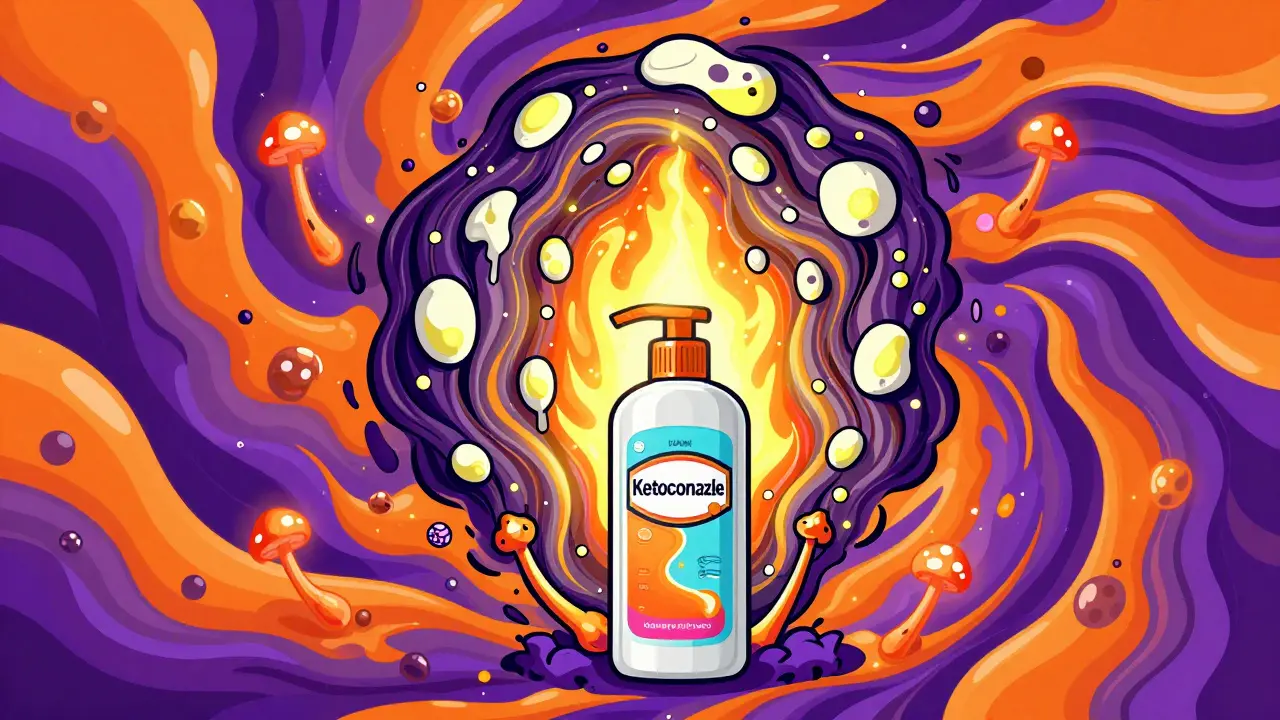
Flakes on your shoulders. An itchy scalp that won’t quit. Even after washing your hair, the white or yellowish scales come right back. If this sounds familiar, you’re not alone. About 50% of adults will deal with seborrheic dermatitis at some point in their lives. It’s not dirty hair. It’s not a sign of poor hygiene. It’s a chronic skin condition tied to yeast, genetics, and your skin’s natural oils.
What’s Really Going On Under Your Scalp?
Seborrheic dermatitis isn’t just dandruff - though dandruff is its most common form on the scalp. The real culprit? A yeast called Malassezia. It’s always on your skin, feeding off the oil your sebaceous glands produce. When it overgrows, it breaks down those oils into irritating fatty acids. That triggers inflammation, speeds up skin cell turnover, and leaves you with flaky, greasy patches. This isn’t an allergy. It’s not contagious. And no, you can’t wash it away. The yeast stays. The inflammation cycles. That’s why it comes and goes - often worse in winter when the air is dry, or during stressful times. People with Parkinson’s disease are 4 to 5 times more likely to get it. So are those who use heavy hair products, drink alcohol heavily, or have oily skin.Where Else Does It Show Up?
Your scalp isn’t the only place. Look at your eyebrows, the sides of your nose, behind your ears, or even your chest. These are all oily zones where sebaceous glands are dense. In babies, it’s called cradle cap - those thick, yellow crusts on the head. It usually clears up by 6 to 12 months. But in teens and adults, it’s a long-term game. Symptoms vary. Some people have mild flaking. Others get red, sore patches with intense itching. In beard areas, men might mistake it for acne or folliculitis. But if the flakes are greasy, not dry, and the redness is patchy, it’s likely seborrheic dermatitis.The Medicated Shampoo Game
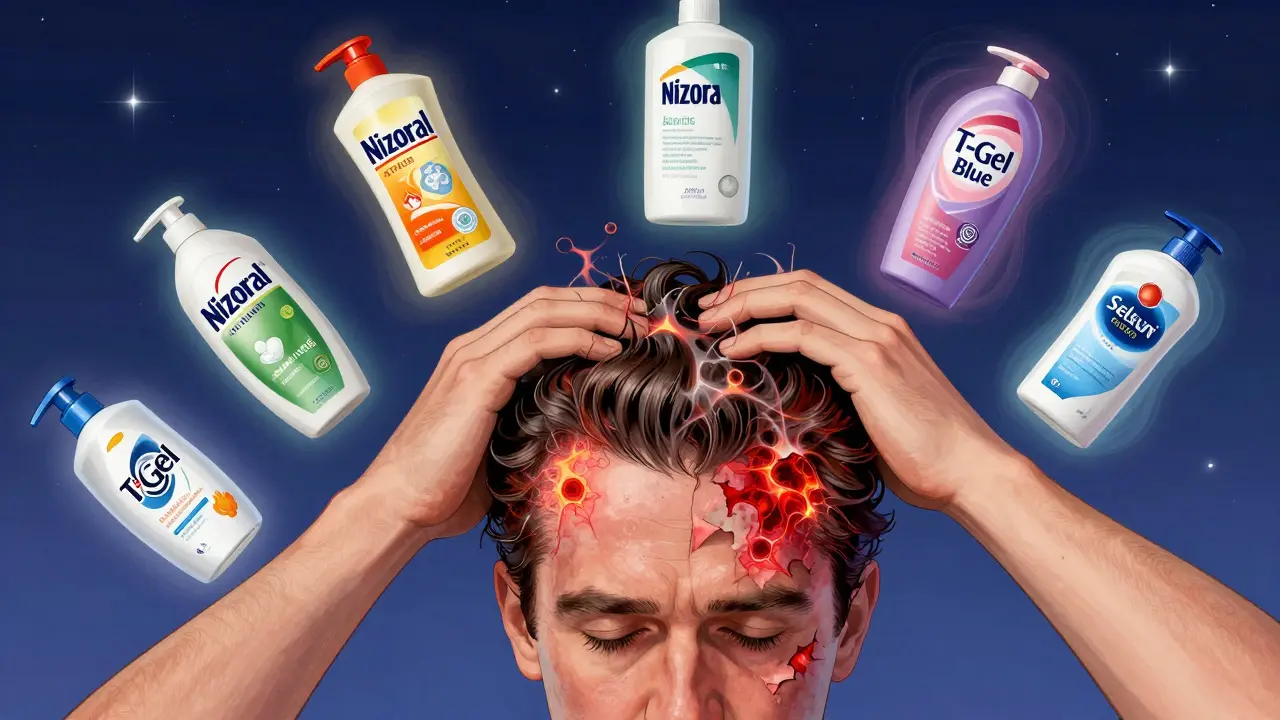
You need shampoos that attack the problem on multiple fronts: kill yeast, calm inflammation, and shed the dead skin. Here’s what actually works, backed by dermatology guidelines:- Ketoconazole (2%) - Top choice for moderate to severe cases. Kills Malassezia yeast directly. Found in Nizoral and generic versions.
- Ciclopirox (1%) - Antifungal and anti-inflammatory. Often prescribed when ketoconazole doesn’t cut it.
- Selenium sulfide (2.5%) - Slows skin cell growth and reduces yeast. Selsun Blue is the most common brand.
- Zinc pyrithione (1-2%) - Gentle, great for mild cases or maintenance. Head & Shoulders has it, but not all versions do - check the label.
- Coal tar (0.5-5%) - Slows down skin turnover. Tar-based shampoos like Neutrogena T/Gel are effective but smell strong and can stain light hair.
- Salicylic acid (1.8-3%) - Breaks down flakes. Works well in combination with other ingredients. Found in Neutrogena T/Sal.
How to Use Them Right
Most people make the same mistake: they lather, rinse, repeat - like regular shampoo. That’s not enough. To get results:- Wet your scalp thoroughly.
- Apply the shampoo directly to the affected areas - not just your hair.
- Leave it on for 5 to 10 minutes. Let it sit. Don’t rush.
- Rinse completely.
What If Your Scalp Feels Worse at First?
Some people report itching or redness getting worse in the first week. That’s not a sign it’s not working - it’s your skin reacting to the treatment. The yeast is dying off, and your immune system is responding. Stick with it. If it doesn’t improve after two weeks, try a different formula. Many users rotate shampoos. Why? Because yeast can get used to one ingredient over time. One person might start with zinc pyrithione, then switch to ketoconazole after a month, then alternate with coal tar every third wash. That’s a common strategy among dermatologists and patients who’ve learned the hard way.Don’t Forget the Face
If you have flaking on your eyebrows or nose, shampoo alone won’t fix it. Use a topical antifungal cream - ketoconazole cream or ciclopirox cream - applied once a day for 2 weeks. For short-term redness and itching, over-the-counter hydrocortisone cream (0.5% or 1%) can help. But don’t use it daily for more than 2 weeks. Long-term steroid use on the face can cause thinning skin. Men with beard flare-ups: shaving can clear up symptoms in 37% of cases. Combine it with a medicated cleanser, and results improve.What Doesn’t Work
- Regular dandruff shampoos with just fragrance or moisturizers. They mask the problem, don’t treat it. - Apple cider vinegar rinses. No clinical evidence they reduce yeast or inflammation. - Essential oils like tea tree oil. Some studies show mild benefit, but not consistent or strong enough for reliable control. - Stressing about it. Stress triggers flare-ups. The more anxious you are about the flakes, the worse they get.
Managing the Side Effects
Medicated shampoos can dry out your hair. That’s normal. You’re stripping excess oil - which is the goal. To counter it:- Use a light, fragrance-free conditioner only on the ends of your hair - not the scalp.
- Avoid heat styling tools for a few days after using coal tar or selenium sulfide.
- If your hair turns orange or dull, switch from selenium sulfide to ketoconazole.
- Try a moisturizing shampoo on non-treatment days.
When to See a Dermatologist
You don’t need to see one right away. Most cases respond to OTC shampoos. But if:- Nothing works after 6-8 weeks of consistent use,
- Your skin cracks, bleeds, or becomes very painful,
- You have flaking on your eyelids or ears that won’t clear,
- You’re losing hair in patches,
Long-Term Reality
There’s no cure. But there’s control. Think of it like managing high blood pressure - you don’t cure it, you keep it in check. Once you find your combo - maybe ketoconazole twice a week, coal tar once, and hydrocortisone for flare-ups - you’ll have a system that works. The key is consistency. Skip your shampoo for a week, and the flakes return. That’s not failure - that’s biology. You’re managing a living organism on your skin, not just cleaning dirt.What’s Next?
Researchers are looking into how the skin microbiome affects flare-ups. Future treatments might target specific yeast strains or use probiotics to restore balance. But for now, the tools we have work - if you use them right. Start with a ketoconazole shampoo. Use it correctly. Be patient. Rotate if needed. And remember - you’re not broken. You just need a better system.Is seborrheic dermatitis the same as dandruff?
Dandruff is a mild form of seborrheic dermatitis that only affects the scalp. Both are caused by Malassezia yeast, but seborrheic dermatitis can also appear on the face, ears, and chest. Dandruff usually just means flakes without redness or inflammation - while seborrheic dermatitis often includes oily, red, itchy patches.
Can I use medicated shampoo every day?
Yes - but only until your symptoms improve. Daily use is recommended for the first 2 to 4 weeks to get control. After that, switch to once or twice a week to prevent flare-ups. Using it too often long-term can dry out your scalp and hair.
Why does my scalp get worse in winter?
Cold, dry air strips moisture from your skin and reduces sunlight exposure, which naturally helps control yeast. About 75% of people report worse symptoms in winter. Indoor heating also dries out the scalp, making flaking more noticeable.
Will shaving my head help?
Shaving your head won’t cure it, but it can make treatment easier. Without hair, you can apply shampoo directly to the scalp and leave it on longer. For men with beard flaking, shaving can clear symptoms in nearly 4 out of 10 cases.
Can stress cause seborrheic dermatitis?
Stress doesn’t cause it, but it’s one of the top triggers for flare-ups. Around 60% of people notice their symptoms worsen during stressful periods - like job changes, grief, or illness. Managing stress won’t eliminate the condition, but it can reduce how often it flares up.
Are natural remedies like aloe vera or coconut oil helpful?
Aloe vera might soothe itching, but it doesn’t kill yeast. Coconut oil can actually make it worse because Malassezia feeds on oils. While they feel good, they’re not treatments. Stick to shampoos with proven antifungal ingredients like ketoconazole or selenium sulfide.
How long before I see results?
Most people notice improvement in 1 to 2 weeks. Full control usually takes 4 to 6 weeks of consistent use. If you don’t see any change after 8 weeks, try switching to a different shampoo or see a dermatologist.
Can kids use medicated shampoos?
For infants with cradle cap, gentle washing with baby shampoo and a soft brush usually helps. Medicated shampoos aren’t recommended for babies under 2 unless prescribed. For older children, zinc pyrithione or ketoconazole shampoos are safe when used once or twice a week under adult supervision.
Does diet affect seborrheic dermatitis?
There’s no strong evidence that specific foods trigger it. But some people notice flare-ups after heavy alcohol use or high-sugar diets, which may feed yeast. A balanced diet won’t cure it, but avoiding excess sugar and alcohol might help reduce flare frequency.
Can I stop using medicated shampoo once my scalp looks normal?
No. Stopping treatment is the #1 reason symptoms return. Malassezia yeast never fully leaves your skin. Once you stop, flakes usually come back in 2 to 4 weeks. Maintenance is key - use your shampoo once or twice a week, even when you feel fine.
Beth Beltway
January 31, 2026 AT 11:11Let me be clear - if you're still using Head & Shoulders because it 'smells nice,' you're not treating a medical condition, you're performing a ritual. Ketoconazole isn't optional. It's the baseline. If your flakes come back after a week off, that's not 'bad luck,' that's biology calling you out for being lazy. Stop making excuses and start treating it like the chronic condition it is.
Marc Bains
February 1, 2026 AT 08:17Hey, I get it - this stuff is frustrating. But I’ve seen people go from full-on scalp meltdown to just a few flakes with ketoconazole + rotation. It’s not magic, it’s consistency. And yeah, the smell of coal tar is like burning tires, but if it works, you learn to live with it. Don’t give up after two weeks - give it 6. You got this.
Claire Wiltshire
February 1, 2026 AT 13:14Thank you for such a well-researched and compassionate breakdown. Many people misunderstand seborrheic dermatitis as a hygiene issue, when in fact it's a complex interplay of microbiome, immune response, and environmental triggers. I especially appreciate the emphasis on maintenance therapy - this isn't a quick fix, but a lifelong management strategy, much like hypertension or diabetes. For those new to this, please remember: progress is not linear, and setbacks are part of the process.
Mike Rose
February 2, 2026 AT 04:20bro i tried nizoral and it made my hair look like i dipped it in motor oil. then i used tea tree oil and it felt better? idk man. maybe i just need to stop washing my hair so much?
Sidhanth SY
February 2, 2026 AT 10:35I’ve had this for years - been through every shampoo on the list. The real game-changer for me? Rotating every 3 weeks. Ketoconazole → selenium sulfide → zinc pyrithione. Also, I started using a humidifier in winter. No more crusty eyebrows. It’s not perfect, but it’s manageable. And yeah, stress makes it worse - I learned that the hard way during my divorce.
Adarsh Uttral
February 3, 2026 AT 01:57coal tar shampoos smell like a gas station after a fire but they work. i use it once a week now and my scalp is chill. no more white flakes on my black tshirts. also, shaving my beard helped a ton. who knew?
April Allen
February 4, 2026 AT 21:22From a neuroimmunological standpoint, the Malassezia-skin lipid interface is a fascinating dysbiosis model. The yeast’s lipase activity generates oleic acid, which disrupts the stratum corneum barrier integrity, triggering a TLR2-mediated inflammatory cascade. This explains the cyclical nature and treatment resistance - it’s not merely antifungal suppression, but immune modulation. Topical calcineurin inhibitors like pimecrolimus may offer a more targeted approach for facial involvement, particularly in steroid-sensitive zones. Long-term microbiome restoration strategies are the future, but for now, structured rotation protocols remain the clinical gold standard.
Sheila Garfield
February 4, 2026 AT 21:27I just wanted to say - you’re not alone. I used to hide my scalp under hats all winter. Then I tried the ketoconazole + conditioning ends trick, and honestly? It’s been life-changing. No more shame. No more panic when someone says, 'You have dandruff?' You’re not broken. You’re just dealing with a stubborn little yeast that thinks it owns your scalp. You’ve got this.
Shawn Peck
February 5, 2026 AT 14:50THIS IS THE MOST IMPORTANT THING YOU’LL READ THIS YEAR. I WAS A MESS. NOW I’M A BEAST. KETOCONAZOLE. 10 MINUTES. NO EXCUSES. YOU’RE WELCOME.