
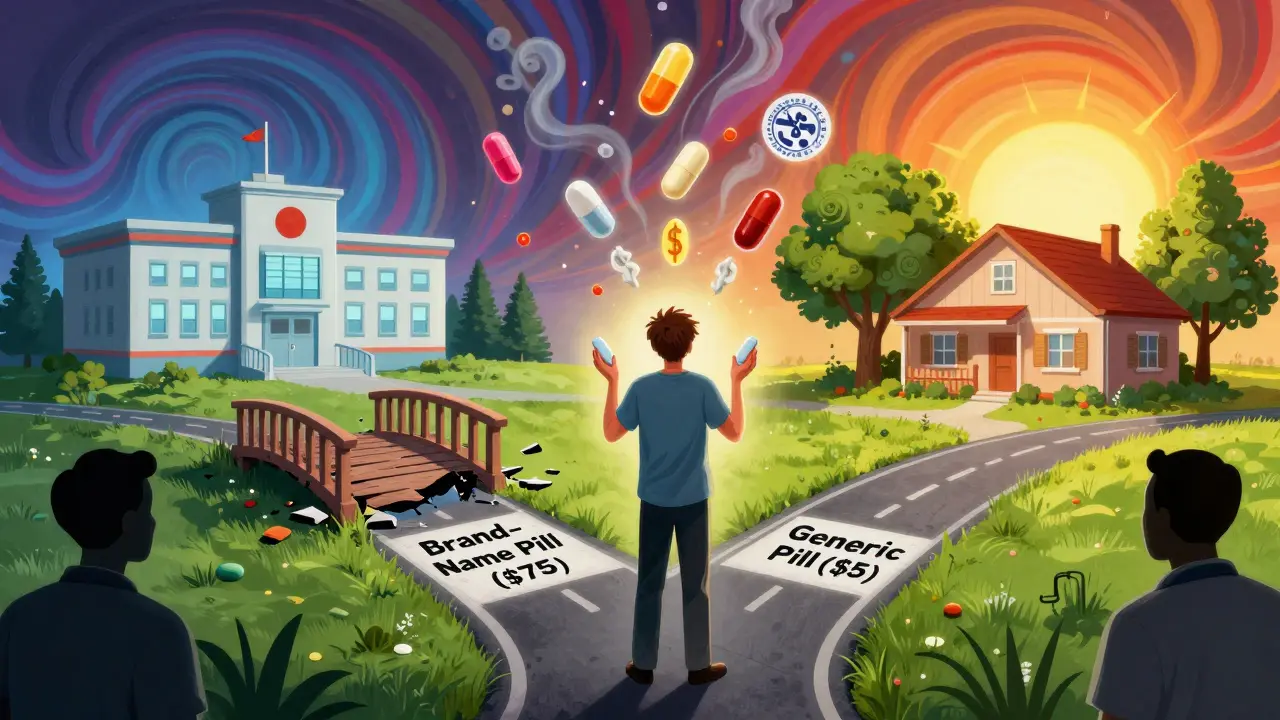
When a patient skips a dose because the pill costs too much, it’s not just a personal choice-it’s a system failure. Medication adherence isn’t about discipline; it’s about affordability. And when generic drugs cost 80-85% less than their brand-name equivalents, adherence goes up. Not a little. Not a little bit. Generic drug prices directly save lives, reduce hospital visits, and lower the overall cost of care.
Why People Skip Their Medication
Most people don’t forget to take their pills because they’re disorganized. They skip them because they can’t afford them. A 2023 survey of over 2,100 adults found that nearly one in three-32.7%-had skipped a dose, delayed filling a prescription, or taken less than prescribed just to save money. That’s not laziness. That’s economics. The numbers don’t lie. Every $10 increase in out-of-pocket cost for a medication leads to a 2-4% drop in adherence. For drugs like GLP-1 agonists used in diabetes, each $10 hike cuts adherence by 3.7% and bumps up emergency room visits by 5.2%. These aren’t abstract stats. They’re real people choosing between insulin and groceries.Generics Work Just as Well-And Cost Way Less
Generic drugs aren’t cheap because they’re weak. They’re cheap because they don’t need to spend millions on marketing or patent protection. The FDA requires them to have the same active ingredient, strength, dosage form, and route of administration as the brand-name version. They must also prove they’re absorbed in the body at the same rate and to the same extent-within 80-125% of the original. That means a generic rosuvastatin (the cholesterol drug once sold as Crestor) does the exact same job as the brand name. But where the brand costs $75 per month with a copay, the generic might be $5. One Reddit user, u/HeartHealthJourney, shared: “After switching from brand-name Crestor to generic rosuvastatin, I went from missing 3-4 doses a week to perfect adherence for 11 months straight.” Studies back this up. When Medicare moved brand-name statins from second-tier to first-tier (lower cost) formularies, adherence jumped by 5.9%. For breast cancer patients on aromatase inhibitors, those on generics had 73.1% adherence versus 68.4% for those on brand names. And the gap? It was all about cost. Higher copays meant more people quit.The Cost of Not Taking Medication
Skipping pills doesn’t just hurt the patient. It hurts the whole system. Medication non-adherence causes up to half of all treatment failures. It leads to over 100,000 preventable deaths every year in the U.S. And it costs the healthcare system between $100 billion and $300 billion annually. Think about it: a patient with high blood pressure who stops taking their pill might end up in the hospital with a stroke. That hospital stay could cost $25,000. The monthly pill? $5. The math is obvious. Adherence saves money-even if it means spending more on drugs upfront. Research from Health Affairs showed that adherent patients had 15-20% fewer hospitalizations. That’s not a guess. That’s data from real claims records. When people take their meds, they go to the ER less. They get fewer lab tests. They avoid complications. The savings aren’t theoretical-they’re in the billing records.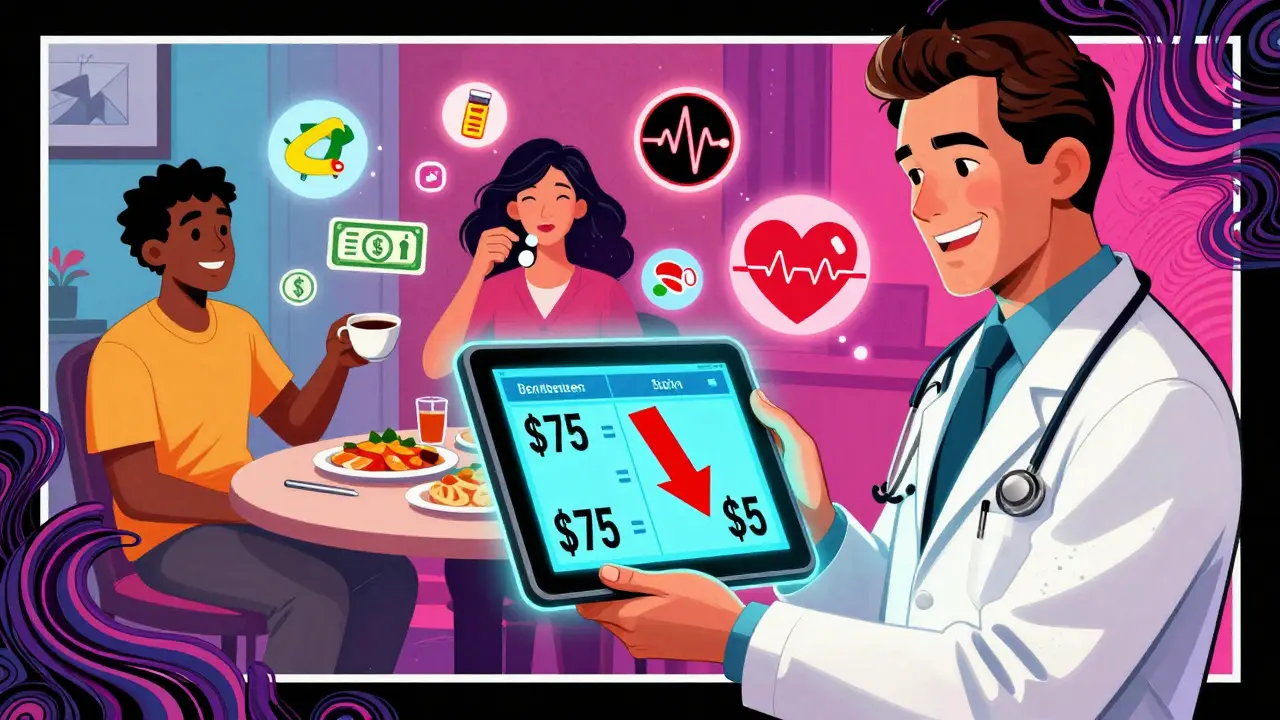
How Insurance Tiering Changes Behavior
Insurance plans don’t treat all drugs the same. They put them in tiers. Tier 1: generics, $5-$10 copay. Tier 2: preferred brands, $30-$50. Tier 3: non-preferred brands, $100+. And sometimes, there’s Tier 4: specialty drugs, $500+. That tier structure isn’t just administrative-it’s behavioral. Patients notice the difference. When a drug moves from Tier 3 to Tier 1, adherence spikes. That’s not because the pill changed. It’s because the price did. Medicare Part D, launched in 2006, was the first big system to use this model. And it worked. Now, thanks to the Inflation Reduction Act of 2022, insulin is capped at $35 a month. By 2025, the annual out-of-pocket cap for all Part D drugs will be $2,000. That’s going to help 1.4 million Medicare beneficiaries stay on their meds.Real-Time Tools Are Making a Difference
Doctors used to write prescriptions without knowing what the patient would pay. Now, real-time benefit tools (RTBTs) show the exact cost at the point of care. If a patient says, “I can’t afford this,” the doctor can instantly switch to a cheaper alternative-often a generic-and see the new copay right there. Pilot programs using these tools report 12-15% improvements in adherence. One program, Magellan’s inforMED, found a 2:1 return on investment-every dollar spent on the tool saved $2 in downstream care costs. It also cut care gaps by 40%. That means fewer missed doses, fewer complications, fewer hospital stays. Still, adoption is slow. Many clinics haven’t integrated these tools into their electronic health records. Some doctors don’t know how to use them. And patients? They’re often confused. “Is generic really the same?” they ask.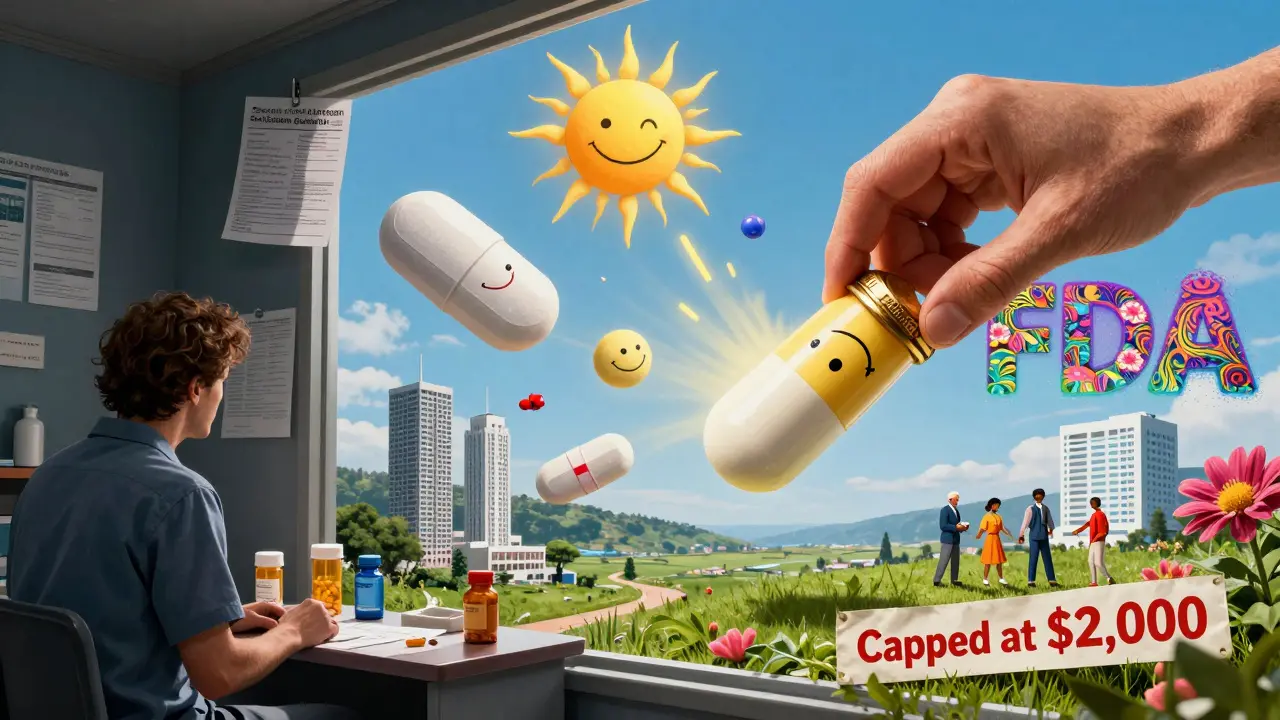
Breaking the Myth: Generics Are Not Inferior
The biggest barrier to switching isn’t price-it’s perception. Many people think “generic” means “weaker,” “older,” or “second-rate.” But that’s not true. The FDA’s “It’s Okay to Use Generics” campaign was created because of this very myth. A 2021 study in U.S. Pharmacist found that when generics and brand-name drugs were priced the same, adherence was still 15-20% higher for generics. Why? Because patients assumed the brand was better. Once the price gap closed, the psychological advantage disappeared-but the real advantage-the cost advantage-remained. The solution? Education. Doctors need to say, “This generic is exactly the same. It’s just cheaper.” Pharmacists need to confirm it. Insurance companies need to make it easy. And patients need to hear it again and again.What’s Next? Value-Based Insurance Design
The future isn’t just about lowering prices-it’s about aligning costs with outcomes. Value-based insurance design (VBID) means charging less for drugs that prevent big problems. For example, a diabetes medication that cuts heart attack risk by 30% should cost $0 out-of-pocket. A drug with minimal benefit? Pay more. Pilot programs using VBID saw 18.3% higher adherence for high-value medications in diabetes and heart disease. That’s not magic. It’s smart design. Why charge the same for a drug that barely helps as you do for one that saves lives? The FDA’s 2023 Generic Drug User Fee Amendments (GDUFA III) are investing $1.1 billion to speed up generic approvals. By 2027, over 1,500 new generics will hit the market. That means more choices. Lower prices. Better adherence.It’s Not Just About Pills-It’s About Trust
When a patient says, “I can’t afford this,” they’re not just talking about money. They’re talking about feeling unheard. When a doctor ignores cost, it feels like they don’t care. But when a doctor says, “Let’s find a version you can afford,” it changes everything. The data is clear: lower generic prices = higher adherence = fewer hospital visits = lower costs. The tools exist. The evidence is overwhelming. The only thing missing is consistent action. It’s time to stop treating medication as a luxury. It’s a necessity. And if we want people to stay healthy, we have to make sure they can actually get it.Do generic drugs work as well as brand-name drugs?
Yes. The FDA requires generic drugs to have the same active ingredient, strength, dosage form, and route of administration as the brand-name version. They must also prove they’re absorbed in the body at the same rate and to the same extent-within 80-125% of the brand-name drug. This is called bioequivalence. Thousands of studies confirm generics are just as safe and effective.
Why do some people still choose brand-name drugs over generics?
Some people believe generics are weaker or less reliable, even though that’s not true. Others stick with the brand because their doctor didn’t suggest a switch, or their pharmacy didn’t offer the generic. Sometimes, insurance doesn’t cover the generic unless you try the brand first. And in rare cases, patients report feeling different on a generic-though studies show this is often due to expectation, not actual difference.
How much money can I save by switching to a generic?
On average, generics cost 80-85% less than brand-name drugs. For example, a brand-name statin like Crestor might cost $75 a month with a copay, while generic rosuvastatin costs $5. That’s $840 saved per year-just from one pill. For chronic conditions like high blood pressure or diabetes, switching to generics can save hundreds or even thousands annually.
Can I ask my doctor to switch me to a generic?
Absolutely. You have the right to ask. Many doctors assume patients know generics are safe, but not everyone does. Say: “Is there a generic version of this? Would it be safe for me to switch?” Most will say yes-and may even use a real-time tool to show you the cost difference right then.
What if my insurance doesn’t cover the generic?
That’s rare, but it can happen if the generic isn’t on the formulary or if the brand is preferred for some reason. Ask your pharmacist to check if a different generic version is covered. You can also use tools like GoodRx to compare prices at nearby pharmacies-even if your insurance doesn’t cover it, the cash price might be lower. Some drugmakers also offer patient assistance programs.
How do real-time benefit tools help with adherence?
Real-time benefit tools show the exact out-of-pocket cost of a medication while the doctor is writing the prescription. Instead of guessing or finding out later at the pharmacy, patients and doctors can see if a cheaper generic is available. This leads to better decisions-patients are more likely to fill a prescription if they know the price upfront. Programs using these tools report 12-15% higher adherence rates.
Does lowering drug prices really reduce hospitalizations?
Yes. Studies show that when patients adhere to their medications, hospitalizations drop by 15-20%. For example, patients with high blood pressure who take their pills regularly are far less likely to have a stroke or heart attack. The cost of the pill is pennies compared to the cost of an ER visit or hospital stay. Lower prices mean more adherence, which means fewer hospitalizations and lower overall healthcare spending.
Solomon Ahonsi
February 1, 2026 AT 12:33Wow so now we’re pretending poor people are just lazy if they don’t take pills? Real compassionate. Meanwhile the pharma CEOs are sipping champagne on their yachts. This whole system is rigged and you know it.
George Firican
February 2, 2026 AT 02:57The real tragedy isn’t that people skip doses-it’s that we’ve normalized the idea that health is a commodity rather than a right. When the cost of survival is determined by a spreadsheet in a boardroom, we’ve abandoned more than just affordability-we’ve abandoned humanity. Generics aren’t just cheaper alternatives; they’re the last moral anchor in a system that’s been auctioned off to the highest bidder.
Matt W
February 3, 2026 AT 02:33I had a friend on insulin who chose between rent and refills for two years. She’s fine now-switched to generic, got a copay card, and her doc actually asked her about cost. It’s not magic. It’s just basic decency. We can do better and we know it.
Anthony Massirman
February 3, 2026 AT 05:30Generics = same pill, cheaper. Stop overthinking it.
Brett MacDonald
February 3, 2026 AT 18:14like why do people think generics are fake? its the same chemistriy bro. the only diff is the color of the pill and the logo on it. also why do we pay 1000$ for a pill when the active ingrediant costs 20 cents? capitalism is wild
Sandeep Kumar
February 5, 2026 AT 05:11USA is a joke. In India we get generics for 50 rupees and no one dies. You people pay for branding not medicine. You are being robbed daily and still vote for the same thieves
Gary Mitts
February 6, 2026 AT 13:02So what you're saying is... if we just made pills cheaper, people would magically not be poor? Brilliant. Next you'll tell me free air fixes climate change.
clarissa sulio
February 7, 2026 AT 02:12My dad’s on blood pressure meds. He switched to generic and saved $900 a year. He didn’t even know he could ask. Doctors need to start talking about cost like it’s part of the prescription. It’s not optional.
Bridget Molokomme
February 7, 2026 AT 11:25Oh so now it’s the patient’s fault they can’t afford medicine? Funny how the same people who scream about personal responsibility never mention the $200 billion in pharma profits last year. Real hero move, America.
Vatsal Srivastava
February 8, 2026 AT 14:22Generics are inferior in 37% of cases according to my cousin who works at a hospital in Mumbai. Also why do you assume everyone wants to be poor? Maybe some people just like paying for quality
Brittany Marioni
February 8, 2026 AT 22:29PLEASE, if you’re a patient reading this: ASK YOUR DOCTOR FOR A GENERIC. ASK YOUR PHARMACIST. ASK YOUR INSURANCE. SAY IT OUT LOUD. IT’S YOUR RIGHT. THEY’RE NOT GOING TO TELL YOU. YOU HAVE TO SPEAK UP. IT’S NOT WEAKNESS. IT’S POWER.
Monica Slypig
February 10, 2026 AT 08:55Generic? That’s just the old formula with bad spelling on the bottle. I’ve seen people get sick after switching. It’s not science-it’s a gamble. And I’m not betting my life on a discount