
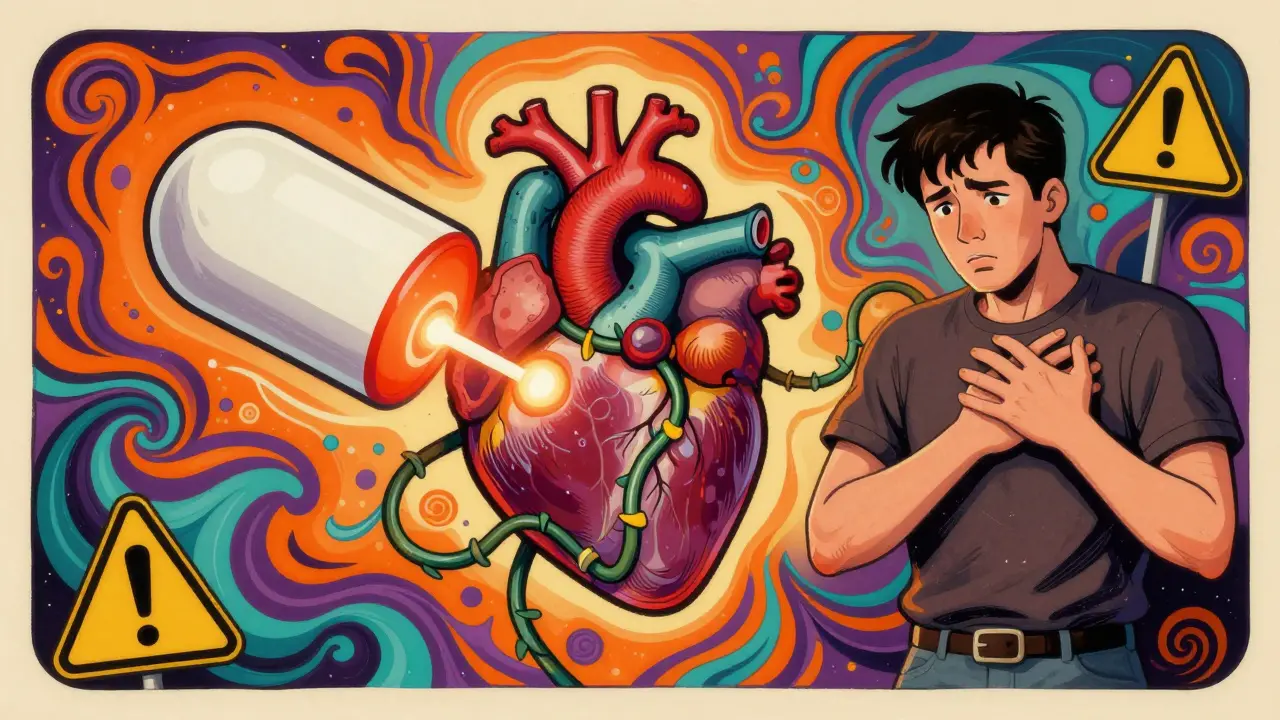
When a migraine hits, you don’t just want relief-you want it fast, safely, and without making things worse. But not all migraine meds are created equal. Triptans, gepants, and ditans all target the same problem: intense head pain. Yet their safety profiles are wildly different. If you’ve ever felt chest tightness after a triptan, or spent six hours dazed after a ditan, you know how confusing and frustrating this can be. This isn’t about which drug works best overall-it’s about which one works best for you, given your body, your risks, and your life.
Triptans: Fast, Effective, But Not for Everyone
Triptans like sumatriptan (Imitrex), rizatriptan (Maxalt), and almotriptan (Axert) have been the gold standard since the 1990s. They work fast-often cutting pain in half within 30 to 60 minutes. That’s why they’re still used in over 60% of acute migraine cases. But speed comes with trade-offs.Up to 15% of users report tingling or warmth in their skin. About 8% feel dizziness or fatigue. But the most alarming side effect? Chest tightness or pressure. It’s not a heart attack-it’s a reaction from the 5-HT1B receptors in blood vessels tightening up. Still, it scares people. Many stop taking triptans because of it, even if they’re perfectly healthy.
That’s why triptans are off-limits if you have heart disease, uncontrolled high blood pressure, or a history of stroke. Even if your doctor says you’re fine, if you’ve ever had chest pain with exertion, or if you’re over 40 and have risk factors like smoking or diabetes, triptans may not be worth the risk. The American Academy of Family Physicians is clear: avoid them if you have cardiovascular issues.
Some triptans are safer than others. Almotriptan and frovatriptan cause fewer side effects overall. Subcutaneous injections cause injection-site pain in 40% of users. Nasal sprays leave a bitter taste for about a quarter of people. And you can’t take them within 24 hours of ergotamines-doing so raises the risk of dangerous blood vessel narrowing.
Gepants: The Gentle Newcomers
Gepants like ubrogepant (Ubrelvy) and rimegepant (Nurtec ODT) arrived in late 2019. They work differently-blocking CGRP, a molecule involved in migraine pain signaling. No vasoconstriction. No chest tightness. That’s why they’re becoming the go-to for people who can’t take triptans.Their side effects? Mild. Nausea happens in just 4-6% of users. Drowsiness affects 2-4%. One person in a thousand had a mild allergic reaction to rimegepant. That’s a huge improvement over triptans. In a 2021 analysis of over 46,000 patients, gepants had the lowest risk of any adverse event among all migraine meds.
But they’re slower. Triptans often work in under an hour. Gepants take 1-2 hours to kick in. Some people feel relief at 2 hours, but it’s not always as strong as a triptan. The upside? Relief lasts longer. Rimegepant’s half-life is 10-12 hours. That means fewer headaches coming back the next day.
There’s one catch: drug interactions. Rimegepant can build up in your system if you’re taking strong CYP3A4 inhibitors like ketoconazole or clarithromycin. That can increase side effects. Always tell your doctor what else you’re on.
On Drugs.com, rimegepant has a 7.1/10 rating. People say things like, “No chest pressure like with triptans, just takes longer to work.” That’s the trade-off: patience for peace of mind.
Ditans: Effective But Hard to Tolerate
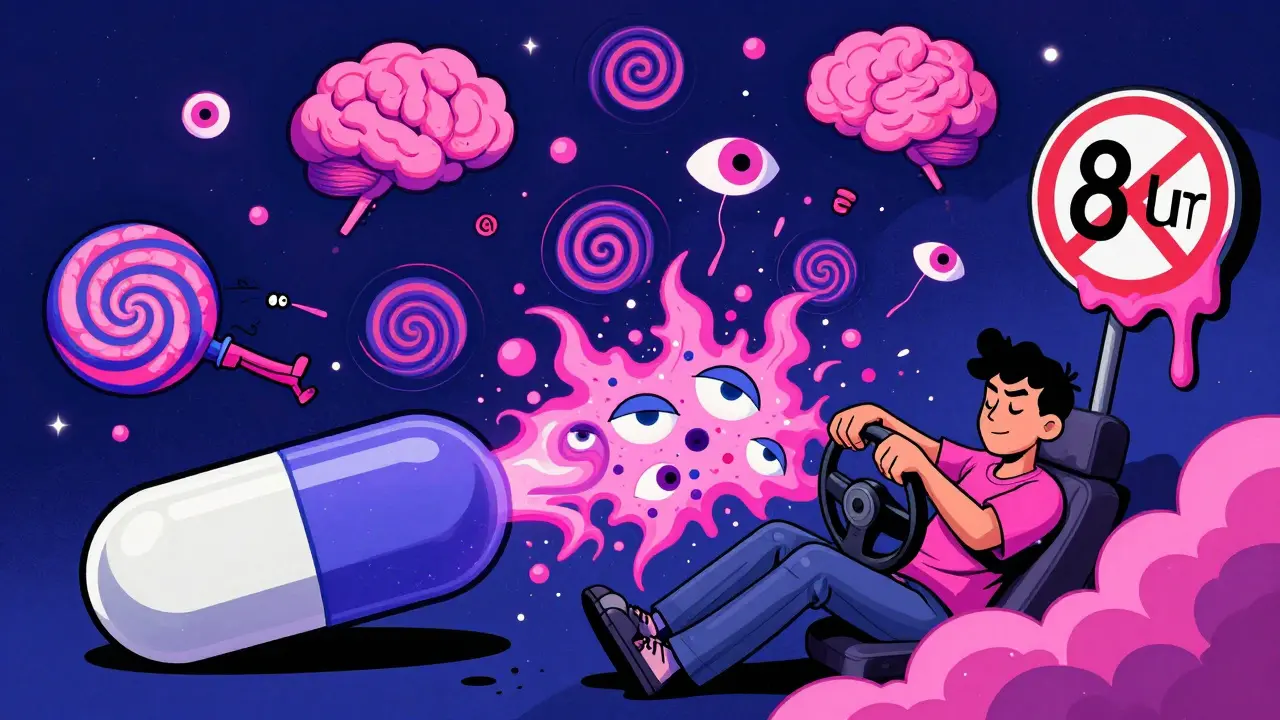
Lasmiditan (Reyvow) is the only ditan approved so far. It targets 5-HT1F receptors, which means it doesn’t constrict blood vessels at all. That makes it theoretically safe for people with heart problems. But it hits your brain harder than anything else.Almost 19% of users on the standard 100mg dose report dizziness. Nearly 10% feel tingling or numbness. About 8% get so sleepy they can’t function. In clinical trials, 3% felt out of coordination. That’s not just “a little tired.” That’s feeling like you’ve had too much to drink-without alcohol.
One patient on Reddit wrote: “Reyvow made me feel drunk without alcohol.” Over 60% of negative reviews on Drugs.com mention dizziness, sedation, or brain fog. In the SAMURAI trial, patients on lasmiditan were twice as likely to report adverse events compared to placebo. The FDA requires a warning: don’t drive or operate machinery for at least 8 hours after taking it.
It’s not useless. For people who can’t take triptans and don’t want to wait for gepants to work, it’s an option. But it’s not a first-line treatment. Dr. Rami Burstein from Harvard says its CNS effects limit its use, especially for people who need to get back to work or care for kids right after taking it.
It also has a hidden risk. Though rare, there’s concern it could lower the seizure threshold. If you’ve ever had a seizure, or take medications that do the same (like certain antidepressants or stimulants), avoid it.

Comparing the Three: A Quick Safety Snapshot
| Feature | Triptans | Gepants | Ditans |
|---|---|---|---|
| Speed of Relief | 30-60 minutes | 1-2 hours | 60-90 minutes |
| Cardiovascular Risk | High (vasoconstriction) | Very Low | Very Low |
| Common Side Effects | Chest tightness, tingling, dizziness, fatigue | Nausea, drowsiness | Dizziness, sedation, paresthesia, incoordination |
| Driving Restrictions | None | None | Do not drive for 8 hours |
| Drug Interactions | Avoid with ergotamines | Avoid with strong CYP3A4 inhibitors | Avoid with CNS depressants |
| Adverse Event Risk (vs. Placebo) | 1.4x higher | 1.1x higher | 2.9x higher |
The data is clear: ditans have the highest risk of side effects. Gepants are the safest. Triptans are in the middle-effective but risky for some.
What Do Real Users Say?
On Drugs.com, triptans average 6.4/10. People love how fast they work, but hate the chest pressure. One review says: “Sumatriptan works within 30 minutes and gets me back to normal.” Another: “Experienced severe chest pressure-never using it again.”Gepants score higher: 7.1/10. Users appreciate the clean side effect profile. “No chest pressure. Just takes longer.” That’s the recurring theme.
Ditans? Only 5.8/10. The negatives dominate: “Felt completely out of it for 6 hours.” “Couldn’t work after taking it.” “Like being drunk.”
Reddit threads show the same pattern. In November 2023 alone, 78 posts mentioned triptan side effects, 42 discussed gepants, and 31 focused on lasmiditan’s sedation. People aren’t just reading about this-they’re living it.
Who Should Take What?
If you’re young, healthy, and need fast relief-triptans still work great. Just know the signs of a bad reaction: chest pressure, sudden shortness of breath, or numbness in your limbs. Stop and call your doctor.If you have heart disease, high blood pressure, or are over 40 with risk factors-skip triptans. Go for gepants. They’re safer, and rimegepant even has FDA approval for both acute and preventive use. That’s rare.
If you’ve tried triptans and gepants and still have trouble, and you’re okay with being sedated for hours-lasmiditan might help. But don’t use it if you need to drive, work, or care for others right after taking it.
And if you’re unsure? Talk to your neurologist. Don’t guess. Migraine treatment is personal. What works for your friend might make you feel worse.
What’s Next?
New drugs are coming. Zavegepant, an intranasal gepant, just finished phase 3 trials with a safety profile similar to other gepants. It might be available soon-offering fast relief without pills or injections.Long-term safety data is still limited. Only rimegepant has two years of use data. For everything else, we’re watching. The FDA’s adverse event reports show gepants have the lowest reporting rate. That’s encouraging.
But here’s the truth: triptans still dominate because they work. They’re cheap, generic, and fast. But for many, the side effects aren’t worth it. Gepants are changing the game-not because they’re faster, but because they’re kinder to your body.
There’s no perfect migraine drug. But there is a best one for you. Know your risks. Know your options. And don’t settle for something that makes you feel worse than the headache itself.
Are triptans safe if I have high blood pressure?
No. Triptans cause blood vessels to narrow, which can raise blood pressure and increase the risk of heart attack or stroke in people with uncontrolled hypertension. If you have high blood pressure, especially if it’s not managed well, your doctor should avoid prescribing triptans. Gepants are a safer alternative.
Can I take gepants with other migraine meds?
You shouldn’t combine gepants with triptans or ergotamines within 24 hours. Also, avoid rimegepant with strong CYP3A4 inhibitors like ketoconazole or grapefruit juice-this can raise drug levels and increase side effects. Always check with your pharmacist before mixing medications.
Why do ditans make me feel drunk?
Lasmiditan affects serotonin receptors in the brain that control balance, coordination, and alertness. This causes dizziness, sedation, and brain fog-symptoms that feel like being intoxicated. That’s why the FDA requires an 8-hour driving restriction. It’s not a psychological effect-it’s a direct neurological response.
Do gepants cause rebound headaches?
There’s no strong evidence that gepants cause medication-overuse headaches, unlike triptans, which can trigger them if used more than 10 days a month. Gepants are approved for up to 18 doses per month, and studies so far show low risk of dependency or worsening headaches with regular use.
Is it safe to use these drugs long-term?
Triptans are generally safe for occasional use, but frequent use increases rebound headache risk. Gepants like rimegepant have two years of safety data showing no major long-term issues. Lasmiditan has less than one year of data. For chronic migraine, preventive treatments like CGRP antibodies may be better than daily acute meds.
What should I do if a migraine medication doesn’t work?
Don’t double the dose. If one triptan doesn’t work, try another-some people respond better to rizatriptan than sumatriptan. If gepants don’t help after two doses, talk to your doctor about switching to a ditan or considering a preventive treatment. Keeping a headache diary helps track what works and what doesn’t.
Final Thoughts
Migraine treatment has changed. We’re no longer stuck with one option. You have choices-and safety matters as much as speed. Triptans still have a place, especially if you’re young and healthy. But for many, the risks outweigh the benefits. Gepants offer a gentler, longer-lasting alternative. Ditans? They’re a backup, not a first choice.The goal isn’t just to kill the pain. It’s to get through your day without feeling like you’ve been hit by a truck after taking the medicine. Choose wisely. Listen to your body. And don’t let fear stop you from finding what works.
Moses Odumbe
December 20, 2025 AT 11:40Meenakshi Jaiswal
December 22, 2025 AT 04:46bhushan telavane
December 24, 2025 AT 03:18Mahammad Muradov
December 25, 2025 AT 00:40Connie Zehner
December 25, 2025 AT 00:52holly Sinclair
December 26, 2025 AT 17:49Monte Pareek
December 27, 2025 AT 10:50Kelly Mulder
December 27, 2025 AT 16:12Tim Goodfellow
December 28, 2025 AT 10:06Elaine Douglass
December 30, 2025 AT 01:01Takeysha Turnquest
December 31, 2025 AT 02:12Emily P
January 1, 2026 AT 05:03Vicki Belcher
January 1, 2026 AT 05:30