
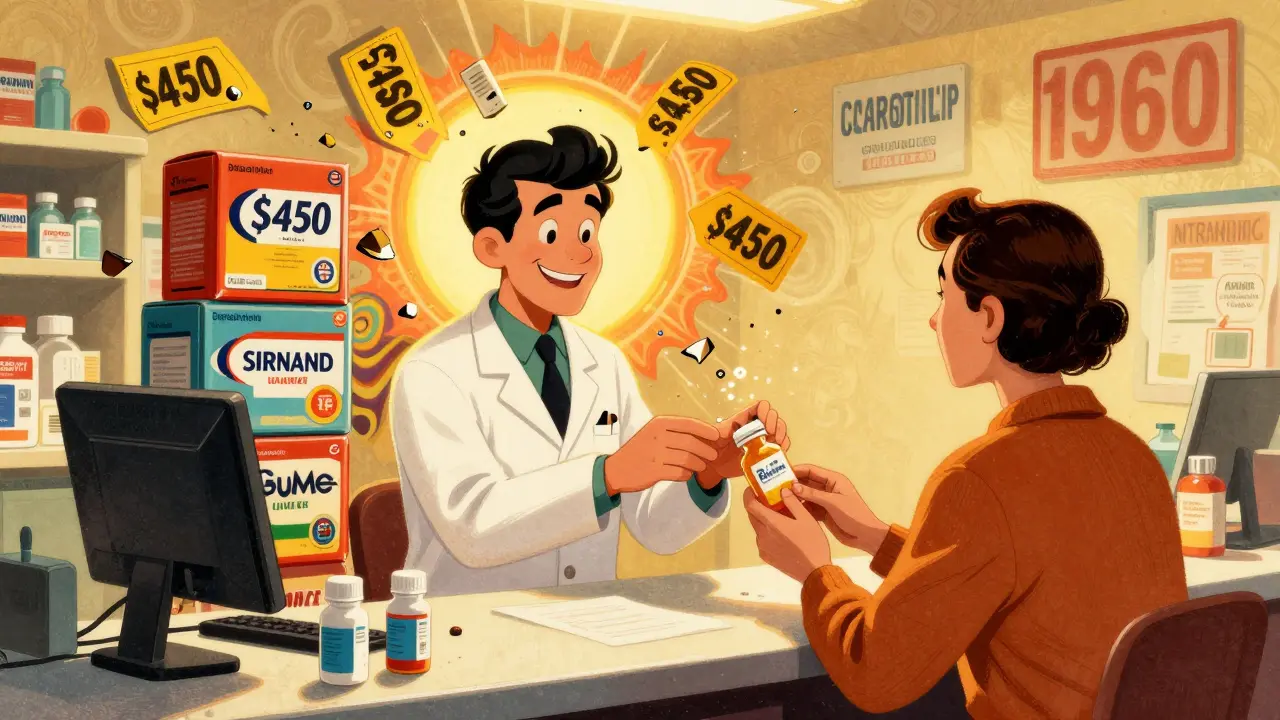
Every year, Americans spend over $1,000 billion on prescription drugs. But here’s the twist: 90% of those prescriptions are for generic medications, and they only cost 1.5% of the total healthcare bill. That’s not a typo. Generics are responsible for most of the prescriptions filled, yet they account for almost none of the spending. How? Because they’re dramatically cheaper - and the savings add up to hundreds of billions each year.
What Exactly Are Generic Medications?
Generic drugs aren’t knockoffs. They’re exact copies of brand-name medicines, approved by the FDA after the original patent expires. To get approved, a generic must prove it delivers the same active ingredient, in the same strength, at the same rate, and with the same effect as the brand. That’s called bioequivalence - and it’s not a suggestion. It’s a legal requirement. The FDA requires generics to show their blood levels match the brand within 80-125% of the original. That’s tight. If your generic doesn’t hit that mark, it doesn’t get sold.Many people think generics are weaker or made with cheaper ingredients. That’s not true. They use the same active compounds. The fillers, colors, or shapes might differ - but those don’t affect how the drug works. The FDA inspects generic manufacturing plants just as often as brand-name ones. In fact, many brand-name companies make their own generics after the patent runs out.
The Real Cost Difference: Generics vs. Brand Names
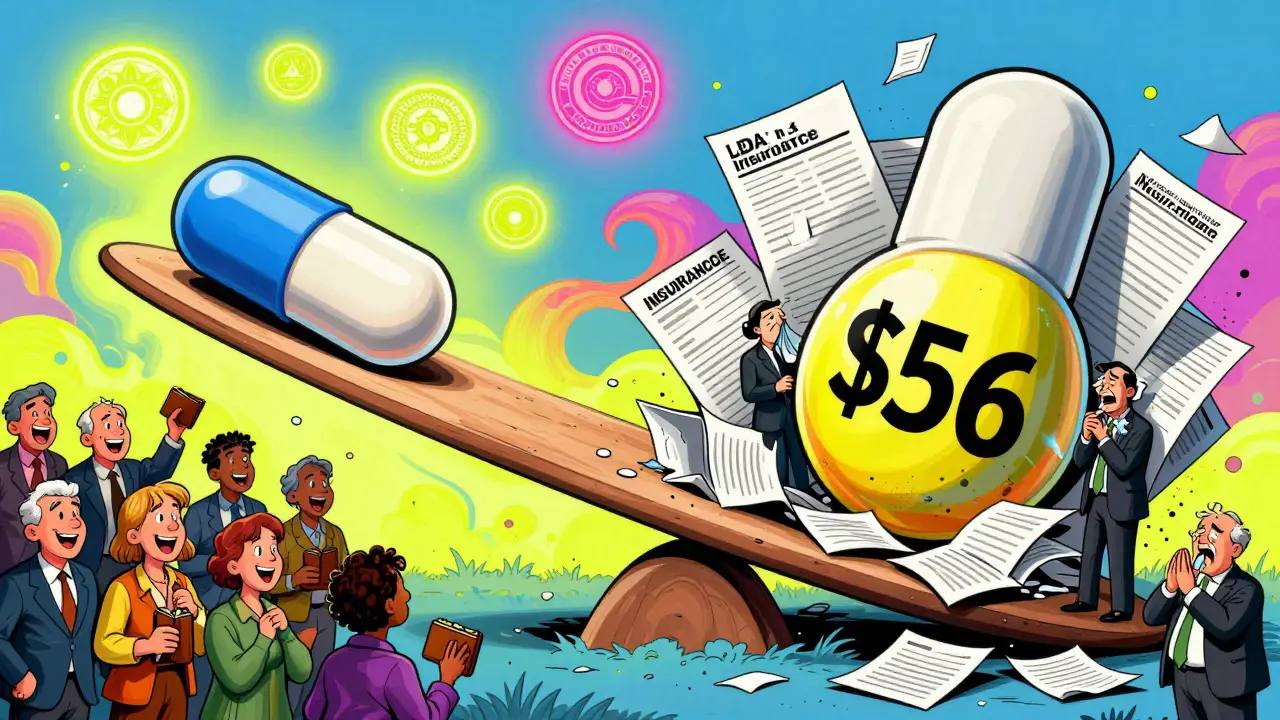
Let’s talk numbers. In 2022, the average copay for a generic prescription was $6.16. For a brand-name drug? $56.12. That’s nearly nine times more. And it’s not just out-of-pocket costs. The total price - what you pay plus what your insurer pays - dropped by nearly 80% between 2010 and 2020 for generics, according to the USC Schaeffer Center.Some drugs show even starker differences. One Reddit user shared they paid $9 for generic sertraline (an antidepressant) versus $450 for Zoloft. That’s a 98% savings. Another study found that 93% of generic prescriptions cost under $20. Only 59% of brand-name ones did. And in Colorado, researchers found that switching from expensive generics to cheaper alternatives of the same drug class saved patients 95% on average - sometimes more.
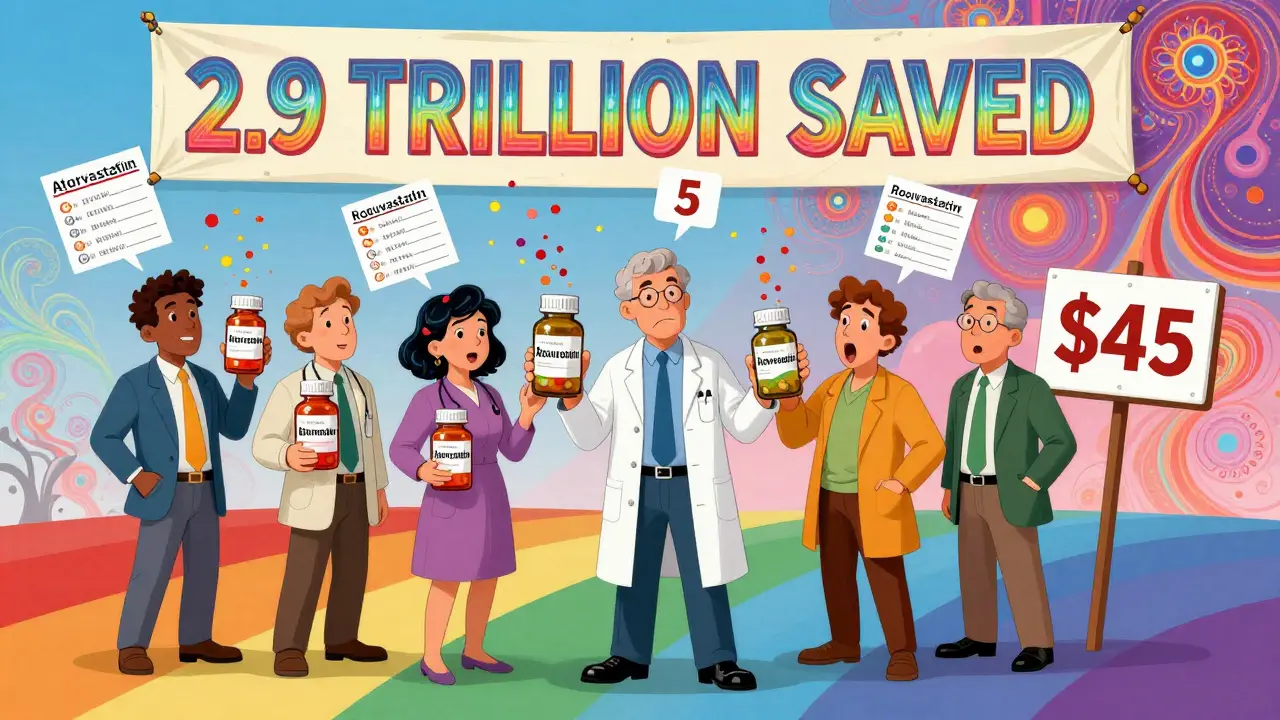
It’s not just about individual savings. In 2022 alone, generic and biosimilar drugs saved the U.S. healthcare system $408 billion. Over the past decade, that total hits $2.9 trillion. Medicare saved $130 billion. Private insurers saved $194 billion. That’s money that stays in patients’ pockets, lowers premiums, and keeps insurance plans from collapsing under the weight of drug costs.
Why Do Brand-Name Drugs Cost So Much?
Brand-name companies spend years and billions developing a new drug. They need to recoup that investment, which is why they charge so much during the patent window - usually 20 years. Once that ends, generics flood the market. And prices crash.When the first generic enters, prices drop 30-40%. With two or three competitors, they fall 50-70%. After five or more, prices often drop 80-85%. That’s why the same pill that cost $100 a month as a brand might cost $5 as a generic. The market forces drive it down. No marketing, no fancy packaging, no expensive ad campaigns. Just the medicine.
But here’s the catch: even after generics arrive, brand-name companies sometimes try to block them. They file dozens of minor patents - on coatings, delivery methods, or packaging - to delay competition. The FTC found that brand manufacturers file an average of 17.5 patents per drug to extend their monopoly. That’s not innovation. That’s legal delay.
Therapeutic Substitution: The Hidden Savings
Most people think savings come from swapping a brand for its generic twin. But the biggest savings often come from switching between two generics. That’s called therapeutic substitution.Take statins. There are six or seven different ones. Atorvastatin (generic Lipitor) and rosuvastatin (generic Crestor) are both effective. But one might cost $5 a month and the other $45. If your doctor prescribes the expensive one, you’re paying more - even though both work the same. A 2022 study in Colorado found that 45 high-cost generics had cheaper alternatives with the same clinical effect. Switching them saved patients an average of 94.9%.
Pharmacists can often make these swaps automatically in 49 states. But in 32 states, they need extra permission from your doctor. That’s a missed opportunity. If your doctor doesn’t know about the cheaper option, you’re stuck paying more. Ask your pharmacist: “Is there a cheaper generic version that works just as well?”
Who’s Using Generics - and Who’s Not?
Generics are everywhere. They’re in 90% of prescriptions filled. But they’re not equally used across all drug types. For blood pressure meds, cholesterol drugs, and antibiotics? Nearly all are generic. For epilepsy drugs? Only 67%. Why? Because some conditions require very precise dosing. Small changes in absorption can cause seizures. That’s why doctors sometimes stick with the brand.But even then, many patients can switch. A 2023 Drugs.com survey found that 15% of people on levothyroxine (a thyroid drug) had issues after switching to a generic. But 85% had no problem. The FDA says all approved generics are safe. The rare issues are often tied to inconsistent manufacturing, not the drug itself. Still, if you feel different after switching - fatigue, dizziness, mood changes - talk to your doctor. Don’t assume it’s all in your head.
Why Don’t More People Ask for Generics?
You’d think everyone would ask. But many don’t. Some think generics are inferior. Others don’t know they can ask. And some doctors don’t mention it.A Consumer Reports survey found that 78% of people actively request generics. But 22% never do. Why? Because they assume their doctor already chose the best option. Or they’re afraid their insurance won’t cover it. Or they’re used to getting the brand because that’s what they’ve always been given.
Harvard Medical School found that when doctors explain the FDA’s bioequivalence rules, 87% of patients stop worrying. A simple sentence - “This generic is tested to work exactly like the brand” - changes minds. Ask your doctor: “Is there a generic version? And if so, is it right for me?”
The Bigger Picture: Why Generics Matter
The U.S. pays 2.78 times more for prescription drugs than other rich countries. Why? Because we don’t regulate prices. We rely on competition - and generics are that competition. Without them, drug costs would be unaffordable for millions.Medicare beneficiaries fill 91% generic prescriptions, yet 41% still struggle to afford them. Why? Because even $5 a pill adds up. And some insurers charge high copays for generics too. The Inflation Reduction Act of 2023 capped Medicare Part D out-of-pocket costs at $2,000 a year. That’s a big win. But it doesn’t fix the underlying problem: drug pricing is broken.
Generics aren’t a magic fix. But they’re the most powerful tool we have. They’ve saved trillions. They keep people on their meds. They prevent hospitalizations. And they give patients control - the power to choose a cheaper, equally effective option.
What You Can Do Today
You don’t need to wait for policy changes. Here’s what you can do right now:- Ask your doctor: “Is there a generic version of this drug?”
- Ask your pharmacist: “Is there a cheaper generic alternative in the same class?”
- Check your copay. If it’s over $20 for a chronic med, ask if a different generic exists.
- Use the FDA’s Orange Book to look up therapeutic equivalence ratings - it’s free online.
- If you switch and feel off, tell your doctor. Don’t assume it’s your fault.
Every time you choose a generic, you’re not just saving money. You’re helping the whole system work better. And that’s worth more than a few dollars at the pharmacy counter.
Are generic medications as safe as brand-name drugs?
Yes. The FDA requires generics to meet the same strict standards as brand-name drugs for quality, strength, purity, and effectiveness. They use the same active ingredients and must prove they work the same way in the body. Manufacturing facilities for generics are inspected just as often as those for brand-name drugs. While rare cases of minor differences in inactive ingredients can cause reactions in sensitive individuals, these are exceptions - not the rule.
Why do some people say generics don’t work as well?
Some patients report feeling different after switching - especially with drugs that have a narrow therapeutic index, like levothyroxine or warfarin. These drugs require very precise dosing, and even small changes in absorption can affect how they work. But studies show that 85-90% of patients have no issues. If you notice symptoms like fatigue, dizziness, or mood changes after switching, talk to your doctor. It’s not always the generic - it could be other factors like diet, stress, or other medications.
Can pharmacists switch my brand-name prescription to a generic without asking?
In 49 U.S. states, pharmacists can automatically substitute a generic for a brand-name drug unless the doctor writes “dispense as written” or “no substitution.” New York is the exception - it requires the prescriber to specifically allow substitution. Even then, pharmacists can suggest cheaper therapeutic alternatives (like switching from one generic statin to another) if they’re allowed under state law. Always check with your pharmacist - they’re often the best source for cost-saving options.
Do generics take longer to work than brand-name drugs?
No. To be approved, generics must prove they enter the bloodstream at the same rate and to the same extent as the brand-name drug. This is called bioequivalence. If a generic absorbed slower or differently, it wouldn’t pass FDA testing. The time it takes to start working is identical. Any perceived delay is usually psychological or due to other factors like diet or other medications.
Why are some generics still expensive?
Some generics remain costly because there’s little competition. If only one or two companies make a generic, prices stay high. This often happens with older drugs, complex formulations, or those with small markets. Drug shortages also drive up prices - 78% of current shortages involve generic medications. In these cases, switching to a different generic in the same class (therapeutic substitution) can save you money. Always ask your pharmacist: “Is there another generic option that’s cheaper?”
How do I find out if a generic is available for my medication?
Ask your doctor or pharmacist - they’re your best resources. You can also check the FDA’s Orange Book, which lists all approved generics and their therapeutic equivalence ratings. Many pharmacies have apps or websites that show pricing for different versions of your drug. If your prescription says “brand necessary,” ask your doctor if that’s truly required or if it’s just habit.
Luke Davidson
January 24, 2026 AT 16:29Bro, I switched my antidepressant to generic sertraline last year and saved $400 a month. My mood didn’t change, my sleep didn’t suck, and my bank account finally stopped crying. Why are we still acting like generics are some kind of pharmacy scam? They’re literally the same damn pill with a different label.
Shanta Blank
January 25, 2026 AT 09:33OMG I can’t believe people still fall for this. I once took a generic blood pressure med and nearly died. My heart was racing, I was sweating like I’d run a marathon in a sauna, and my pharmacist just shrugged and said ‘it’s FDA approved.’ 😭 The FDA is a joke. Brand-name drugs are the only thing keeping us from turning into human popsicles.
Elizabeth Cannon
January 26, 2026 AT 20:59generic is fine unless u have a weird reaction then u just gotta stick with the brand smh. my cousin switched to generic levothyroxine and started hallucinating. not a joke. she thought her cat was talking to her. now she pays $80 a month and is perfectly fine. so yeah. not one size fits all. 🤷♀️
Marie-Pier D.
January 27, 2026 AT 13:22Hey everyone - I just want to say thank you to the person who wrote this. 💛 I’m a single mom on a fixed income, and generics are the only reason I can afford my insulin. I used to skip doses. Now I don’t. That’s not just money saved - that’s life saved. Let’s stop acting like this is about ‘brand loyalty’ and start acting like we care about people. 🙏
Karen Conlin
January 27, 2026 AT 15:30Let’s talk about therapeutic substitution - it’s the secret weapon no one talks about. My pharmacist switched me from rosuvastatin to atorvastatin last year. Same effect. Same cholesterol numbers. But I went from $45/month to $5. That’s not ‘saving money.’ That’s winning the system. Pharmacists are the real MVPs. Ask them. Trust them. They know the price tags better than your doctor does.
Sawyer Vitela
January 29, 2026 AT 05:4490% of prescriptions? That’s not a win, that’s a failure of innovation. If we’re relying on 10-year-old chemistry to treat modern diseases, we’re not saving money - we’re just delaying the inevitable collapse. The real problem isn’t brand names. It’s that pharma stopped trying.
Alexandra Enns
January 30, 2026 AT 17:06Oh please. Canada’s healthcare system is a joke and you people think generics are some kind of miracle? We pay $2 for generics here and still get the same side effects. The FDA is just a marketing arm for Big Pharma. Your ‘bioequivalence’? That’s a 45% window. You think that’s precise? My grandma’s blood levels bounced like a ping pong ball. You’re not saving money - you’re gambling with your health.
Vatsal Patel
January 31, 2026 AT 22:05Ah yes, the great generic delusion - where the poor are told to be grateful for the crumbs of science while the rich sip champagne on their private islands. The FDA approves generics, yes - but who approved the system that makes a $2 pill a luxury? The real villain isn’t the brand name. It’s the capitalist logic that turns medicine into a commodity. We are not patients. We are consumers. And consumers get what they can afford. 😇
Kat Peterson
February 1, 2026 AT 15:41Okay but have you seen the packaging on generics? 😭 Like, I’m not paying $5 for a pill that comes in a baggie with a sticky label that says ‘take 1’ in Comic Sans. I want dignity. I want branding. I want the little blue capsule that makes me feel like I’m not just a statistic in a spreadsheet. It’s not about the drug - it’s about the *vibe*. 🖤
Sushrita Chakraborty
February 1, 2026 AT 18:13It is truly remarkable how the United States healthcare system has managed to institutionalize cost-consciousness as a moral imperative, while simultaneously failing to regulate pricing mechanisms. The phenomenon of therapeutic substitution, while economically rational, often disregards individual physiological variance - a factor that, in clinical practice, cannot be reduced to statistical averages. One must question whether systemic savings are being achieved at the cost of patient autonomy.
Izzy Hadala
February 2, 2026 AT 23:08Per the FDA’s 2023 Generic Drug User Fee Amendments report, 98.7% of generic drugs approved between 2018 and 2023 demonstrated bioequivalence within the 80-125% confidence interval. Manufacturing facility inspection compliance rates for generics (94.2%) are statistically indistinguishable from those of originators (95.1%). The claim that generics are ‘inferior’ is empirically unsupported. Further, the FTC’s 2022 report on pay-for-delay agreements confirms that 78% of patent litigation against generics is frivolous. Data does not support anecdotal narratives.
Luke Davidson
February 4, 2026 AT 21:45@7106 - you just quoted a government report like it’s scripture. I get it. Numbers are safe. But my cousin’s kid had a seizure after switching to a generic epilepsy med. The FDA says it’s ‘within range.’ But when your kid’s body says ‘no,’ the numbers don’t matter. You don’t get to sanitize trauma with statistics.