
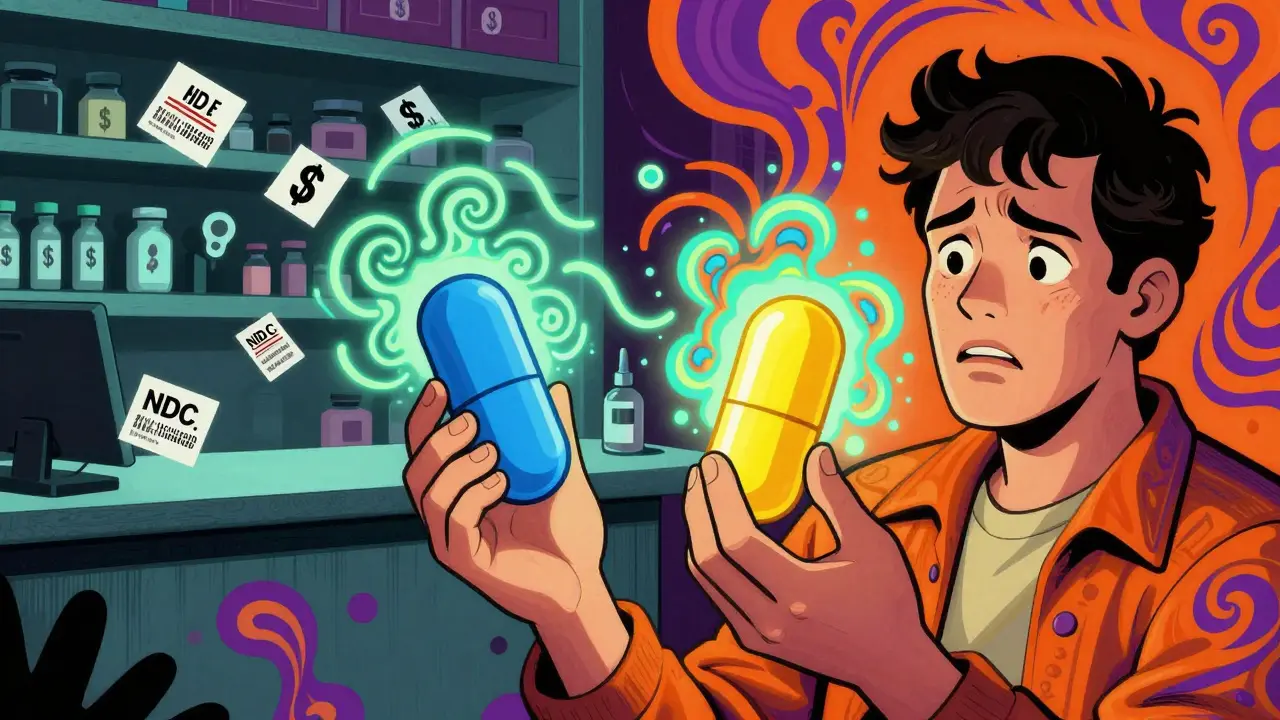
Switching from a brand-name drug to a generic version is supposed to save money-without sacrificing effectiveness. But for some people, that switch triggers unexpected side effects, worsened symptoms, or even dangerous health events. If you’ve noticed a change in how you feel after your pharmacist handed you a new pill with a different color or shape, you’re not imagining it. And you’re not alone.
Why switching generics can go wrong
Generic drugs are required by the FDA to have the same active ingredient as the brand-name version. That part is true. But what’s not always said is that generics can differ in their inactive ingredients, how the drug is released in your body, and even the way the tablet breaks down. These differences are small-within FDA limits-but for certain medications, even tiny changes can cause big problems. The biggest risk comes with drugs that have a narrow therapeutic index (NTI). These are medications where the difference between a helpful dose and a harmful one is very small. A 10% change in how much of the drug gets into your bloodstream might be harmless for a statin, but for something like warfarin or levothyroxine, it can mean the difference between preventing a clot and causing a stroke-or between feeling energized and crashing into fatigue. A 2019 study in BMJ Open tracked over 2,800 people with heart disease who switched between different generic versions of the same drug. Within 30 days, they were 12.3% more likely to be hospitalized than those who stayed on the same version. That’s not a fluke. It’s a pattern.Which medications are most likely to cause trouble?
Not all generics are created equal. Some drug classes have a long history of problems after switching. Here are the top five:- Antiepileptics (like phenytoin, divalproex): Seizures can return or worsen after a switch, even if the active ingredient is identical. Neurologists report this often-68.7% of those surveyed in 2021 saw patients experience breakthrough seizures after switching generics.
- Thyroid meds (levothyroxine): This one is especially tricky. With 12 different generic manufacturers in the U.S., each using different fillers and coatings, your TSH levels can swing wildly. One study found patients switched between generics had TSH levels that changed by more than 30% in just weeks.
- Anticoagulants (warfarin): Too little, and you risk a clot. Too much, and you bleed. Even small changes in absorption can push someone into dangerous territory. Pharmacists are now advised to avoid automatic substitution for warfarin.
- Immunosuppressants (tacrolimus, cyclosporine): After organ transplants, stability is everything. A 2023 review found switching generics increased rejection risk by nearly 25% in some transplant centers.
- Extended-release psychiatric drugs (Adderall XR, bupropion XL): These use special bead systems to release medication slowly. Different manufacturers use different bead designs. One patient might feel fine on one brand, then feel jittery, anxious, or emotionally flat after switching to another-even though both are labeled “10mg Adderall XR.”
What patients are really experiencing
Behind the data are real people. On Reddit’s r/ADHD community, a thread titled “Generic Adderall Switch Ruined My Life” has over 800 comments. Most describe the same thing: sudden return of focus problems, new anxiety, insomnia, or headaches within 24 to 72 hours of picking up a new refill. A 2023 hospital review of 1,437 patients found that 63% of people identified their meds by how they looked-color, shape, imprint-not by name. When the pill changed, they didn’t realize it was the same drug. Some even took both versions, thinking they were different meds. One patient developed serotonin syndrome from accidental overdose. A MedShadow survey of 1,247 people taking generic ADHD meds found:- 63.2% noticed decreased effectiveness after a manufacturer switch
- 41.7% developed new side effects
- 28.4% got headaches
- 22.1% felt more anxious
- 19.3% had stomach issues
The system is pushing switches-whether you want them or not
Here’s the uncomfortable truth: your pharmacist isn’t choosing to switch your meds because they think it’s better for you. They’re doing it because their pharmacy benefit manager (PBM)-a middleman company like CVS Caremark or OptumRx-is paying them to. PBMs make money through rebates. They negotiate deals with generic drug makers: “If you give us the biggest discount, we’ll push your version to all our patients.” That means your prescription might switch manufacturers every few months, based on which company is offering the highest rebate-not which one works best for you. A 2022 Senate investigation found PBMs change preferred generic manufacturers an average of 4.7 times per year per drug. For someone on a chronic medication, that’s nearly five different pills in a year. And no one tells you.What you can do to protect yourself
You don’t have to accept random switches. Here’s how to take control:- Ask for the manufacturer name when you pick up your prescription. Write it down. You have the right to request the same brand each time.
- Check the NDC code on your pill bottle. It’s a 10-digit number. If it changes, your generic manufacturer changed.
- Ask your doctor to write “Dispense As Written” (DAW-1) on your prescription. This legally prevents substitution for NTI drugs like levothyroxine, warfarin, or tacrolimus.
- Track your symptoms. Keep a simple log: date, medication name, manufacturer, how you felt. If you notice a pattern after a switch, bring it to your doctor.
- Talk to your pharmacist. They can often hold stock from a specific manufacturer if you ask. Many will do it if you explain you’ve had issues before.

When to call your doctor
Don’t wait for a crisis. If you notice any of these after switching generics, contact your provider right away:- New or worsening side effects (headaches, dizziness, nausea, anxiety)
- Return of symptoms you had under control (seizures, fatigue, brain fog)
- Unexplained changes in lab results (TSH, INR, drug levels)
- Feeling “off” for more than 3-5 days
The bottom line
Generics are safe for most people. For the majority, switching saves money with no issues. But for those on NTI drugs-or those who are especially sensitive to formulation changes-the risks are real. The FDA says generics are equivalent. But doctors, pharmacists, and patients are seeing something different. Your body isn’t a statistic. If you feel worse after a switch, it’s not in your head. It’s a signal. Speak up. Track it. Ask for consistency. Your health isn’t a cost-saving experiment.Can switching to a generic drug really cause side effects?
Yes. While generics must contain the same active ingredient, differences in inactive ingredients, coating, or release mechanisms can affect how the drug is absorbed. For medications with a narrow therapeutic index-like levothyroxine, warfarin, or antiepileptics-even small changes can cause side effects or loss of effectiveness. Many patients report new anxiety, headaches, fatigue, or return of original symptoms after a switch.
Which generic drugs are most likely to cause problems?
The highest-risk generics include antiepileptics (phenytoin, divalproex), thyroid meds (levothyroxine), blood thinners (warfarin), transplant drugs (tacrolimus), and extended-release psychiatric meds (Adderall XR, bupropion XL). These drugs have tight safety margins, and small changes in absorption can lead to serious outcomes like seizures, strokes, organ rejection, or worsening depression/anxiety.
Why do pharmacies keep switching my generic meds?
Pharmacies switch generics because pharmacy benefit managers (PBMs) pay them rebates to use certain manufacturers. The PBM chooses the cheapest option each month, not the one that works best for you. This can mean you get a different pill every refill-even if you’ve had no issues before. This practice is common and often happens without patient notification.
How can I stop my generic from being switched?
Ask your doctor to write “Dispense As Written” (DAW-1) on your prescription. This legally prevents substitution. You can also ask your pharmacist to order the same generic manufacturer each time. Write down the NDC code on your bottle-this identifies the manufacturer. If it changes, you’ll know. Many pharmacists will honor requests for a specific brand if it’s available.
Should I avoid generics altogether?
No. Generics are safe and effective for most people and save billions in healthcare costs. But if you’re on a high-risk medication-or if you’ve had problems after a switch-you have the right to request consistency. Don’t assume all generics are the same. Track your response, speak up, and work with your provider to find the version that works for you.
If you’ve noticed changes after switching generics, you’re not alone. Millions of people experience this. The system isn’t designed to prioritize individual response-but you can still take control. Know your meds. Ask questions. Document changes. And never ignore how you feel.
Glenda Marínez Granados
January 22, 2026 AT 00:03So let me get this straight - we’re letting corporations decide which pill I get based on who gave them the biggest kickback? 🤡 I’m not a lab rat. I’m a human with a nervous system that remembers what works. And now I’m supposed to be grateful for the ‘savings’ while my brain turns to mush? 💀
MARILYN ONEILL
January 23, 2026 AT 11:19This is why I don’t trust generics. My cousin took some cheap thyroid stuff and ended up in the ER. She cried for a week. It’s not science - it’s corporate greed pretending to be healthcare.
Steve Hesketh
January 24, 2026 AT 01:29Hey, I just want to say - if you’re reading this and you’ve felt something off after a switch, you’re not crazy. I’ve been there. My brother’s on tacrolimus after his transplant, and when they switched his generic, his body started rejecting the new kidney. He was in the hospital for three weeks. We didn’t know why until we checked the NDC code. Please, please, please - write down that number. Talk to your pharmacist. You have power. You’re not alone in this.
Samuel Mendoza
January 24, 2026 AT 08:58Everyone’s overreacting. The FDA says they’re the same. If you can’t handle a pill change, maybe you shouldn’t be on meds.
Malvina Tomja
January 24, 2026 AT 16:24Let’s be real: if you’re the type of person who gets ‘headaches’ or ‘anxiety’ after switching generics, you probably have a low pain threshold and a fragile psyche. Stop blaming the system. Maybe you just need to toughen up.
Ben McKibbin
January 24, 2026 AT 20:26This post is a masterclass in patient advocacy - and it’s terrifying how many people don’t know this stuff. The FDA’s equivalence standards are a joke for NTI drugs. It’s not that generics are bad - it’s that the system is rigged to treat bodies like interchangeable widgets. The solution isn’t to ditch generics - it’s to demand transparency, enforce stricter bioequivalence testing for high-risk meds, and ban automatic substitution without consent. We’re not asking for luxury. We’re asking for basic dignity.
Amber Lane
January 26, 2026 AT 01:08I’m from Nigeria, and here, generics are the only option. But I’ve seen people get sicker after switches too. It’s not just America. This is a global issue.
Ashok Sakra
January 27, 2026 AT 07:00Bro I had the same thing with my Adderall. I went from 10mg blue to 10mg white and I cried for 3 days straight. I thought I was losing my mind. Then I found out they changed the manufacturer. Now I scream at the pharmacist every time. They think I’m crazy. I’m not. I’m awake.
michelle Brownsea
January 27, 2026 AT 11:39Oh, so now it’s ‘corporate greed’ again? Let me guess - you also think vaccines cause autism, climate change is a hoax, and your therapist is a CIA plant? You’re not ‘advocating’ - you’re feeding paranoia with a side of misinformation. The FDA doesn’t lie. Your body is weak. Stop blaming the system.
Roisin Kelly
January 29, 2026 AT 00:46They’re poisoning us. I know it. I’ve seen the signs. The same companies that make the generics also own the PBMs. They’re making us sick so they can sell us more meds. It’s a pyramid scheme with pills.
lokesh prasanth
January 30, 2026 AT 03:38generic is fine. you just weak. my cousin took 5 diffrent kind and still fine. stop whining.