
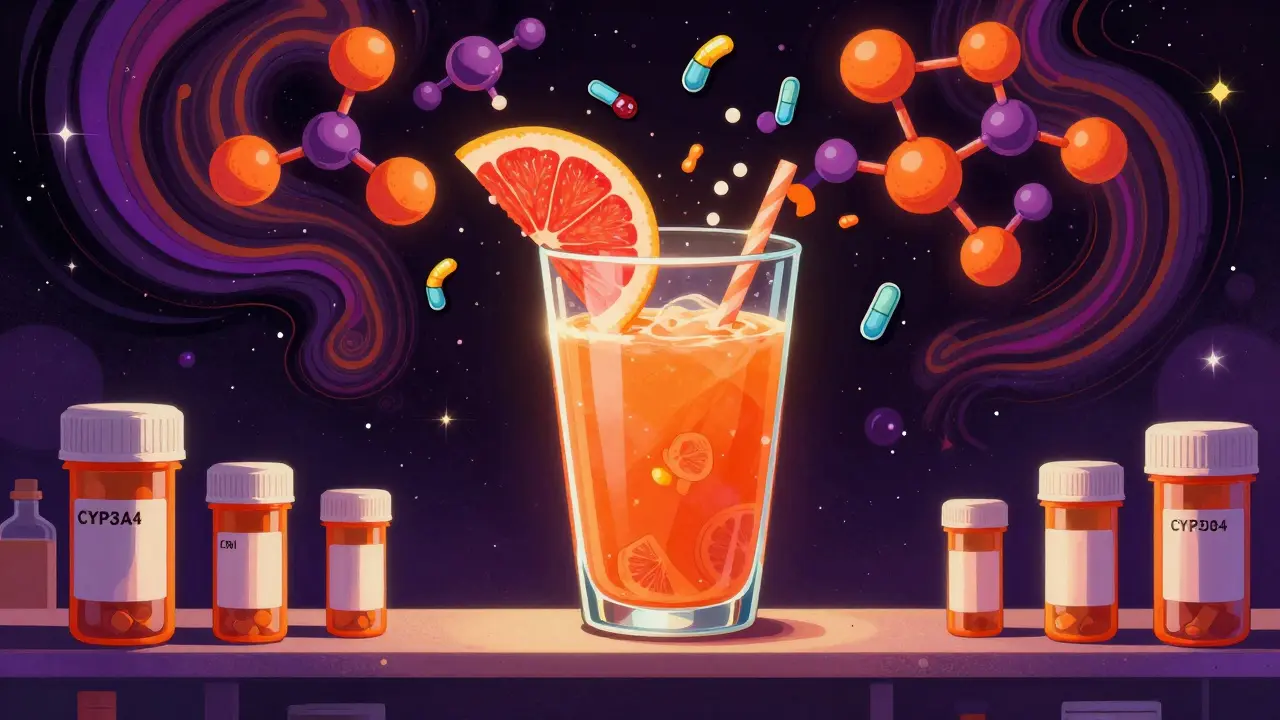
One glass of grapefruit juice in the morning might seem like a healthy choice-until it turns dangerous. For people taking certain medications, that refreshing citrus drink can trigger serious, even life-threatening reactions. It’s not about the sugar or acidity. It’s about what’s hidden in the juice: chemicals that interfere with how your body processes drugs. This isn’t a myth or a warning from an old wives’ tale. It’s a well-documented, clinically proven interaction that affects tens of millions of people worldwide.
How Grapefruit Juice Changes How Your Body Handles Medications
When you take a pill, your body doesn’t just absorb it like water. Many drugs are broken down before they even enter your bloodstream, mostly by enzymes in your intestines called CYP3A4. These enzymes act like a filter, reducing how much of the drug actually gets into your system. Grapefruit juice doesn’t just pass through-it shuts down this filter.
The culprits are compounds called furanocoumarins-mainly bergamottin and 6’,7’-dihydroxybergamottin. These chemicals bind to CYP3A4 enzymes in your gut and permanently disable them. Once they’re gone, your body can’t break down the drug properly. The result? More of the drug enters your bloodstream than intended. A single 200mL glass of grapefruit juice can boost drug levels by up to eight times. That’s not a small bump-it’s a medical emergency waiting to happen.
This isn’t just about the juice you drink with your breakfast. The effect lasts for days. Even if you take your medication 12 hours after drinking grapefruit juice, the enzymes are still turned off. Full recovery takes about 72 hours. That means if you drink grapefruit juice on Monday, your body is still vulnerable on Thursday.
Which Medications Are Most at Risk?
Not all drugs are affected. But for those that are, the consequences can be severe. The U.S. Food and Drug Administration lists over 85 medications with known interactions, and about 43 of them carry a serious risk of harm.
Statins are among the most common offenders. Simvastatin and lovastatin-used to lower cholesterol-can cause muscle breakdown (rhabdomyolysis) when grapefruit juice raises their levels. One study showed a 330% increase in simvastatin concentration after just 200mL of juice. Atorvastatin also has a moderate risk. But pravastatin, rosuvastatin, and fluvastatin? No problem. They’re metabolized differently and aren’t affected.
Calcium channel blockers like felodipine and nifedipine, used for high blood pressure, can cause dangerous drops in blood pressure, dizziness, or even heart rhythm problems. Felodipine levels can jump 300% to 800%. Amlodipine, however, is safe. The difference? It doesn’t rely on CYP3A4 for breakdown.
Benzodiazepines like midazolam and triazolam, used for anxiety or sleep, can lead to excessive sedation, slowed breathing, or coma when combined with grapefruit juice. Midazolam levels can spike by 515%.
Immunosuppressants like cyclosporine and tacrolimus-taken after organ transplants-can reach toxic levels, damaging kidneys or the nervous system. Grapefruit juice interactions here have led to hospitalizations and graft failure.
Even some antiarrhythmics like amiodarone and antibiotics like erythromycin are affected. And then there are the surprises: drugs like theophylline and itraconazole actually become less effective with grapefruit juice. The reason? Grapefruit also blocks OATP transporters, which help absorb some drugs. So it’s not always about increasing levels-it’s about changing how your body handles them.
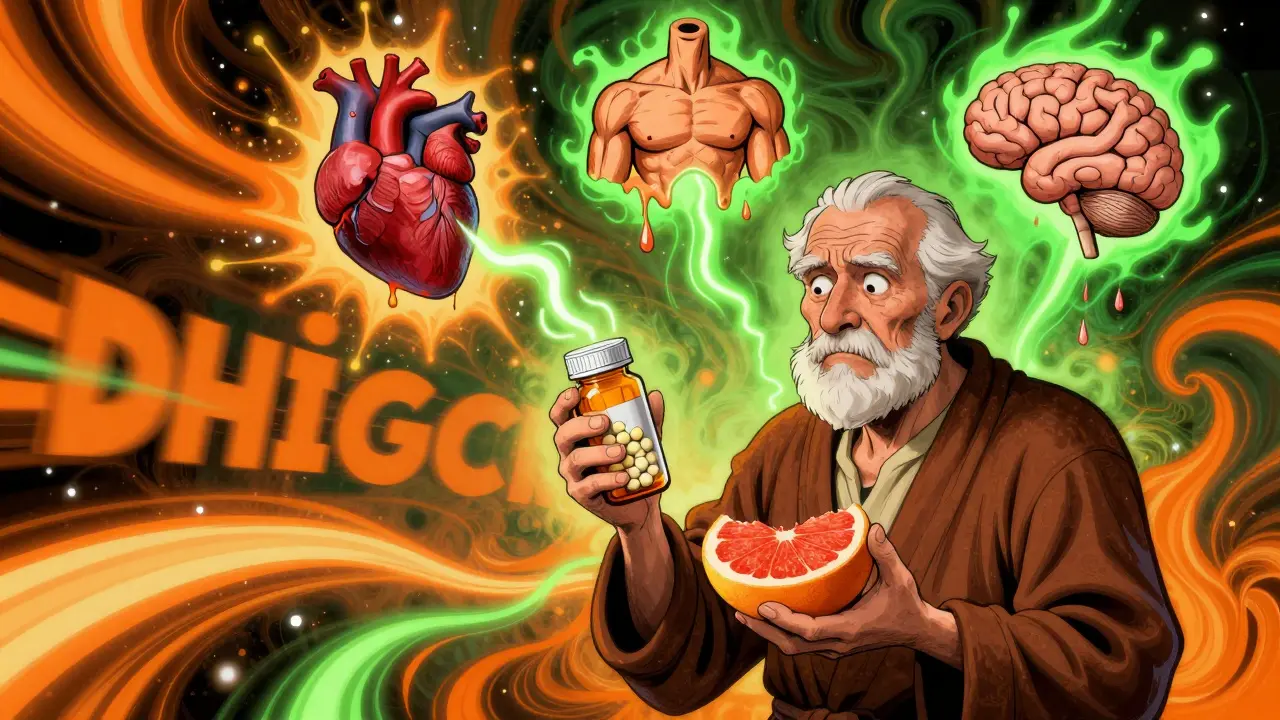
Why Some People Are More at Risk Than Others
Not everyone reacts the same way. Two people drinking the same amount of grapefruit juice with the same medication can have wildly different outcomes. One might feel fine; the other ends up in the ER.
Why? Genetics play a big role. Some people naturally have more CYP3A4 enzymes in their gut. Studies show a strong correlation (r=0.78) between enzyme levels and how much drug levels rise after grapefruit juice. If your body naturally breaks down drugs quickly, grapefruit juice hits you harder.
Age matters too. Older adults are more vulnerable. They’re more likely to take multiple medications, have slower metabolism, and reduced kidney function. The American Geriatrics Society lists grapefruit interactions as a key concern in their 2023 Beers Criteria for older adults. About 42% of people over 65 take five or more medications-many of which interact with grapefruit.
Even the type of grapefruit makes a difference. White grapefruit contains 20-50% more furanocoumarins than pink or red varieties. Fresh juice, frozen concentrate, and whole fruit all have the same effect. Even a small glass-6.8 fluid ounces-is enough to trigger a reaction.
What About Other Citrus Fruits?
Not all citrus is dangerous. Regular oranges, tangerines, and clementines are safe. They don’t contain the furanocoumarins that cause the problem.
But Seville oranges-used in marmalade-and pomelos? Avoid them. They contain the same harmful compounds as grapefruit. If your jar of marmalade says “Seville orange,” check your meds. Same goes for fresh pomelo juice or fruit.
Limes and lemons? No significant risk. The compounds that cause the interaction are unique to grapefruit and its close relatives. So you don’t need to give up all citrus-just the ones that are bitter and pink or white.
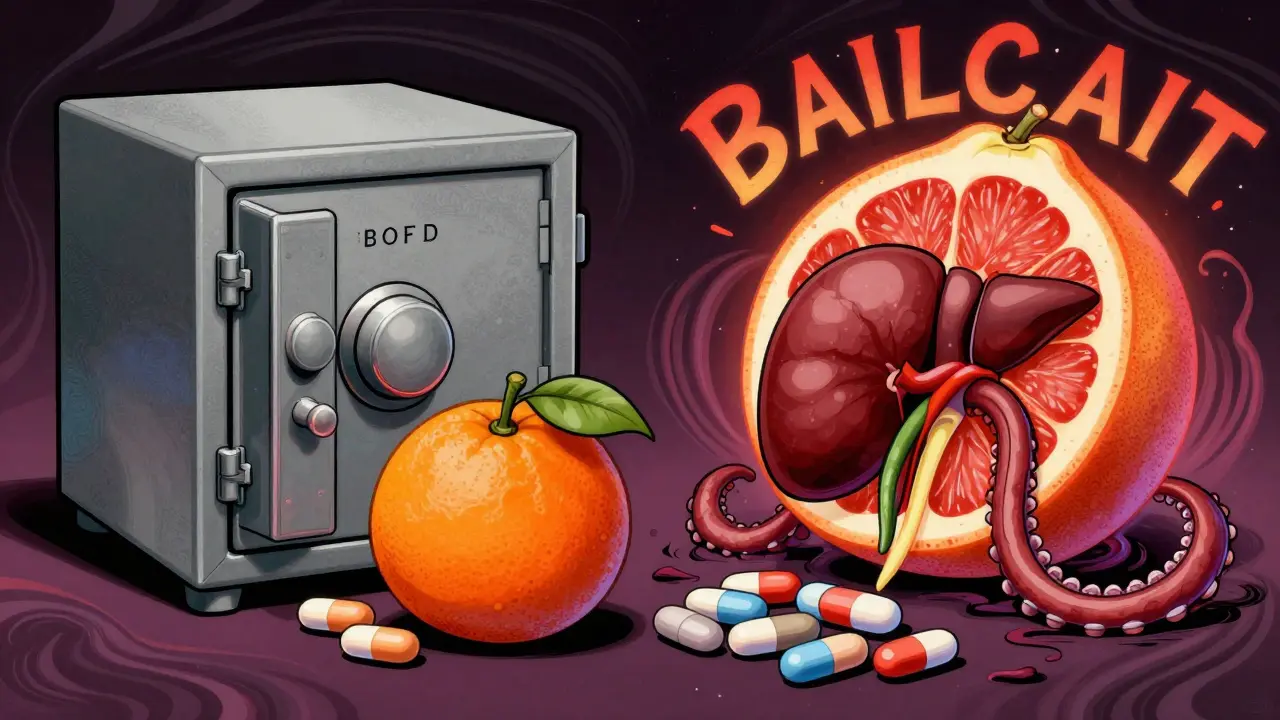
What Should You Do?
If you’re on medication, the safest move is to avoid grapefruit entirely. Don’t rely on timing. Don’t assume “a little won’t hurt.” The interaction doesn’t follow rules-it’s unpredictable and cumulative.
Here’s what to do:
- Check your medication label. If it says “Avoid grapefruit juice,” take it seriously.
- Ask your pharmacist. They can tell you if your meds are affected. Only 37% of pharmacists consistently counsel patients on this, so don’t assume they will.
- Look up your medication online. The FDA, University of Liverpool’s Medicines Interaction Checker, and other trusted sources list interactions.
- If you’re unsure, switch to a safer alternative. For example, switch from simvastatin to rosuvastatin, or from felodipine to amlodipine.
- Don’t assume “natural” means safe. Grapefruit juice isn’t a health food in this context-it’s a drug modifier.
Even if you’ve been drinking grapefruit juice with your meds for years without issues, that doesn’t mean it’s safe. The interaction can show up at any time. Your body changes. Your meds change. Your gut enzymes change. What was fine last year might be dangerous this year.
Why This Problem Keeps Growing
This isn’t a forgotten issue. It’s getting worse. The FDA now requires grapefruit warnings on 19% of prescription labels-up from 12% in 2015. Electronic health records now include over 128 grapefruit-related alerts. Drug interaction software flags grapefruit as the #1 food-drug interaction in 18% of cases.
But awareness is still low. A 2021 study found only 28% of patients could name their own grapefruit-affected medications-even after being told. And 47% of patients continue drinking grapefruit juice despite warnings. Among those over 65, non-compliance hits 63%.
Pharmaceutical companies are trying to fix this. Some have reformulated drugs-like extended-release felodipine-to reduce the interaction. Researchers are even working on CRISPR-edited grapefruit that lacks furanocoumarins. But until those reach the market, the only proven solution is avoidance.
The bottom line? Grapefruit juice isn’t just a beverage. For millions, it’s a hidden risk. It doesn’t matter if you’re healthy, young, or eat organic. If you’re on one of these medications, grapefruit juice can turn a routine treatment into a medical crisis. Skip it. Your body will thank you.
Can I drink grapefruit juice if I take my medication at night?
No. The enzymes in your gut that grapefruit juice disables take about 72 hours to recover. Taking your medication at night doesn’t help if you drank grapefruit juice in the morning. The interaction isn’t about timing-it’s about whether the enzymes are still active. Even 24 hours after drinking grapefruit juice, your body may still be vulnerable.
Is it safe to eat grapefruit instead of drinking the juice?
No. The same compounds that cause the interaction are in the fruit, the juice, and even the peel. Eating half a grapefruit has the same effect as drinking a glass of juice. The dose isn’t about liquid volume-it’s about the amount of furanocoumarins. One whole grapefruit can be enough to trigger a dangerous reaction.
Are there any medications that are completely safe with grapefruit?
Yes. Many drugs aren’t affected because they don’t rely on CYP3A4 for metabolism. Examples include pravastatin, rosuvastatin, fluvastatin, losartan, amlodipine, and levothyroxine. But you can’t assume-always check your specific medication. Just because one statin is safe doesn’t mean all are. Always verify with your pharmacist or doctor.
Can grapefruit juice make my medication less effective?
Yes, in rare cases. Grapefruit juice also blocks OATP transporters, which help absorb some drugs. For example, fexofenadine (an allergy medication) and levothyroxine can become less effective when taken with grapefruit juice. So it’s not just about increasing drug levels-it can also reduce them. Always check how your specific drug is absorbed.
What should I do if I accidentally drank grapefruit juice with my medication?
If you took a single dose and feel fine, monitor yourself for unusual symptoms like dizziness, muscle pain, irregular heartbeat, or extreme drowsiness. Call your pharmacist or doctor if you’re concerned. If you’re on a high-risk medication like simvastatin or cyclosporine, don’t wait-seek medical advice immediately. Going forward, avoid grapefruit entirely. One mistake doesn’t mean you’re doomed, but repeating it puts you at serious risk.
Pankaj Singh
January 13, 2026 AT 18:20This is why people die from 'natural remedies.' Grapefruit juice isn't a health food-it's a silent killer for people too lazy to read their damn labels. If you're on meds and still drinking it, you're not 'health-conscious,' you're just stupid.
Scottie Baker
January 14, 2026 AT 02:53Bro. I’ve been drinking grapefruit juice with my statin for 8 years. Never had an issue. Now you’re telling me I’m gonna drop dead tomorrow because some study says so? Nah. My body knows what it’s doing. You’re overreacting.
Nelly Oruko
January 15, 2026 AT 01:30It’s fascinating how something so simple-like a fruit-can unravel complex biological systems. The body isn’t a machine you can tweak with timing. It’s a living, evolving network. And we treat it like a spreadsheet. We need more humility in pharmacology.
Angel Molano
January 15, 2026 AT 18:41If you’re taking meds and still drinking grapefruit juice, you deserve what happens. No sympathy. No exceptions. This isn’t a suggestion-it’s a warning written in blood.
laura Drever
January 16, 2026 AT 08:52lol why is everyone so dramatic. i drink it every day. never died. also i think the study was funded by big pharma to sell more expensive drugs.
Diana Campos Ortiz
January 17, 2026 AT 04:15I switched from simvastatin to rosuvastatin after reading this. Honestly? I didn’t even know grapefruit was a thing until my pharmacist mentioned it. Thanks for the heads-up. I feel way safer now. 😊
jefferson fernandes
January 17, 2026 AT 23:21Let’s not panic, but let’s also not ignore science. If you’re on any statin, calcium channel blocker, or immunosuppressant-check your med sheet. If it says ‘avoid grapefruit,’ don’t argue. Ask your pharmacist. They’re not just there to hand out pills-they’re your safety net. And yes, it’s worth the 2 minutes.
Acacia Hendrix
January 18, 2026 AT 23:58It’s not merely a CYP3A4 inhibition-it’s a pharmacokinetic disruption of first-pass metabolism mediated by irreversible furanocoumarin adduct formation, which suppresses intestinal enzyme activity with a half-life exceeding 24 hours. The clinical implications are profound for polypharmacy patients, particularly those with reduced hepatic reserve. You’re not just ‘drinking juice’-you’re modulating bioavailability thresholds.
Jesse Ibarra
January 19, 2026 AT 12:04Of course you’re not supposed to drink it. But the real tragedy? People who don’t know they’re at risk. I’ve seen grandmas on blood pressure meds chugging it like it’s orange juice. They think ‘natural’ means ‘harmless.’ It’s not ignorance-it’s negligence. And we’re letting it happen.
Vinaypriy Wane
January 20, 2026 AT 16:56I get it. People are scared. But please-don’t shame others. I have a friend who’s 72, on cyclosporine, and loves grapefruit. She didn’t know. Now she does. She’s not a bad person. She’s just someone who needs better education. Let’s help. Not yell.