

Starting a new medication for your mental health can feel like a gamble. You're often told it will help, but you're left wondering: Will it make me feel numb? Will I gain weight? How long until I actually feel better? If you're navigating the world of antidepressants safety profile, the first thing to know is that these drugs aren't a one-size-fits-all solution. While they can be life-saving for those with moderate to severe depression, the journey to finding the right one often involves a frustrating period of trial and error.
Quick Summary: What You Need to Know
- Timeline: Most medications take 4-6 weeks to show a difference, with full benefits appearing around week 12.
- First-Line Options: SSRIs and SNRIs are usually prescribed first because they generally have fewer severe side effects than older drugs.
- Effectiveness: About 50-60% of people see a significant reduction in symptoms, though combining meds with therapy usually works best.
- Key Risks: Common issues include weight gain, sexual dysfunction, and emotional blunting; rare but serious risks include increased suicidal thoughts in young adults.
- Exit Strategy: Never stop these medications abruptly due to the risk of discontinuation syndrome.
The Different Types of Antidepressants
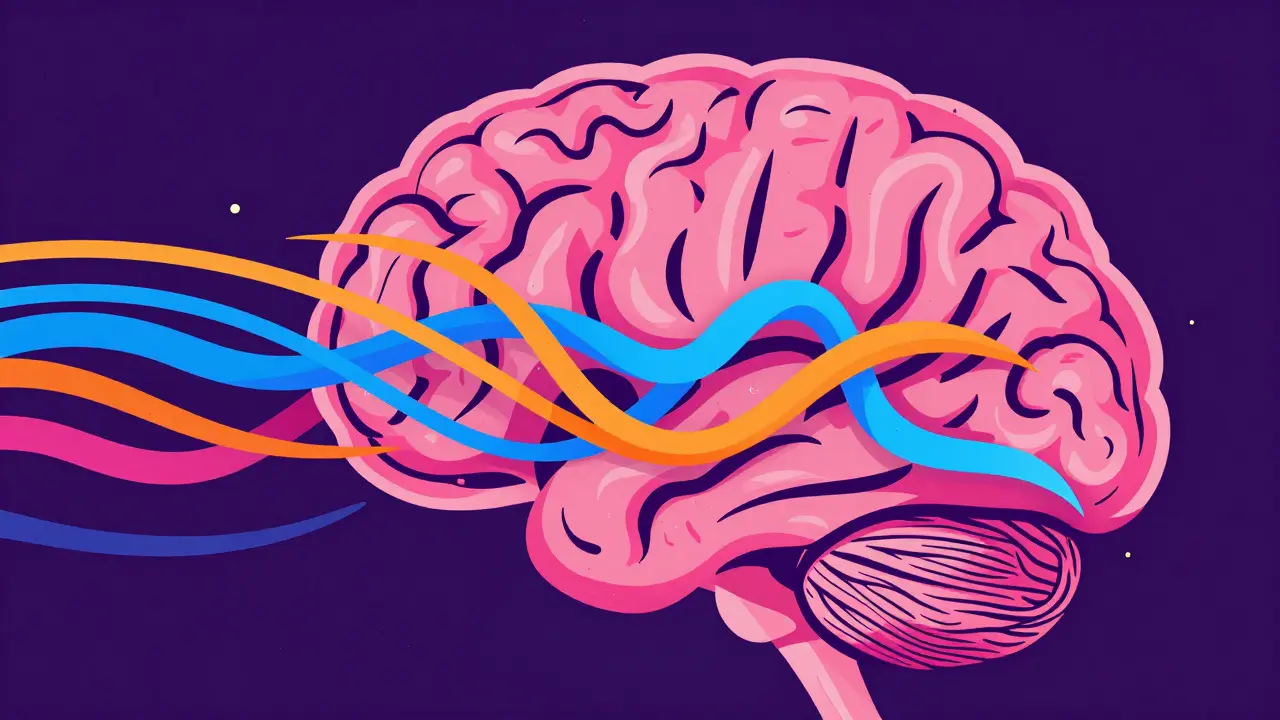
Not all antidepressants work the same way. They primarily target neurotransmitters-the brain's chemical messengers-like serotonin, norepinephrine, and dopamine. Depending on which chemical the drug targets, your experience with it will differ.
Selective Serotonin Reuptake Inhibitors (SSRIs) is a class of medication that increases serotonin levels in the brain by blocking its reabsorption. Common examples include Sertraline (Zoloft) and Fluoxetine (Prozac). These are the most common prescriptions because they are generally easier to tolerate than older options.
Serotonin-Norepinephrine Reuptake Inhibitors (SNRIs) are drugs that boost both serotonin and norepinephrine. Medications like Venlafaxine (Effexor) and Duloxetine (Cymbalta) often fall into this category and are sometimes used when SSRIs aren't enough or when chronic pain is also present.
Atypical Antidepressants are medications that don't fit into the other main categories, often targeting dopamine. A prime example is Bupropion (Wellbutrin), which is often praised for having fewer sexual side effects than SSRIs.
Then there are the "old school" options. Tricyclic Antidepressants (TCAs) and Monoamine Oxidase Inhibitors (MAOIs) are rarely first choices today. While effective, they come with much heavier side effect profiles and, in the case of MAOIs, strict dietary restrictions to avoid dangerous blood pressure spikes.
| Class | Primary Target | Common Examples | Main Advantage | Primary Drawback |
|---|---|---|---|---|
| SSRIs | Serotonin | Sertraline, Escitalopram | High safety/tolerability | Sexual dysfunction |
| SNRIs | Serotonin & Norepinephrine | Venlafaxine, Duloxetine | Effective for anxiety/pain | Can increase blood pressure |
| Atypicals | Dopamine & Norepinephrine | Bupropion | Lower weight gain risk | Potential for insomnia |
| TCAs/MAOIs | Multiple/MAO Enzyme | Amitriptyline, Phenelzine | Strong for severe cases | Severe side effects/diet limits |
The Safety Profile: Weighing Risks vs. Benefits
Let's be honest: the side effects can be a dealbreaker. For many, the trade-off is worth it to get their life back, but it's important to know what you're signing up for. In the short term, you might deal with nausea or a bit of insomnia. According to data from MIT Health, about 15-20% of patients experience nausea early on, but this usually fades within a week.
Long-term use brings different challenges. Many people report "emotional blunting"-a feeling that they can't feel the extreme lows, but they can't feel the extreme highs either. Weight gain is another huge concern, affecting roughly 50% of users. Sexual side effects are even more common, hitting up to 56% of those on serotonin-based meds. This is why some doctors suggest adding Bupropion to the mix; it can sometimes counteract those specific issues.
There is also a darker risk. The FDA mandates a "black box warning" for people under 25 because antidepressants can actually increase suicidal thoughts in some young adults during the first few weeks of treatment. If you're young or have a history of these thoughts, close monitoring by a doctor is non-negotiable.
Pregnancy adds another layer of complexity. Taking these meds in the third trimester can lead to newborns who are restless or have low blood sugar. However, the American College of Obstetricians and Gynecologists suggests that for many women, the risk of untreated severe depression is actually more dangerous for both the mother and the baby than the medication itself.
The Reality of the "Trial and Error" Phase
If the first pill you try doesn't work, don't panic. It's actually the norm. Many patients have to try two or three different medications before finding the "goldilocks" drug that works without making them miserable. Some people find that Sertraline makes them jittery, while Escitalopram feels just right. This isn't a failure of the medicine; it's a result of how unique our brain chemistry is.
You also have to play the waiting game. You aren't going to wake up the next morning feeling euphoric. The NHS notes that it takes 4-6 weeks to see a real shift. Some people feel the side effects immediately but the benefits slowly. This "gap" is where many people give up, thinking the drug doesn't work. Hang in there-the full effect often doesn't kick in until the 12-week mark.
The Danger of Quitting Cold Turkey
One of the most dangerous things you can do is stop your medication abruptly. This triggers what's known as Discontinuation Syndrome, which is a fancy way of saying your brain is reacting to the sudden loss of a chemical it has grown dependent on.
Roughly 50-70% of patients experience withdrawal if they stop suddenly. You might feel "brain zaps" (electric shock sensations in the head), extreme irritability, dizziness, and flu-like symptoms. Some drugs are harder to quit than others; for example, Paroxetine has a very short half-life, making withdrawal more likely compared to Fluoxetine, which stays in your system longer and "tapers" itself naturally.
Making the Most of Your Treatment
Medication is a powerful tool, but it's rarely the only tool you need. The consensus among experts, including the American Psychiatric Association, is that combining meds with psychotherapy-specifically Cognitive Behavioral Therapy (CBT)-leads to the best outcomes. The meds stabilize the "floor" of your mood, which gives you the mental energy to actually engage in therapy and learn coping mechanisms.
If you're struggling with side effects, talk to your doctor about timing. Taking your dose at night can kill the daytime drowsiness. If dry mouth is the problem, sugar-free gum is a simple fix. The most important thing is to keep a log of how you feel and share it with your provider every few weeks. They can't adjust the dose or the drug if they don't know exactly how you're reacting.
How long does it take for antidepressants to work?
You'll usually start noticing a difference in 4 to 6 weeks. However, it can take up to 12 weeks to reach the full therapeutic benefit. It's common to feel some side effects before you feel the mood-lifting benefits.
Will I have to take these medications forever?
Not necessarily. While some people need long-term support, others use them to get through a crisis. For those in remission, guidelines suggest staying on the medication for 6-9 months to prevent a relapse, which can drop the relapse rate from about 60% down to 20-30%.
Can I drink alcohol while on antidepressants?
Generally, it's not recommended. Alcohol is a depressant and can counteract the effects of your medication. It can also increase drowsiness and impair your judgment more severely when combined with drugs like SSRIs or SNRIs.
What should I do if I feel my symptoms getting worse?
Contact your doctor immediately. Some people experience an increase in anxiety or suicidal thoughts when first starting a medication. This is a medical emergency if you have a plan to hurt yourself-reach out to a crisis hotline or go to the nearest emergency room.
Are generic antidepressants as good as brand name ones?
Yes. Generic versions contain the same active ingredients and must meet the same safety and efficacy standards as the brand-name versions. They are significantly more affordable and are the standard of care in most healthcare systems.
Next Steps and Troubleshooting
If you're currently on a medication and feel "stuck," here is a quick guide on what to do next:
- Feeling numb or "flat"? Ask your doctor about adjusting the dose or switching to an atypical antidepressant like Bupropion.
- Can't sleep? Try moving your dose to the morning or evening depending on if the drug makes you wired or drowsy.
- Thinking about stopping? Schedule a "tapering plan" with your provider. Never just stop taking your pills on a Monday morning.
- Still feeling depressed after 3 months? This is the time to discuss "augmentation" (adding a second med) or switching classes entirely.
Mark Zhang
April 5, 2026 AT 21:44It's so important to mention the gap between starting the meds and feeling the benefits. A lot of people just quit because they don't feel anything in the first two weeks, but hanging in there is the hardest and most crucial part of the process. You're definitely not alone if it takes a few tries to find the right fit.
Rob Newton
April 6, 2026 AT 20:06Too much reliance on chemicals. Just fix your diet.
Aysha Hind
April 8, 2026 AT 18:53Big Pharma just wants you hooked on these synthetic sludge cocktails to keep the profits rolling in while your brain turns into mush. These "side effects" are just the drugs rewriting your DNA to make you compliant little drones for the system. It's all a choreographed dance of chemical dependency designed by people who wouldn't know real healing if it hit them in the face. Absolute madness that people just swallow this blindly without looking into the natural alternatives that the establishment suppresses. Total sham.
HARSH GUSANI
April 10, 2026 AT 04:08Who cares about this stuff? 🙄 Only weak people need these pills. In my country we have better ways to deal with stress and we don't need western chemicals to feel happy! 🇮🇳💪
The Charlotte Moms Blog
April 10, 2026 AT 21:59The weight gain part is completely understated!!! I've seen so many women struggle with this and the doctors just brush it off like it's no big deal... It's absolutely devastating to your self-esteem!!! Plus the brain fog is real!!!
Jenna Carpenter
April 12, 2026 AT 04:23Honestly if you can't handle the side effects you just aren't commited enough to your own healng process. Most peple just complain insted of doing the work.
Hudson Nascimento Santos
April 12, 2026 AT 22:03There is a profound philosophical tension here between the desire for stability and the loss of a certain raw, authentic human experience. By smoothing out the lows, we inadvertently shave off the peaks of our emotional landscape. It makes one wonder if the "healing" is actually a restoration of self or the creation of a curated, muted version of existence. Still, for some, the alternative is a void so deep that any level of numbness is a sanctuary.
Lawrence Rimmer
April 14, 2026 AT 13:08The whole concept of "brain chemistry" is just a convenient narrative to sell pills to a society that's fundamentally broken. We've pathologized sadness. If you're depressed, it's probably because your life actually sucks and a pill won't change your shitty job or your lonely apartment. It's an intellectual cop-out to say it's all just serotonin levels.
Sakshi Mahant
April 15, 2026 AT 06:44It's interesting to see how different cultures view this. In some places, the stigma is so high that people suffer in silence, while in others, the medicalization of every emotion is the norm. I believe there is a middle ground where we can respect the science but also value the traditional ways of finding peace and community support.
Dipankar Das
April 15, 2026 AT 13:09YOU MUST REMAIN DISCIPLINED IN YOUR TREATMENT! It is a failure of will to give up during the trial and error phase! You have to force yourself to endure the nausea and the insomnia because the result is a productive life! Only those with true mental fortitude will push through the 12-week mark and achieve victory over their condition!