
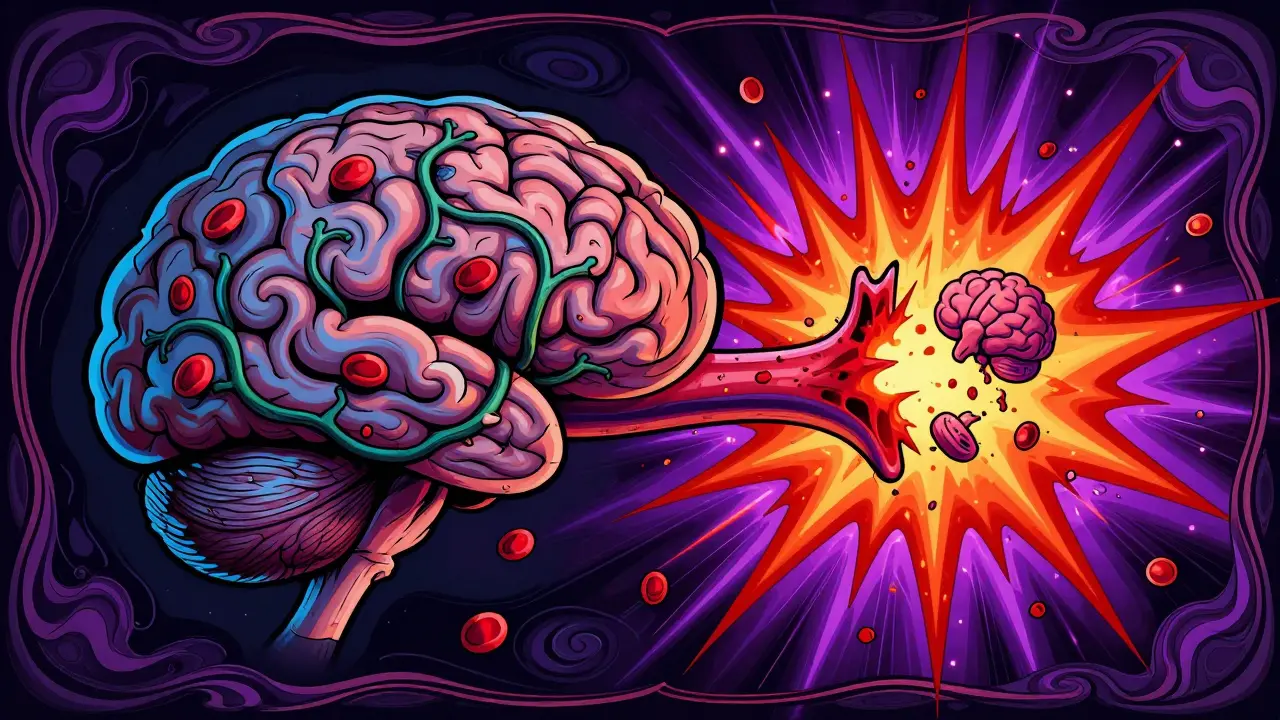
Two out of every three strokes are caused by a blockage. One in five is caused by bleeding. That’s not a guess-it’s the hard truth from the CDC and major stroke centers across the U.S. and U.K. And yet, most people can’t tell the difference between an ischemic stroke and a hemorrhagic stroke. That’s dangerous. Because how you treat them is completely opposite. Give a clot-busting drug to someone with a bleed, and you make things worse. Fast. Deadly worse.
What’s the Real Difference Between Ischemic and Hemorrhagic Strokes?
An ischemic stroke is when a blood clot blocks an artery feeding the brain. It’s like a clogged pipe in your house-water can’t flow. This type makes up about 87% of all strokes. The clot might form right in the brain (thrombotic), or it might travel from your heart or neck (embolic). About 30% of these have no clear cause, called cryptogenic strokes. These often sneak up. Symptoms might start as mild numbness in your hand, then slowly spread over 10 to 30 minutes. Speech gets fuzzy. Vision blurs. You don’t always feel like you’re having a medical emergency.
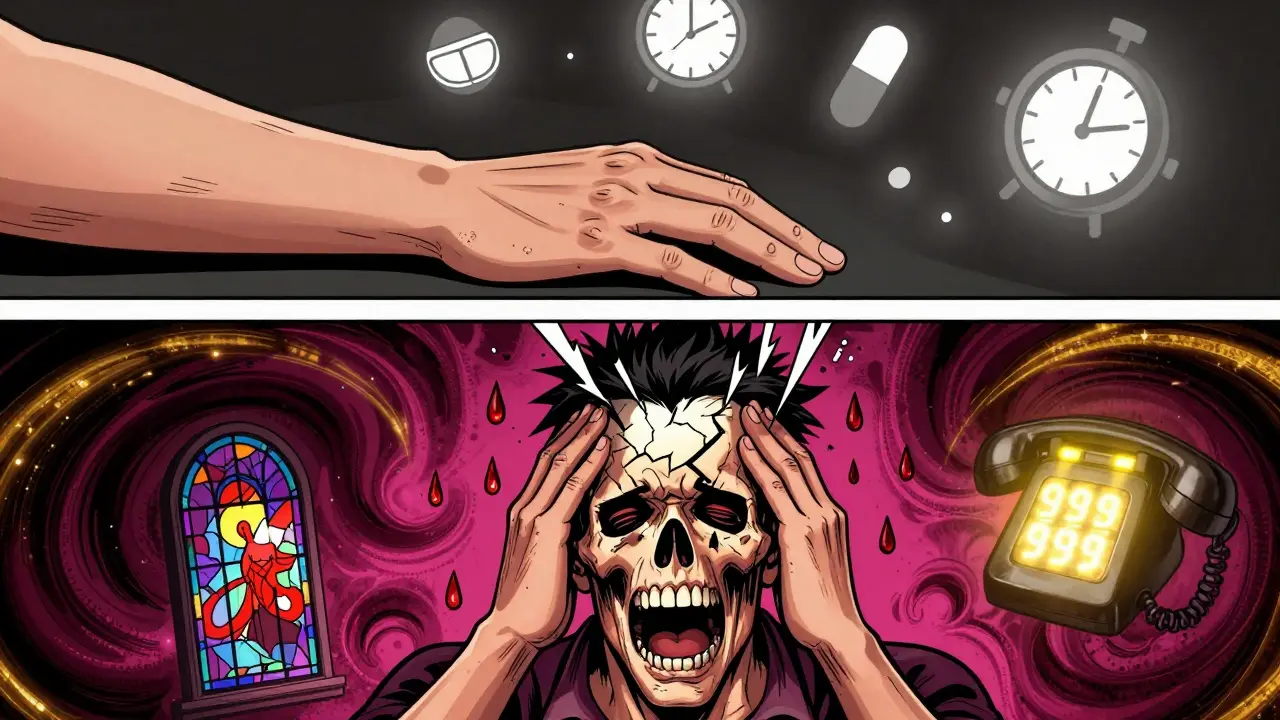
A hemorrhagic stroke is when a blood vessel bursts inside or around the brain. It’s not a clog-it’s a rupture. This happens in only 13-15% of cases, but it’s often more violent. The most common cause? High blood pressure. Over years, it weakens the walls of small arteries in the brain. Then-pop. The pressure from the leaking blood crushes brain tissue. The second big cause? A brain aneurysm. It’s a balloon-like bulge in a vessel wall. When it bursts, it causes a subarachnoid hemorrhage. These strokes don’t whisper. They scream. People describe it as the worst headache of their life. Some lose consciousness instantly. Others have seizures, vomiting, or one pupil suddenly bigger than the other.
Here’s what the data shows about symptoms:
| Symptom | Ischemic Stroke | Hemorrhagic Stroke |
|---|---|---|
| Severe headache | 19% | 92.4% |
| Loss of consciousness | 15% | 63% |
| Seizures | 0% | 17.4% |
| Dilated pupils | 27.4% | 86.8% |
| Agitation | 6.7% | 79.9% |
That’s not just medical jargon. That’s what real patients report. On Reddit’s stroke forum, people who survived hemorrhagic strokes said they knew something was wrong the moment the headache hit. One woman said, “It felt like my head was going to explode.” Another described waking up unable to move, then hearing his wife scream, “Call 999!”
How Doctors Tell Them Apart-And Why It Matters
There’s no time to wait for symptoms to get worse. Every minute counts. That’s why the first thing any hospital does when someone shows signs of stroke? A non-contrast CT scan. It’s fast. It’s cheap. And it tells you instantly: is there bleeding? Or is it a clot?
If it’s ischemic, you might get tPA (alteplase) or tenecteplase-drugs that dissolve clots. But only if given within 3 to 4.5 hours. For larger clots in major brain arteries, doctors can do a mechanical thrombectomy. A catheter is threaded up from the groin, right into the blocked artery, and the clot is pulled out. This works even up to 24 hours after symptoms start-if the brain tissue is still salvageable.
If it’s hemorrhagic? You don’t give clot-busters. You do the opposite. You lower blood pressure fast. You give drugs to reduce swelling. And if it’s from an aneurysm? Surgery. Two main options: coiling (a tiny metal coil is inserted through the artery to seal the aneurysm) or clipping (a surgeon opens the skull and places a metal clip on the aneurysm). Stanford’s Dr. Gary Steinberg says clipping still beats coiling for certain aneurysms-especially if they’re large or oddly shaped.
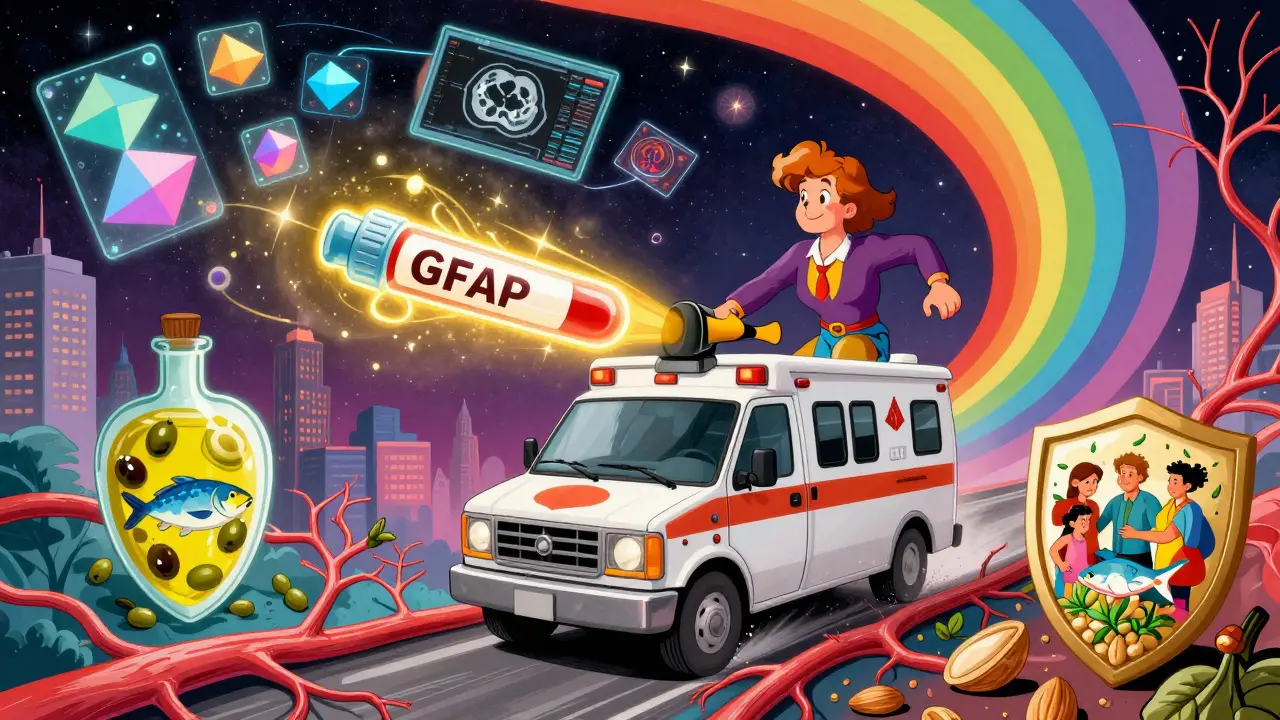
And here’s something new: blood tests. In February 2023, the Journal of the American College of Cardiology published data showing that a simple blood test measuring GFAP (a protein released by damaged brain cells) can distinguish hemorrhagic from ischemic stroke with 92% accuracy within 15 minutes. That means ambulances could one day start treatment before even reaching the hospital.
What Causes Each Type? And Who’s at Risk?
Ischemic strokes are tied to heart and artery disease. The biggest risk factor? atrial fibrillation-a wobbly heart rhythm. It lets blood pool in the heart, forming clots. People with AFib are five times more likely to have a stroke. That’s why doctors put them on warfarin, apixaban, or other blood thinners. The ARISTOTLE trial showed these drugs cut stroke risk by 60-70%.
But it’s not just AFib. High cholesterol, smoking, diabetes, and obesity all build up plaque in arteries. That’s what leads to thrombotic strokes. Small vessel strokes (lacunar strokes) are often from decades of uncontrolled high blood pressure-even if you never had a heart attack.
Hemorrhagic strokes? Almost always about pressure. The CDC says 78-88% of brain bleeds happen because of long-term hypertension. That’s why the SPRINT trial was a game-changer. They took people with high blood pressure and told half to keep their systolic pressure under 140. The other half? Under 120. Guess who had 38% fewer hemorrhagic strokes? The 120 group. That’s not a small win. That’s life-saving.
How to Prevent a Stroke-Before It Happens
Prevention isn’t complicated. It’s just hard to stick to.
For ischemic stroke prevention:
- Take your blood thinners if you have AFib-no skipping days.
- Use aspirin (81mg daily) or clopidogrel if you’ve had a prior stroke or TIA. It cuts recurrence by 25%.
- Control cholesterol with statins if you have plaque in your arteries.
- Quit smoking. Your stroke risk drops by half within one year.
For hemorrhagic stroke prevention:
- Get your blood pressure checked monthly if you’re over 40.
- Keep systolic pressure below 120 mmHg. That’s the new gold standard.
- Limit alcohol. More than two drinks a day raises bleeding risk.
- Don’t use cocaine or methamphetamine. They spike blood pressure instantly.
And for both types:
- Eat a Mediterranean diet: olive oil, fish, nuts, vegetables, whole grains. The PREDIMED study showed a 30% lower stroke risk.
- Move 150 minutes a week. Walk, swim, cycle. It cuts overall stroke risk by 27%.
- Manage diabetes. High sugar damages blood vessels over time.
- Know FAST: Face drooping, Arm weakness, Speech difficulty, Time to call 999. If you see any of these, act. Don’t wait. Don’t drive yourself. Call emergency services.
What Happens After a Stroke? Survival and Recovery
Survival depends on speed. A 2022 report from the American Stroke Association found that 73% of people with good outcomes recognized symptoms within five minutes and called for help immediately. Those who waited more than an hour? Their chances of full recovery dropped by 60%.
Ischemic stroke survivors often regain most function with rehab-physical therapy, speech therapy, occupational therapy. But hemorrhagic stroke survivors face longer, harder recoveries. The bleeding causes more direct damage. Even if they survive, many need months of therapy. And the risk of another bleed is higher.
But here’s hope: AI is helping. Hospitals like those using Viz.ai’s software are cutting “door-to-needle” time by over 50 minutes. That means more people get tPA before brain cells die. And in 2023, the WAKE-UP trial showed that MRI scans can identify stroke patients who can still benefit from tPA-even up to 9 hours after symptoms start. That’s a huge window for people who wake up with a stroke.
Why This Matters More Than Ever
Stroke is the fifth leading cause of death in the U.S. and kills one person every 19 minutes. The cost? Over $53 billion a year in medical bills and lost work. Globally, stroke cases will rise 27% by 2030 as populations age. But death rates are falling-because we’re getting better at prevention and faster at treatment.
The message isn’t just medical. It’s personal. If you’re over 40, get your blood pressure checked. If you have atrial fibrillation, take your pills. If you smoke, quit today. If you see someone with slurred speech or one arm drooping-call 999. Don’t wait. Don’t assume it’s just a migraine. Don’t hope it’ll pass.
Strokes don’t care if you’re young or old. They don’t care if you’re healthy. They strike fast. And they’re preventable-if you know what to look for, and what to do.
Can a stroke happen to someone young?
Yes. While stroke risk increases with age, about 10-15% of strokes happen in people under 50. Causes in younger people include heart defects, blood clotting disorders, drug use, or undiagnosed high blood pressure. Cryptogenic strokes are more common in younger patients, which is why thorough testing is essential.
Is it safe to take aspirin if I think I’m having a stroke?
No. Don’t take aspirin unless a medical professional tells you to. If it’s a hemorrhagic stroke, aspirin can make the bleeding worse. The only safe action is to call emergency services immediately. Let them decide treatment.
Can you have a stroke and not know it?
Yes. These are called silent strokes. They don’t cause obvious symptoms like weakness or slurred speech, but they damage small areas of the brain. Over time, multiple silent strokes can lead to memory problems or dementia. They’re often found on brain scans done for other reasons.
How long do stroke symptoms last before it’s too late?
For clot-busting drugs like tPA, the window is 3-4.5 hours. For mechanical thrombectomy, it can extend to 24 hours if imaging shows brain tissue is still viable. But the sooner you act, the better. Every minute without blood flow kills 1.9 million brain cells. Don’t wait for symptoms to get worse.
Does having a TIA mean I’m going to have a full stroke?
A TIA (mini-stroke) is a warning sign. About 1 in 3 people who have a TIA will eventually have a full stroke, with half of those happening within a year. But with proper treatment-blood pressure control, statins, antiplatelets-your risk can drop by over 80%. Treat a TIA like a medical emergency.
Are there any new treatments on the horizon?
Yes. Blood tests that detect GFAP within minutes could allow paramedics to identify hemorrhagic strokes before arriving at the hospital. AI tools are improving scan interpretation speed. And minimally invasive surgery for brain bleeds (like MISTIE III) is reducing death rates by 10%. Research into stem cells and neuroprotective drugs is also advancing, though these are still experimental.
What to Do Next
If you’re over 40, get your blood pressure checked. If it’s above 120/80, talk to your doctor about lowering it. If you have atrial fibrillation, make sure you’re on the right medication. If you smoke, set a quit date-today. If you’ve ever had a TIA, don’t ignore it. And if you’re caring for someone at risk, learn FAST. Keep it simple. Face. Arm. Speech. Time. Call 999.
Strokes aren’t random. They’re preventable. And knowing the difference between ischemic and hemorrhagic isn’t just medical knowledge-it’s a life-saving skill.
Ajay Sangani
December 22, 2025 AT 13:24Katie Taylor
December 23, 2025 AT 13:24Wilton Holliday
December 25, 2025 AT 11:41Abby Polhill
December 27, 2025 AT 04:56Bret Freeman
December 27, 2025 AT 13:02Austin LeBlanc
December 28, 2025 AT 10:00Rachel Cericola
December 28, 2025 AT 20:16Blow Job
December 28, 2025 AT 22:25Christine Détraz
December 30, 2025 AT 13:21John Pearce CP
January 1, 2026 AT 03:38EMMANUEL EMEKAOGBOR
January 2, 2026 AT 00:27CHETAN MANDLECHA
January 2, 2026 AT 13:18Pankaj Chaudhary IPS
January 3, 2026 AT 18:27