
Drug Interaction Blood Pressure Risk Checker
Check Your Medication Risks
This tool helps identify potentially dangerous medication combinations that may cause severe hypertensive crisis. Based on your inputs, it will indicate risk levels and provide important warnings.
How This Works
This tool identifies dangerous combinations based on the medical knowledge presented in the article. It is not a substitute for professional medical advice.
Common dangerous interactions include:
- MAOIs with tyramine-rich foods causing sudden blood pressure spikes
- Propranolol combined with cocaine leading to extreme vasoconstriction
- High-dose venlafaxine (above 300mg) increasing diastolic pressure
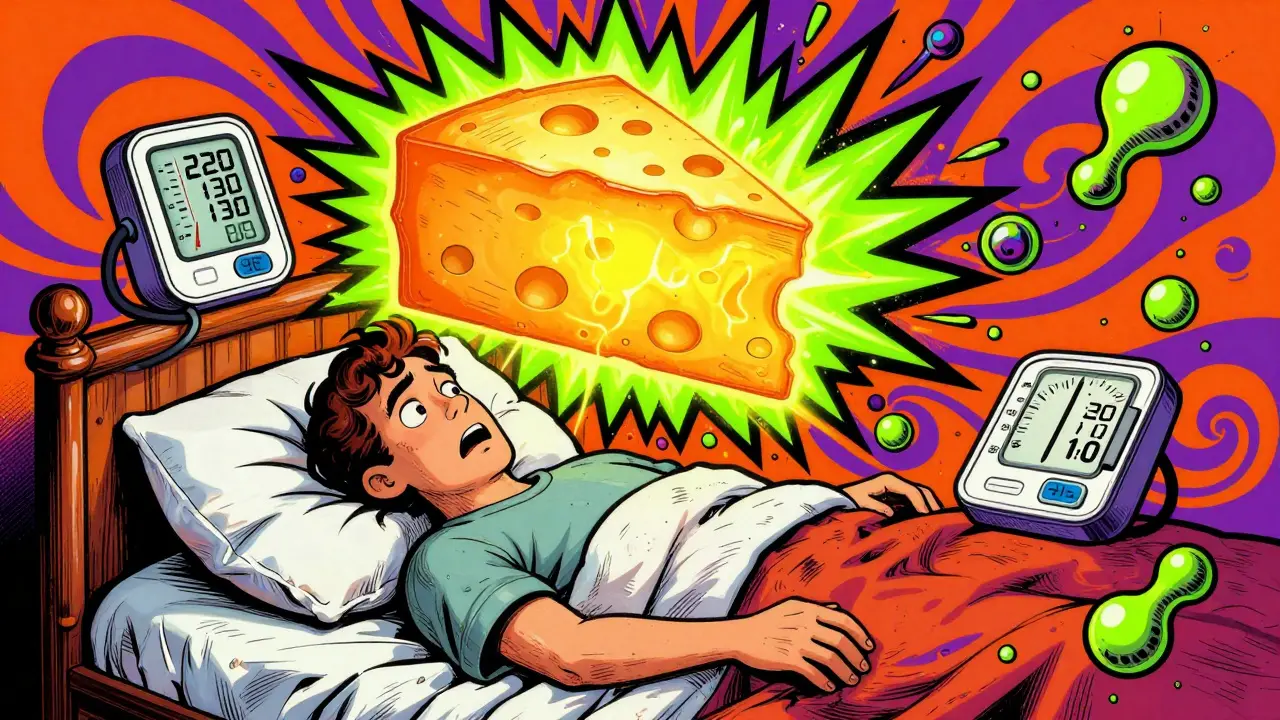
A severe hypertensive crisis isn't just a high blood pressure reading. It's a medical emergency that can strike without warning, often triggered by something as simple as a common cold medicine or a dietary choice. When drugs interact in unexpected ways, blood pressure can spike to dangerous levels-sometimes over 220 mmHg systolic-in under an hour. This isn't theoretical. People are ending up in intensive care units because they didn’t know their antidepressant, painkiller, or even licorice candy could cause this. Hypertensive crisis is defined as a systolic blood pressure above 180 mmHg or diastolic above 120 mmHg, with signs of immediate organ damage. That damage can include stroke, heart attack, kidney failure, or bleeding in the brain. The difference between a hypertensive urgency and a hypertensive emergency? One has organ damage. The other doesn’t. But both require urgent action. Most people think of high blood pressure as something slow and silent. But drug-induced hypertensive crisis is fast, violent, and often avoidable. About 15-20% of all secondary hypertension cases come from drug interactions, and experts believe the real number is even higher because so many cases go unreported or misdiagnosed. One of the most dangerous combinations is MAOIs (monoamine oxidase inhibitors) with foods high in tyramine. MAOIs are antidepressants like phenelzine or selegiline. Tyramine is found in aged cheeses, cured meats, soy sauce, and tap beer. Normally, your body breaks down tyramine. But MAOIs block that process. Tyramine builds up, forces out stored norepinephrine, and your blood pressure skyrockets. Case reports show systolic spikes of 50 to 100 mmHg within minutes. One patient described waking up with 220/130 after eating cheddar cheese while on selegiline. Three days in the ICU. Still terrified of cheese. The fix? Phentolamine. Given intravenously, it reverses the crisis in 92% of cases within 20 minutes. But prevention is far better than emergency treatment. The American Heart Association recommends a 2-week gap between stopping an MAOI and starting another antidepressant. For irreversible MAOIs like phenelzine, some experts say wait 4 to 5 weeks. Then there’s cocaine. Even on its own, cocaine causes severe hypertension. But when taken with propranolol-a beta-blocker often prescribed for heart conditions-the danger multiplies. Propranolol blocks the heart’s beta receptors, but not the alpha receptors in blood vessels. Cocaine stimulates those alpha receptors, causing unopposed, extreme vasoconstriction. Systolic pressures over 220 mmHg have been documented within 30 to 60 minutes. This isn’t rare. Emergency rooms see it. Another hidden culprit is mineralocorticoid receptor activation. This isn’t just about one drug. It’s about how certain substances mimic aldosterone, the hormone that makes your body hold onto salt and water. Licorice candy, carbenoxolone (a stomach ulcer drug), and even some steroid creams can block the enzyme that normally protects your body from excess cortisol. Cortisol then acts like aldosterone. Result? Sodium retention, fluid overload, low potassium, alkaline blood, and high blood pressure. In one study, patients showed a 15-20% increase in exchangeable sodium and 10-15% more blood volume. Blood pressure often doesn’t drop for weeks after stopping the trigger. Venlafaxine, a common antidepressant, is another growing concern. At doses above 300 mg per day, it’s linked to statistically significant diastolic pressure increases-often pushing diastolic above 90 mmHg. A 2015 meta-analysis confirmed this dose-dependent effect. Yet, many doctors don’t monitor blood pressure when prescribing venlafaxine. Patient reviews on Drugs.com show 42% of users reported unexplained high blood pressure, but their doctors dismissed it. One woman’s pressure jumped from 120/80 to 160/105 after her dose was increased. She was told it was stress. It was the drug. Cyclosporine, used after organ transplants, causes hypertension in up to 50% of patients. It reduces sodium excretion and increases prostaglandins that constrict blood vessels. In transplant centers, it’s common to misdiagnose this as organ rejection. The result? Doctors increase the immunosuppressant dose-which makes the hypertension worse. A 2019 European Society of Hypertension report found 55% of cyclosporine-induced hypertension cases were mismanaged this way. Over-the-counter medications are a blind spot. Decongestants like pseudoephedrine and phenylephrine are in nearly every cold remedy. They’re alpha-agonists. They constrict blood vessels. For someone already on blood pressure medication, this can be enough to trigger a crisis. Consumer Reports found only 12% of decongestant products have clear hypertension warnings. Most people don’t even think to mention their cold medicine to their doctor. The FDA has started responding. In 2023, they approved a decision-support tool that cuts MAOI-related emergencies by 40%. It integrates with electronic health records and flags risky combinations before the prescription is even filled. But it’s not everywhere. And it doesn’t cover OTC drugs. Genetics are playing a bigger role too. People with certain CYP2D6 gene variants metabolize some antidepressants differently. They build up higher levels of the drug. A 2023 study found these patients are 3.2 times more likely to have a severe hypertensive reaction. Genetic testing isn’t routine-but it should be for high-risk medications. So what can you do?
- If you’re on an MAOI, avoid aged cheese, soy sauce, cured meats, and tap beer. Use an app like MAOI Diet Helper-studies show it improves adherence by 78%.
- Don’t take decongestants if you have high blood pressure. Use saline sprays instead.
- Ask your pharmacist: "Could any of my medications, including supplements or OTC drugs, raise my blood pressure?"
- If you’re on venlafaxine above 225 mg/day, get your blood pressure checked every 3 months.
- Keep a written list of every medication, supplement, and herbal product you take. Bring it to every appointment.
Pat Fur
March 21, 2026 AT 19:28Anil Arekar
March 22, 2026 AT 12:22Elaine Parra
March 23, 2026 AT 03:48Natasha Rodríguez Lara
March 24, 2026 AT 05:47Caroline Bonner
March 26, 2026 AT 03:12peter vencken
March 26, 2026 AT 23:54Chris Crosson
March 27, 2026 AT 20:26Linda Foster
March 29, 2026 AT 00:48