
QT Interval Calculator for Methadone Patients
Calculate your corrected QT interval (QTc) and understand your risk of arrhythmia while on methadone therapy.
QTc Result
Corrected QT Interval
Risk Assessment
Normal QTc: ≤430 ms (men), ≤450 ms (women)
Borderline: 431-450 ms (men), 451-470 ms (women)
Significantly prolonged: >450 ms (men), >470 ms (women)
High risk: >500 ms
Understanding Your Result
Why Methadone Can Slow Your Heart’s Electrical Cycle
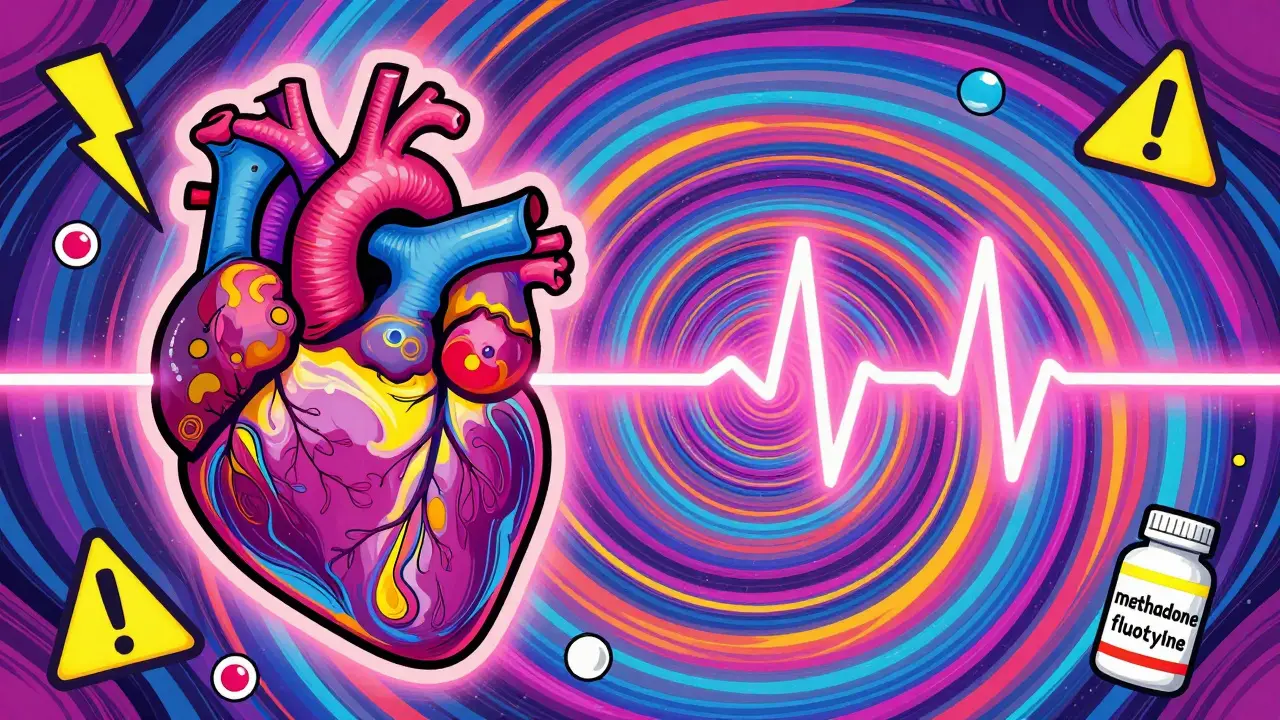
Methadone saves lives. For people struggling with opioid dependence, it reduces cravings, cuts overdose deaths by a third, and helps rebuild stability. But behind that benefit is a quiet danger: methadone can stretch out the heart’s electrical recovery time, measured as the QT interval on an ECG. When this interval gets too long, it opens the door to a dangerous rhythm called Torsades de Pointes - a type of ventricular arrhythmia that can turn fatal in seconds.
This isn’t theoretical. Since the FDA issued a safety alert in 2006, over 140 confirmed cases of Torsades de Pointes linked to methadone have been reported. Many more likely went unnoticed because sudden death in someone on methadone is often written off as an overdose. But it’s not always the drug itself that kills. Sometimes, it’s the heart.
How Methadone Disrupts Your Heart’s Rhythm
Methadone blocks a specific potassium channel in heart cells called hERG (KCNH2). This channel normally helps reset the heart’s electrical charge after each beat. When it’s blocked, the heart takes longer to recharge. That delay shows up on an ECG as a longer QT interval.
It’s not just methadone alone. Other factors pile on. If you’re taking medications like certain antidepressants, antipsychotics, or antibiotics - especially those that also prolong QT - the effect multiplies. Even low potassium or magnesium levels can tip the balance. And if you have sleep apnea - which affects nearly half of people on methadone - your oxygen levels drop at night, further stressing the heart.
The result? A heart that’s more prone to erratic, dangerous rhythms. The risk doesn’t always rise with dose, but it often does. People taking over 100 mg a day are three times more likely to have a dangerously prolonged QT interval than those on lower doses.
What’s a Normal QT Interval? Know the Numbers
Not every long QT is dangerous. But you need to know where the lines are.
- Normal QTc: ≤430 ms for men, ≤450 ms for women
- Borderline: 431-450 ms (men), 451-470 ms (women)
- Significantly prolonged: >450 ms (men), >470 ms (women)
- High risk: >500 ms - this is where sudden cardiac death risk jumps fourfold
These numbers aren’t guesses. They’re based on decades of clinical data and endorsed by the American Heart Association and the FDA. A QTc of 480 ms might seem close to normal, but in someone with low potassium and on fluoxetine, it’s a warning sign.
One study of 127 people in a Swiss methadone program found that nearly 3 in 10 had QTc over 450 ms. Almost 9% were above 500 ms - a red zone. The ones with the longest intervals were taking higher doses, had low potassium, or were on other QT-prolonging drugs.
Who Needs an ECG Before Starting Methadone?
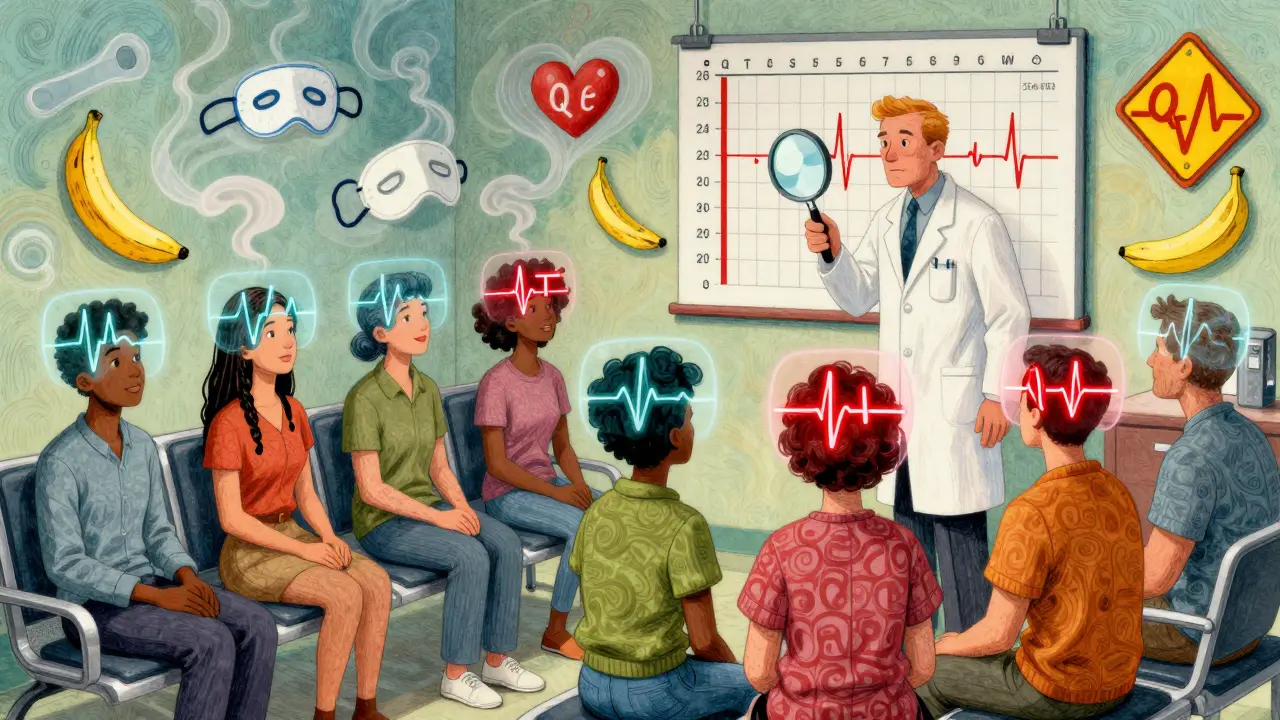
You don’t need an ECG for everyone. But you need one for the right people.
Guidelines agree: all patients starting methadone at doses above 100 mg per day should get a baseline ECG. For those on lower doses, an ECG is still recommended if you have any of these risk factors:
- Female gender (women have 2.5 times higher risk than men)
- Age 65 or older
- History of heart disease, heart failure, or low ejection fraction
- Pre-existing bradycardia (heart rate under 50 bpm)
- Low potassium (<3.5 mmol/L) or low magnesium (<1.5 mg/dL)
- Use of other QT-prolonging drugs: tricyclic antidepressants, haloperidol, fluconazole, moxifloxacin
- Known congenital long QT syndrome
If you’re on methadone and you’re taking fluvoxamine for depression, you’re doubling your risk. Fluvoxamine blocks the liver enzyme that breaks down methadone, causing levels to spike by up to 50%. That’s not a coincidence - it’s a recipe for trouble.
How Often Should You Get an ECG After Starting Methadone?
One ECG at the start isn’t enough. Methadone builds up in your system over weeks. The full effect on your heart doesn’t show up until steady state - usually 2 to 4 weeks after starting or changing your dose.
After that, monitoring depends on your risk level:
- Low risk: QTc under 450 ms (men) or 470 ms (women), no other risk factors - ECG every 6 months
- Moderate risk: QTc between 450-480 ms (men) or 470-500 ms (women), or one or two risk factors - ECG every 3 months
- High risk: QTc over 480 ms (men) or 500 ms (women), or three or more risk factors - ECG every month, plus dose review and cardiology referral
That’s not just protocol - it’s survival. A 2023 study in JAMA Internal Medicine showed that clinics with structured ECG monitoring had 67% fewer serious cardiac events than those without.
What to Do If Your QTc Is Too Long
If your QTc hits 500 ms or more - or if it jumps more than 60 ms from your baseline - you need to act fast.
- Check your electrolytes. Low potassium and magnesium are easy to fix with supplements or dietary changes. Don’t wait.
- Review all your meds. Stop or switch any non-essential QT-prolonging drugs. Talk to your prescriber about alternatives.
- Consider lowering your methadone dose. You don’t need to stop treatment. Often, reducing the dose by 10-20% brings the QTc back down without losing the benefits of therapy.
- Switch to buprenorphine. This is a game-changer for high-risk patients. Buprenorphine has almost no QT prolongation risk. If you’re on high-dose methadone with multiple risk factors, switching isn’t giving up - it’s choosing safety.
- Get a cardiology consult. If your QTc is above 500 ms, you need a heart specialist involved. They can assess your risk of Torsades and decide if you need a pacemaker or other intervention.

The Hidden Risk: Sleep Apnea and Methadone
One of the most overlooked factors? Sleep apnea.
Up to half of people on methadone maintenance have undiagnosed sleep apnea. The condition causes repeated drops in oxygen during sleep. That stress triggers adrenaline spikes, increases heart rate variability, and makes the heart more vulnerable to arrhythmias - especially when QT is already prolonged.
If you snore loudly, wake up gasping, or feel exhausted during the day, get tested. Treating sleep apnea with CPAP isn’t just about better sleep. It’s about protecting your heart.
What Patients Are Saying: Real-World Gaps in Care
On Reddit’s r/OpiatesRecovery forum, over 140 people shared their experiences with ECG monitoring. Two-thirds said they’ve had inconsistent or skipped ECGs across different clinics. Some waited months. Others were never told they needed one.
But here’s the flip side: 82% of those who got regular ECGs felt safer and more confident in their treatment. Only 47% of those without monitoring felt the same.
Access to ECGs shouldn’t be a lottery. If your clinic doesn’t offer baseline or follow-up ECGs, ask why. You have the right to know your heart is safe.
The Bottom Line: Safety Isn’t Optional
Methadone is powerful. It works. But power comes with responsibility. The same dose that keeps someone off heroin can also stop their heart - if no one’s watching.
There’s no need to avoid methadone. But you must be monitored. Baseline ECG. Follow-up at steady state. Regular checks based on your risk. Electrolytes checked. Other meds reviewed. Sleep apnea screened.
This isn’t bureaucracy. It’s basic care. And it saves lives.
Can methadone cause sudden cardiac death even if I feel fine?
Yes. Methadone can prolong the QT interval without causing symptoms like dizziness or palpitations. Many people who experience Torsades de Pointes have no warning signs. The first sign can be collapse or cardiac arrest. That’s why routine ECG monitoring is critical - you can’t feel a prolonged QT interval.
Is buprenorphine safer than methadone for my heart?
Yes. Buprenorphine has a much lower risk of QT prolongation compared to methadone. Studies show minimal to no effect on the QT interval, even at high doses. For patients with multiple risk factors - like older age, female gender, low potassium, or use of other QT-prolonging drugs - switching to buprenorphine is often the safest choice without sacrificing treatment effectiveness.
Do I need an ECG if I’m on a low dose of methadone, like 40 mg per day?
It depends. If you have no other risk factors - no heart disease, no low electrolytes, no other QT-prolonging drugs - and you’re under 65, an ECG may not be required. But if you’re female, have a history of heart issues, or take antidepressants like fluoxetine or sertraline, you should still get a baseline ECG. Risk isn’t just about dose. It’s about your whole picture.
Can drinking alcohol or using benzodiazepines increase my risk?
Yes. Alcohol and benzodiazepines don’t directly prolong the QT interval, but they increase the risk of respiratory depression when combined with methadone. This can lead to low oxygen levels, which stress the heart and make arrhythmias more likely. Even if your QT is normal, mixing these substances raises your chance of sudden death.
How long does it take for methadone to affect my QT interval?
Methadone builds up slowly in your body. It takes about 2 to 4 weeks to reach steady-state levels. That’s why your first ECG should be done after this period, not right after starting. The full effect on your heart’s electrical system doesn’t show up until then. Monitoring too early can give false reassurance.
What if my clinic won’t do ECGs? Can I get one elsewhere?
Yes. You can request a referral to a cardiologist or ask your primary care provider to order a baseline ECG. Many community labs and urgent care centers offer ECGs without a specialist referral. If your clinic refuses, document it. Your safety matters. There’s no justification for skipping this simple, life-saving test.
Is QT prolongation from methadone permanent?
Usually not. If you reduce your methadone dose, correct electrolyte imbalances, or switch to buprenorphine, the QT interval typically returns to normal within weeks. But if you continue with high doses and risk factors, the risk remains. It’s reversible - but only if you act.
Jody Fahrenkrug
January 17, 2026 AT 10:13People act like this is some secret danger, but if your clinic is doing its job, you’re fine.
john Mccoskey
January 17, 2026 AT 18:39Ryan Hutchison
January 18, 2026 AT 05:36Samyak Shertok
January 18, 2026 AT 13:57vivek kumar
January 19, 2026 AT 10:46Nick Cole
January 19, 2026 AT 19:27waneta rozwan
January 20, 2026 AT 00:57Nicholas Gabriel
January 21, 2026 AT 23:35Cheryl Griffith
January 22, 2026 AT 21:03swarnima singh
January 24, 2026 AT 03:06Isabella Reid
January 24, 2026 AT 20:47Travis Craw
January 26, 2026 AT 06:24Christina Bilotti
January 26, 2026 AT 23:49