

Adrenal Recovery & ACTH Test Estimator
Use this tool to estimate how long your adrenal glands might need to recover after stopping steroids and to understand what ACTH stimulation test results mean. This is an educational aid, not a substitute for professional medical advice.
Patient History Inputs
Recovery Estimate
ACTH Stimulation Test Interpreter
Clinical Interpretation
Stopping steroids after months of use isn't just about lowering the dose; it's a delicate biological negotiation with your body. If you've been on prednisone or another glucocorticoid for more than three weeks, your adrenal glands have likely gone quiet, waiting for external instructions. Suddenly cutting them off can lead to an adrenal crisis-a potentially life-threatening emergency. This is where ACTH stimulation testing becomes the critical tool for assessing adrenal recovery. It tells doctors whether your hypothalamic-pituitary-adrenal (HPA) axis has woken up enough to handle daily stress without synthetic help.
The stakes are high. A study from Mayo Clinic between 2015 and 2020 showed that using structured tapering protocols combined with ACTH testing reduced adrenal crisis incidence from 8.5% to just 1.2%. That’s not a minor improvement; it’s a safety net. But how does this actually work? And why do some guidelines suggest testing everyone while others say wait for symptoms? Let’s break down the current best practices as defined by the 2024 joint guideline from the Endocrine Society and European Society of Endocrinology.
Why Your Adrenals Need a Wake-Up Call
When you take exogenous steroids, your brain senses plenty of cortisol in the blood and stops sending signals to your adrenal glands. Over time, these glands shrink and lose their ability to produce cortisol on demand. This state is called secondary adrenal insufficiency. The good news is that it’s usually reversible. The bad news is that the timeline for recovery varies wildly based on how long you’ve been suppressed.
The general rule of thumb, supported by the Adrenal Insufficiency Coalition, is that recovery takes roughly one month for every month of suppression. If you’ve been on steroids for two years, don’t expect your adrenals to bounce back in two weeks. However, this is a rough estimate. Some patients recover faster; others face permanent damage if suppression was severe and prolonged. This uncertainty is exactly why we need objective data rather than guesswork.
| Factor | Impact on Recovery Time | Clinical Implication |
|---|---|---|
| Duration of Therapy | High | >3 weeks requires tapering; >12 months risks permanent atrophy |
| Dose Intensity | Moderate | High doses suppress the axis more profoundly than physiologic doses |
| Individual Variability | Unpredictable | Some patients recover in weeks, others take over a year |
| Underlying Disease | Contextual | Diseases like Duchenne muscular dystrophy require specific stress-dose protocols |
The Mechanics of ACTH Stimulation Testing
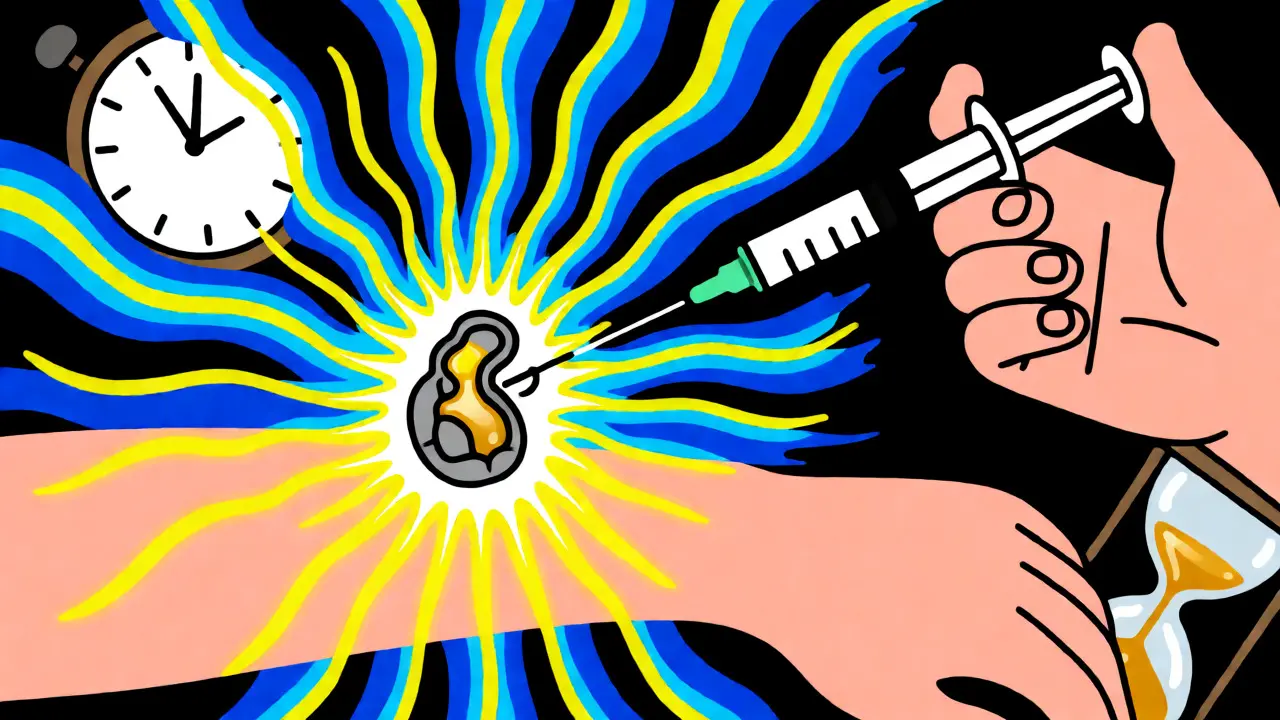
So, how do we know if your adrenals are ready? We perform an ACTH stimulation test, also known as the cosyntropin stimulation test. It’s straightforward but precise. You receive an injection of 250 mcg of synthetic ACTH (cosyntropin), either intravenously or intramuscularly. This mimics the signal your pituitary gland would normally send to stimulate cortisol production. Then, blood samples are drawn at baseline (0 minutes), 30 minutes, and 60 minutes post-injection.
The goal is to see if your adrenal glands respond by producing cortisol. According to the Endocrine Society, a peak cortisol level of ≥18-20 mcg/dL (500-550 nmol/L) indicates sufficient adrenal function. If your levels stay below 14 mcg/dL (386 nmol/L), your adrenals are still insufficient, and you’ll need to continue replacement therapy or slow down the taper even further.
Timing matters. The 2024 guideline recommends performing this test when patients reach physiologic replacement doses-typically around 4-6 mg of prednisone equivalent daily. Testing too early, while you’re still on high doses, gives false reassurance because the exogenous steroid masks the lack of endogenous production. Testing too late exposes you to unnecessary risk during a vulnerable period.
Navigating the Tapering Landscape
Not all tapers are created equal. The approach depends heavily on the underlying condition and the duration of treatment. For short-term use (less than 3-4 weeks), many clinicians argue no taper is needed because the HPA axis hasn’t had time to fully shut down. However, once you cross that threshold, caution is key.
For longer-term users, protocols like the PJ Nicholoff Steroid Protocol offer structured steps. Originally designed for Duchenne muscular dystrophy, its principles apply broadly: reduce prednisone by 2.5-5 mg every 1-2 weeks until reaching a maintenance dose, then switch to percentage-based reductions (e.g., 20-25% weekly). This slower pace near the finish line allows the HPA axis time to regenerate.
Here’s where expert opinions diverge. Dr. Irina Bancos, a co-author of the 2024 guideline, emphasizes that clinical experience is paramount. She notes that specialists must monitor for disease reactivation during the taper. Sometimes, symptoms flare not because of adrenal insufficiency, but because the underlying autoimmune or inflammatory condition returns. Distinguishing between steroid withdrawal syndrome and true adrenal crisis is tricky. Withdrawal symptoms-fatigue, nausea, body aches-can mimic insufficiency. In fact, studies suggest 35-45% of tapering patients experience these withdrawal effects, which may require a temporary dose increase to stabilize before continuing the descent.
Controversies and Practical Challenges
Should everyone get tested? The Endocrine Society suggests selective testing for those at high risk or showing symptoms. Conversely, the Adrenal Insufficiency Coalition advocates for routine testing after three months of therapy. Why the difference? Cost and access. An ACTH test isn’t always readily available, especially in rural areas. A 2022 study found that nearly 70% of primary care physicians felt unprepared to implement formal ACTH protocols due to limited specialist support.
Dr. Alessandro Prete argued in a 2023 editorial that routine testing at the six-month mark could prevent 92% of adrenal crises without significant cost increases. Yet, real-world data shows barriers. A survey by the Adrenal Insufficiency Coalition revealed that 61% of patients faced wait times of over four weeks for testing. During those delays, some patients suffered crises requiring emergency care. This gap between ideal protocol and practical reality is a major pain point for patients.
Moreover, interpretation isn’t always black and white. What if your cortisol peaks at 16 mcg/dL? Is that enough? Current guidelines lean toward caution, suggesting continued supplementation if levels are borderline, especially if the patient reports persistent fatigue or hypotension. There is no perfect biomarker yet, though research into salivary cortisol monitoring offers hope for less invasive future assessments.

Living Through the Taper: Patient Experiences
If you’re currently tapering, you might feel worse before you feel better. This is common. Patient advocacy groups report that 78% of surveyed individuals experienced significant anxiety during the process. The fear of an adrenal crisis is real, and so is the physical discomfort of withdrawal.
Carrying a steroid alert card is non-negotiable. All patients on exogenous steroids should be advised to increase their dose during acute illness, injury, or surgery-a concept known as "stress dosing." While compliance is high in academic centers (92%), it drops significantly in community settings (47%). Missing a stress dose during a bout of gastroenteritis can trigger a crisis that lands you in the ER.
On the positive side, structured protocols work. Testimonials from caregivers using the Nicholoff Protocol highlight that gradual reduction prevented the muscle function decline seen with rapid tapers. Similarly, hospitals adopting structured tapering with ACTH testing saw dramatic drops in admission rates. At Massachusetts General Hospital, implementing these guidelines cut adrenal crisis admissions from 12 to 2 per year in a cohort of 150 patients.
Future Directions and Technology
The landscape is evolving. The Endocrine Society is developing a mobile app to guide tapering protocols, aiming to empower both patients and providers. Additionally, the NIH has funded research into point-of-care ACTH stimulation tests, which could bring this critical assessment closer to home clinics and reduce wait times.
Integration into electronic health records is also gaining traction. Epic Systems announced modules to track HPA axis recovery, helping clinicians visualize trends over time. As adoption grows-with 78% of US endocrinology practices already following the new 2024 recommendations-we can expect more standardized, safer discontinuation processes.
Ultimately, stopping steroids is a marathon, not a sprint. It requires patience, communication, and sometimes, testing. By understanding the role of ACTH stimulation in verifying adrenal recovery, you can navigate the taper with confidence, minimizing risks and maximizing quality of life.
How long does it take for adrenal glands to recover after stopping steroids?
Recovery time varies significantly based on the duration of steroid use. A common heuristic is one month of recovery for every month of suppression. However, this is an estimate; some patients recover within weeks, while those on long-term therapy (over 12 months) may take up to a year or longer. Individual variability plays a huge role, which is why monitoring via ACTH testing is recommended.
What is considered a normal result for an ACTH stimulation test?
According to the Endocrine Society, a peak serum cortisol level of ≥18-20 mcg/dL (500-550 nmol/L) at 30 or 60 minutes post-injection indicates adequate adrenal function. Levels below 14 mcg/dL (386 nmol/L) typically indicate adrenal insufficiency, suggesting the need for continued glucocorticoid replacement or a slower taper.
Do I need an ACTH test if I’ve only been on steroids for a few weeks?
Generally, no. The 2024 joint guideline recommends against mandatory tapering and testing for therapy durations shorter than 3-4 weeks, as the HPA axis is unlikely to be significantly suppressed. However, clinical judgment applies; if you were on very high doses or have other risk factors, your doctor might still advise caution.
What happens if I miss a dose during my taper?
Missing a single dose rarely causes a crisis, but it can lead to withdrawal symptoms like fatigue, nausea, or dizziness. If you miss a dose, take it as soon as you remember unless it’s close to the next scheduled dose. Do not double up. If symptoms persist, contact your healthcare provider, as you may need to pause the taper or slightly increase the dose temporarily.
Can I stop steroids abruptly if my ACTH test is normal?
Even with a normal ACTH test, abrupt cessation is often discouraged if you’ve been on steroids for a long time. The test confirms your adrenals can respond to a massive stimulus, but they may not yet handle everyday fluctuations perfectly. Most protocols recommend a final slow taper over several weeks to ensure stability and avoid rebound inflammation or withdrawal symptoms.
Morgan Law
August 30, 2026 AT 18:03Yo, this is actually super useful info for anyone stuck in the prednisone trap.
I've been tapering off after like 8 months of use and honestly the anxiety is real. The part about the Mayo Clinic study reducing crisis rates from 8.5% to 1.2% gave me some hope though. It’s wild how much guesswork was involved before these structured protocols came out. I’m just trying to keep my head up and trust the process even when my adrenals feel totally asleep.
The bit about stress dosing during illness hit home too. Had a bad flu last month and almost forgot to bump my dose, which would have been a disaster if I hadn't caught it early. Definitely sharing this with my support group.
Curtis Surpless
August 31, 2026 AT 23:54testing everyone at six months seems excessive given the cost barriers cited
most primary docs are already overwhelmed without adding another specialized protocol they barely understand
the niche cases need testing but blanket application is just bureaucratic bloat
Aaron Gragg
September 2, 2026 AT 19:31It is imperative to acknowledge that the dichotomy between routine screening and selective testing often overlooks the socioeconomic disparities inherent in healthcare access across the United States.
While the Endocrine Society advocates for a more targeted approach based on clinical risk factors, the Adrenal Insufficiency Coalition’s push for universal testing highlights a critical gap in patient safety versus resource allocation.
From an endocrinological perspective, the HPA axis suppression is not merely a binary state of 'on' or 'off' but rather a continuum of functional capacity that requires nuanced interpretation of cortisol kinetics post-stimulation.
The reference to Dr. Prete’s argument regarding the prevention of ninety-two percent of adrenal crises suggests that the upfront cost of testing may indeed be offset by the substantial expenses associated with emergency department visits for acute adrenal insufficiency.
Furthermore, the integration of electronic health record modules by Epic Systems represents a significant technological leap forward in standardizing care pathways for patients undergoing long-term glucocorticoid therapy.
We must also consider the psychological burden placed upon patients who face prolonged wait times for specialist appointments, which can exacerbate the very symptoms of withdrawal and anxiety described in the article.
The variability in individual recovery timelines underscores the necessity for personalized medicine approaches rather than rigid adherence to generalized heuristics such as one month of recovery per month of suppression.
Ultimately, the goal should be to empower both providers and patients with accessible tools and clear guidelines that minimize the risk of life-threatening complications while respecting the practical limitations of our current healthcare infrastructure.
Sarah Leitschuh
September 3, 2026 AT 10:41I think we need to be careful not to dismiss the value of routine testing just because it's inconvenient for doctors.
Yes, primary care physicians are busy, but missing an adrenal crisis is catastrophic for a patient.
The data shows that structured protocols save lives and reduce hospitalizations significantly.
If the system is broken, we should fix the system, not skip the necessary tests.
Patients deserve objective data rather than relying solely on subjective symptom reporting which can be unreliable.
Also, the point about rural access is valid, but telehealth and point-of-care testing could bridge that gap eventually.
We shouldn't let logistical hurdles compromise medical best practices.
Empathy for the doctors is good, but advocacy for patient safety is crucial here.
Let's find a middle ground where testing is accessible and standardized.
Kristina Rhodes
September 4, 2026 AT 19:12Oh, wonderful. Another layer of bureaucratic complexity added to the already exhausting journey of healing.
We are told to trust our bodies, yet we are simultaneously instructed to distrust them until a synthetic hormone injection tells us otherwise.
Perhaps the true test is not of our adrenal glands, but of our patience with a system that treats human physiology as a series of checkboxes.
One must wonder if the 'anxiety' mentioned is truly physiological, or merely the rational response to being treated like a malfunctioning machine.
Still, I suppose having a map is better than wandering blindly through the fog of withdrawal.
Let us hope the 'wake-up call' does not come too harshly for those still sleeping on their potential.
The irony of needing external validation to confirm internal readiness is not lost on me.
But hey, if it keeps us out of the ER, maybe it is worth the indignity of the needle.
We shall see what the future holds for this delicate biological negotiation.
In the meantime, I will continue to sip my tea and contemplate the absurdity of modern medicine.
It is all quite fascinating, in a terrifying sort of way.
Do try to stay calm, everyone. Or don't. The adrenals won't mind either way.
Probably.
Or maybe they will scream.
We shall find out together, I suppose.
What a delightful time to be alive and suppressed.
Truly.
Anyway, moving on.
The sun is shining, apparently.
Even if my cortisol isn't.
Good luck with your tapers, friends.
You'll need it.
And maybe some cookies.
Cortisol helps with stress, right?
Sure.
Whatever.
Next.
...
Rose Boerner
September 5, 2026 AT 21:05It is absolutely paramount that every single patient adheres strictly to the prescribed tapering schedule without deviation.
To ignore the doctor's orders is not merely a mistake; it is a moral failing of self-discipline.
Those who suffer crises due to non-compliance have only themselves to blame for their lack of vigilance.
One must treat the body with the utmost respect and rigor, lest chaos ensues.
The statistics provided clearly indicate that structure saves lives, and thus, structure must be obeyed.
There is no room for ambiguity or laziness in matters of health.
We must hold ourselves accountable to the highest standards of medical compliance.
Anything less is simply unacceptable in a civilized society.
Let this serve as a stern warning to all who dare to deviate from the path.
Duty and discipline are the cornerstones of recovery.
Let us strive for excellence in our health management.
For the sake of order and stability.
Amen.
Anderson Miller
September 6, 2026 AT 15:31honestly???
i mean... sure.
but do you really think the average person has the mental bandwidth to track percentage reductions while dealing with brain fog??
it feels like... yeah... great on paper...
reality is messy...
and the 'wait for symptoms' approach? scary stuff...
like... really scary...
but also... testing everyone? expensive...
so... what do we do??
i guess we just... cope??
ugh...
sigh...
anyway... good post... i guess...
maybe...
who knows...
adrenals... weird things...
really...
very weird...
okay... done talking now...
bye...
...
Harry Falk
September 7, 2026 AT 05:26Clear guide. Useful for patients and providers alike.