
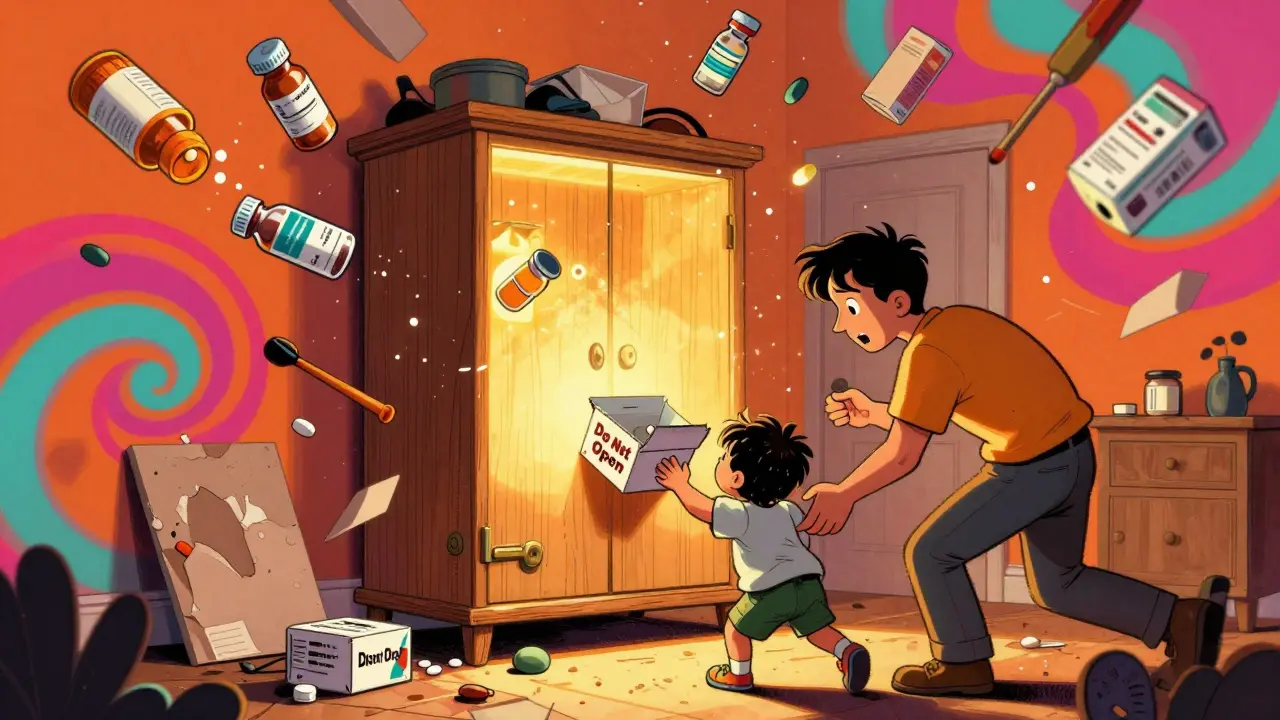
When you’re tearing down walls or packing up your life for a new home, your medications shouldn’t get lost in the chaos. But most people don’t think about them until they’re staring at a pile of boxes wondering where their insulin or blood pressure pills went. That’s a dangerous gap. Medications aren’t just items-they’re lifelines. And during renovations or moves, they become vulnerable to heat, moisture, theft, or accidental access by kids or pets.
Why Medications Are at Risk During Moves and Renovations
Think about where you normally keep your meds. Probably in the bathroom cabinet, right? That’s the worst place. Humidity from showers breaks down pills. Sunlight through windows weakens them. And during renovations, those cabinets might be torn out. Or during a move, boxes get tossed into a hot car trunk or left in an unheated garage overnight.
According to Baystate Health, nearly all non-refrigerated medications need to stay between 59°F and 77°F (15°C-25°C). Temperatures outside that range-like a car sitting in March sun or a basement with no insulation-can make your pills useless. Insulin, thyroid meds, and some antibiotics are especially sensitive. Once they degrade, you won’t know it. They’ll still look fine. But they won’t work.
And then there’s security. The EPA says 55% of Americans take prescription meds. But only 1 in 4 stores them in a locked cabinet. During a move, when everything’s out in the open, kids, guests, or even cleaners might stumble on a bottle. A single dose of opioids like hydrocodone can be deadly to a child. And if you’re renovating, your home might be open to contractors, delivery people, or neighbors helping out. That’s a real risk.
Before You Start: Sort and Clean Out
Don’t pack everything. Start by taking stock. Pull out every pill bottle, patch, and liquid. Check expiration dates. Look for bottles that are cracked, discolored, or smell weird. If it’s been sitting untouched for over a year, toss it.
For disposal, never just flush pills or dump them in the trash. The EPA recommends using drug take-back programs whenever possible. Many pharmacies, hospitals, and police stations in the UK offer free drop-off bins. Bristol has several permanent collection points at local pharmacies like Boots and Lloyds.
If no take-back is nearby, mix pills with something unappealing-used coffee grounds, cat litter, or dirt. Put them in a sealed plastic bag before throwing them out. This stops someone from digging through your bin. But here’s the exception: if you have fentanyl patches or certain strong opioids, the FDA says you should flush them. Why? Because even one patch left lying around can kill a child. Check the label or ask your pharmacist if you’re unsure.
Where to Store Medications During Renovations
If you’re staying in the house while it’s being renovated, you need a new home for your meds. Forget the bathroom. Forget the kitchen counter. Find a cool, dry, locked spot.
Best options:
- A locked cabinet in a hallway closet
- A high drawer in a bedroom or study
- A small lockbox on a shelf away from windows
Keep it out of sight and out of reach. Even if you think your toddler can’t climb, they will. Use a simple padlock or a combination lockbox. You don’t need a gun safe-just something that can’t be opened by a curious hand. ADT says any locked compartment works, even a locked fireproof box.
Temperature matters. If your kitchen is being rewired and the fridge is off, don’t leave insulin in there. Move it to a cooler room. A closet in the middle of the house usually stays stable. Use a small digital thermometer to check. If it hits 80°F or drops below 50°F, move it.
Packing Medications for a Move
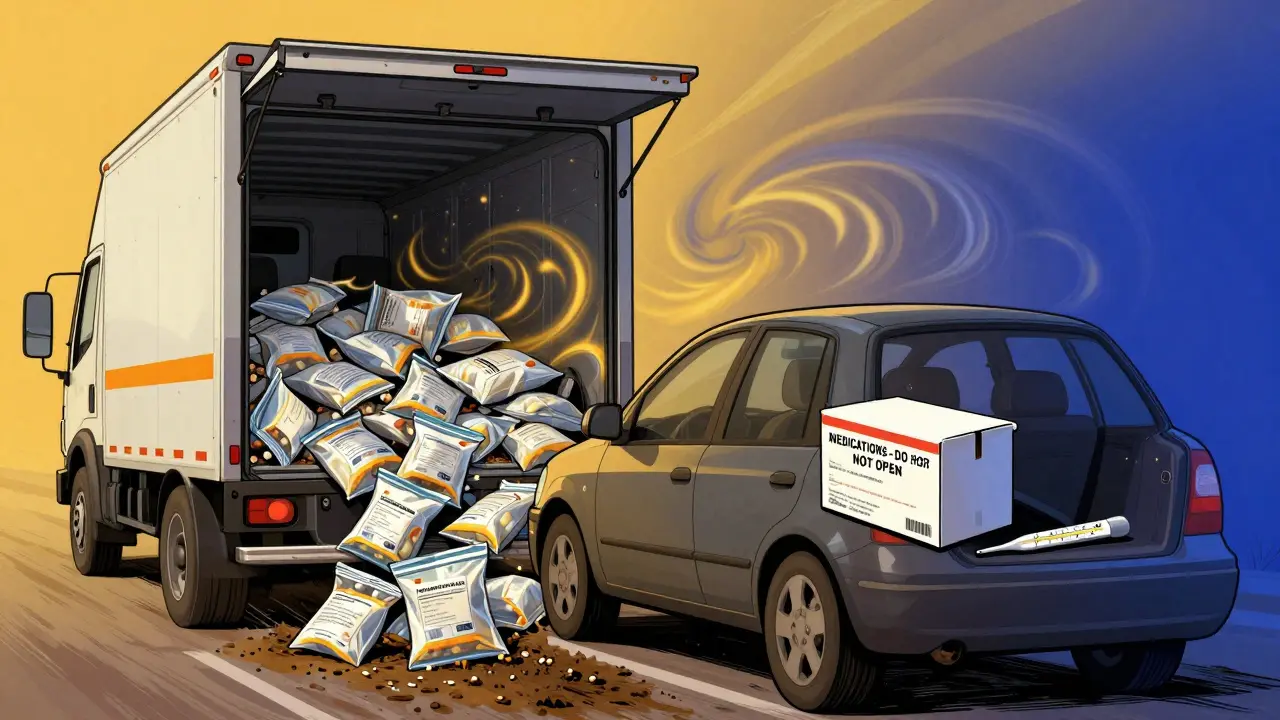
Don’t toss meds into a box with clothes and books. Pack them separately. Use their original bottles. That’s not just for safety-it’s the law. Pharmacies label bottles with your name, dosage, and instructions. If you switch them into ziplock bags, you risk giving your child the wrong pill or taking someone else’s meds.
For daily pills, use a pill organizer with the day and time marked. But keep the original bottles in a separate, clearly labeled box. Label the box: Medications - Do Not Open.
For refrigerated meds like insulin, insulin pens, or certain biologics:
- Use a small insulated cooler with ice packs
- Keep it in the car’s cabin, not the trunk
- Never freeze them-frozen insulin is ruined
- Check the temperature with a thermometer before loading
Keep this box with you during the move. Don’t let movers handle it. If you’re driving, keep it on your lap or in the seat next to you. If you’re using a removal company, hand them a sealed, labeled box and say: This stays with me.
What to Do When You Arrive
Unpack your meds first. Not your towels. Not your dishes. Your pills.
Set up a permanent storage spot before you even unpack the kitchen. Find a dry, cool, locked cabinet. A high shelf in a bedroom closet works. Avoid basements, attics, and garages. Even if it’s winter, those places fluctuate too much.
Double-check all labels. Make sure nothing got mixed up. If you’re unsure about a pill’s identity, call your pharmacy. Don’t guess.
If you’re using a new fridge, wait 24 hours before putting in refrigerated meds. Fridges need time to stabilize. Put your insulin in a drawer until then.
Special Cases: Controlled Substances and Kids
If you or someone in your home takes opioids, benzodiazepines, or other controlled substances, you need extra steps. These aren’t just pills-they’re drugs of abuse. A single tablet can be fatal to a child or teenager.
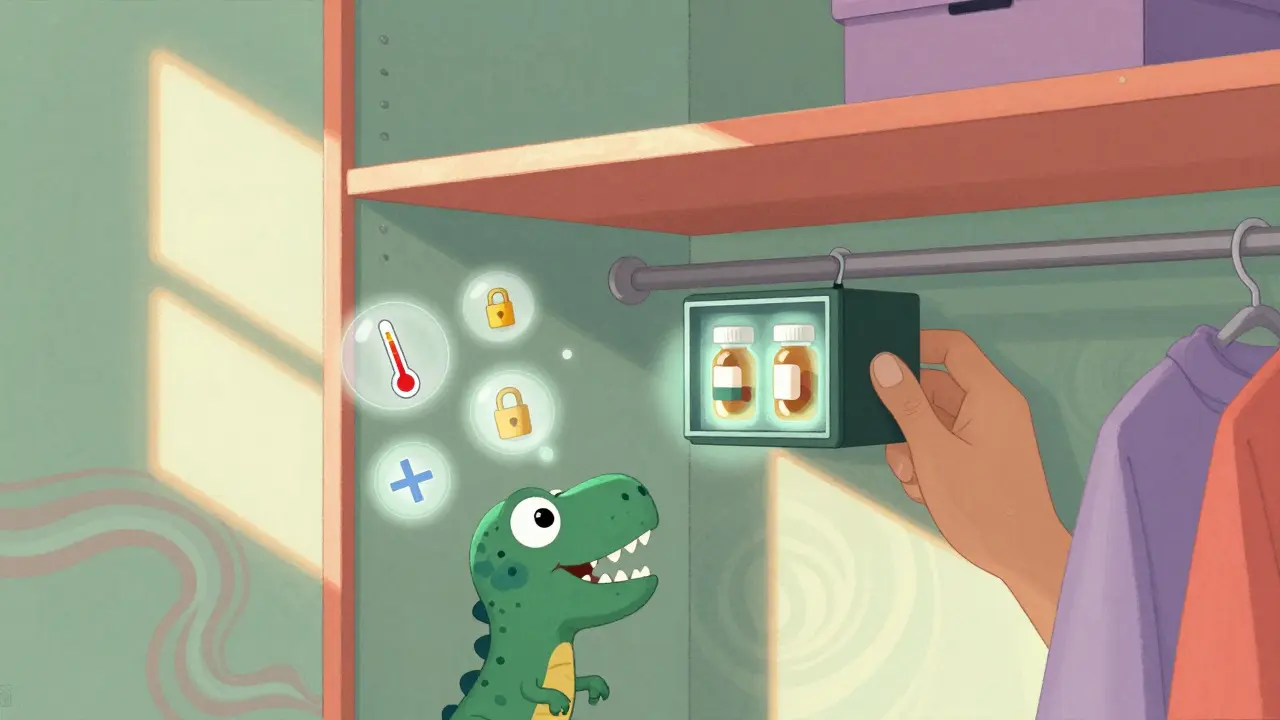
Use a locked medicine safe. You can buy them online for under £30. Some even have digital locks. Keep it bolted to the wall. Don’t rely on a drawer that can be yanked open.
And if you have kids or grandchildren visiting during the move? Tell them: Don’t touch the locked box. Don’t assume they’ll understand. Even older teens don’t realize how dangerous a single pill can be.
When to Call Your Pharmacist
Before you start packing, call your pharmacy. Ask:
- Are any of my meds temperature-sensitive?
- Do any need special handling during transport?
- Can you give me a list of take-back locations near me?
They’ll know. Pharmacists deal with this every week. They’ve seen people bring in meds that got soaked in rain or left in a hot car. They’ll tell you what to do.
Also, if you’re moving to a new area, ask if your prescriptions can be transferred. Some pharmacies won’t refill if you’ve moved out of their service zone. Don’t wait until you’re out of pills.
Final Checklist
Before you start moving or renovating, do this:
- Review all meds. Toss expired, unused, or damaged ones.
- Use drug take-back for disposal-never flush unless instructed.
- Pack originals only. No ziplock bags.
- Keep refrigerated meds cool and dry during transit.
- Store in a locked, cool, dry place-away from windows and bathrooms.
- Label everything clearly: Medications - Do Not Open.
- Hand-carry your meds during the move.
- Unpack them first in your new home.
- Call your pharmacist if unsure.
Can I store medications in the garage during renovations?
No. Garages get too hot in summer and too cold in winter. Most medications need stable temperatures between 59°F and 77°F. Garage storage can ruin pills and make them unsafe. Always choose an interior room with no windows or direct heat sources.
What if I run out of pills during the move?
Call your pharmacy ahead of time. Ask for a short-term refill or transfer your prescription to a local pharmacy near your new home. Many pharmacies offer emergency refills for moving patients. Don’t wait until you’re out-plan at least a week in advance.
Is it safe to move medications in a rental truck?
Only if you’re riding in the cab with them. Never leave medications in a rental truck’s cargo area. Temperature swings and humidity can destroy them. Keep them in a sealed, labeled box with you at all times.
Should I pack all my meds in one box?
No. Group them by type-daily pills, injectables, emergency meds like EpiPens-but keep them in separate, clearly labeled containers. This prevents mix-ups and makes it easier to find what you need right after the move.
Can I use a regular lockbox from the hardware store?
Yes. A simple combination lockbox or a small locked cabinet works fine. You don’t need a fancy medicine safe. The goal is to keep them out of reach of children and unauthorized people. Just make sure it’s sturdy and can’t be easily pried open.
phyllis bourassa
March 7, 2026 AT 02:44Okay but like… have you ever tried to move insulin in a hot car while your cousin’s dog is licking the window? No? Good. Because I have. And let me tell you, that vial looked fine-until it didn’t. Now my dad’s glucose levels are all over the place and we’re stuck with a $400 refill. Don’t be that person. Just pack it right.
Also, why is no one talking about how weird it is that we treat meds like they’re just… stuff? They’re not. They’re the reason someone’s alive. Treat them like your kid’s favorite stuffed animal. Because honestly? That’s how fragile this is.
Adebayo Muhammad
March 8, 2026 AT 20:40Let me be clear: the real issue isn't the temperature, or the storage-it's the societal neglect of pharmaceutical integrity. We treat medicine as disposable, as if it were a fast-food burger that can be left in the sun and still nourish. This isn't negligence-it's systemic apathy. The pharmaceutical industry doesn't care. The government doesn't care. And yet, we expect people to survive on pills that have been baked, frozen, and handled by strangers. Where is the accountability? Where is the regulation? We are not just storing medicine-we are preserving life. And we are failing.
Tim Hnatko
March 9, 2026 AT 09:36This is one of those posts that feels like a quiet hug. I’ve moved three times in five years, and every time, I forgot meds until the third day. Then panic. Then a call to my pharmacist. You’re right-it’s not about boxes. It’s about rhythm. I now pack my meds in a small, labeled pouch and keep it on my person. Even when I’m drunk at a housewarming, I still check my pocket. It’s become a ritual. Not because I’m paranoid. Because I’m alive.
Pranay Roy
March 11, 2026 AT 08:43Wait-so you’re telling me the government doesn’t require sealed, climate-controlled transport for meds during moves? That’s insane. I’ve seen contractors steal oxycodone from abandoned homes. I’ve seen kids find fentanyl patches in garage boxes. This isn’t just about storage-it’s about a broken system. Who’s auditing this? Who’s tracking where these pills go after a move? The DEA doesn’t care. Pharmacies don’t care. And you’re just supposed to ‘label it’? That’s not safety. That’s a prayer.
Joe Prism
March 11, 2026 AT 22:09Medication isn’t laundry. It’s not a book. It’s not a lamp. It’s biological. It’s time-sensitive. It’s life. And we treat it like an afterthought. That’s not just careless. It’s dangerous. And we’re lucky so far. We’re not smart.
Andrew Poulin
March 13, 2026 AT 14:15Just pack them in your carry-on. Don’t overthink it. No one needs a lockbox. No one needs a thermometer. If you’re moving, you’re already stressed. Keep it simple. Box. Label. Carry. Done.
And stop using the word ‘lifeline.’ It’s cringe.
Weston Potgieter
March 15, 2026 AT 06:46So you’re telling me I need to spend $30 on a lockbox just so my 2-year-old doesn’t eat a pill that’s been sitting in a cardboard box for 14 days? Bro. My kid eats crayons. He’s gonna eat whatever’s in his reach. The real solution? Don’t have meds. Or better yet-don’t have kids. Just saying.
Also… why are we still using paper labels? QR codes. Digital logs. Blockchain for meds. We’re living in 2025. Not 1998.
Vikas Verma
March 16, 2026 AT 09:55Strategic medication management during relocation is imperative for maintaining therapeutic efficacy and ensuring patient safety. Adherence to ambient temperature protocols, coupled with segregation of controlled substances into tamper-evident containers, significantly mitigates risk exposure. Utilizing institutional take-back frameworks enhances compliance with regulatory standards. Proactive pharmacist consultation remains a critical pillar in operational continuity.
Sean Callahan
March 17, 2026 AT 17:01you know what i did? i just threw all my meds in a tote bag and put it in the backseat. i didnt even label it. i just told the movers 'dont touch the bag' and they didnt. it worked. i mean… it worked.
also my cat licked a pill off the floor once and lived. so maybe we're overthinking this?
amber carrillo
March 19, 2026 AT 12:27This made me cry. Not because I’m dramatic. But because I’ve been the person who forgot her insulin in a garage for three days. I didn’t know it was ruined until I passed out at work. I’m alive. But I shouldn’t have been. Thank you for writing this. I’m printing it. And I’m putting it on my fridge.