
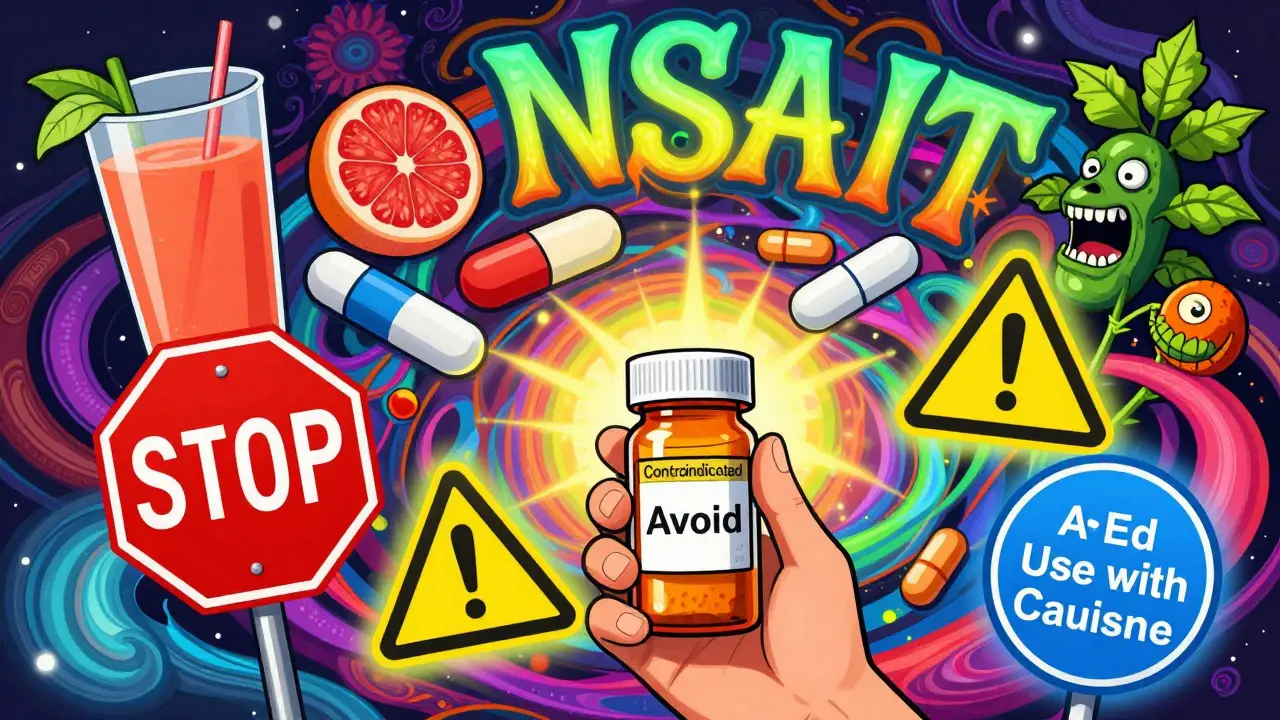
When you pick up a new prescription, the small paper insert that comes with it might seem like just another piece of paperwork. But that medication guide holds life-saving information-especially when it comes to drug interactions. Many people don’t realize that the biggest risks from their medications often come not from the pills themselves, but from what they’re taken with. A simple combination of your blood pressure pill and a common painkiller could lead to serious bleeding. A daily supplement might turn a cholesterol drug into a danger zone. These aren’t rare edge cases. They happen every day, and they’re often preventable-if you know how to read the warnings.
Where to Find the Warnings
Every prescription medication comes with a standardized guide, and over-the-counter drugs have a Drug Facts label. Both follow strict rules set by the U.S. Food and Drug Administration (FDA). Look for two main sections: Drug Interactions (for prescriptions) and Warnings (for OTC meds). These aren’t buried in fine print. They’re clearly labeled, usually near the middle or end of the guide. Don’t skip them just because they look technical. The FDA requires these sections to use plain language, not medical jargon.For example, if you’re taking warfarin a blood thinner used to prevent clots, the guide will list interactions with NSAIDs like ibuprofen or naproxen, aspirin even low-dose, and even grapefruit juice which can spike warfarin levels. It won’t just say "avoid." It will tell you why: "Increases risk of bleeding by 70-100%." That’s not vague. That’s a measurable danger.
Understanding Severity Levels
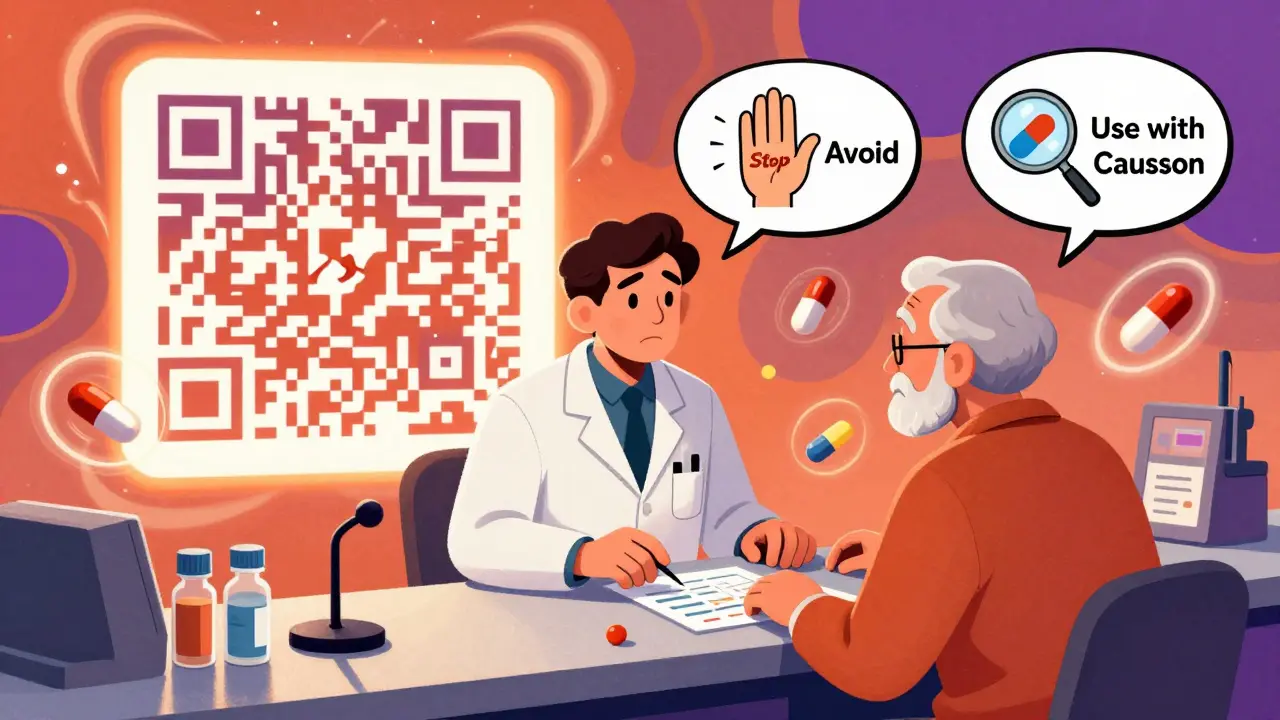
Not all interactions are created equal. Medication guides now use clear, standardized terms to tell you how serious a warning is. You’ll see three main levels:- Contraindicated - This means DO NOT take together. It’s a hard stop. For example, simvastatin a cholesterol drug and clarithromycin an antibiotic can’t be mixed. The combination raises simvastatin levels tenfold, turning a 0.04% annual risk of muscle damage into 0.4%. That’s a tenfold jump.
- Avoid - This means the risk is high enough that you should not combine them unless your doctor specifically says it’s okay and you’re under close monitoring.
- Use with Caution - You can take them together, but you need to watch for side effects. Your doctor might adjust doses or order extra tests.
These terms replaced confusing phrases like "may interact" or "use carefully." The change came after studies showed patients missed critical warnings when language was unclear. Now, if you see "Contraindicated," you know it’s not a suggestion. It’s a rule.
What Most People Miss
The biggest mistake? Thinking only about prescription drugs. Over-the-counter pain relievers, herbal supplements, vitamins, and even foods can cause dangerous interactions. According to the FDA’s adverse event database, 37% of serious drug interactions involve something you can buy without a prescription. That means:- St. John’s Wort, a popular mood supplement, can make birth control pills, antidepressants, and even heart medications fail.
- Grapefruit juice isn’t just for oranges-it affects more than 85 drugs, including apixaban a blood thinner and atorvastatin a statin.
- Calcium supplements can block absorption of thyroid meds if taken at the same time.
A 2022 Consumer Reports survey found that 78% of people read their medication guides-but only 32% could correctly identify major interaction warnings. The confusion was highest around food and supplement interactions. Why? Because they’re not always listed upfront. You have to dig into the "Drug Interactions" section to find them.
How to Decode the Language
The FDA requires medication guides to follow a specific format. Here’s what to look for:- Bold text - Used for absolute warnings like "Do not take if..." These are non-negotiable.
- Italics - Used for precautions like "Ask your doctor before use if..." These mean proceed with care.
- Standard text - Used for monitoring advice like "Your doctor may check your liver function." This tells you what to expect if you take the combination.
Take apixaban a blood thinner as an example. Its guide says: "Increased risk of bleeding that can be fatal." Then it lists: "Do not take if you have active bleeding." And below that: "Avoid concomitant use with other anticoagulants." The bold line tells you what to avoid. The italic line tells you what to ask about. The rest tells you what to monitor.
How to Use This Information
Knowing the warnings isn’t enough. You need a system. Here’s what works:- Make a complete list - Write down every pill, patch, capsule, and supplement you take. Include doses and times. Don’t forget herbal teas, protein powders, or CBD oil.
- Check each one - Pull out the guide for every medication. Go straight to the "Drug Interactions" section. Don’t skim. Read every bullet.
- Use the FDA’s Drug Interaction Checker - It’s free, updated quarterly, and available online. Type in your medications and it flags risks. Many pharmacists use it too.
- Ask your pharmacist - Pharmacists are trained to spot hidden risks. Tell them you’re checking for interactions. They’ll review your full list in minutes. A 2021 study showed that separating doses by 2-4 hours can reduce moderate interactions by 60%.
One patient, a 68-year-old woman in Ohio, avoided a hospital stay after her pharmacist noticed her sertraline an antidepressant and tramadol a painkiller were both listed as risk factors for serotonin syndrome. She switched painkillers. No incident. That’s the power of a second set of eyes.
What’s Changing Now
The system is getting better. Since January 2023, 37% of new drugs include QR codes on their packaging. Scan it, and you get an interactive guide with audio, visuals, and real-time interaction alerts. By January 2025, all new drugs must include this feature. The FDA is also standardizing warning language across all guides by December 2025. No more "use with caution" vs. "monitor" vs. "consider"-just three clear terms: Contraindicated, Avoid, Use with Caution.And the results are showing up. A 2022 Mayo Clinic study found that patients who used digital interaction reports had 42% fewer medication-related hospital visits. Digital tools don’t just make things easier-they save lives.
What to Do Today
You don’t need to wait for new technology. Start now:- Grab your next medication guide. Read the "Drug Interactions" section like you’re reading a warning label on a power tool.
- Write down every drug, supplement, and food you take. Keep it updated.
- Take it to your next pharmacy visit. Ask: "Are any of these a risk together?"
- Don’t assume your doctor knows everything. They might not know about your turmeric capsules or your nightly melatonin.
Medication guides aren’t meant to scare you. They’re meant to empower you. Every warning is a chance to avoid a problem before it starts. You’re not just reading paper-you’re reading protection.
What should I do if I find a drug interaction on my medication guide?
Don’t stop taking your medication without talking to your doctor or pharmacist. Some interactions are serious and require immediate action, while others can be managed with timing changes or dose adjustments. Write down the interaction, bring your full medication list to your provider, and ask: "What’s the safest way to handle this?" Never assume it’s safe just because you’ve taken both before.
Can I trust generic drug guides as much as brand-name ones?
Yes, but not always. Generic drugs must contain the same active ingredient as the brand-name version, so their interaction risks are identical. However, a 2022 analysis found only 53% of generic medication guides meet current readability standards. Some use smaller fonts, unclear wording, or skip key warnings. Always compare the generic guide to the brand-name one online if you’re unsure.
Why do some interaction warnings say "based on animal studies"?
That usually means the interaction hasn’t been fully studied in humans yet, but lab or animal data suggests a possible risk. The FDA requires these to be included if the risk is biologically plausible. It’s a precaution. If you’re taking a drug with this warning, your doctor may monitor you more closely or choose an alternative.
Do food interactions really matter?
Absolutely. Grapefruit juice can raise levels of certain drugs by 500%. Calcium in dairy can block thyroid medication absorption. Even high-fiber meals can delay how fast your body absorbs some pills. The FDA requires food interactions to be listed if they’re clinically significant. If your guide says "take on an empty stomach" or "avoid grapefruit," follow it exactly.
How often should I review my medication guide?
Every time you get a new prescription or refill. Medication guides are updated when new risks are discovered. A drug that was safe last year might now carry a new warning. Also, if you start a new supplement, OTC drug, or change your diet, review all your guides again. Many serious interactions happen within 30 days of starting a new medication.
Justin Archuletta
March 16, 2026 AT 04:25Finally, someone says it like it is! 🙌 I used to skip those inserts-thought they were just filler. Now I read every word. Grapefruit juice almost got me. Thanks for the wake-up call!
Sanjana Rajan
March 16, 2026 AT 22:19Of course you’re telling us this now. Like it’s news that people don’t read labels. I’ve been yelling this from the rooftops since 2018. And still, 78% read but 32% understand? Shocking. Not.
Kyle Young
March 18, 2026 AT 02:56It’s fascinating how we’ve externalized responsibility for our own health onto pharmaceutical packaging. The FDA’s clarity is helpful-but shouldn’t we also be teaching critical literacy in schools? If a 68-year-old woman in Ohio had to rely on a pharmacist to catch a serotonin syndrome risk, what does that say about our broader health education system?
Perhaps the real innovation isn’t the QR code-it’s the cultural shift needed to treat medication as something requiring active engagement, not passive acceptance.
Aileen Nasywa Shabira
March 19, 2026 AT 21:48Oh wow, a *free* FDA checker? And they’re adding *QR codes*? Next they’ll tell us the sun rises in the east. This is revolutionary. 🤡
Meanwhile, my cousin took St. John’s Wort with her SSRI and ended up in the ER. She said she "read the label." Yeah. Right. Like anyone actually reads 12 pages of tiny print before their 7 a.m. coffee.
Kendrick Heyward
March 20, 2026 AT 09:07THIS. THIS RIGHT HERE. 💔 I’ve been taking OTC painkillers with my blood pressure med for YEARS. I didn’t even know it was a thing. Now I’m terrified. Who else is in this boat?? I need to call my pharmacist ASAP. 😭
lawanna major
March 21, 2026 AT 18:03There is profound value in this article-not because it reveals new information, but because it reframes the medication guide as a covenant between patient and provider. The FDA’s standardization of terminology-contraindicated, avoid, use with caution-isn’t merely bureaucratic; it’s a linguistic shift toward patient autonomy.
When language becomes precise, agency follows. No longer are we left to interpret "may interact" as a suggestion or a warning. We are given clear boundaries. And in medicine, boundaries are not restrictions-they are protections.
Also, the inclusion of food interactions is long overdue. A single grapefruit can alter pharmacokinetics more than a poorly timed dose. This is public health literacy in action.
Ryan Voeltner
March 22, 2026 AT 17:52Linda Olsson
March 23, 2026 AT 06:53Let’s be real-the FDA doesn’t care about you. They just added QR codes because Big Pharma paid them off. Who do you think funds the "studies" that "prove" these warnings? The same companies that make the drugs. And don’t get me started on how they bury the real risks in footnotes. You think they want you to know that your antidepressant + turmeric = liver failure? Nope.
Read between the lines. The "contraindicated" warnings? They’re just the tip of the iceberg. The rest? Hidden. Delayed. Suppressed.
Emily Hager
March 25, 2026 AT 05:45How dare you suggest that people should read their own medication guides? Who gave you the authority to assume we’re all capable of interpreting pharmacokinetic data? Most of us aren’t doctors. We’re tired. We’re overwhelmed. We’re working three jobs and raising kids.
Instead of blaming patients for not reading, why not fix the system? Make the warnings audible. Make them mandatory on the bottle cap. Make them part of the pharmacy’s intake process. Stop making us responsible for the gaps in your infrastructure.
Melissa Starks
March 26, 2026 AT 22:17Okay I’m gonna be real-I used to think this stuff was just scare tactics. Then my grandma almost went into a coma because she took her thyroid med with calcium. I didn’t even know that was a thing. 🤯
Now I have a spreadsheet. Every pill. Every supplement. Every tea. Even the CBD gummies I take for anxiety. I print it out. I bring it to every appointment. My pharmacist calls me "the Medication Detective" now. 😄
And honestly? It’s kind of empowering. Like I’m not just a patient. I’m part of the team. And if you’re reading this and you’re not doing this? Please start. You don’t need to be perfect. Just start. I believe in you.
Lauren Volpi
March 27, 2026 AT 23:41Oh great. Another American self-congratulatory piece. "Look how smart we are with our QR codes and FDA guidelines." Meanwhile, in India, people take 17 pills a day with chai and no labels. And they’re fine. Maybe the problem isn’t the patient. Maybe it’s the over-medicalization of life.
Prathamesh Ghodke
March 28, 2026 AT 23:44As a pharmacist in Mumbai, I see this daily. A man takes aspirin with his statin and wonders why his muscles hurt. A woman takes ashwagandha with her thyroid med and blames "stress."
But here’s the thing-we don’t need fancy QR codes. We need one question: "What else are you taking?" Ask it. Always. Even if they say "nothing." Ask again.
Simple. Human. Effective.
Stephen Habegger
March 30, 2026 AT 13:37Love this. I used to think "use with caution" meant "maybe don’t." Now I know it means "monitor your symptoms." That’s huge. Just started taking apixaban last month. I printed out the guide and taped it to my fridge. Best decision ever.
Ayan Khan
March 31, 2026 AT 21:05Reading this made me reflect on how medicine is often treated as a transaction rather than a relationship. The medication guide isn’t just a document-it’s a dialogue between science, regulation, and lived experience. When we reduce risk to binary warnings, we lose the nuance of individual biology. But when we empower patients with clarity, we restore dignity.
The QR code isn’t technology. It’s trust.