
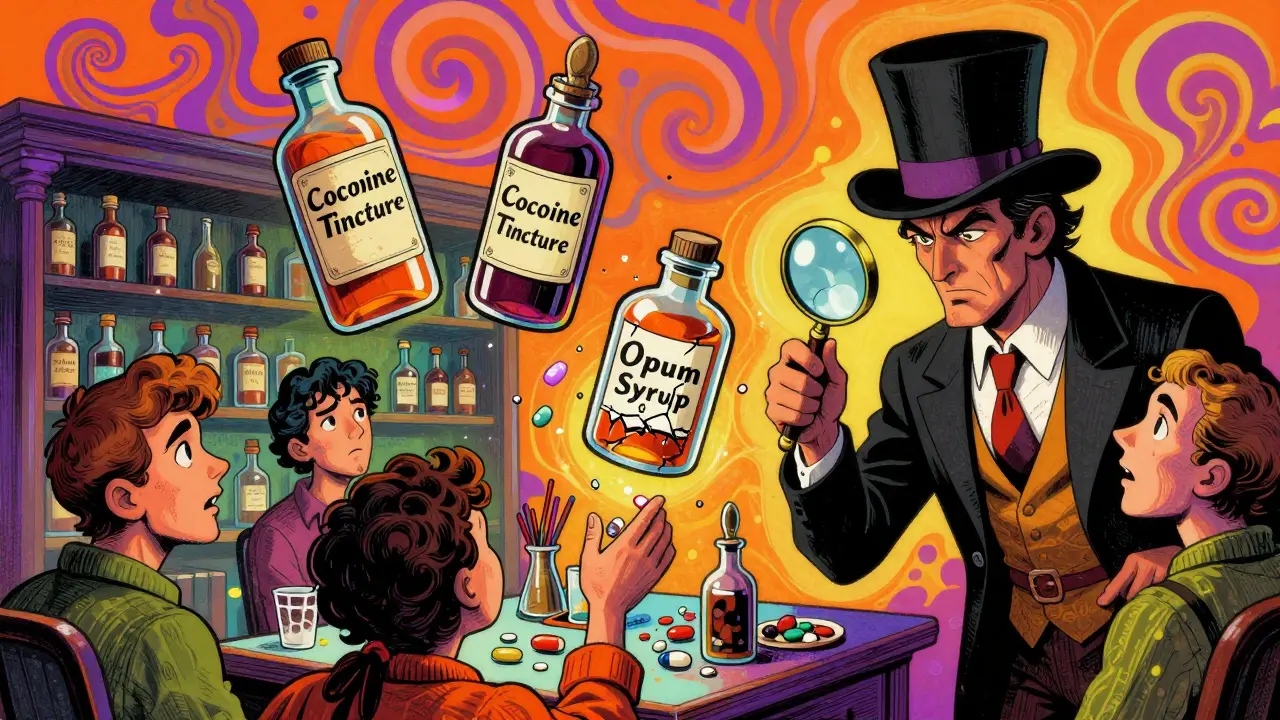
Today, more than 9 out of 10 prescriptions filled in the U.S. are for generic drugs. They’re cheaper, widely available, and trusted by doctors and patients alike. But this wasn’t always the case. Just 40 years ago, generic drugs made up less than 20% of prescriptions. What changed? The story of how generic drugs became the backbone of American healthcare is one of regulation, profit, scandal, and hard-won progress.
Before Generics: A Wild West of Medicine
In the 1800s, there was no real oversight of what went into medicine. Pills, syrups, and tinctures were sold with little to no testing. In 1820, eleven doctors got together in Washington, D.C., and created the first U.S. Pharmacopeia - a list of standard drug ingredients and strengths. It was a start, but not law. Companies still sold fake or diluted products with no consequences.
The 1848 Drug Importation Act was the first federal attempt to stop bad drugs from crossing borders. Customs agents were told to inspect incoming shipments. But it didn’t fix the problem at home. Counterfeit drugs were everywhere. In 1888, the American Pharmaceutical Association published the National Formulary to help pharmacists identify real medicines. Still, enforcement was weak.
The turning point came in 1906. President Theodore Roosevelt signed the Federal Food and Drugs Act after public outrage over dangerous products - like patent medicines laced with alcohol, cocaine, or opium. For the first time, labels had to list ingredients. If a drug was harmful, the government could act. This law became the foundation of what we now call the FDA.
Deadly Mistakes and New Rules
In 1937, a company marketed a new antibiotic called Elixir Sulfanilamide. To dissolve the powder, they used diethylene glycol - a chemical used in antifreeze. Over 100 people died, mostly children. The public was horrified. Congress responded quickly.
In 1938, the Federal Food, Drug, and Cosmetic Act (FDCA) was passed. For the first time, drugmakers had to prove their products were safe before selling them. The FDA gained real power. But there was one big gap: they didn’t require proof that drugs actually worked.
That changed in 1962. The thalidomide tragedy in Europe - where a drug meant to treat morning sickness caused severe birth defects - shocked the world. In the U.S., the drug had been kept off shelves thanks to FDA reviewer Frances Kelsey, who refused to approve it without more data. Her caution saved American babies.
The Kefauver-Harris Drug Amendments of 1962 forced drug companies to prove not just safety, but effectiveness. Every drug on the market since 1938 had to go back and show it worked. This was the first major step toward modern drug standards.
Why Generics Didn’t Take Off - Until 1984
Even after 1962, generic drugs stayed rare. Why? Because copying a brand-name drug was expensive and legally risky. To get approval, a generic maker had to run the same clinical trials as the original company - costing millions and taking years. Most didn’t bother.
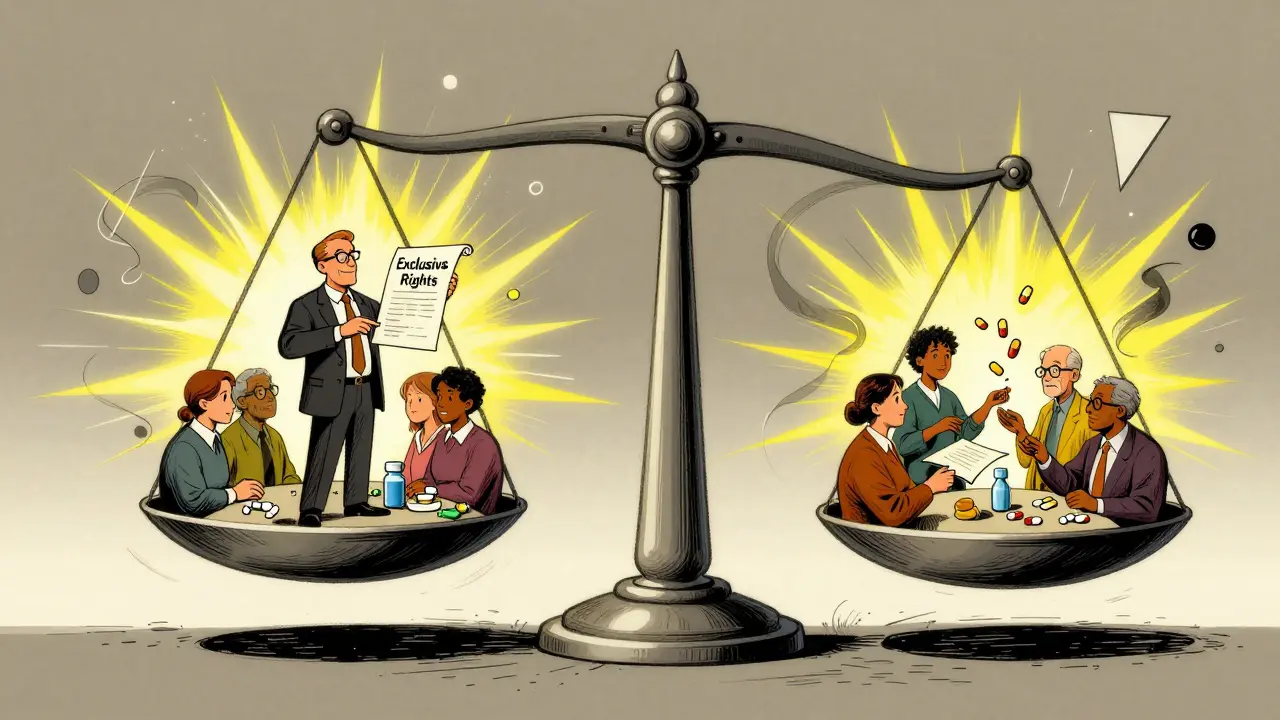
Then came the Hatch-Waxman Act of 1984. Officially called the Drug Price Competition and Patent Term Restoration Act, it was a compromise. Brand-name companies got extra patent time to make up for delays in FDA approval. In return, generic makers got a fast track.
The key was the Abbreviated New Drug Application, or ANDA. Instead of repeating clinical trials, generic companies only had to prove their drug was bioequivalent - meaning it worked the same way in the body. No need to prove safety again. No need to repeat expensive studies. Just show the body absorbed the same amount of the same active ingredient at the same rate.
Before Hatch-Waxman, generics made up 19% of prescriptions. By 1990, that jumped to 40%. Today, it’s over 90%.
The Real Savings - and the Hidden Costs
Generic drugs don’t just save money - they save lives. In 2021 alone, they saved the U.S. healthcare system $373 billion. Over the last decade, that adds up to more than $3.7 trillion. The Congressional Budget Office found generics cut drug costs by 80-85% compared to brand names.
And the numbers back it up: in 2022, generics made up 90.5% of all prescriptions filled, but only 23.4% of total drug spending. That’s the power of competition.
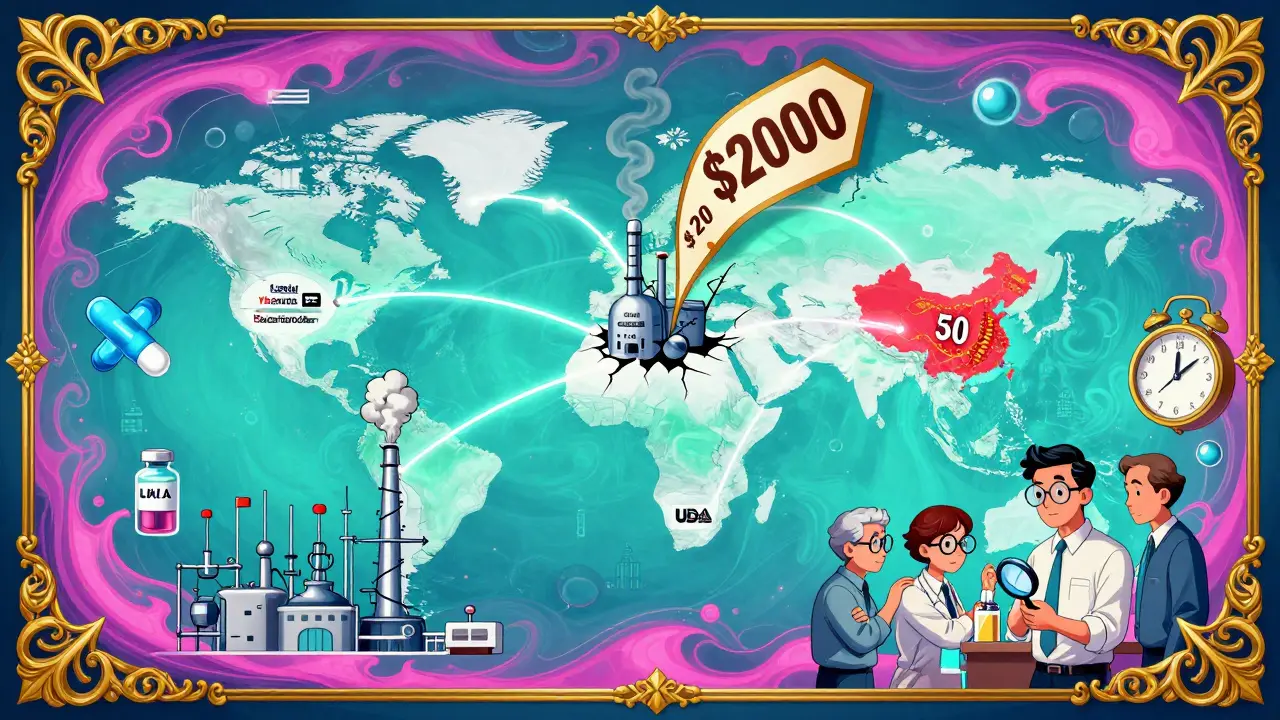
But there’s a darker side. While most generic prices have dropped, some have spiked. Between 2013 and 2017, 15% of generic drugs saw price hikes over 100%. Why? When only one or two companies make a drug, they can raise prices with little fear of competition. This happened with old, cheap drugs like doxycycline, insulin, and albuterol. Sometimes, a drug’s price went from $20 a bottle to $2,000.
Drug shortages became common too. Between 2018 and 2022, the FDA recorded 1,234 shortages. Two-thirds of them involved generic drugs. Why? Because many generics are made overseas, and supply chains are fragile. Over 80% of active pharmaceutical ingredient (API) factories are outside the U.S. - mostly in China and India. When one factory has a quality issue, the whole country can run short.
Modern Challenges: Patents, Delays, and Global Supply Chains
The Hatch-Waxman Act created a system that worked - for a while. But brand-name companies found loopholes. One trick: sue a generic maker the moment they file an ANDA. That triggers a 30-month automatic delay. Many companies file multiple lawsuits, even if the case is weak. This is called “evergreening.” It’s legal, but it keeps generics off the market for years.
In 2019, Congress passed the CREATES Act to stop this. It lets the FDA force brand-name companies to provide samples of their drugs so generics can test them. If they refuse, the generic maker can sue. As of late 2022, the FDA had taken 27 enforcement actions under this law.
Another big change came in 2012 with the Generic Drug User Fee Amendments (GDUFA). Before this, the FDA took an average of 30 months to review a generic application. After GDUFA, that dropped to 10 months. Approval rates jumped from 45% to 95%. The FDA now approves around 900 ANDAs every year.
Today, the FDA oversees more than 22,000 generic drug products and 13,000 manufacturing sites worldwide. The next frontier? Biosimilars - cheaper versions of complex biologic drugs like Humira or Enbrel. These are harder to copy than pills, but they’re starting to appear. Experts predict biosimilars could save billions more in the coming decade.
What’s Next for Generic Drugs?
Generic drugs aren’t perfect. Quality control gaps, supply chain risks, and price gouging still happen. But the system works better than ever. The U.S. has the most efficient generic drug market in the world. No other country comes close to 90% generic use.
Looking ahead, the goal is simple: keep prices low, ensure quality, and make sure no company can block competition. The FDA is working on new tools to monitor manufacturing sites remotely and speed up approvals even more. Meanwhile, Congress keeps debating how to prevent price spikes and protect patients.
One thing is clear: without generic drugs, millions of Americans couldn’t afford their prescriptions. They’re not just a cost-saving trick - they’re essential medicine.
Are generic drugs as safe and effective as brand-name drugs?
Yes. The FDA requires generic drugs to have the same active ingredient, strength, dosage form, and route of administration as the brand-name version. They must also prove bioequivalence - meaning they work the same way in the body. Generics are held to the same quality and manufacturing standards. Millions of people take generics every day without issue.
Why are generic drugs so much cheaper?
Generic manufacturers don’t have to repeat expensive clinical trials because they rely on the original drug’s safety and efficacy data. They also face competition from multiple makers once a patent expires. That drives prices down. Brand-name companies spend billions on marketing and R&D - generics don’t need to.
Can I trust generics made in other countries?
Yes. The FDA inspects all manufacturing facilities - whether in the U.S., India, China, or elsewhere - using the same standards. About 80% of active ingredients come from outside the U.S., but every site must pass FDA inspections. The agency has increased overseas inspections dramatically since 2010. If a facility fails, its products are blocked from entering the U.S.
Why do some generic drugs have different colors or shapes?
By law, generics can’t look exactly like the brand-name drug - that would violate trademark rules. So they use different colors, shapes, or coatings. But the active ingredient and how it works in your body are identical. The differences are only in inactive ingredients, like fillers or dyes, which don’t affect effectiveness.
What’s the difference between generic drugs and biosimilars?
Generic drugs are copies of small-molecule drugs - pills you swallow. Biosimilars are copies of large, complex biologic drugs made from living cells - like injections for arthritis or cancer. Because they’re more complex, biosimilars can’t be exact copies. They’re “similar” in structure and function. The approval process is stricter, but they still cost less than the original biologics.
Why do some generic drugs suddenly get expensive?
When only one or two companies make a drug, they can raise prices. This often happens with older drugs that have low profit margins - no one wants to make them unless they’re the only one. If production stops or a factory fails, supply drops and prices spike. The FDA tracks these drugs closely and tries to prevent shortages, but it’s not always possible.
Anu radha
December 17, 2025 AT 10:43So many people in my village in India rely on these cheap pills. My mom takes her blood pressure medicine every day - it costs less than a cup of tea here. I’m glad America finally gets it.
Jody Patrick
December 19, 2025 AT 00:52China and India make our meds? That’s why we’re weak. We need to bring production home. Now.
Linda Caldwell
December 19, 2025 AT 12:24Generics saved my dad’s life and my bank account. No hype. Just facts. Keep fighting for access.
Joe Bartlett
December 20, 2025 AT 01:39UK does this better. We get generics for pennies. Americans overpay for everything.
Peter Ronai
December 20, 2025 AT 06:51Oh please. You think this is some heroic victory? The FDA’s a joke. Half these generics are made in factories with rats in the walls and inspectors who get paid in chai. And you’re clapping like it’s a TED Talk? The real scandal is how long it took for people to wake up. You think this system’s fair? It’s just capitalism with a Band-Aid.
That 90% stat? It’s not because we’re smart - it’s because Big Pharma let them in on purpose. They knew generics would kill their profits on old drugs, so they sold the patents to shady middlemen who jack prices up 1000%. Doxycycline? $20 to $2000? That’s not competition. That’s robbery with FDA approval.
And don’t get me started on ‘bioequivalent.’ You know what that means? The pill dissolves at the same speed. Doesn’t mean your body reacts the same. I’ve seen people switch and have seizures. But hey, the label says ‘same active ingredient’ so we’re good right? Roll the credits.
Hatch-Waxman wasn’t a win - it was a surrender. Brand names got extra patents and generics got a backdoor. Now we’ve got a two-tier system where the rich get name brands and the poor get whatever’s left. And you call that progress? Pathetic.
And the ‘inspections’? Please. The FDA has 1,000 inspectors for 13,000 global sites. That’s one per 13 sites. One person. Per year. You think they’re checking for mold? They’re checking if the label says ‘ibuprofen’ and not ‘ibuprufen.’
Don’t call this a success story. Call it a tragedy with a happy ending that only the middle class believes in.
Brooks Beveridge
December 21, 2025 AT 12:33Hey, I just want to say - this stuff matters. I’ve seen people skip doses because they can’t afford the brand. Generics aren’t just cheaper - they’re lifelines. And yeah, the system’s flawed, but it’s the best we’ve got. Keep pushing for better oversight, but don’t throw out the baby with the bathwater. We’re all in this together.
And to those saying ‘bring it back to the US’ - that’s not the fix. The fix is fair pricing, not nationalism. We need more makers, not fewer. More competition, not more walls.
Also - big props to Frances Kelsey. That woman held the line when everyone else blinked. Real hero.
Erik J
December 23, 2025 AT 00:16Interesting how the FDA’s approval rate jumped from 45% to 95% after GDUFA. But what’s the failure rate of those approved generics in real-world use? Is there any long-term data on adverse reactions post-approval? I’ve never seen it published.
Steven Lavoie
December 23, 2025 AT 23:14As someone who grew up in a country where generics were the only option, I can tell you - trust isn’t given, it’s earned. The FDA’s standards, even with flaws, are the gold standard globally. My cousin in Nigeria takes a generic antibiotic made in India, and it works because the API was tested to U.S. specs. That’s the quiet power of this system.
Don’t let the price spikes blind you to the bigger picture: without generics, millions wouldn’t even have access. That’s not a bug - it’s the feature.
Sachin Bhorde
December 25, 2025 AT 14:38bro in india we make like 60% of the world's generics but no one talks about it. we got factories in pharma city that make more pills than your whole state. but yeah the us still thinks it's the only one doing stuff. lol
also doxycycline price hike? that's because one chinese factory had a fire and the whole world panicked. not because of some evil plot. supply chain is fragile man.
Jane Wei
December 25, 2025 AT 15:28my pharmacist switched my brand to generic and I thought I’d feel weird… but nope. same pill. same results. just cheaper. weird how that works.
Meghan O'Shaughnessy
December 26, 2025 AT 11:19It’s wild to think that 40 years ago, most people didn’t even know generics existed. Now they’re invisible - and that’s the point. They’re just medicine. No fanfare. No drama. Just people getting better.
Kaylee Esdale
December 27, 2025 AT 02:48Generics are the unsung heroes of healthcare. No glitter. No ads. Just the stuff that keeps you alive. I love that they look different too - makes me feel like I’m not just a consumer, I’m part of a system that actually works.
Anna Giakoumakatou
December 27, 2025 AT 18:32Oh wow. A 3,700 billion dollar ‘savings’ - how noble. Let me grab my tiny violin while I cry over the 200% price spike on my insulin. Truly, the American dream: buy a generic, hope it doesn’t kill you, and thank the FDA for letting you live on a budget.