
Combination Drug Suitability Checker
Check if your combination drug is appropriate
Based on clinical evidence and patient-specific factors from the article. This tool helps you understand when combination drugs are beneficial versus when single medications might be safer.
Imagine taking five pills a day just to manage your blood pressure, diabetes, and cholesterol. Now imagine taking just one. That’s the promise of combination drugs-single tablets that pack two or more active ingredients into one dose. They’re everywhere now: for hypertension, tuberculosis, HIV, Parkinson’s, and even depression. But behind the convenience lies a real trade-off: easier to take, or harder to control?
Why Combination Drugs Exist
Combination drugs aren’t new. Traditional medicine systems like Ayurveda and Traditional Chinese Medicine used multi-herb formulas for centuries. But modern fixed-dose combinations (FDCs) started taking shape in the 1970s with drugs like sulfamethoxazole and trimethoprim, used together to fight bacterial infections more effectively than either alone. The goal? Make treatment simpler, especially for patients juggling multiple chronic conditions.The World Health Organization recognized this early. By 2005, 18 out of 312 drugs on its Essential Medicines List were fixed-dose combinations. Why? Because they work. For tuberculosis, FDCs like rifampicin + isoniazid cut treatment dropout rates by nearly half in low-resource settings. For high blood pressure, low-dose combinations of ACE inhibitors and diuretics improve control faster than single drugs. In cancer, combining drugs that attack different pathways slows resistance. For Parkinson’s, levodopa + carbidopa keeps dopamine levels steady without the nausea that comes with levodopa alone.
These aren’t random mixes. Rational FDCs follow strict rules: the drugs must work through different mechanisms, have similar half-lives so they peak at the same time, and not amplify each other’s side effects. When done right, they’re not just convenient-they’re clinically superior.
The Convenience Factor
Let’s talk about pill burden. It’s not just a buzzword. Taking eight pills a day isn’t just annoying-it’s dangerous. Studies show that patients on multiple medications miss doses, skip refills, or stop altogether. One study found that patients on FDCs were 30% more likely to stick to their regimen than those on separate pills. That’s not small. For older adults, people with memory issues, or those with complex regimens, one pill instead of four can mean the difference between staying healthy and ending up in the hospital.Combination drugs also cut down on pharmacy trips and prescription costs. Insurance often covers one pill at a lower co-pay than multiple separate ones. For public health systems, especially in countries with limited resources, FDCs mean fewer packaging needs, easier distribution, and better adherence across populations. In India, where tuberculosis is still widespread, FDCs helped scale up treatment to millions who otherwise couldn’t manage daily multi-pill routines.
The Hidden Risks
But here’s the catch: when you combine drugs, you lose flexibility. If one ingredient causes a bad reaction-say, a rash from the diuretic in your blood pressure combo-you can’t just stop that one part. You have to stop the whole pill. Even if the other drugs are working fine. That forces you back to square one: finding separate pills, adjusting doses again, restarting the whole process.Then there’s dosing. What if you need to increase your blood pressure med but your kidney function is declining and you can’t handle more of the diuretic? With separate pills, you adjust one. With a combo, you’re stuck. You might end up underdosed on one, overdosed on another. Pharmacokinetics matter-how fast each drug is absorbed, how long it lasts. If one drug clears your system faster than the other, you’re getting an unbalanced dose every time you take it.
And then there’s the risk of side effects multiplying. Two drugs that are safe alone can become dangerous together. The classic example? Taking an NSAID like ibuprofen with a blood thinner like warfarin. Alone, each is fine for most people. Together? Higher chance of stomach bleeding. FDCs make this invisible. You don’t see the individual ingredients. You just see “one pill.”
When FDCs Go Wrong
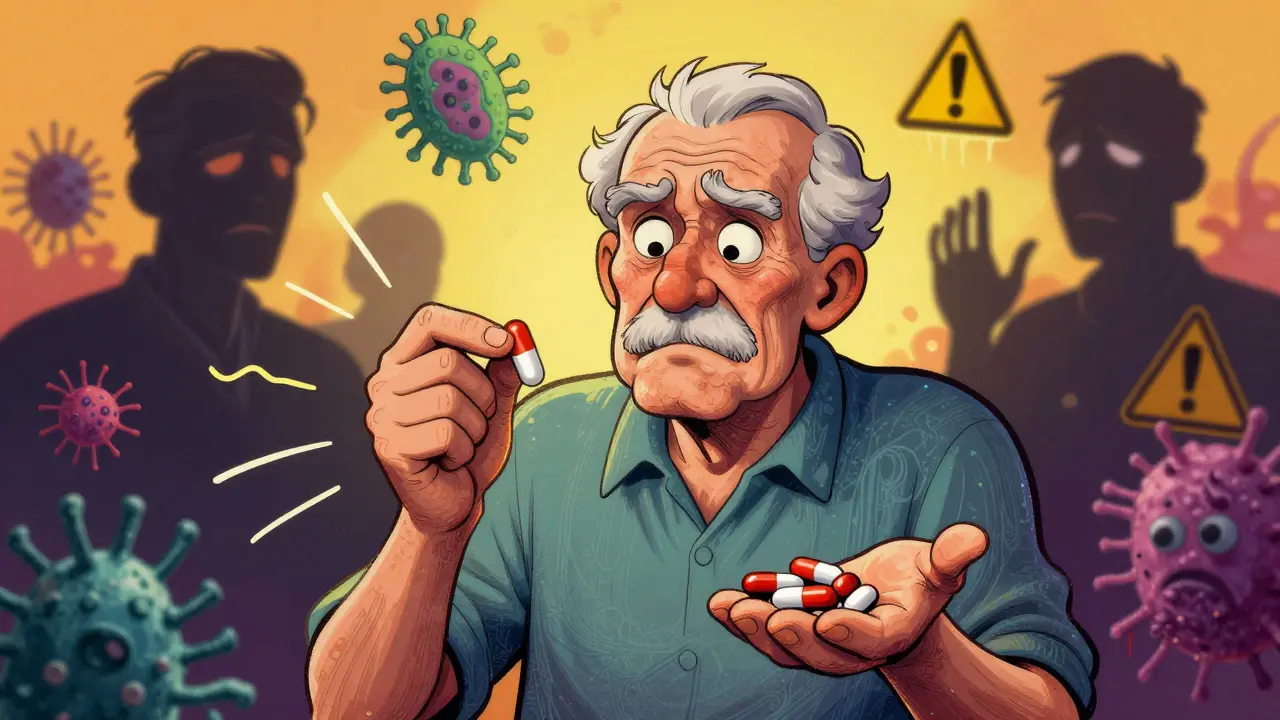
Not all combinations are created equal. In countries like India, regulatory oversight has struggled to keep up with demand. Thousands of unapproved FDCs flooded the market-antibiotic combos with no proven benefit, painkillers stacked with muscle relaxants, antivirals paired with antifungals without evidence. The Central Drugs Standard Control Organization (CDSCO) has banned over 300 such combinations since 2016. Why? Because they don’t just waste money-they fuel antimicrobial resistance.The WHO has warned that irrational antibiotic combinations are accelerating superbugs. When you mix two antibiotics without knowing if they’re synergistic, you’re not curing infections-you’re training bacteria to survive. And because these drugs are sold over the counter in many places, patients self-medicate, take incomplete courses, and spread resistance.
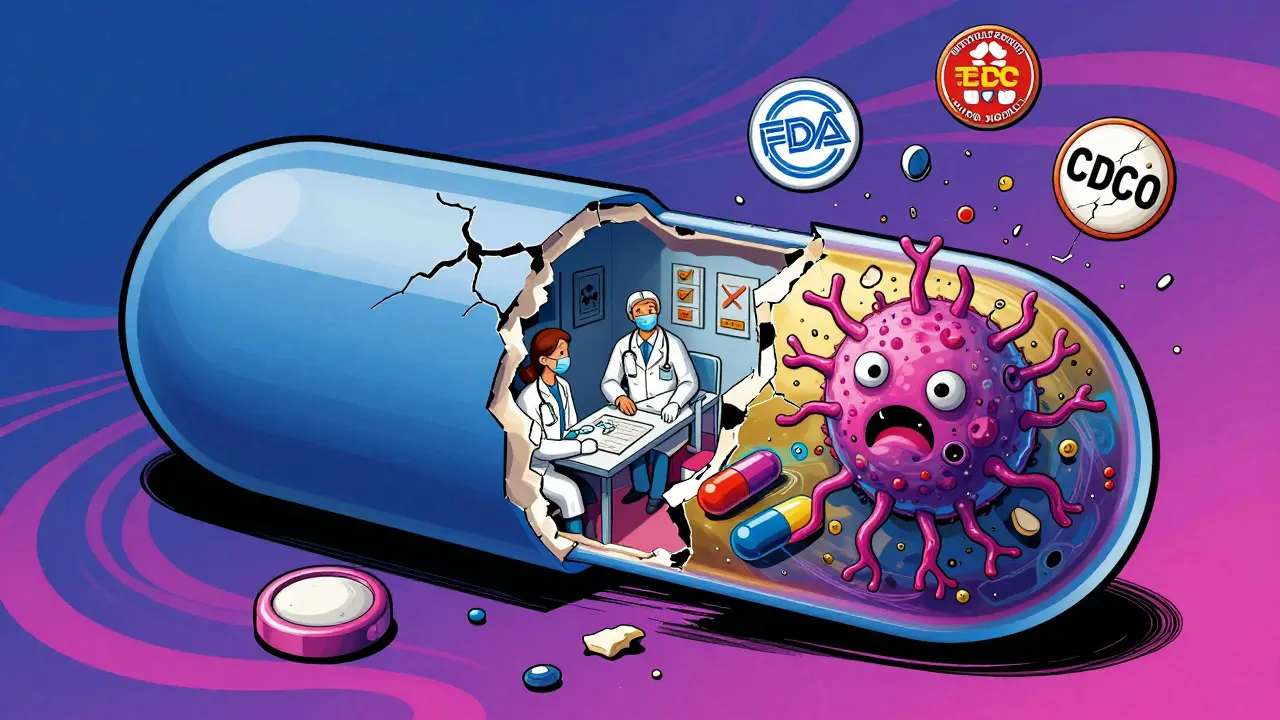
The FDA doesn’t allow this. In the U.S., combination drugs must prove safety and efficacy as a unit-not just as the sum of their parts. But even then, some FDCs slip through. A 2023 review found that nearly 1 in 5 new FDCs approved by the FDA lacked clear evidence that the combination was better than the individual drugs. That’s not innovation. That’s marketing.
Combination Drugs vs Compounded Medications
You might hear about compounded medications-custom mixes made by pharmacists. These are different. A compounding pharmacy might make a topical cream with amitriptyline, baclofen, and gabapentin for nerve pain because no pill form exists. Or remove lactose for someone allergic. These are personalized. FDCs are mass-produced.The key difference? Regulation. Compounded drugs aren’t FDA-approved. The agency doesn’t check their safety before they’re sold. FDCs go through full clinical trials. That’s why FDCs are trusted in guidelines. Compounded meds are a backup-used when no approved option exists.
But here’s the problem: some clinics and pharmacies market compounded combos as “better” than FDCs. They’re not. Unless you have a specific, documented need-like an allergy, swallowing difficulty, or a rare condition-stick with approved combinations. Don’t fall for the myth that “custom” means “better.”
What Should You Do?
If you’re on a combination drug:- Know what’s in it. Ask your pharmacist for the full list of active ingredients.
- Check if any new symptoms match one of the components. A headache? Could be the diuretic. Dizziness? Maybe the beta-blocker.
- Never stop the pill just because one side effect appears-talk to your doctor first. They might switch you to a different combo or separate drugs.
- If you’re prescribed a new FDC, ask: “Is this combination proven to work better than taking the drugs separately?”
Doctors, too, need to be careful. The American Association of Orthodontists and other groups warn that FDCs limit treatment customization. That’s true. But it’s not a reason to avoid them. It’s a reason to choose wisely. Use them for conditions where the science supports synergy-hypertension, TB, HIV, Parkinson’s. Avoid them for conditions where dosing needs fine-tuning, like depression or epilepsy.
The Future of Combination Drugs
The future isn’t about more combinations-it’s about smarter ones. Companies are using AI to predict which drug pairs will work together without dangerous interactions. Researchers are designing FDCs for rare diseases where no single drug exists. The WHO’s next Essential Medicines List, due in 2025, will likely add more evidence-backed combinations.But the biggest shift? Regulation. Countries are cracking down on irrational FDCs. The FDA is tightening review standards. India’s CDSCO is now requiring clinical trial data for every new combo. That’s good news.
Combination drugs aren’t good or bad. They’re tools. Used right, they save lives. Used carelessly, they create new problems. The key isn’t to avoid them-it’s to demand proof. If your doctor prescribes a combo, ask: “What’s the evidence this works better than separate pills?” If they can’t answer, it might be time to look again.
Tim Goodfellow
December 20, 2025 AT 15:48Combination drugs are like ordering a five-course meal in one bite - convenient if you’re starving, but you better hope the chef didn’t mix the spices wrong. In India, where I’m from, these pills saved lives during the TB crisis. But I’ve seen people get sick because they didn’t know their combo had a diuretic that wrecked their kidneys. Knowledge isn’t power here - it’s survival.
Connie Zehner
December 21, 2025 AT 05:19This is why I hate modern medicine 😔 People just want quick fixes instead of actually healing. I’ve been on 7 different combos and my body’s a mess. No one tells you about the brain fog or the rage episodes. I’m just a lab rat with a pill organizer. 🙃
pascal pantel
December 21, 2025 AT 09:47Let’s be real - 80% of FDCs are pharmaceutical marketing masquerading as innovation. The FDA approves them based on surrogate endpoints, not outcomes. And don’t get me started on the Indian regulatory chaos. You’re not treating disease, you’re creating polypharmacy monsters with no pharmacokinetic rationale. This isn’t science, it’s profit-driven laziness.
holly Sinclair
December 23, 2025 AT 05:51There’s something deeply human about the way we reduce complexity into single units - one pill, one solution, one identity. But the body doesn’t work like that. It’s a symphony of systems, not a playlist of drugs. When we force two molecules into one capsule, we’re not just simplifying treatment - we’re ignoring the messy, beautiful unpredictability of biology. Are we healing, or are we just making compliance easier for a system that doesn’t care if we live or die, as long as we keep buying pills?
Monte Pareek
December 24, 2025 AT 13:21Listen up. If you’re on a combo drug and you don’t know what’s in it you’re playing Russian roulette with your liver. Ask your pharmacist. Write it down. Google each ingredient. Don’t trust the label. I’ve seen patients drop dead because they didn’t realize their BP combo had a hidden NSAID. This isn’t complicated. It’s basic. You don’t eat a mystery stew and hope it’s safe. Why do it with your meds?
Elaine Douglass
December 26, 2025 AT 01:21i just started a combo for my diabetes and high bp and honestly it changed my life no more 6 pills a day just one and i actually remember to take it now 😊
Dikshita Mehta
December 27, 2025 AT 17:31In India, FDCs are a lifeline - but also a minefield. My aunt took an unapproved combo for joint pain and ended up with liver failure. The pharmacy didn’t even know what was in it. We need better labeling, public education, and stricter enforcement. Convenience shouldn’t override safety. We can do better.
Sahil jassy
December 27, 2025 AT 19:46One pill for diabetes + hypertension? Yes please. I’m 68 and my hands shake. I drop pills. I forget. This one thing kept me out of the hospital. Don’t knock it till you’ve tried juggling 8 different bottles
Alex Curran
December 29, 2025 AT 04:03My dad’s on a combo for Parkinson’s and it’s the only thing that lets him eat without drooling or shaking. But when he got a UTI and needed antibiotics, his doc had to pause the combo because one ingredient interacted. That’s the tradeoff. You gain adherence, you lose flexibility. It’s not perfect but it’s better than nothing
Kathryn Featherstone
December 30, 2025 AT 08:24I work in a clinic and I’ve watched people thrive on FDCs - and I’ve watched others spiral because their doctor didn’t adjust the dose when their kidneys declined. It’s not the combo’s fault. It’s the lack of follow-up. We need better monitoring systems, not just more pills.
Nicole Rutherford
January 1, 2026 AT 00:28Anyone who thinks combo drugs are a good idea hasn’t read the FDA’s adverse event reports. You think you’re saving time? You’re just delaying the inevitable hospital trip. And don’t even get me started on the people who self-medicate with Indian FDCs from shady websites. You’re not a patient - you’re a walking clinical trial.
Mahammad Muradov
January 1, 2026 AT 16:36Let me tell you something about Indian FDCs. I’ve seen pharmacies sell combinations of antibiotics with antihistamines - no prescription, no science. The government banned over 300 of them. But guess what? They’re still on the shelves. People don’t care about evidence. They care about price. And that’s not just ignorance - it’s systemic failure.
Gloria Parraz
January 3, 2026 AT 14:17My brother was prescribed a combo for depression and anxiety. He got dizzy, nauseous, and felt like he was drowning in his own skin. He didn’t know which drug was doing it. He stopped cold turkey. Two weeks later, he was in the ER. Don’t let convenience become a trap. Ask questions. Demand clarity. Your life isn’t a packaging design.