
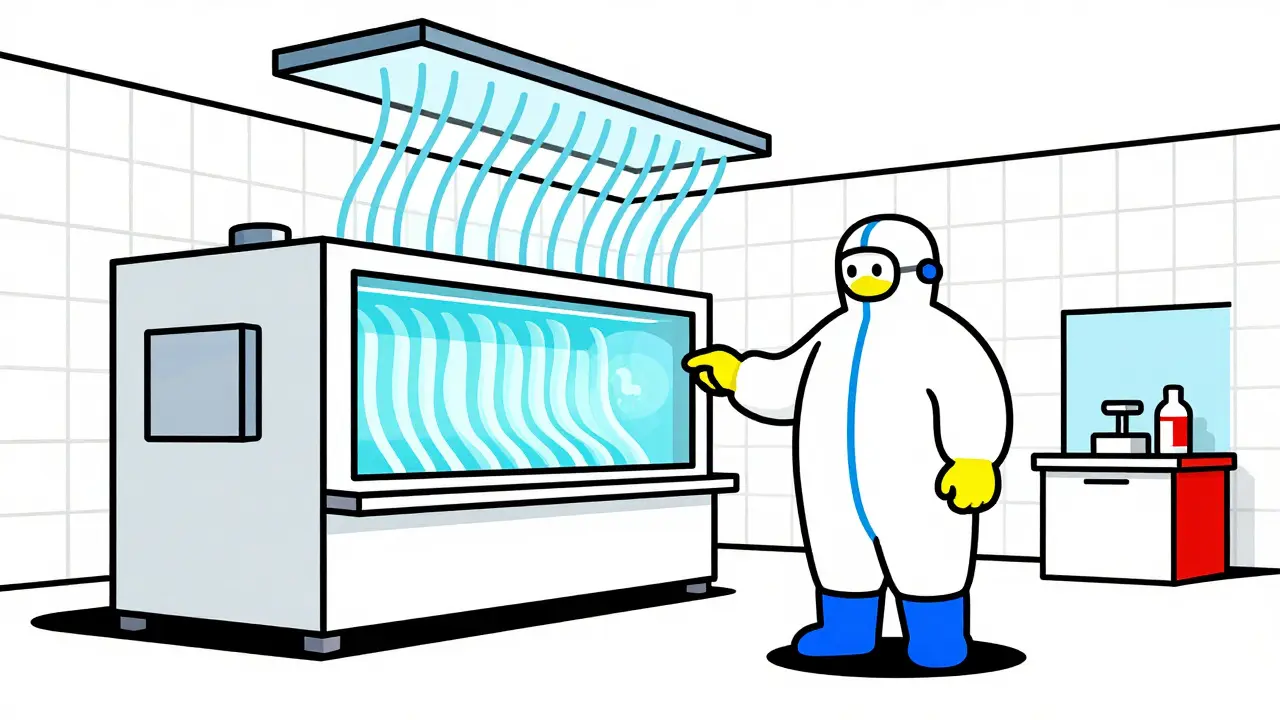
When you pick up a bottle of generic medication at the pharmacy, you trust that it works exactly like the brand-name version. But how do we know the pills inside are safe, sterile, and free from harmful contaminants? The answer lies in invisible environments called cleanrooms, which are controlled environments with regulated levels of particulate and microbiological contamination. These facilities are not just clean; they are engineered fortresses designed to protect drug integrity. For generic drug manufacturers, meeting strict cleanroom standards is not optional-it is the legal and scientific requirement to prove their products are bioequivalent to reference drugs.
The stakes are incredibly high. A single breach in environmental control can lead to product recalls, regulatory shutdowns, or worse, patient harm. In recent years, regulators have tightened these rules significantly. If you are involved in pharmaceutical manufacturing, understanding these standards is critical for compliance, cost management, and public safety.
Why Cleanrooms Are Non-Negotiable for Generics
Generic drugs must demonstrate bioequivalence to the original reference listed drug (RLD). This means the generic must deliver the same amount of active ingredient into the patient's bloodstream over the same period. Contamination-whether from dust particles, microbes, or cross-contamination with other drugs-can alter this profile or cause adverse reactions.
Regulatory bodies like the U.S. Food and Drug Administration (FDA) and the European Medicines Agency (EMA) enforce Current Good Manufacturing Practices (cGMP). Under 21 CFR Parts 210 and 211, manufacturers must validate that their facility design prevents contamination. For sterile injectables, ophthalmics, and implants, the environment is the primary barrier against risk. The FDA’s Orange Book requirements mandate that generics meet the same quality benchmarks as innovators, regardless of price differences. Failure to comply results in severe penalties, including Form 483 observations, warning letters, and import alerts. In fiscal year 2022 alone, the FDA issued 228 cGMP-related warning letters, with 63% tied to manufacturing deficiencies.
Understanding Cleanroom Classifications
Cleanrooms are classified based on the number of particles allowed per cubic meter of air. The global benchmark is ISO 14644-1, first published in 1999 and updated in 2015. However, pharmaceutical regulations often use specific grades that map to ISO classes. Here is how the major systems align:
| Grade / ISO Class | Particle Limit (≥0.5μm/m³) | Air Changes/Hour | Typical Use Case |
|---|---|---|---|
| Grade A (ISO Class 5) | 3,520 | Minimum 60 | Sterile filling, aseptic processing |
| Grade B (ISO Class 7 operational) | 3,520,000 | Minimum 40 | Aseptic preparation areas |
| Grade C (ISO Class 8 operational) | 35,200,000 | Minimum 20 | Non-sterile solid dosage prep |
| Grade D (ISO Class 8 at rest) | 35,200,000 | Minimum 10 | Packaging, less critical steps |
Grade A zones require unidirectional laminar airflow at speeds between 0.36-0.54 m/s and positive pressure differentials of 10-15 Pascals relative to adjacent areas. These zones are where the drug is most vulnerable. Grade B serves as the background environment for Grade A activities. As you move to Grades C and D, particle limits increase, but monitoring remains rigorous. Temperature must stay between 18-26°C, and humidity between 30-60%, per WHO guidelines. Microbial limits are equally strict, ranging from 1 colony-forming unit (CFU) per plate in Grade A to 200 CFU in Grade D.
Global Regulatory Frameworks: EU vs. FDA
While the goal is universal safety, regulatory approaches differ slightly. The European Union’s EudraLex Volume 4, specifically Annex 1, provides explicit ISO equivalencies for each grade. The 2023 revision of Annex 1, effective August 25, places heavy emphasis on a holistic "contamination control strategy" rather than just particle counts. It mandates continuous monitoring and stricter viable air sampling.
In contrast, the FDA’s 21 CFR 211.46 focuses on facility design preventing contamination but does not explicitly cite ISO classes. Instead, it relies on performance-based validation. This creates a challenge for global manufacturers who must satisfy both regimes. For example, USP Chapter <797> addresses compounding pharmacies with less stringent requirements (ISO Class 7 buffer areas) compared to the ISO Class 5 required for Grade A manufacturing. Harmonization efforts through the International Council for Harmonisation (ICH), such as ICH Q7 for active pharmaceutical ingredients, help bridge these gaps, but discrepancies remain.
The Cost of Compliance for Generic Manufacturers
Strict cleanroom standards come with a hefty price tag. Implementing an ISO Class 5 cleanroom costs between $250 and $500 per square foot. For generic manufacturers operating on slim gross margins of 15-20%-compared to 70-80% for innovator drugs-this is a significant burden. HVAC upgrades alone can run millions of dollars. A Pfizer facility manager reported spending $2.3 million on an HVAC upgrade to convert a Grade C area to Grade B for a generic oncology product. While expensive, this investment prevented 17 potential out-of-specification batches annually, saving $8.5 million.
Operational costs also rise. Maintaining these environments requires specialized HEPA filters (H13-H14 class with 99.95-99.995% efficiency), real-time monitoring systems ($50,000-$100,000 per room), and extensive personnel training. Gowning certification alone takes 40-60 hours. Despite these costs, non-compliance is far more expensive. Aurobindo Pharma faced a $137 million recall in 2022 due to inadequate Grade B monitoring. The financial risk of failure outweighs the upfront investment.
Implementation Challenges and Best Practices
Even with the best equipment, human error remains the biggest threat. Industry surveys show that 42% of deviations stem from personnel gowning procedures. Workers introduce particles simply by moving. To mitigate this, facilities must implement robust training programs and behavioral protocols. Real-time monitoring systems help detect airflow disruptions instantly.
Climate also plays a role. In tropical regions, maintaining low humidity requires specialized dehumidification systems, adding 20-30% to HVAC costs. Facilities in India, for instance, spend an average of $4.2 million per facility to upgrade to Annex 1 standards, compared to $2.8 million in the U.S., due to infrastructure limitations.
Best practices include:
- Continuous Monitoring: Install sensors that track particle counts, temperature, and humidity in real-time.
- Personnel Training: Conduct regular gowning certifications and behavior audits.
- Preventive Maintenance: Schedule regular HEPA filter testing and HVAC servicing.
- Documentation: Maintain 15-20 standard operating procedures (SOPs) covering environmental monitoring, calibration, and cleaning.
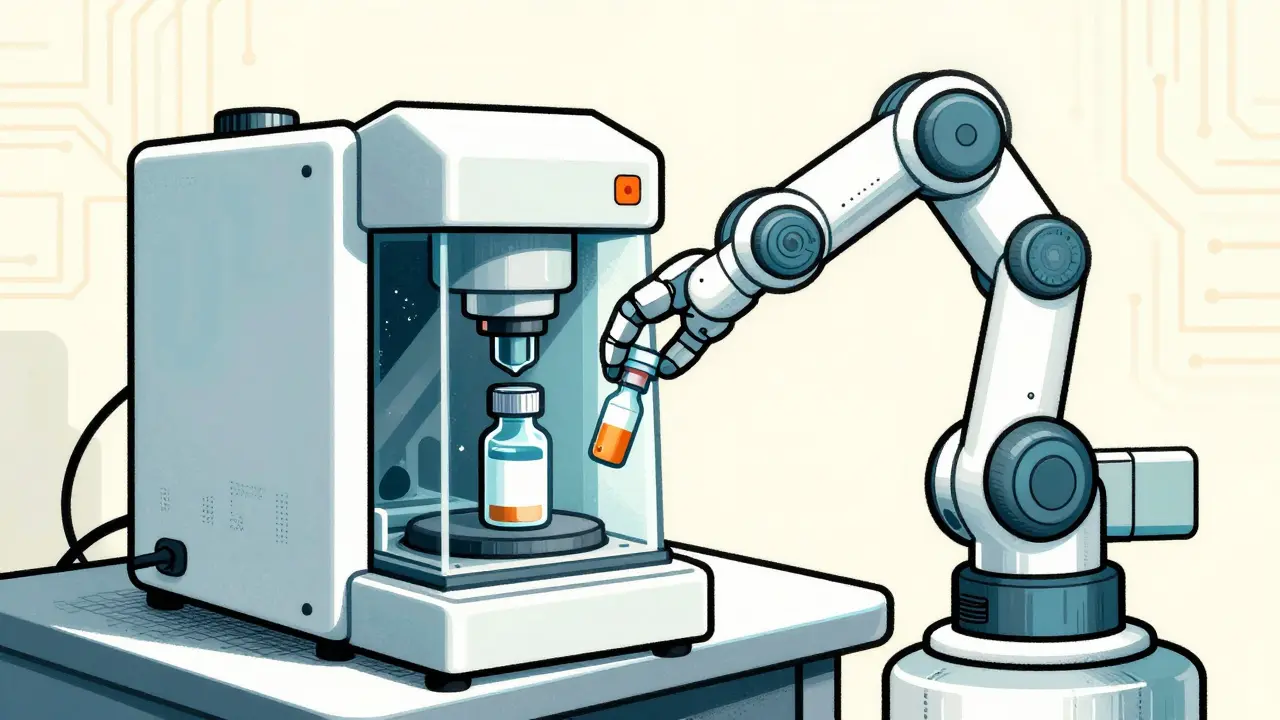
Teva’s success with its generic Copaxone illustrates the power of advanced technology. By implementing isolator technology in Grade A areas, they reduced contamination events from 12 to 2 per year, securing FDA approval after previous rejections.
Future Trends in Cleanroom Technology
The industry is moving toward automation and continuous manufacturing. McKinsey & Company projects that robotics and AI-powered monitoring will reduce cleanroom operational costs by 25-30% by 2028. Single-use systems are gaining traction, especially in biologics manufacturing, reducing the need for complex cleaning cycles. The PDA is developing Technical Report 81 to address these trends.
However, complexity is increasing. Biosimilars and complex generics like inhalers require more stringent controls. The FDA projects that 50% of new Abbreviated New Drug Applications (ANDAs) by 2025 will require Grade A/B environments, up from 35% in 2022. As regulations tighten, the gap between compliant and non-compliant manufacturers will widen, favoring those who invest early in robust contamination control strategies.
What is the difference between ISO Class 5 and Grade A?
ISO Class 5 is a particle count classification allowing no more than 3,520 particles ≥0.5μm per cubic meter. Grade A is a pharmaceutical regulatory designation that typically corresponds to ISO Class 5 but includes additional requirements for microbial limits, airflow velocity, and personnel protocols specific to sterile manufacturing.
Why are cleanroom standards stricter for generic drugs than brand names?
They are not necessarily stricter, but generic manufacturers face higher scrutiny because they must prove bioequivalence to the reference product without the benefit of clinical trial data. Any deviation in quality could imply the generic is not equivalent, leading to immediate regulatory action.
How much does it cost to maintain a Grade A cleanroom?
Initial construction costs range from $250 to $500 per square foot. Operational costs vary widely but include HVAC maintenance, filter replacements, monitoring systems, and personnel training. Annual operational expenses can represent 15-25% of total facility capital expenditure for generic manufacturers.
What happens if a cleanroom fails inspection?
Failures can result in FDA Form 483 observations, warning letters, import alerts, or consent decrees. Severe cases may lead to product recalls, facility shutdowns, and significant financial losses, as seen in the 2022 Aurobindo Pharma case involving a $137 million recall.
Are there alternatives to traditional cleanrooms?
Yes, isolators and restricted access barrier systems (RABS) provide localized containment within larger rooms. Single-use technologies also reduce contamination risks by eliminating reusable equipment. These solutions are increasingly popular for complex generics and biologics.