
Biotin Testing Window Calculator
How Biotin Affects Your Blood Tests
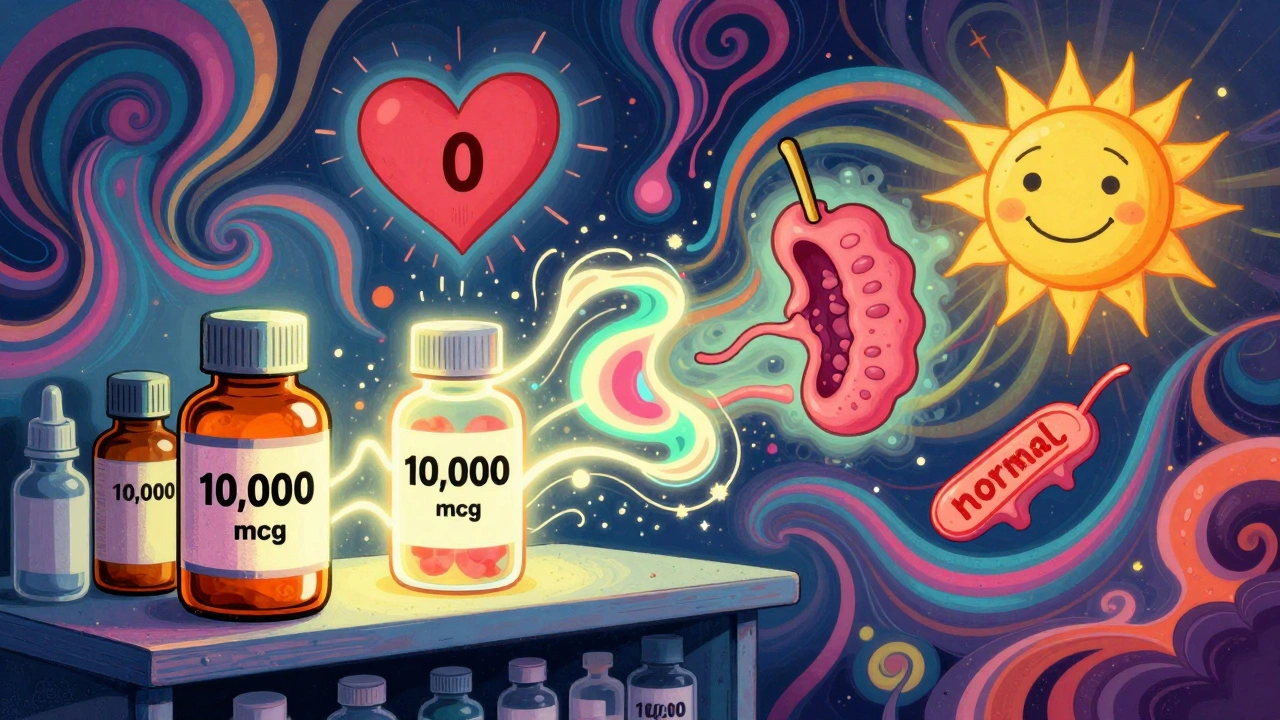
High-dose biotin supplements (5,000 mcg+) can cause dangerous false results in lab tests. This tool helps you determine how long you need to stop biotin before bloodwork.
Results
Important: Stopping too soon can cause false results. If you have symptoms like chest pain or thyroid issues, never skip medical care based on test results.
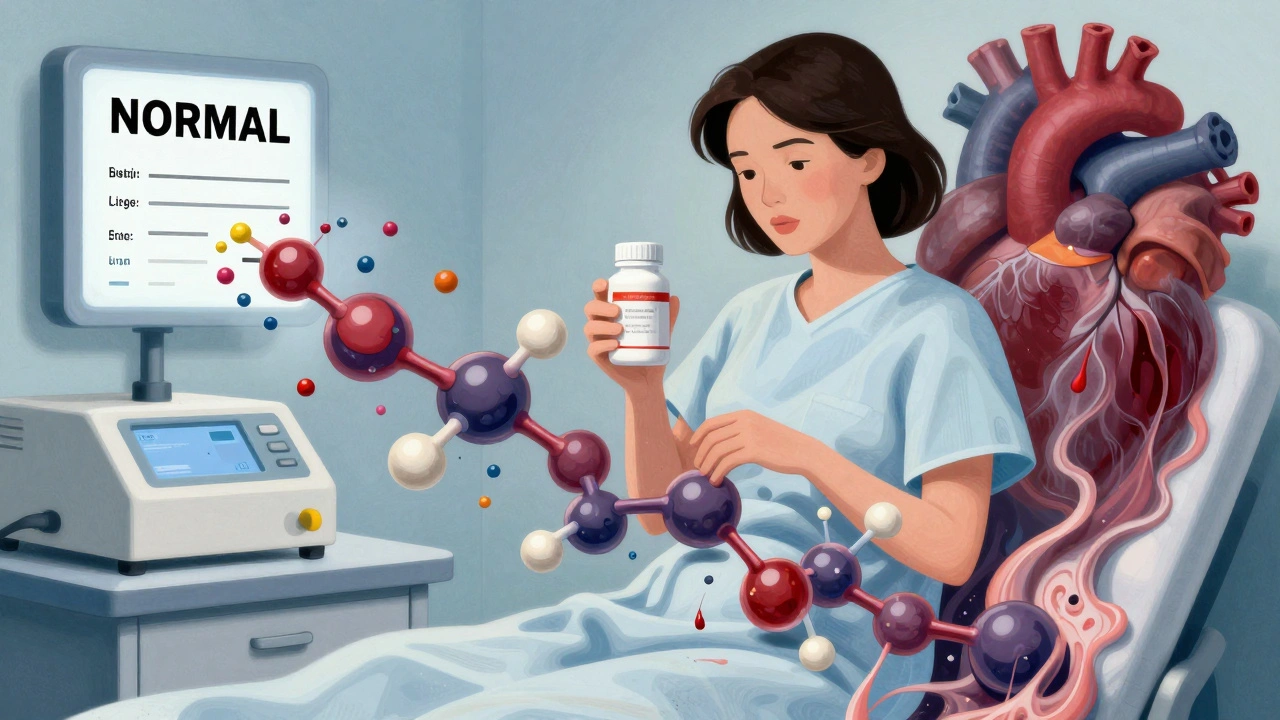
Imagine going to the hospital with chest pain, and your blood test says your heart is fine. But you’re having a heart attack. That’s not a hypothetical. It’s happened. And the culprit? A daily supplement you picked up at the drugstore for healthier hair and nails.
Biotin - also known as vitamin B7 - is everywhere. It’s in multivitamins, prenatal pills, and especially in those flashy hair, skin, and nail supplements promising quick results. Many of these contain 5,000 to 10,000 micrograms per dose. That’s over 160 times the amount your body actually needs. The problem isn’t the biotin itself. It’s what it does to your lab tests.
How Biotin Tricks Lab Machines
Most modern blood tests - about 70% of them - rely on a clever trick called biotin-streptavidin binding. Think of it like a molecular magnet. Biotin sticks tightly to streptavidin, and labs use that bond to grab hold of the molecules they’re trying to measure - like thyroid hormones, cortisol, or cardiac troponin (the protein that signals heart damage).
But when you take high-dose biotin supplements, your blood gets flooded with it. Suddenly, there’s too much biotin floating around. It crowds the test, sticking to the streptavidin before the lab’s own reagents can. That throws everything off. Some tests show falsely low results. Others show falsely high ones. And the machine doesn’t know anything’s wrong. It just prints out numbers that look normal.
This isn’t a rare glitch. A 2020 FDA report found that 80% of high-volume lab tests in the U.S. use this technology. That means millions of results every year could be distorted by a simple supplement you didn’t think twice about.
The Tests Most at Risk
Not all tests are equally affected. Some are more vulnerable than others. Here’s what you need to watch for:
- Cardiac troponin (I and T): This is the big one. Falsely low troponin levels can make a heart attack look like indigestion. At least one death has been directly linked to this error.
- Thyroid tests (TSH, fT4, fT3): Biotin can make your TSH look abnormally low, tricking doctors into thinking you have hyperthyroidism. That’s led to unnecessary radioactive iodine treatment - and even thyroid removals.
- Hormone tests (cortisol, FSH, LH, PTH): These can swing wildly in either direction, leading to wrong diagnoses of adrenal disorders, infertility, or parathyroid problems.
- Vitamin D: Falsely high or low readings can affect bone health decisions.
And here’s the scary part: you won’t know it’s happening. There’s no warning label on the test result. No red flag. Just numbers that look perfect - until they’re not.
Who’s Most at Risk?
You don’t need to be taking 300 mg a day (yes, that’s a real dose used for multiple sclerosis) to be in danger. The problem starts at 5 mg - or 5,000 micrograms - a day. That’s less than what’s in many popular supplements.
People who are most likely to be affected:
- Women taking hair, skin, or nail supplements (especially those aged 20-39)
- Pregnant women on prenatal vitamins with added biotin
- People with multiple sclerosis on high-dose biotin therapy
- Anyone taking supplements labeled “10,000 mcg” or more
But here’s the twist: if you’re taking a standard multivitamin with 30-300 mcg of biotin, you’re likely fine. The danger comes from mega-doses - the kind marketed for beauty, not nutrition.
Real Cases, Real Consequences
It’s not just theory. There are documented cases of people being harmed.
A 34-year-old woman in the U.S. had her thyroid removed after her TSH came back dangerously low. She was told she had Graves’ disease. But she’d been taking a 10,000 mcg biotin supplement daily. Once she stopped, her TSH returned to normal. She didn’t have Graves’ disease at all.
In another case, a man went to the ER with chest pain. His troponin levels were normal. He was sent home. He died two days later of a massive heart attack. The autopsy showed he’d been taking 5,000 mcg of biotin daily.
And it’s not just patients. Doctors are often unaware. A 2020 study found that 43% of physicians had never heard that biotin could interfere with lab tests. That’s not a small gap - it’s a blind spot that can kill.
How Long Does Biotin Stick Around?
It doesn’t vanish overnight. Biotin’s half-life is 8 to 24 hours, depending on how much you took. That means it can linger in your blood for two to three days after your last dose.
So if you’re scheduled for bloodwork, stopping the night before isn’t enough. Here’s what labs recommend:
- Quest Diagnostics: Wait at least 8 hours after your last dose.
- Labcorp: Stop for 48 to 72 hours.
- Vanderbilt University Medical Center: Stop for 3 days for most tests - 7 days for thyroid panels.
Why the difference? Because some tests are more sensitive than others. Thyroid hormones hang around longer in the system, so they need more time to clear.
What Should You Do?
Here’s a simple action plan - no guesswork needed.
- Check your supplement labels. Look for “biotin” or “vitamin B7.” If it says 5,000 mcg or more, you’re in the danger zone.
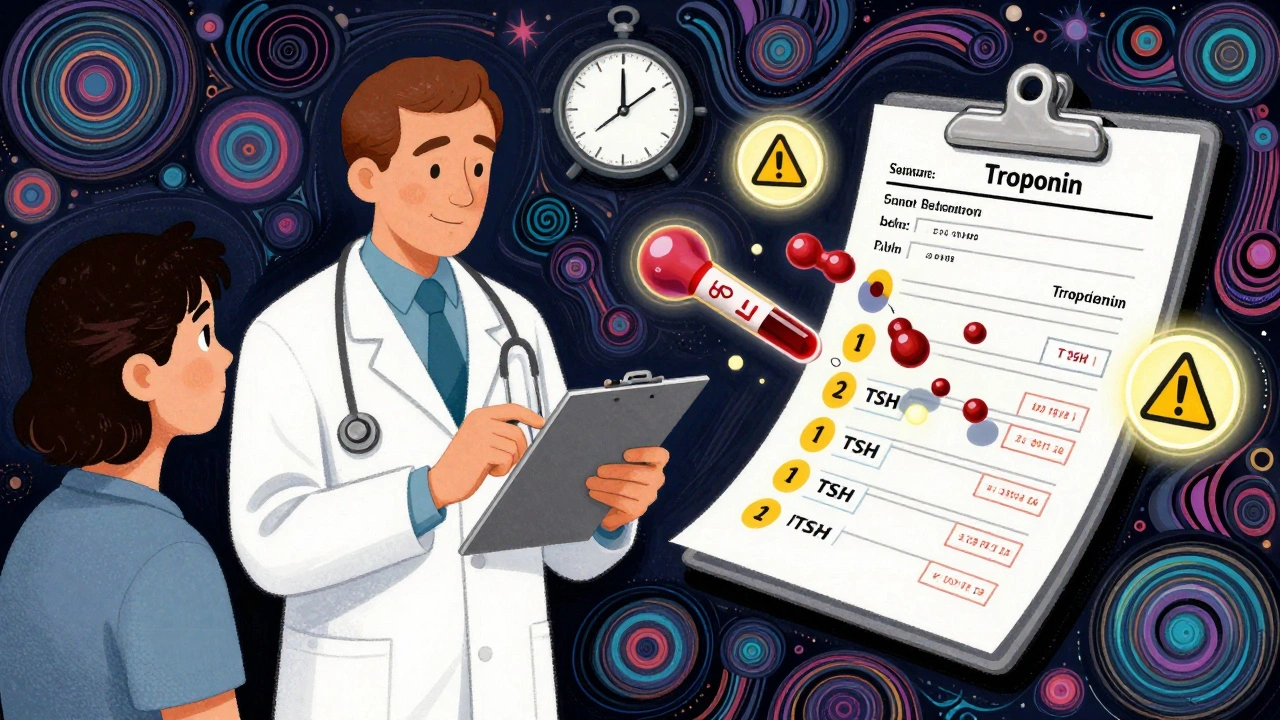
- Tell your doctor. Before any blood test, say: “I’m taking biotin supplements.” Don’t assume they’ll ask. Most won’t.
- Stop taking it. If you’re due for a test, stop the supplement at least 3 days before - and 7 days if thyroid tests are involved.
- Don’t restart until after. Wait until after your blood draw to resume, unless your doctor says otherwise.
And if you’re on high-dose biotin for a medical condition like multiple sclerosis? Talk to your neurologist. They’ll likely have a specific testing protocol for you.
Why Don’t Labels Warn Us?
It’s shocking, but true: only 37% of biotin supplement labels mention they can interfere with lab tests. That’s according to a 2022 study of 200 top-selling products.
The FDA has pushed for better labeling. Health Canada now requires warning statements on supplements with over 100 mcg of biotin. But in the U.S., it’s still mostly voluntary. That means you’re left to figure it out on your own - and that’s dangerous.
Is There Hope for the Future?
Yes. Some labs are fighting back. Siemens Healthineers launched a new “Biotin-Blocking Technology” in 2022 that cuts interference by 90%. The FDA is also drafting new rules requiring all test manufacturers to check for biotin interference up to 1,200 ng/mL - far beyond what most people take.
But until those changes are universal, the responsibility falls on you. Your doctor can’t fix a test result if they don’t know the problem exists. And if you’re taking high-dose biotin, you’re playing Russian roulette with your health.
There’s no evidence that 10,000 mcg of biotin gives you better hair than 300 mcg. Your body can’t use more than a tiny fraction. The rest? It’s just sitting in your blood, quietly messing with your lab results.
If you’re taking biotin for beauty - stop. Your hair won’t fall out. Your skin won’t break out. And your next blood test won’t lie to you.
Can biotin supplements cause false positives or false negatives in blood tests?
Yes. Biotin can cause both. In sandwich immunoassays - used for troponin, thyroid hormones, and many others - excess biotin causes falsely low results. In competitive immunoassays - like some vitamin D or hormone tests - it can cause falsely high results. The direction of the error depends on the test design, and there’s no way to tell from the result alone.
How long should I stop biotin before a blood test?
For most tests, stop for 3 days. For thyroid function tests (TSH, fT4, fT3), stop for 7 days. If you’re taking 5,000 mcg or more daily, even 24 hours isn’t enough. Biotin can stay in your system for up to 72 hours, and some tests are sensitive to trace amounts. When in doubt, wait longer.
Do all biotin supplements cause this problem?
No. Only high-dose supplements - those with 5,000 mcg (5 mg) or more - are risky. Standard multivitamins with 30-300 mcg are safe. The danger comes from beauty supplements, hair growth formulas, and some prenatal vitamins that pack in mega-doses. Always check the label.
What should I do if my test results seem off?
Ask your doctor if you’re taking biotin. If you are, say so immediately. If your results don’t match your symptoms - like a normal troponin with chest pain, or a low TSH with no weight loss or anxiety - biotin interference should be suspected. Request a repeat test after stopping the supplement for 3-7 days.
Are there any lab tests that aren’t affected by biotin?
Yes. Tests that use mass spectrometry or non-biotin-based methods are unaffected. These include glucose, cholesterol, liver enzymes, and kidney function tests. But because labs don’t always tell you which method they’re using, you can’t assume safety. Always disclose biotin use - even if you think your test isn’t affected.
Michael Robinson
December 11, 2025 AT 03:39It’s wild how we’ll swallow a pill for shiny hair but ignore the tiny print that could save our lives. We treat supplements like candy, then act shocked when the system breaks down. Maybe the real problem isn’t biotin-it’s how we’ve turned health into a beauty contest.
Kathy Haverly
December 12, 2025 AT 05:03Oh please. This is just another fear-mongering article from someone who thinks every supplement is a poison. You think your thyroid is fragile? Try living with real disease. Biotin’s not the villain-lazy doctors and bad lab protocols are. Stop scaring people into buying more ‘natural’ crap.
Andrea Petrov
December 12, 2025 AT 17:59Did you know the FDA’s been hiding this since 2017? Big Pharma doesn’t want you to know biotin messes with tests because it exposes how unreliable their whole diagnostic system is. They profit off false positives, then sell you more meds. The supplement industry is just the scapegoat. Look at the patents-every major lab has biotin-blocking tech. They’ve known for years.
Suzanne Johnston
December 13, 2025 AT 03:25I’ve been a nurse for 22 years, and I’ve seen this happen twice. One woman got her thyroid removed because her TSH looked ‘off.’ She was just taking a hair supplement. Another man was sent home with chest pain-his troponin was ‘normal.’ He died two days later. This isn’t theory. It’s tragedy wrapped in a vitamin bottle. Please, if you’re taking anything over 5,000 mcg-stop. And tell your doctor. Even if they don’t ask.
Steve Sullivan
December 13, 2025 AT 04:11bro i took 10k mcg biotin for 6 months and my hair looked like a wig from a 90s sitcom 😅 but i also got my thyroid checked and it was fine. maybe i got lucky? or maybe i just don’t trust labs anymore 🤷♂️
George Taylor
December 13, 2025 AT 20:14...This article is... overwrought. And repetitive. And emotionally manipulative. And yet... somehow... correct. I’m not sure if I’m more disturbed by the science or the fact that people still buy this stuff like it’s glitter. 10,000 mcg? For HAIR? You’re not a unicorn. You’re a walking lab error.
ian septian
December 15, 2025 AT 01:49Stop biotin 3 days before bloodwork. That’s it. No drama. Just do it.
Chris Marel
December 15, 2025 AT 19:19I come from a place where people don’t even have access to basic vitamins. It’s hard to hear that some are taking 10,000 mcg just for hair. But I also get it-when you’re told your body isn’t good enough, you chase anything that promises change. This isn’t just about labs. It’s about how we sell worth to women. Please don’t blame the supplement. Blame the system that sold it.
Evelyn Pastrana
December 16, 2025 AT 03:43So let me get this straight: I spent $40 on a bottle of ‘glow juice’... and now I’m basically a walking medical bomb? 😂 Well, at least my nails are fire. But yeah, I’m stopping. And telling my doctor. And maybe I’ll just eat an egg instead. Who knew the answer was in the kitchen all along?
Carina M
December 16, 2025 AT 15:22It is, regrettably, a lamentable indictment of contemporary consumer culture that individuals are willing to ingest pharmacologically potent substances without regulatory oversight, under the fallacious assumption that ‘natural’ equates to ‘safe.’ The absence of mandatory labeling constitutes a gross dereliction of duty by both industry and regulatory bodies. One must question the moral integrity of a marketplace that commodifies ignorance.
William Umstattd
December 17, 2025 AT 18:13MY BEST FRIEND GOT HER THYROID CUT OUT BECAUSE OF THIS. SHE WASN’T EVEN SICK. SHE WAS JUST TAKING HAIR GUMMIES. NOW SHE’S ON LEVOTHYROXINE FOR LIFE. AND THE COMPANY THAT MADE THE SUPPLEMENT? STILL SELLING IT. NO WARNING. NO APOLOGY. JUST PROFITS. THIS ISN’T A MISTAKE. IT’S A CRIME.
Elliot Barrett
December 18, 2025 AT 00:18So you’re telling me the entire medical system is built on a glitch that a $12 bottle of hair pills can break? That’s not science. That’s a joke. And we’re the punchline. Why don’t they just label it ‘WARNING: MAY CAUSE DOCTORS TO MISS HEART ATTACKS’? Oh wait-they did. Nobody reads labels anyway.
Tejas Bubane
December 18, 2025 AT 13:21India has no such problem because we don’t waste money on these fake beauty pills. We use amla oil and curry leaves. Real food. Real results. Americans think supplements are medicine. We know better.
Ajit Kumar Singh
December 18, 2025 AT 15:35My sister took biotin for 2 years, her hair was thick, but her TSH was off, doctor said she had hyperthyroidism, she cried, she changed diet, she did everything, then she stopped the supplement and everything went back normal. I told her to tell the doctor, she didn’t think it mattered. Now I tell everyone. Don’t be stupid. Stop it before the test.
Angela R. Cartes
December 18, 2025 AT 20:49Yasss queen, I stopped my 10k biotin after reading this and now I’m just vibing with my natural glow 🌸✨ also my last blood test was clean, no drama, no lies. ps: my nails still don’t break. who knew?