
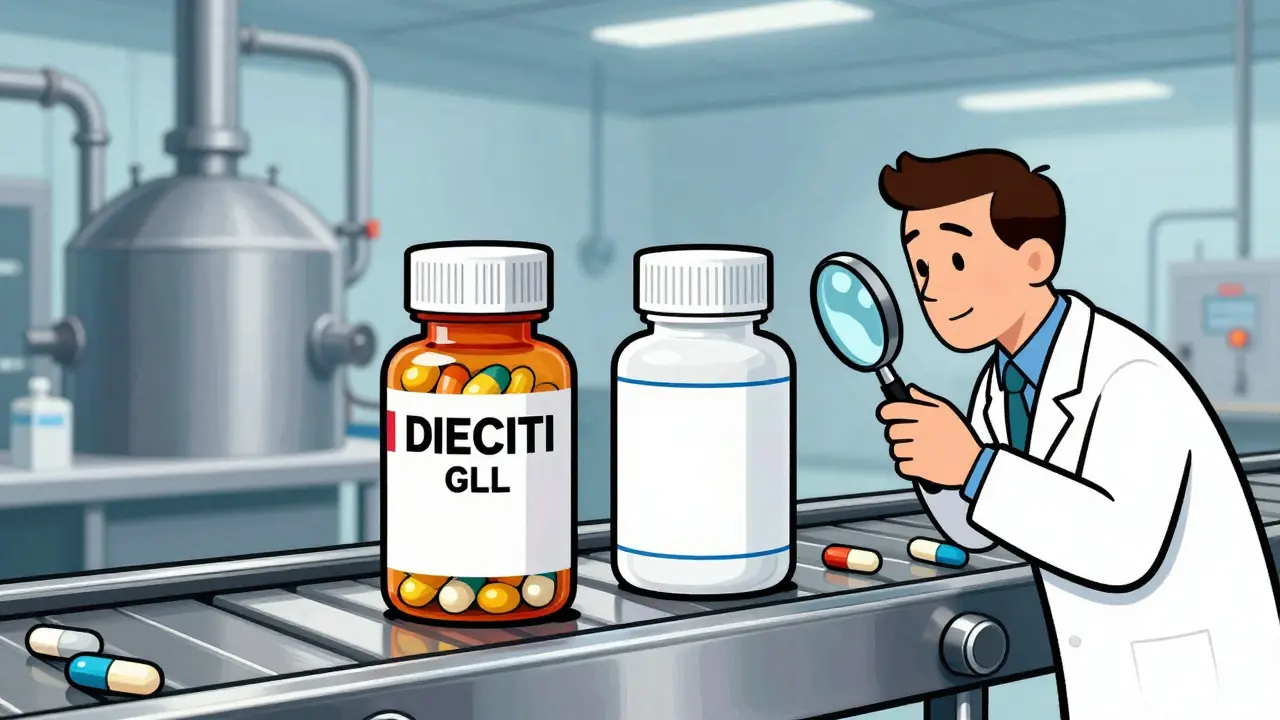
When you see a pill with a different label but the same active ingredient as your brand-name prescription, you might assume it came from a completely different factory. In the case of authorized generics (AGs), that assumption is often wrong. Authorized generics are prescription drugs produced by the original New Drug Application (NDA) holder and marketed under a private label at generic prices. This means the company that invented and patented the drug is often the very entity making its cheaper counterpart. It’s a strategy that blurs the line between innovation and cost-saving, creating a unique corner of the pharmaceutical supply chain that many patients and even healthcare professionals don’t fully understand.
The Regulatory Backbone: How AGs Work
To understand who makes these drugs, we have to look at the rules that allow them to exist. The concept stems from the Hatch-Waxman Act of 1984, which established the framework for generic drug approval in the United States. Under this law, specifically Subsection 505(t)(3) of the Federal Food, Drug, and Cosmetic Act, an authorized generic is defined as a listed drug approved under subsection 505(c) that is marketed with labeling, packaging, or product codes differing from the original listed drug. The key takeaway here is that AGs do not go through the standard Abbreviated New Drug Application (ANDA) process. They bypass the need for separate bioequivalence studies because they are legally considered the same product as the brand-name drug, just with a different sticker on the box.
This regulatory shortcut creates two distinct manufacturing pathways. First, the NDA holder can produce the exact same drug product using their existing facilities and processes, simply changing the label. This requires only an annual report to the FDA. Second, the NDA holder can contract another company to manufacture the generic version. If this happens, the new manufacturing site must be added to the original NDA through a Prior Approval Supplement (PAS) or a Change Being Effected in 30 days (CBE30) submission. Regardless of the path, the NDA holder retains full regulatory responsibility for quality and safety. As of Q3 2023, the FDA reported 217 active authorized generic products in the U.S. market, representing about 7.3% of all generic drug entries.
Who Is Behind the Counter? The Three Manufacturing Models
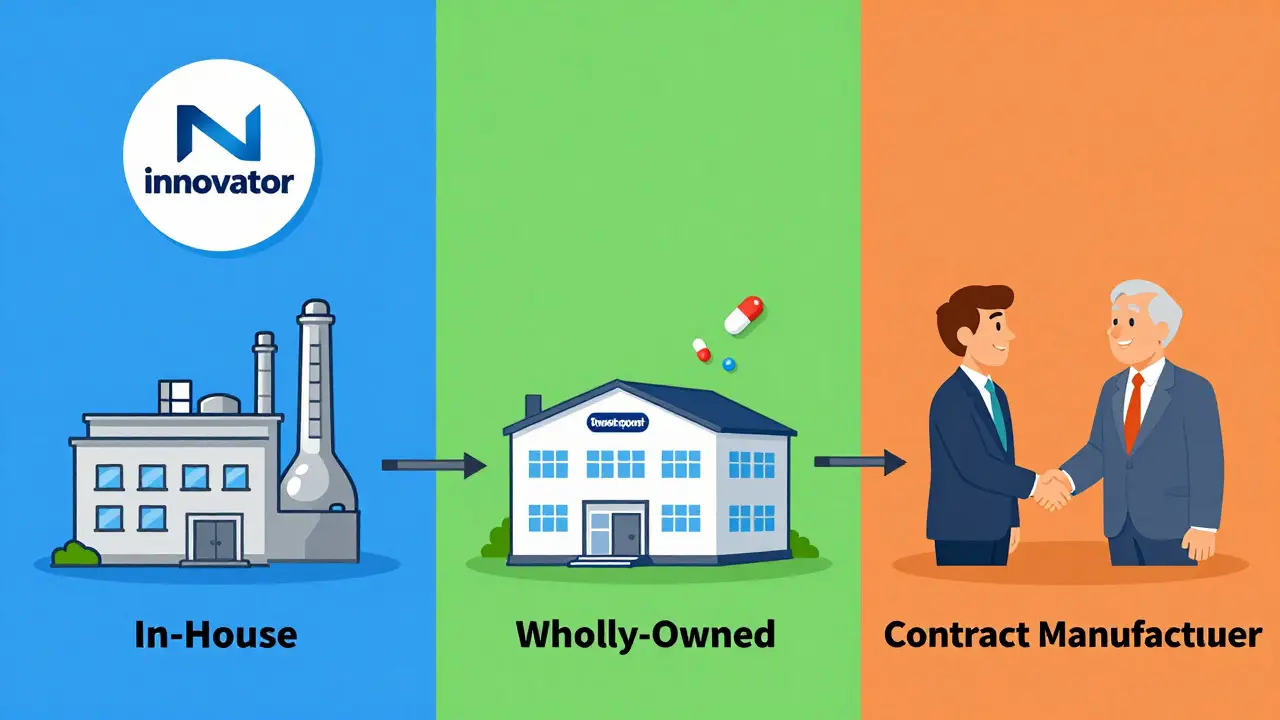
You might wonder if every authorized generic comes out of the same building as the brand-name drug. Not always, but more often than you’d think. Market dynamics reveal three primary models for how these drugs are made. Understanding these helps clarify where your medication actually comes from.
- In-House Production: Approximately 52% of authorized generics are manufactured directly by the innovator company under a private label. The company uses its own plants, its own staff, and its own quality control systems. There is no third-party involvement in the production phase.
- Wholly-Owned Subsidiaries: About 31% of AGs are produced by subsidiaries owned entirely by the brand manufacturer. A prime example is Greenstone LLC, a US-based company wholly owned by Pfizer Inc. Greenstone has been providing authorized generic versions of Pfizer’s brand-name medications since 1998. Currently, Greenstone manufactures over 70 authorized generics across various therapeutic areas, all produced using the same manufacturing processes and facilities as their branded counterparts.
- Third-Party Contract Manufacturers: The remaining 17% are manufactured by independent contract manufacturers under strict oversight from the NDA holder. In these cases, the brand company signs a contractual agreement to have another firm produce the drug, ideally using the same formulation and testing protocols. For instance, in 2020, Mylan (now Viatris) began manufacturing authorized generics of Pfizer’s Lyrica under such an arrangement.
According to US Pharmacist’s 2022 analysis, approximately 68% of authorized generics are manufactured in the exact same facilities as the brand-name product. This stands in stark contrast to traditional generics, where only about 12% are manufactured using identical processes to the brand-name drug, as reported in the 2023 FDA Orange Book analysis. This high degree of overlap suggests that for many AGs, the physical origin of the pill is indistinguishable from the brand version.
Quality Control and cGMP Compliance
Does the change in label affect the quality of the drug? Regulatory standards say no. Facilities producing authorized generics must maintain compliance with Current Good Manufacturing Practices (cGMP) as outlined in 21 CFR Parts 210 and 211, with no exceptions. The FDA’s 2022 inspection data showed that facilities producing authorized generics had a 98.7% cGMP compliance rate, compared to 96.2% for traditional generic manufacturers. This slight edge likely reflects the fact that these facilities are already vetted and monitored for the brand-name product, meaning the infrastructure for quality assurance is deeply embedded in their operations.
Maintaining identical product performance while changing only the labeling is an operational challenge. It requires precise control over manufacturing variables. Take Teva’s launch of an authorized generic version of its own Copaxone in 2021. Teva had to maintain identical glass vial specifications and lyophilization processes while changing only the label design. This required significant investment in dedicated packaging lines to ensure that the final product met the exact same performance criteria as the brand-name drug, despite the visual differences. The FDA’s 2023 Transparency Initiative now requires NDA holders to disclose whether authorized generics are manufactured in the same facility as the brand-name product, a rule implemented starting January 1, 2024, to address concerns raised by the Government Accountability Office regarding pharmaceutical supply chains.
Market Impact and Strategic Intent
Why do companies bother doing this? The answer lies in market control. Brand manufacturers use authorized generics to capture generic market share without losing control over product quality or manufacturing processes. According to Avalere Health’s 2019 report, this strategy allows companies to compete against traditional generics while maintaining a foothold in the market during patent challenges. Dr. Dan Leonard, President of the FDA’s Generic Drug User Fee Amendments (GDUFA) committee, noted in a 2022 advisory meeting that authorized generics represent a sophisticated market strategy where brand companies can effectively compete against traditional generics while maintaining quality control.
The financial stakes are significant. Industry analysts at IQVIA reported in their 2022 Generic Drug Market Analysis that authorized generics account for approximately $4.7 billion in annual U.S. pharmaceutical sales, representing 9.2% of the total generic drug market. This figure has grown from 6.1% in 2018, indicating a steady increase in adoption. The most successful authorized generic to date is the generic version of AstraZeneca’s Nexium, manufactured by AstraZeneca’s subsidiary Az generici, which achieved $1.2 billion in annual sales in 2022 according to Evaluate Pharma’s market data. The most common therapeutic areas for these products include cardiovascular medications (28%), central nervous system drugs (22%), and metabolic agents (18%).
| Feature | Authorized Generics (AGs) | Traditional Generics |
|---|---|---|
| Regulatory Pathway | Original NDA (New Drug Application) | ANDA (Abbreviated New Drug Application) |
| Manufacturer | NDA Holder or Subsidiary | Independent Generic Company |
| Bioequivalence Studies | Not Required | Required |
| Same Facility as Brand | ~68% Yes | ~12% Yes |
| Market Share (US, 2022) | 9.2% of Generic Market | 90.8% of Generic Market |
The Debate: Competition or Cartel?
Not everyone is happy with this model. Critics argue that authorized generics create artificial competition. Dr. Aaron Kesselheim of Harvard Medical School published a 2021 JAMA Internal Medicine analysis arguing that authorized generics “create artificial competition that may delay true generic competition and ultimately harm consumers by maintaining higher overall drug prices.” His concern is that when the brand owner sells the generic themselves, they have less incentive to drive prices down aggressively compared to an independent competitor fighting for market share. However, the FDA’s 2023 Transparency Initiative acknowledges these concerns while emphasizing that authorized generics must meet the same quality standards as brand-name products. The agency notes that AGs have identical active ingredients, strength, dosage form, and route of administration as the brand-name drug, with only minor differences in labeling and packaging. For patients, this means the efficacy and safety profile remain consistent, regardless of whose name is on the box.
Future Trends and Upcoming Shifts
The landscape is evolving. Clarivate anticipates a 15-20% increase in authorized generic manufacturing through wholly-owned subsidiaries by 2025, driven by patent expirations of $127 billion in brand-name drugs over the next five years. A significant upcoming shift involves the 2025 patent expiration of Humira, where AbbVie has already established a manufacturing arrangement with its subsidiary Soliris Generics to produce an authorized generic version, as documented in their 2023 SEC filings. These moves suggest that large pharmaceutical companies will continue to leverage their internal manufacturing capabilities to manage the transition from brand to generic status. The FDA’s GDUFA III includes specific provisions to streamline the notification process for authorized generics while maintaining rigorous quality oversight, ensuring this pathway remains a significant component of the U.S. pharmaceutical landscape through at least 2028.
Are authorized generics exactly the same as brand-name drugs?
Yes, in terms of active ingredients, strength, dosage form, and route of administration. The only differences are usually in the labeling, packaging, and sometimes the inactive ingredients (excipients), though these must also meet FDA standards. They are marketed under the original brand's NDA rather than through a separate ANDA process.
Who is responsible for the quality of an authorized generic?
The NDA holder (the original brand manufacturer) retains full regulatory responsibility for the product, regardless of whether they manufacture it themselves or hire a third-party contract manufacturer. They must notify the FDA when marketing an authorized generic under their approved NDA.
How does an authorized generic differ from a traditional generic?
Traditional generics are produced by independent companies through the ANDA process, requiring bioequivalence studies. Authorized generics are produced by the brand owner (or its subsidiary) under the original NDA, bypassing the need for separate bioequivalence studies and often using the same manufacturing facilities as the brand drug.
Can I tell if my medication is an authorized generic?
Usually, yes. Authorized generics are marketed under a private label, which means the box will have a different trade name or trademark than the brand-name drug. However, the active ingredient name will be the same. Since January 2024, NDA holders must also disclose whether the AG is manufactured in the same facility as the brand product, increasing transparency.
Do authorized generics lower drug prices?
They are sold at generic prices, which are typically lower than brand-name prices. However, critics argue that because the brand owner controls both sides of the transaction, the price reduction may not be as aggressive as if independent competitors were involved. Nonetheless, they provide a lower-cost option for patients and payers.