
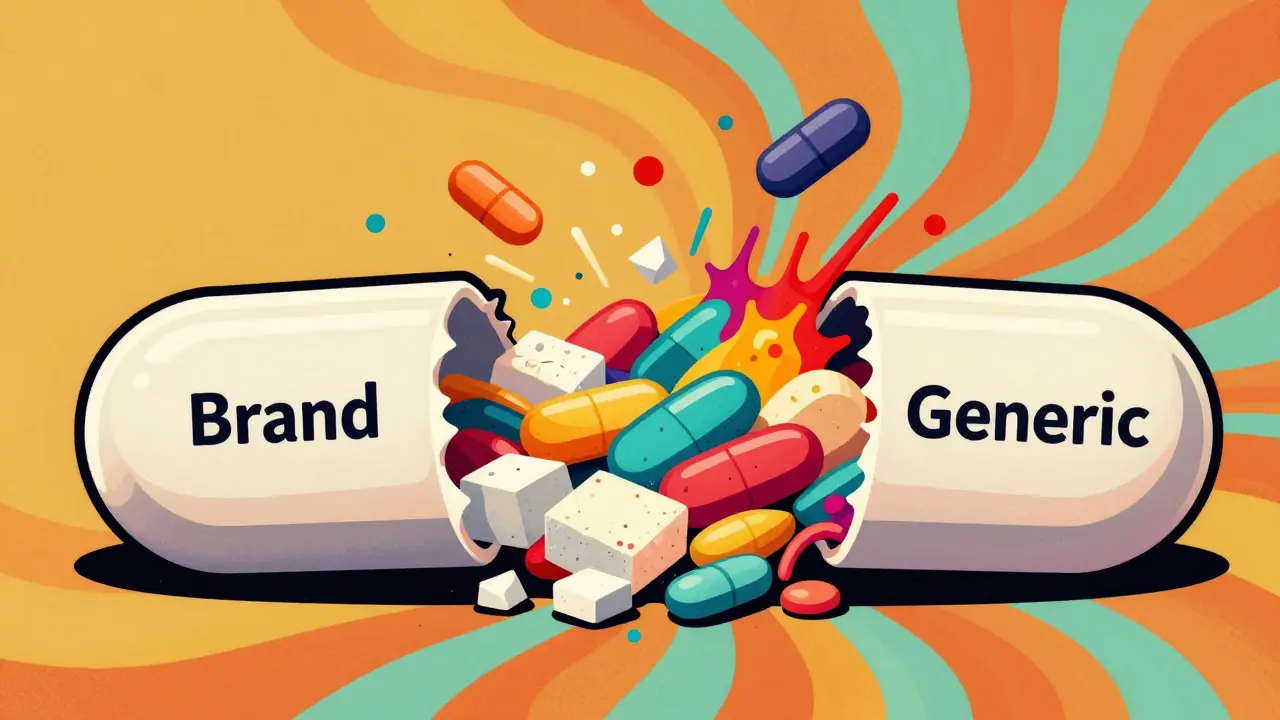
You trust your medication. You take it every day for a chronic condition, or maybe just once in a while for an infection. But what happens if you start feeling unwell after switching from a brand-name drug to its cheaper generic version? It’s a frustrating and scary scenario. Many people assume that because the active ingredient is the same, the pill must be identical. The reality is more complex. While generic medications are pharmaceutical products that contain the same active ingredient as their brand-name counterparts but may differ in inactive components like fillers, dyes, and binders, they often contain different "inactive" ingredients. These hidden components-such as lactose, gluten, certain dyes, or even peanut oil-can trigger allergic reactions in sensitive individuals, even if the main drug molecule causes no issues.
This isn’t just theoretical. Research indicates that approximately 5-10% of adverse reactions to generic drugs are linked to these inactive ingredients rather than the active pharmaceutical ingredient itself. For many, this means a sudden rash, hives, or worse, appearing out of nowhere when nothing about their health has changed except the pharmacy’s inventory. Understanding why this happens, recognizing the warning signs, and knowing exactly when to seek emergency care can mean the difference between a manageable discomfort and a life-threatening event.
Why Do Generic Drugs Cause Allergies?
To understand the reaction, you have to look at what’s inside the pill beyond the medicine itself. The Food and Drug Administration (FDA) requires that generic drugs demonstrate bioequivalence, meaning they deliver the same amount of active ingredient into your bloodstream within a specific range (80-125%) compared to the brand name. However, manufacturers are allowed-and often required-to use different inactive ingredients to hold the pill together, control release rates, or add color.
A study published in the Journal of Generic Medicines found that 83% of generic formulations contain at least one different inactive ingredient compared to their brand-name equivalents. Of those, 27% contain ingredients known to cause allergic reactions in susceptible people. Here are the most common culprits:
- Lactose: Present in about 28% of oral generics. If you have severe lactose intolerance or a milk protein allergy, this filler can cause gastrointestinal distress or skin reactions.
- Gluten: Found in roughly 12% of generics, posing a risk for patients with celiac disease or wheat allergies.
- Dyes: FD&C Yellow No. 5 (tartrazine) is used in about 15% of liquid generics and some tablets. Tartrazine is a well-known allergen that can trigger hives, asthma, or nasal congestion.
- Peanut Oil: Used in approximately 8% of injectable generics, such as certain forms of propofol. This is critical for anyone with a severe peanut allergy.
- Magnesium Stearate: A common binder that has been linked to reactions in patients who previously tolerated brand-name versions of antibiotics like amoxicillin.
The problem is compounded by awareness gaps. The Institute for Safe Medication Practices reports that 15-20% of generic-specific allergic reactions go underreported because neither the patient nor the healthcare provider connects the symptom to the change in formulation. You might blame a new food or environmental factor, missing the real cause entirely.
Recognizing Symptoms: Mild vs. Severe
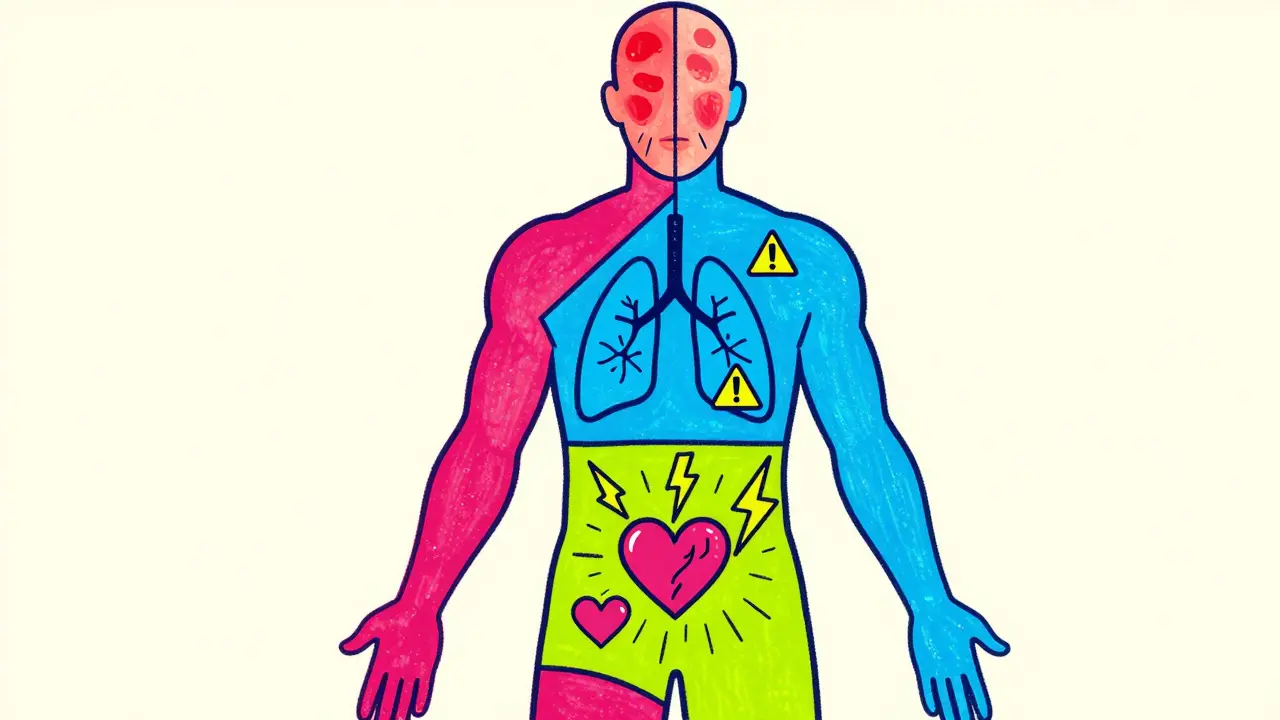
Allergic reactions don’t always announce themselves with drama. Sometimes they creep in slowly. Knowing the difference between a mild irritation and a medical emergency is crucial. Symptoms generally fall into three categories based on severity and speed of onset.
Mild Reactions
Mild reactions usually involve the skin and appear hours or even days after taking the medication. According to data from the American College of Allergy, Asthma & Immunology (ACAAI), the most common signs include:
- Rash: Reported in 68% of mild cases. This might look like a red, itchy patch on your arms, legs, or torso.
- Hives (Urticaria): Raised, ity welts that appear on 42% of patients with mild reactions.
- Itching (Pruritus): Generalized itching without visible hives occurs in 57% of cases.
If you experience these symptoms, do not ignore them. Even mild reactions warrant a call to your doctor within 72 hours. Why? Because 65% of initial mild reactions progress to more severe reactions upon subsequent exposure. Your body is sensitizing itself, and the next dose could be much worse.
Moderate Reactions
Moderate reactions involve multiple body systems and require prompt medical attention. You should contact your healthcare provider within 24 hours if you notice:
- Facial Swelling: Particularly around the eyes, lips, or tongue (angioedema).
- Respiratory Issues: Mild wheezing or shortness of breath (seen in 31% of moderate cases).
- Gastrointestinal Distress: Nausea, vomiting, or abdominal cramping that doesn’t resolve within two hours.
Severe Reactions (Anaphylaxis)
Anaphylaxis is a rare but life-threatening emergency. It occurs in about 0.02-0.04% of generic medication administrations. The key here is speed. The American College of Allergy, Asthma & Immunology notes that 43% of severe reactions develop within 15 minutes of ingestion. Another 38% manifest between 15 and 60 minutes. Delayed hypersensitivity reactions can take several hours, but true anaphylaxis moves fast.
Symptoms of anaphylaxis include:
- Throat Tightness: A sensation of closing up, difficulty swallowing, or hoarseness (present in 87% of anaphylaxis cases).
- Respiratory Distress: Severe wheezing, stridor (high-pitched breathing sound), or a respiratory rate over 30 breaths per minute.
- Cardiovascular Collapse: Dizziness, fainting (syncope), or a systolic blood pressure drop below 90 mmHg.
- Multi-system Involvement: Simultaneous skin, respiratory, and gastrointestinal symptoms.
When to Seek Immediate Medical Care
There is no gray area when it comes to anaphylaxis. If you suspect you are having a severe allergic reaction, time is tissue. The National Institute of Allergy and Infectious Diseases (NIAID) provides clear criteria for when to act immediately.
Call 911 and use epinephrine right now if you experience:
- Any sign of respiratory compromise: Wheezing, stridor, or struggling to breathe.
- Cardiovascular symptoms: Feeling lightheaded, fainting, or a rapid drop in blood pressure.
- Involvement of two or more organ systems: For example, hives combined with vomiting, or swelling combined with wheezing.
The Food Allergy Research & Education (FARE) organization emphasizes that 91% of anaphylaxis cases involving medication require epinephrine within 5-15 minutes of symptom onset for optimal outcomes. Antihistamines like Benadryl are too slow for anaphylaxis; they do not reverse airway constriction or blood pressure drops. Epinephrine is the only first-line treatment. If you have an EpiPen, use it immediately, then call for help. Lie down with your legs elevated unless you are having trouble breathing, in which case sit upright to ease respiration.
For less severe reactions, the timeline is slightly more flexible but still urgent. Contact your primary care provider or allergist within 24 hours if you have persistent hives lasting more than six hours, moderate facial swelling, or gastrointestinal symptoms that linger. Do not wait to see if it goes away. Early intervention helps identify the specific allergen and prevents future episodes.
Navigating the Pharmacy: Proactive Steps
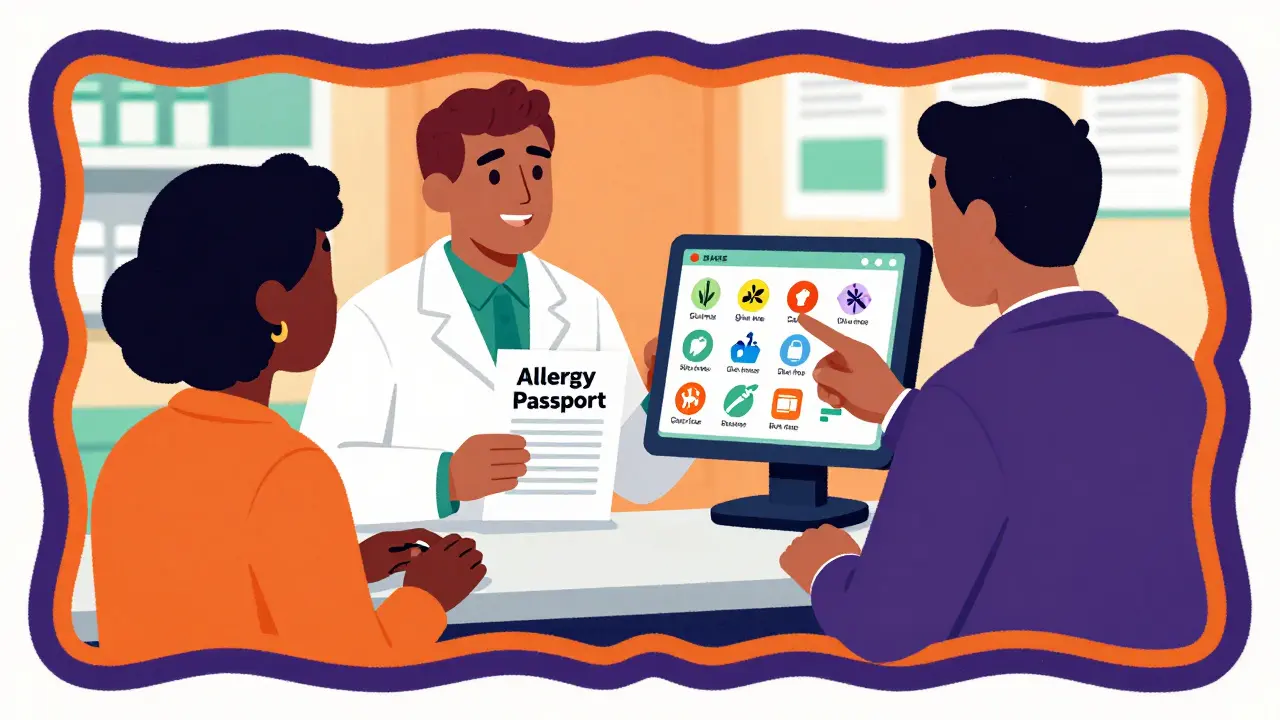
Once you’ve identified a reaction, the goal is to prevent it from happening again. This requires proactive communication with your healthcare team. The American Pharmacists Association recommends that patients with known allergies maintain a "medication allergy passport." This simple document lists all problematic inactive ingredients, not just drug names. Studies show this practice reduces adverse drug events by 29%.
Here is how to manage your prescriptions safely:
| Step | Action | Reason |
|---|---|---|
| 1 | Inform Your Pharmacist | Pharmacists can check the FDA’s Inactive Ingredient Database to find formulations free of your specific triggers. |
| 2 | Request Specific Formulations | Ask for "dye-free," "gluten-free," or "lactose-free" versions. About 38% of major generic manufacturers offer these specialized options. |
| 3 | Document the Reaction | Tell your doctor exactly which brand or generic caused the issue. This helps distinguish true drug allergy from excipient sensitivity. |
| 4 | Consider Allergy Testing | Formal testing costs $350-$600 but can save thousands in unnecessary alternative meds and prevent future emergencies. |
Don’t be afraid to ask questions. "Does this generic contain tartrazine?" or "Is this tablet gluten-free?" are valid and important inquiries. The pharmacist has access to detailed monographs for every product they dispense. In some cases, your doctor may need to prescribe the brand-name drug if a safe generic alternative isn’t available, though insurance approval might be required.
The Importance of Formal Allergy Testing
Many people carry a label of "drug allergy" that may not be accurate. Dr. Kimberly Blumenthal of Massachusetts General Hospital highlights that 90% of patients labeled as penicillin-allergic can safely take penicillin after proper evaluation. Mislabeling leads to the use of broader-spectrum, more expensive, and potentially less effective antibiotics.
If you react to a generic, formal allergy testing can determine whether you are allergic to the active drug or just the inactive filler. The Cleveland Clinic’s Drug Allergy Clinic notes that while testing costs between $350 and $600, it prevents an estimated $2,500 to $4,000 in annual costs associated with using inferior alternative medications. More importantly, it restores your ability to use first-line treatments safely.
The Joint Task Force on Practice Parameters (AAAAI/ACAAI) specifies that all severe reactions to generics require immediate epinephrine administration and emergency care, followed by consultation with an allergist within 72 hours for potential drug challenge testing. This process involves carefully administering small, increasing doses of the suspected allergen under medical supervision to confirm the diagnosis.
Real-World Context and Awareness
You are not alone in this experience. Online communities reflect a growing awareness of this issue. On Reddit’s r/Allergies community, a 2023 thread collected 247 responses, with 68% reporting reactions specifically to generic formulations after tolerating brand-name equivalents. One user documented developing hives within 30 minutes of taking generic sertraline versus no reaction to brand-name Zoloft, later identifying tartrazine dye as the culprit.
Data from Healthgrades shows that generic medication-related allergy complaints increased by 22% between 2019 and 2022. Patient satisfaction scores regarding communication about inactive ingredients averaged a low 2.8 out of 5 stars. This gap in communication is dangerous. The American Medical Association’s 2022 guidance states that physicians should document not just the drug name but the specific formulation (brand or generic) and suspected inactive ingredient when recording medication allergies. This precise documentation has been shown to reduce inappropriate avoidance of essential medications by 37%.
As generic medications represent 90% of all prescriptions filled in the United States, understanding these nuances is increasingly critical for patient safety. The FDA’s 2022 Drug Safety Communication mandated clearer labeling of problematic inactive ingredients, though full implementation is ongoing. Until then, vigilance is your best defense.