
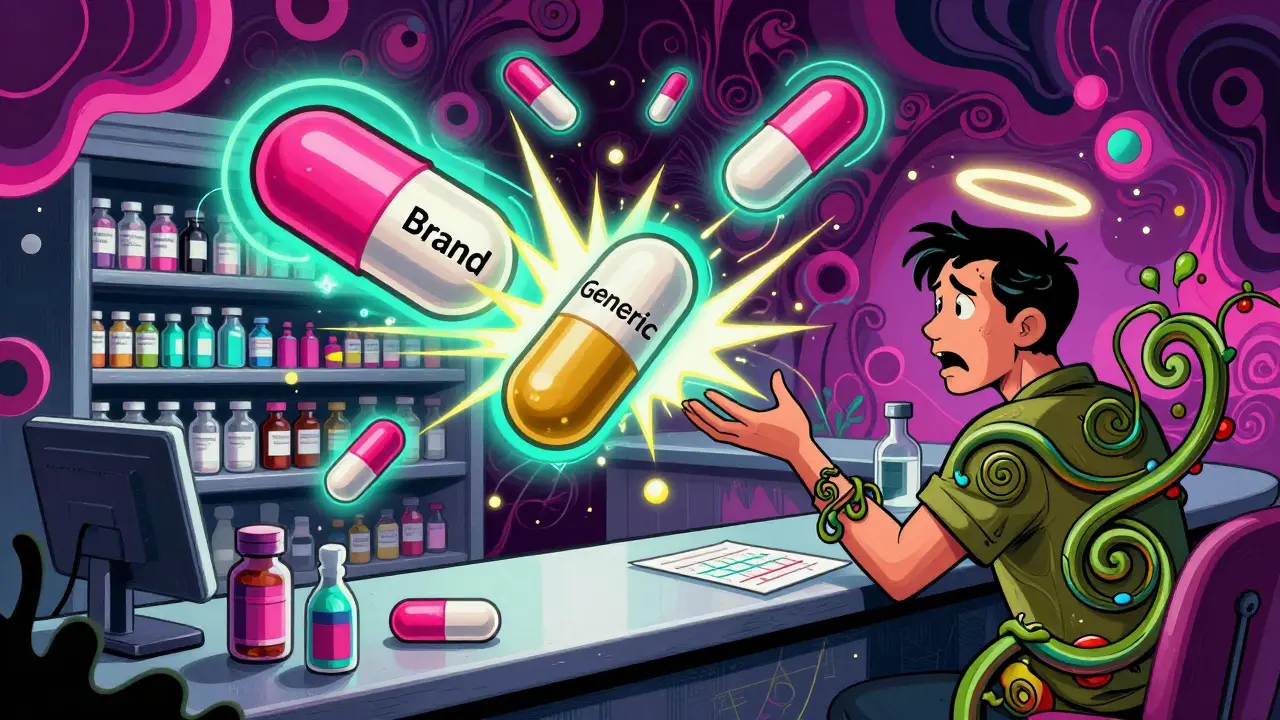
Switching from brand-name phenytoin to a generic version might seem like a simple cost-saving move-but for patients taking this drug, it can be anything but. Phenytoin is not like most medications. Even small changes in how much of the drug reaches your bloodstream can mean the difference between stopping seizures and slipping into toxicity. And because generic versions, while legally approved, aren’t identical in how they’re made, therapeutic drug monitoring isn’t optional-it’s essential.
Why phenytoin is different
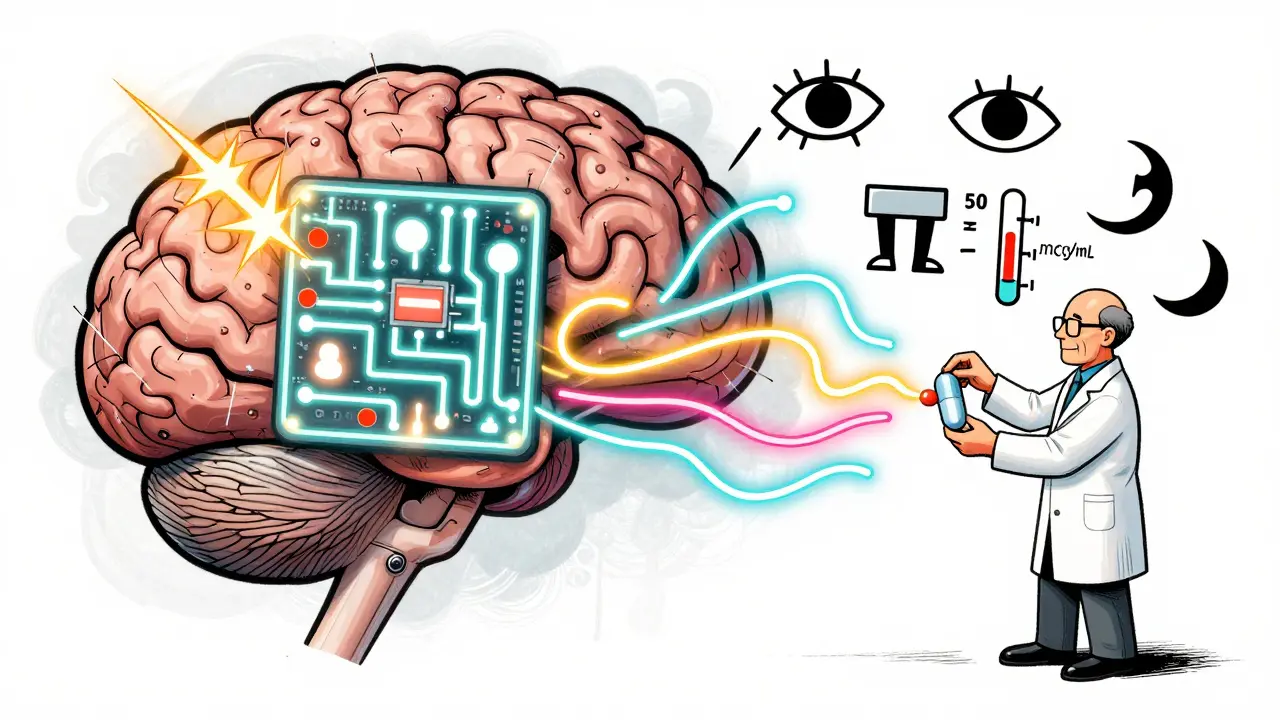
Phenytoin has been used since the 1930s to treat epilepsy, and it still works. But its behavior in the body is tricky. It has a narrow therapeutic window: the safe and effective range is only 10 to 20 mcg/mL. Go below that, and seizures may return. Go above it, and you risk confusion, unsteady walking, nystagmus (involuntary eye movements), or even coma. At levels over 50 mcg/mL, death can occur. What makes this worse is that phenytoin doesn’t clear from the body at a steady rate. Below 10 mcg/mL, it’s eliminated predictably. But as levels climb into the therapeutic range, the body’s enzymes get overwhelmed. Elimination shifts from first-order to zero-order kinetics. That means a tiny dose increase-say, 25 mg more per day-can cause a huge jump in blood levels. One day you’re stable. The next, you’re toxic. Add to that: phenytoin is 90-95% bound to proteins in the blood. Only the tiny unbound portion (about 10%) actually works. So if your albumin drops-due to liver disease, malnutrition, or kidney problems-your total phenytoin level might look fine, but your free, active drug level could be dangerously high.Generic substitutions: the hidden risk
Generic drugs must meet FDA standards for bioequivalence. That means their absorption (AUC) and peak concentration (Cmax) must fall within 80-125% of the brand-name drug. Sounds tight? For most drugs, yes. For phenytoin? Not nearly enough. A 20% difference in how much drug gets into your blood might be fine for a blood pressure pill. But for phenytoin, that’s the difference between control and crisis. Studies show patients switching between different generic brands-or from brand to generic-have experienced seizures or toxicity, even when their blood levels were "in range." Why? Because different fillers, coatings, or manufacturing methods change how quickly the tablet dissolves or how well it’s absorbed. The NHS Tayside guidelines from 2022 say it plainly: "Therapeutic monitoring may be required when switching formulations." The American Academy of Family Physicians agrees: while routine monitoring isn’t needed for everyone, it’s critical when you change products.When and how to monitor
Don’t wait for symptoms. If you switch phenytoin brands or generics, get your blood level checked.- Take a trough level (just before your next dose) the day before the switch.
- After switching, wait at least 5 days before checking again. Phenytoin takes time to reach steady state-especially if you’re on maintenance doses.
- For IV doses, check levels 2-4 hours after the infusion. For oral, wait 12-24 hours.
- Repeat the level 5-10 days after the switch to confirm stability.
Special cases: what else matters
If you’re low on albumin, total phenytoin levels can be misleading. A corrected level can be estimated using this formula:Corrected phenytoin = Measured level / ((0.9 × Albumin / 42) + 0.1)
But even this isn’t perfect. In practice, if you have low albumin, ask for a free phenytoin level. That measures only the active, unbound drug. It’s more accurate and avoids dangerous misinterpretations. Liver problems? You’re at higher risk. Phenytoin is metabolized by the liver. If your liver is slow, levels build up faster. Kidney disease? Same issue-protein binding changes, and clearance drops.Drug interactions that change everything
Phenytoin doesn’t play well with others. Many common drugs can mess with its levels:- Increase levels: Amiodarone, fluconazole, metronidazole, cimetidine, valproate, sulfa drugs.
- Decrease levels: Rifampin, carbamazepine, alcohol, theophylline, barbiturates.

Long-term monitoring: more than just blood levels
Phenytoin doesn’t just affect your brain. Long-term use can cause:- Gingival hyperplasia (swollen gums)
- Hirsutism (excess hair growth)
- Thickened facial features
- Vitamin D deficiency
- Low calcium and phosphate
- Bone thinning (osteomalacia)
- Peripheral neuropathy
What to do if you’re switched
If your pharmacy switches your phenytoin without warning:- Don’t panic, but don’t ignore it.
- Check your prescription label. Is the manufacturer different?
- Call your neurologist or epilepsy clinic. Ask if you need a blood level drawn.
- Watch for new symptoms: dizziness, slurred speech, blurred vision, unsteady walking, or confusion.
- If you have seizures again-or feel worse-get checked immediately.
Jody Patrick
December 18, 2025 AT 02:26This is why America needs to stop letting foreign labs make our life-saving meds. Generic phenytoin? More like generic danger. I’ve seen patients crash because some Indian plant used a different filler. No more compromises.
Radhika M
December 18, 2025 AT 21:29If you take phenytoin, never switch brands without checking your blood level. I’m a nurse in Delhi and I’ve seen too many seizures happen after pharmacy swaps. Simple rule: same pill, same dose, same monitor. No guesswork.
Philippa Skiadopoulou
December 20, 2025 AT 00:08Therapeutic drug monitoring is non-negotiable for phenytoin. The pharmacokinetic profile is inherently nonlinear and highly protein-bound. Bioequivalence thresholds of 80-125% are statistically acceptable for antihypertensives but clinically reckless for anticonvulsants.
Guidelines from Tayside and AAFP are correct. Implementation remains inconsistent.
Pawan Chaudhary
December 21, 2025 AT 19:41Hey everyone, I know this sounds scary but you’re not alone. My cousin has been on phenytoin for 15 years and we just learned about the switching risk last year. Now she checks her levels every time her pharmacy changes the label. It’s a habit now - and it saved her from a hospital trip. You got this!
Anna Giakoumakatou
December 23, 2025 AT 05:48Oh wow, a whole essay on why generics might not kill you instantly. How novel. I suppose the FDA is just a bunch of drunken interns who think 80-125% is a ‘safe’ range for a drug that can induce coma. How quaint. I bet they also think ‘natural’ sugar is better than high-fructose corn syrup. Let me guess - your pharmacist has a ‘wellness’ certificate?
Sam Clark
December 24, 2025 AT 01:11Thank you for this comprehensive and clinically grounded overview. The distinction between total and free phenytoin levels is critically underappreciated in primary care settings. I strongly encourage all prescribers to incorporate free level testing in patients with hypoalbuminemia, renal impairment, or hepatic dysfunction. Documentation and patient education must accompany any formulation change. This is standard of care, not optional.
Chris Van Horn
December 25, 2025 AT 15:07THEY SWITCHED MY PHENYTOIN WITHOUT TELLING ME AND I HAD A SEIZURE IN THE GROCERY STORE. I WAS HOLDING A BAG OF POTATOES. MY KID WAS THERE. THE PHARMACY SAID IT WAS "EQUIVALENT." EQUIVALENT TO WHAT? A GRAVE? THE FDA IS A CORRUPT BUREAUCRACY AND GENERIC COMPANIES ARE MURDERERS IN LAB COATS. I’M SUEING. AND YES I’M WRITING IN ALL CAPS BECAUSE I’M STILL ANGRY.
Peter Ronai
December 25, 2025 AT 15:59Anyone who thinks phenytoin is just another pill hasn’t lived through a toxicity episode. I’ve seen it. The nystagmus, the slurred speech, the way their eyes roll back like they’re watching a horror movie only they can see. And then there’s the doctors who say "it’s just a generic" like it’s a different brand of toilet paper. This isn’t about cost. It’s about not letting people die because someone’s profit margin is too thin. Wake up.
Steven Lavoie
December 27, 2025 AT 09:51As someone who grew up in a country where access to brand-name meds is a luxury, I’ve seen how generic substitution can be a lifeline - but also a landmine. Phenytoin is one of those drugs where the difference between saving a life and ending one is a few micrograms per milliliter. What we need isn’t fear - it’s awareness, consistent monitoring, and better communication between pharmacists, patients, and neurologists. Let’s treat this like the precision medicine it is.