

When your thyroid goes into overdrive, it doesn’t just make you feel a little jittery-it can send your whole body into chaos. Heart racing. Hands shaking. Sweating through your clothes even in a cool room. Insomnia. Weight loss despite eating more. These aren’t just stress symptoms. They’re signs of hyperthyroidism, a condition where your thyroid gland pumps out too much hormone. And while fixing the root cause takes time, there’s a fast-acting tool doctors reach for right away: beta-blockers.
What Exactly Is Hyperthyroidism?
Hyperthyroidism means your thyroid is making too much T3 and T4, the hormones that control how fast your body uses energy. This pushes your metabolism into high gear. About 1.2% of people in the U.S. have it, and women are five to ten times more likely to be affected than men. The most common cause? Graves’ disease-an autoimmune disorder where your immune system accidentally attacks your thyroid and tells it to overproduce. Other causes include toxic nodules or an enlarged thyroid with multiple overactive spots.The problem isn’t just the hormones themselves. It’s what they do to your body. Your heart races even when you’re sitting still. Your muscles tremble. You feel anxious, hot, and wired. Left unchecked, this can lead to serious complications like atrial fibrillation, bone loss, or even thyroid storm-a rare but life-threatening surge in symptoms that requires emergency care.
Why Beta-Blockers Are the First Line of Symptom Control
Antithyroid drugs like methimazole or radioactive iodine therapy are the long-term solutions. But they take weeks-sometimes months-to bring hormone levels down. That’s where beta-blockers come in. They don’t touch the thyroid. They don’t reduce hormone production. What they do is block the effects of excess thyroid hormone on your body.Think of it like turning down the volume on a speaker that’s blasting too loud. The signal is still there, but you can finally hear yourself think. Beta-blockers calm the heart, reduce tremors, ease anxiety, and stop the excessive sweating. Within hours of taking the first dose, many patients report feeling like themselves again.
The American Thyroid Association recommends non-selective beta-blockers like propranolol as the go-to choice. Why? Because they don’t just block heart receptors-they also help reduce the conversion of T4 into the more active T3 hormone in the liver and other tissues. This gives them a double benefit. Propranolol is usually started at 10 to 20 mg every six hours. In severe cases, doses can go as high as 240 to 480 mg per day.
How Beta-Blockers Compare to Other Options
Not everyone can take beta-blockers. If you have asthma or severe COPD, blocking beta-2 receptors in your lungs can trigger dangerous bronchospasm. In those cases, doctors turn to calcium channel blockers like verapamil or diltiazem. These don’t affect hormone levels either, but they help control heart rate without touching the airways. Studies show they’re effective for patients who can’t tolerate beta-blockers.Other beta-blockers like atenolol or metoprolol are selective-they mainly target the heart. They’re sometimes used for people with mild respiratory issues, but they don’t block T4-to-T3 conversion like propranolol does. That’s why propranolol remains the gold standard for most cases.
Here’s how the main options stack up:
| Medication | Type | Typical Dose | Key Benefits | Key Limitations |
|---|---|---|---|---|
| Propranolol | Non-selective beta-blocker | 10-40 mg every 6 hours | Blocks heart, tremors, anxiety; reduces T4 to T3 conversion | Can worsen asthma; multiple daily doses |
| Nadolol | Non-selective beta-blocker | 40-160 mg once daily | Long-acting; once-daily dosing | Less effective at blocking T4-to-T3 conversion |
| Atenolol | Selective beta-1 blocker | 25-50 mg once daily | Safer for mild asthma/COPD | No effect on T4-to-T3 conversion |
| Verapamil | Calcium channel blocker | 120-360 mg daily | Safe for asthma; controls heart rate | Slower onset; doesn’t help tremors or anxiety |
| Esmolol (IV) | Ultra-short-acting beta-blocker | 50-100 μg/kg/min IV | Used in thyroid storm; precise control | Requires ICU monitoring |

When and How to Start Beta-Blockers
Doctors don’t wait. If you walk in with a heart rate of 120, trembling hands, and unexplained weight loss, beta-blockers are often started the same day. A 2021 study showed that starting propranolol within 24 hours of diagnosis cut emergency visits for thyrotoxic symptoms by 37%. That’s huge.The standard starting dose is 10 to 20 mg every six hours. Your doctor will adjust based on your heart rate, tremors, and how you feel. You’ll know it’s working if your pulse drops below 90, your hands stop shaking, and you can sleep through the night.
In thyroid storm-a medical emergency with fever, confusion, vomiting, and heart failure-patients get esmolol through an IV drip in the ICU. It works fast and wears off quickly, so doctors can fine-tune the dose without risking dangerously low heart rates.
How Long Do You Stay on Beta-Blockers?
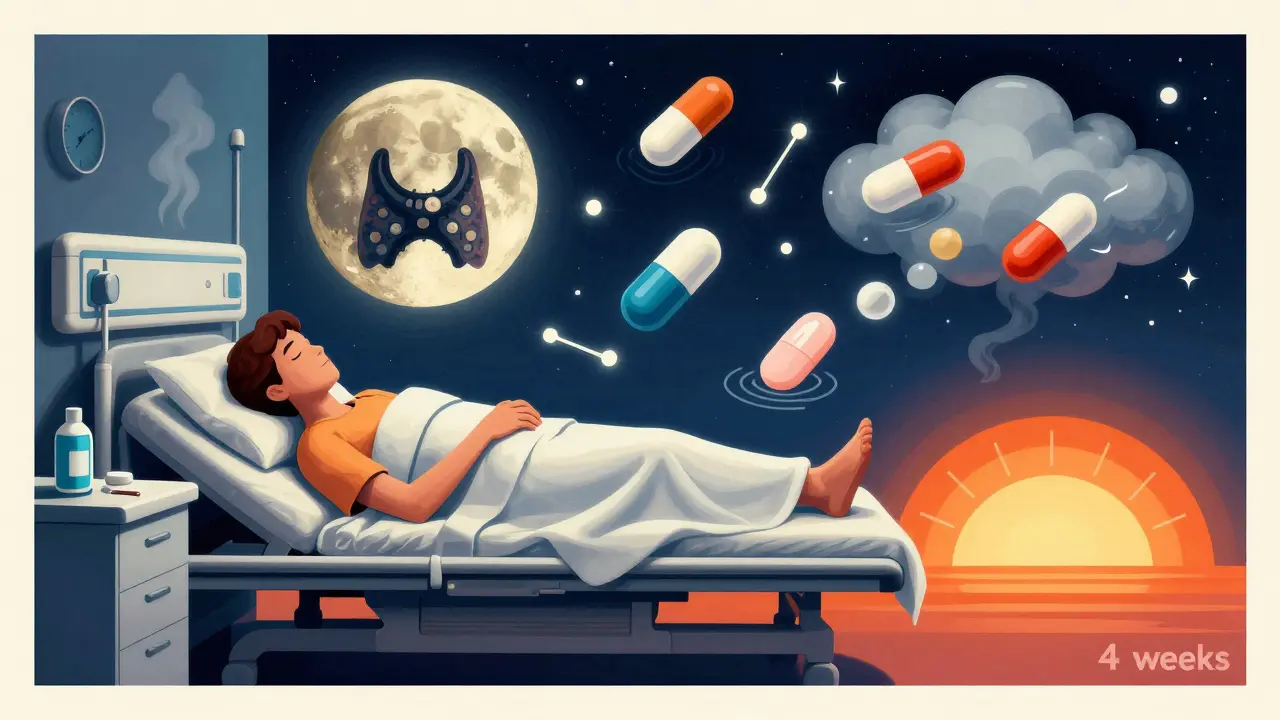
This is a common question. Beta-blockers aren’t a cure. They’re a bridge. Once your antithyroid drugs (like methimazole) start working and your thyroid hormone levels normalize, you can slowly stop the beta-blockers. That usually happens in 4 to 8 weeks.But there are exceptions. If you’re getting radioactive iodine therapy, your doctor will keep you on beta-blockers longer-often until your thyroid function settles, which can take 3 to 6 months. Why? Because RAI can cause a temporary spike in thyroid hormone as the gland breaks down. Beta-blockers protect your heart during that time.
Never stop beta-blockers cold turkey, especially if you’ve been on them for more than a few weeks. Stopping suddenly can cause rebound tachycardia or even a heart attack. Always taper under medical supervision.
Who Should Avoid Beta-Blockers?
Not everyone is a candidate. Beta-blockers are risky-or even dangerous-for people with:- Severe asthma or COPD (can trigger bronchospasm)
- Second- or third-degree heart block (slows heart too much)
- Decompensated heart failure (can worsen fluid buildup)
- Severe peripheral artery disease (can reduce blood flow to limbs)
Older adults and those with existing heart conditions need lower doses and careful monitoring. Too much beta-blockade can lead to dangerously low heart rates or low blood pressure. Your doctor will watch your vitals closely during the first few days.
What About Side Effects?
Most people tolerate beta-blockers well. But side effects can happen:- Fatigue or dizziness
- Cold hands and feet
- Upset stomach or nausea
- Sleep problems or nightmares
- Masking low blood sugar symptoms (dangerous for diabetics)
If you’re diabetic, beta-blockers can hide the warning signs of hypoglycemia-like a fast heartbeat or shaking. You’ll need to check your blood sugar more often.
Some people worry about depression or weight gain. While these are possible, they’re not common with short-term use in hyperthyroidism. The benefits far outweigh the risks in most cases.
The Bigger Picture: Beta-Blockers Are Just One Piece
It’s easy to think beta-blockers are the treatment. They’re not. They’re the rescue team. The real fix comes from antithyroid drugs, radioactive iodine, or surgery. Beta-blockers give you breathing room while those treatments kick in.According to a 2019 survey of endocrinologists, 98% routinely prescribe beta-blockers at diagnosis. That’s nearly universal. Why? Because they work fast, they’re safe for most people, and they prevent complications.
But skipping definitive treatment? That’s a mistake. If you stay on beta-blockers for months without addressing the root cause, your thyroid keeps overproducing. You’re at risk for long-term damage to your bones, heart, and muscles. Beta-blockers buy time-but they don’t replace the cure.
What’s Next?
Research is looking into more targeted beta-blockers that avoid lung side effects without losing the T4-to-T3 blocking benefit. But for now, propranolol remains the best tool we have. Guidelines haven’t changed since 2016, and no major updates are expected until 2026.If you’ve been diagnosed with hyperthyroidism, don’t panic. Beta-blockers can turn your worst days into manageable ones. Work with your doctor to start the right dose, monitor your progress, and plan your next steps. You’re not stuck with this forever. You’re just in the middle of getting better.
Can beta-blockers cure hyperthyroidism?
No. Beta-blockers only manage symptoms like rapid heartbeat, tremors, and anxiety. They don’t reduce thyroid hormone production or fix the underlying cause, such as Graves’ disease. Definitive treatments like antithyroid drugs, radioactive iodine, or surgery are needed to cure the condition.
How quickly do beta-blockers work for hyperthyroidism?
Symptom relief often begins within hours. Heart rate typically drops within 1 to 2 hours after taking propranolol. Tremors and anxiety improve within a day or two. This is much faster than antithyroid drugs, which take 3 to 6 weeks to normalize hormone levels.
Is propranolol better than other beta-blockers for hyperthyroidism?
Yes, for most patients. Propranolol is a non-selective beta-blocker that blocks both heart and peripheral receptors. It also reduces the conversion of T4 to the more active T3 hormone. This dual action makes it more effective than selective beta-blockers like atenolol or metoprolol, which only target the heart.
Can I take beta-blockers if I have asthma?
Non-selective beta-blockers like propranolol can trigger severe asthma attacks and are generally avoided. However, calcium channel blockers like verapamil or diltiazem are safe alternatives for controlling heart rate. In some cases, selective beta-blockers like atenolol may be used cautiously under close supervision if asthma is mild and well-controlled.
How long should I stay on beta-blockers after starting antithyroid drugs?
Most people can stop beta-blockers within 4 to 8 weeks once thyroid hormone levels return to normal. Your doctor will check your TSH, T3, and T4 levels at 6 weeks and 3 months to confirm. If you’re undergoing radioactive iodine therapy, you may need to continue beta-blockers for 3 to 6 months until your thyroid function stabilizes.
Can beta-blockers cause weight gain?
Weight gain isn’t common with short-term use in hyperthyroidism. In fact, many patients gain weight after starting beta-blockers because their metabolism slows back to normal. This is a sign the treatment is working-not a side effect. Long-term weight gain is more likely due to returning to a normal appetite after months of uncontrolled hyperthyroidism.
What should I do if I miss a dose of propranolol?
If you miss a dose, take it as soon as you remember-if it’s not close to your next scheduled dose. Don’t double up. Missing doses can cause rebound symptoms like rapid heart rate or increased anxiety. If you’re on a strict schedule and miss more than one dose, contact your doctor. Abruptly stopping beta-blockers can be dangerous.
Are there natural alternatives to beta-blockers for hyperthyroidism symptoms?
No proven natural alternatives match the speed and effectiveness of beta-blockers for controlling acute symptoms like rapid heart rate or tremors. While magnesium, omega-3s, and stress-reduction techniques may help with general anxiety or sleep, they do not block the effects of excess thyroid hormone. Relying on them instead of prescribed medication can lead to serious complications.
Hyperthyroidism doesn’t have to take over your life. With the right combination of beta-blockers and definitive treatment, most people return to normal within months. The key is starting early, staying consistent, and working closely with your care team.
Charles Barry
December 22, 2025 AT 06:35Let me guess - Big Pharma paid the AMA to push propranolol because it’s cheap and keeps people hooked. Beta-blockers don’t fix the thyroid, they just numb you while the real problem keeps eating your bones and brain. You think your heart rate dropping means you’re getting better? Nah. You’re just sedated. The real cure? Remove the source. Cut out gluten, iodine, and stress. Or better yet - find the mold in your house. That’s what’s really triggering Graves’. They don’t want you to know that.
Rosemary O'Shea
December 23, 2025 AT 20:34Oh, darling, how quaint. You're referencing a 2016 guideline like it’s the Gospel of Endocrinology. Propranolol? How… Victorian. Have you considered the epigenetic burden of synthetic beta-blockers on the gut-brain axis? The T4-to-T3 conversion suppression is merely a band-aid on a hemorrhaging artery of systemic inflammation. I’ve personally seen patients reverse Graves’ with ancestral diet protocols, cold plunges, and daily breathwork. Beta-blockers are the pharmaceutical equivalent of wearing a tuxedo to a fire.
Candy Cotton
December 25, 2025 AT 14:13As an American citizen and former clinical research coordinator at Mayo Clinic, I must emphasize that the American Thyroid Association guidelines are evidence-based, peer-reviewed, and universally accepted in reputable medical institutions worldwide. The use of propranolol for acute symptom management in hyperthyroidism is not a suggestion - it is standard of care. Any alternative approach that delays pharmacological intervention is medically negligent and puts lives at risk. This is not a wellness trend. It is pathophysiology.
Jeremy Hendriks
December 27, 2025 AT 07:32There’s a quiet violence in how we treat the body like a broken machine. Beta-blockers don’t heal - they suppress. They’re the silence after a scream, not the resolution of the conflict. The thyroid isn’t malfunctioning - it’s screaming for attention. It’s the body’s last cry before collapse. We give it a sedative and call it medicine. But what if the problem isn’t the gland? What if it’s the world we’ve built - the stress, the toxins, the disconnection? Propranolol doesn’t ask why. It just makes you stop shaking. And that’s the tragedy.
Tarun Sharma
December 27, 2025 AT 17:38Thank you for the detailed and clinically accurate overview. Beta-blockers are indeed a critical bridge therapy. I have seen patients in India with severe thyrotoxicosis stabilize within hours of propranolol, allowing time for definitive treatment. The key is timely initiation and close monitoring. This post serves as an excellent reference for both patients and practitioners.
Gabriella da Silva Mendes
December 29, 2025 AT 16:34Okay but like… why is everyone so obsessed with propranolol?? I took it once and felt like a zombie with cold hands and nightmares about my high school prom 😭 I just want to chill and not have my heart feel like it’s doing the cha-cha in my chest. Can’t we just drink matcha and do yoga?? Also, why is verapamil not trending?? It’s like the cool kid at the pharmacy who doesn’t make you cry at night 💅✨ #BetaBlockerHate #ThyroidLife #VerapamilIsTheRealG
Jim Brown
December 31, 2025 AT 12:15The use of beta-blockers in hyperthyroidism is a profound example of medicine’s dual nature: it intervenes in the symptom while respecting the system’s autonomy. Propranolol does not impose control - it restores equilibrium. It is not a mask, but a translator. The thyroid speaks in catecholamines; the heart listens in beats per minute. The beta-blocker, in its quiet molecular grace, becomes the interpreter between chaos and calm. We do not cure with it - we listen. And in that listening, we allow the body’s own wisdom to reassert itself. This is not suppression. It is sanctuary.
Sam Black
January 1, 2026 AT 13:53Just wanted to add something practical - if you’re on propranolol and start feeling unusually tired or cold, don’t panic. It’s likely working. But if your pulse drops below 50 or you feel dizzy standing up, talk to your doctor. I’ve seen too many people taper off too fast because they ‘felt fine’ - then boom, rebound tachycardia. One guy I knew thought he was healed after 3 weeks, stopped cold, and ended up in the ER with atrial fibrillation. Don’t be that guy. Taper slow. Trust the process. Your heart will thank you.
Tony Du bled
January 2, 2026 AT 09:07Propranolol saved my life. I was shaking so bad I couldn’t hold a coffee cup. Heart racing at 130 while watching Netflix. Took my first pill at 8pm. Slept 8 hours straight for the first time in months. No magic. No crystals. Just science. Don’t let the conspiracy guys scare you. This stuff works.