
Keeping a complete and up-to-date list of all your medications isn’t just a good idea-it’s a lifesaver. Every year in the U.S., around 7,000 people die from preventable medication errors. Many of these happen because doctors and pharmacists don’t know exactly what you’re taking. It’s not just about pills you get from a prescription. It’s also the vitamins, supplements, herbal remedies, and over-the-counter painkillers you grab without thinking. If you’re on five or more medications, your risk of a dangerous interaction goes up fast. A simple, accurate medication list can cut that risk in half.
What to Include on Your Medication List
A good medication list doesn’t just say “ibuprofen.” It gives full details so anyone treating you can act quickly and safely. Here’s what you need to write down for every medicine:
- Drug name - both the brand name (like Advil) and the generic name (ibuprofen)
- Strength and dose - for example, 200 mg, one tablet
- How often - once daily, twice a day, every 6 hours
- How to take it - by mouth, applied to skin, injected, inhaled
- Why you take it - for high blood pressure, for arthritis pain, for sleep
- When you last took it - especially important if you’re in the ER
- Who prescribed it - doctor’s name and clinic
Don’t forget anything. That includes:
- Vitamins (like vitamin D or B12)
- Supplements (fish oil, magnesium, melatonin)
- Herbal remedies (st. john’s wort, echinacea, turmeric)
- Over-the-counter drugs (antacids, cough syrup, allergy pills)
- Topical creams and patches (nicotine, pain relief patches)
Even if you think it’s “not a real medicine,” it can still interact with your prescriptions. St. John’s wort, for example, can make blood thinners like warfarin useless-or dangerously strong. A 2021 study found that over half of patient-reported medication lists had at least one critical error because people left out supplements.
Paper vs. Apps vs. Electronic Health Records
You’ve got choices. Each has pros and cons.
Paper lists are simple. You can carry them in your wallet, keep them on your fridge, or tuck them into your medical file. The FDA’s free “My Medicines” template is a solid starting point. It’s designed to be clear, with space for allergies and emergency contacts too. But here’s the catch: 43% of paper lists are outdated within six months, according to a 2022 JAMA study. If you forget to update it after a doctor changes your dose, it’s worse than useless-it’s dangerous.
Smartphone apps like Medisafe, MyTherapy, and CareZone help you track doses, set reminders, and even alert you about interactions. They’re great if you’re tech-savvy. Medisafe users report 28% fewer missed doses. But only 35% of adults over 65 use them regularly, according to Pew Research. If you’re not comfortable with phones, an app might add stress instead of safety.
EHR-integrated lists (like MyChart from Epic) are the gold standard-if your doctor uses them. These lists sync with your pharmacy records and hospital systems. When you’re admitted to the ER, they can pull up your real-time meds. But here’s the problem: only 58% of primary care practices have full access to these systems. And if you see multiple doctors, they might not all use the same platform. Your list in one office might be totally different from the one in another.
The best approach? Use a paper list as your backup, and update it weekly. If you use an app, make sure you can print a copy for appointments. Never rely on memory alone.
How to Keep It Updated
Most people start a list after a hospital stay or a big health scare. Then they forget. A University of Michigan study found that 68% of patients don’t update their list after being discharged. That’s a huge gap.
Here’s how to make updating automatic:
- Do a monthly check - When you organize your pill box, look at your list. Add new meds, cross out ones you stopped, update doses.
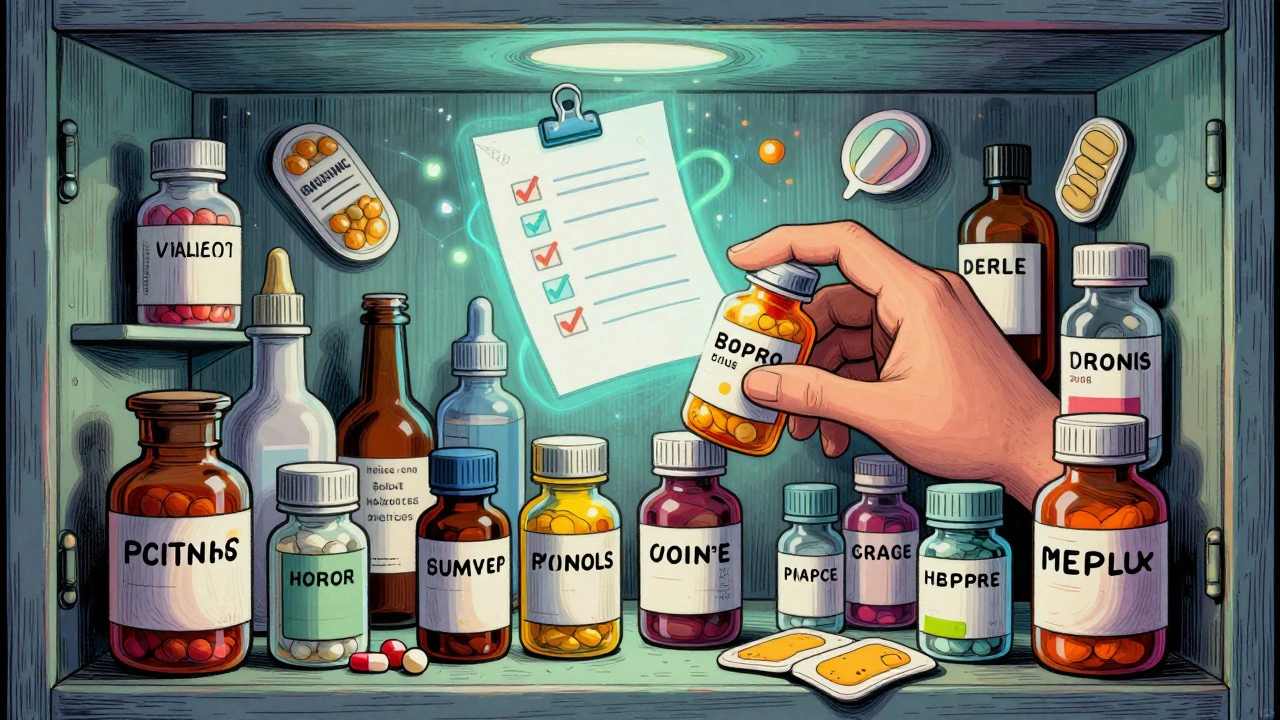
- Use the brown bag method - Every six months, put all your bottles in a brown bag and take them to your doctor. They’ll match what’s in the bag to your list. It’s messy, but it catches things you didn’t know you forgot.
- Take a photo - Snap a picture of the label on each bottle. Store them in a folder on your phone. If you can’t remember a name, you’ve got a visual backup.
- Update after every change - Whether it’s a new prescription, a dose change, or you stopped a drug because it made you dizzy, write it down the same day.
- Link it to routine events - Update your list when you get your flu shot, pay your prescription bill, or go to the pharmacy for refills. Tie it to something you already do.
Don’t wait for your annual checkup. That’s too late. Medication changes happen between visits. If your blood pressure med was increased last week, your list should reflect that by the next day.
Why Your Doctor Needs to See It
Doctors don’t always ask for your list. But they should. And you should insist.
A 2023 review of 47 studies showed that when pharmacists reviewed medication lists with patients, adverse drug events dropped by over 31%. When doctors did it alone, the drop was only 18%. Why? Pharmacists are trained to spot interactions, duplicate prescriptions, and dosing errors. They also spend more time talking to you.
Bring your list to every appointment-even if it’s just for a cold. If you’re seeing a specialist, give them a copy. If you’re going to the ER, show it to the triage nurse. The American Medical Association says this simple step can save doctors 2.7 hours a day by reducing unnecessary tests and clarifying prescriptions.
And don’t be shy. If a doctor says, “We have your records,” ask: “Can you check my list against your system? I’ve had issues before.”
What Happens When You Don’t Have One
It’s not theoretical. In 2022, the ECRI Institute reported over 1,200 patient safety incidents linked to outdated or missing medication lists. One case involved an 82-year-old man who took warfarin for atrial fibrillation. He’d stopped taking a blood pressure pill months earlier, but his list didn’t reflect it. The ER doctor, seeing the old list, prescribed a new drug that interacted with warfarin. He bled internally and died.
That’s not rare. A 2023 Rand Corporation study found medication errors cost the U.S. healthcare system $42 billion a year. Most of that is avoidable.
People who keep accurate lists report better communication with their care team. The National Council on Aging found that 67% of seniors who maintained updated lists felt more confident talking to their doctors. But 41% still forgot to update them after changes. That’s the gap.
Where to Get Help
You don’t have to do this alone.
- The FDA’s “My Medicines” template is free and downloadable. It’s designed for real-world use, with clear sections and emergency contact space.
- Your pharmacist can help you build and update your list. Many offer free Medication Therapy Management (MTM) under Medicare Part D. They’ll review all your meds, flag risks, and give you a printed copy.
- Community health centers often have nurses or patient navigators who can sit with you and help organize your list.
- Family members can help, especially if you’re managing multiple conditions. Ask a trusted person to check your list with you once a month.
Some health systems now let you update your medication list directly through your patient portal. If yours does, use it. But still print a copy. Digital access doesn’t help if you’re unconscious in an ambulance.
Final Tip: Make It Visible
Keep your list where it can be seen-and grabbed-fast.
- Carry a folded copy in your wallet or purse.
- Post a copy on your fridge with a magnet.
- Put one in your car’s glove box.
- Share a digital copy with a family member or caregiver.
And if you’re hospitalized, give your list to the nurse when you’re admitted. Don’t wait to be asked. Say: “Here’s my full list of everything I take.”
Medication safety isn’t about technology. It’s about awareness. It’s about remembering that every pill, every drop, every patch matters. And the only person who knows your full list is you. Keep it accurate. Keep it current. Keep it with you.
What should I do if I can’t remember all my medications?
Start by checking your pharmacy’s online portal or calling them-they have a full record of your filled prescriptions. Look through your pill bottles, especially ones you haven’t finished. Check your medicine cabinet for vitamins, supplements, and over-the-counter drugs. Take a photo of each bottle and compare them side by side. If you’re still unsure, bring everything to your pharmacist-they can sort it out for you.
How often should I update my medication list?
Update it every time a medication changes-whether you start, stop, or change the dose. That means after every doctor visit, hospital stay, or pharmacy refill. At a minimum, review it once a month. Use a routine like pill-organizing day or your weekly grocery trip as a reminder.
Can I use an app instead of a paper list?
Apps are helpful for reminders and tracking, but never rely on them alone. Phones can die, apps can glitch, and emergency responders can’t access your phone if you’re unconscious. Always have a printed copy you can hand over. Use the app to stay on top of doses, but keep the paper version as your official backup.
Why does my doctor need to know about vitamins and supplements?
Many supplements interact with prescription drugs. For example, garlic, ginkgo, and fish oil can thin your blood and increase bleeding risk if you’re on warfarin. St. John’s wort can make antidepressants, birth control, or heart meds less effective. Even common vitamins like vitamin K can interfere with blood thinners. Your doctor needs the full picture to avoid dangerous combinations.
What if I see multiple doctors and pharmacies?
That’s exactly when a medication list is most important. Each provider may only see part of your picture. Keep one master list and give a copy to every doctor, specialist, and pharmacist you see. Ask them to update it with their notes. If possible, use a single pharmacy for all your prescriptions-it helps them catch interactions across all your meds.
Is there a free template I can use?
Yes. The U.S. Food and Drug Administration offers a free, printable “My Medicines” form on their website. It includes space for all your meds, allergies, emergency contacts, and pharmacy info. Many pharmacies also have their own versions. Ask your pharmacist for one-they’ll be happy to give it to you.
If you’re on five or more medications, your medication list isn’t just a tool-it’s your safety net. The right list can prevent a hospital stay, a dangerous interaction, or worse. It doesn’t take much time to create, but it saves hours, days, or even years of your life. Start today. Update it tomorrow. Keep it with you always.
val kendra
December 4, 2025 AT 03:43Update it every time I refill a prescription. No excuses.
Isabelle Bujold
December 5, 2025 AT 23:46George Graham
December 7, 2025 AT 06:54Ollie Newland
December 7, 2025 AT 13:42Michael Feldstein
December 7, 2025 AT 15:23Benjamin Sedler
December 8, 2025 AT 06:40Heidi Thomas
December 9, 2025 AT 02:09Alex Piddington
December 10, 2025 AT 09:03Libby Rees
December 11, 2025 AT 02:00Dematteo Lasonya
December 12, 2025 AT 11:36Gareth Storer
December 13, 2025 AT 15:11Chad Handy
December 15, 2025 AT 13:51Rebecca Braatz
December 15, 2025 AT 21:51Ben Choy
December 17, 2025 AT 01:18Emmanuel Peter
December 17, 2025 AT 21:39