
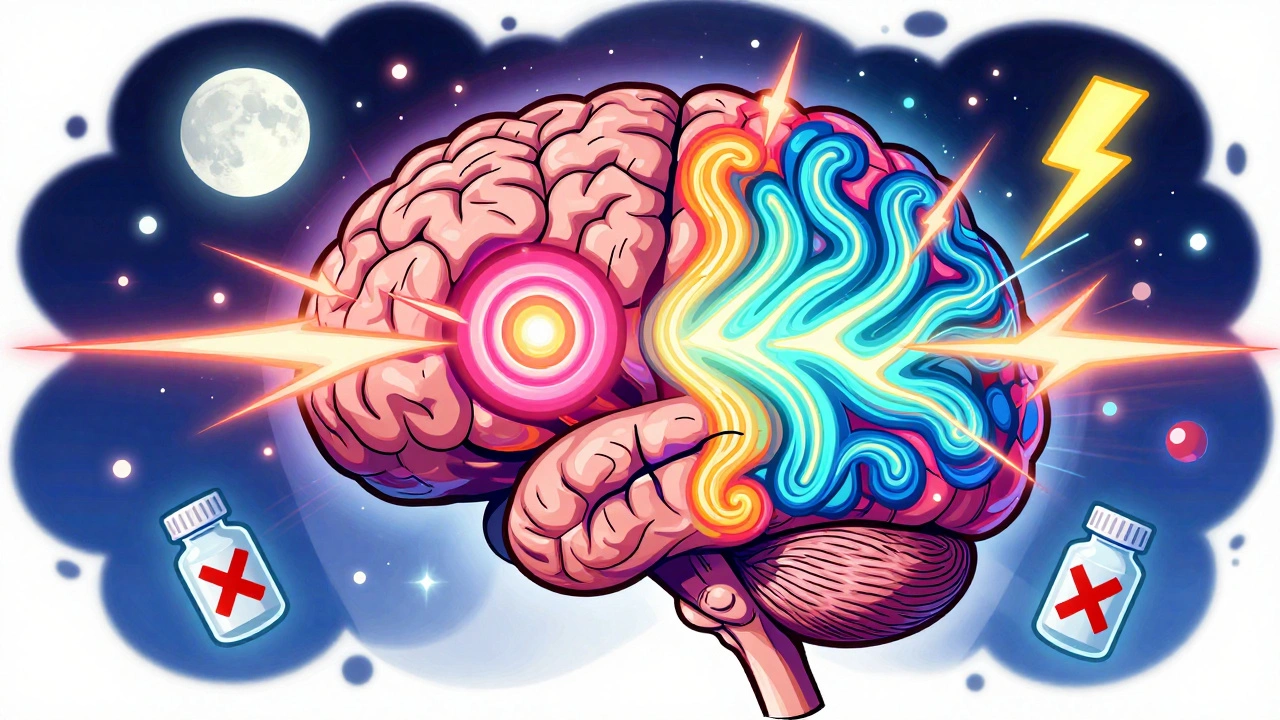
When someone has a seizure, it can be terrifying - for them and everyone around them. But not all seizures are the same. Some last just a few seconds and look like a blank stare. Others involve full-body shaking and loss of consciousness. The difference matters because how you treat it depends on what kind of seizure it is. Epilepsy isn’t just one condition. It’s a group of brain disorders where the brain’s electrical activity goes off track, leading to repeated seizures. The epilepsy types and seizure classifications have changed significantly in 2025, making it easier for doctors to match the right treatment to the right patient.
What Counts as Epilepsy?
You don’t get diagnosed with epilepsy after one seizure. The International League Against Epilepsy (ILAE) says you need either two unprovoked seizures more than 24 hours apart, or one seizure with a high chance (at least 60%) of having another. That’s because a single seizure can happen for many reasons - low blood sugar, a head injury, alcohol withdrawal - and doesn’t mean you have epilepsy. Only when the brain keeps misfiring on its own, without a clear trigger, does it become a chronic condition.
Around 50 million people worldwide live with epilepsy, and about 3.4 million of them are in the U.S. That’s more than autism or Parkinson’s disease. But here’s the problem: nearly 8 in 10 people with epilepsy have been misdiagnosed at least once. Many are told they have one kind of seizure when they actually have another. That’s why getting the classification right is more than academic - it’s life-changing.
The New Seizure Classification System (2025)
The old terms - like ‘simple partial’ or ‘complex partial’ - are gone. The 2025 update from the ILAE simplified things. Now, seizures are grouped into four main types: focal, generalized, unknown onset, and unclassified.
Focal seizures start in one part of the brain. They’re the most common, making up about 60% of all epilepsy cases. These used to be called partial seizures. Now, they’re split into two categories based on consciousness:
- Aware - You’re fully awake during the seizure. You might feel a strange smell, see flashing lights, or have a tingling hand. You remember it all.
- Impaired awareness - You’re confused, stare blankly, or do automatic things like chewing or walking in circles. You won’t remember it afterward. This is what most people picture as a ‘complex partial’ seizure.
Generalized seizures involve both sides of the brain from the start. They’re less common, at about 30% of cases. These include:
- Absence seizures - Brief lapses in awareness, often mistaken for daydreaming. Common in kids. Lasts 5-10 seconds.
- Myoclonic seizures - Sudden jerks, like being shocked. Usually in the arms or shoulders.
- Tonic-clonic seizures - The classic ‘grand mal’ seizure. Body stiffens, then shakes. Often followed by confusion or sleep.
- Atonic seizures - Sudden loss of muscle tone. People drop like a ragdoll. Can cause serious injuries.
There’s also a new category: combined generalized and focal epilepsy. This affects 5-8% of patients. Someone might have both types of seizures. If doctors miss this, they might prescribe the wrong drug - and the seizures won’t stop.
What Triggers Seizures?
People with epilepsy aren’t always having seizures. Many go weeks or months without one. But certain things can push the brain over the edge. Common triggers include:
- Lack of sleep - One of the biggest triggers. Missing even one night of sleep can increase seizure risk by 30%.
- Stress - Emotional or physical stress raises cortisol, which can lower the seizure threshold.
- Flashing lights - Only affects about 3% of people with epilepsy (photosensitive epilepsy). It’s rare but dangerous.
- Alcohol and drugs - Heavy drinking or withdrawal can trigger seizures. Even binge drinking once a month raises risk.
- Medication non-adherence - Skipping doses is the #1 reason seizures come back in people already on treatment.
- Hormonal changes - Many women have more seizures around their period (catamenial epilepsy).
One study found that 78% of patients could identify at least one personal trigger. Keeping a seizure diary - noting what you ate, how much you slept, your stress level - helps spot patterns. Apps like SeizureTracker or MySeizureGuide make it easier.
Antiepileptic Medications: How They Work
There are over 30 approved antiepileptic drugs (AEDs). No single pill works for everyone. The goal isn’t just to stop seizures - it’s to stop them without making you feel awful.
Here are the most common ones and what they’re best for:
- Levetiracetam (Keppra) - Works for both focal and generalized seizures. Often first choice because it has fewer side effects. Common ones: drowsiness, mood changes.
- Lamotrigine (Lamictal) - Good for absence and focal seizures. Also used in bipolar disorder. Risk: serious skin rash if dose is raised too fast.
- Valproate (Depakote) - Very effective for generalized seizures, especially myoclonic and tonic-clonic. But it’s not safe for women of childbearing age - it can cause birth defects.
- Clobazam (Onfi) - A benzodiazepine. Used for Lennox-Gastaut syndrome. Can cause drowsiness and dependence.
- Carbamazepine (Tegretol) - Best for focal seizures. But can make absence seizures worse. Needs blood tests to monitor levels.
- Topiramate (Topamax) - Works for many types. Side effects: memory issues, weight loss, kidney stones.
Doctors start low and go slow. The right dose is the lowest one that stops seizures without side effects. About 30% of people don’t respond to the first drug tried. That doesn’t mean they’re out of options - it just means they need to try another.
Why Getting the Type Right Matters
Wrong classification = wrong drug. A 2023 study found that 27% of patients were on the wrong medication because their seizure type was misdiagnosed. For example:
- Someone with focal seizures that feel like ‘spells’ might be misdiagnosed as having absence seizures - and given ethosuximide, which does nothing for focal seizures.
- A person with myoclonic jerks might be told they have ‘stress-induced twitching’ - and miss out on the right drug like valproate or levetiracetam.
- Someone with focal seizures starting in the temporal lobe might be treated like they have generalized epilepsy - and end up with worse seizures and more side effects.
EEG is the gold standard for diagnosis, but it’s not always available. In rural areas, only about 58% of patients get an EEG within 72 hours. That’s why doctors rely heavily on detailed descriptions from witnesses. A video of the seizure - even from a phone - can be more helpful than a perfect EEG.
What’s New in 2025
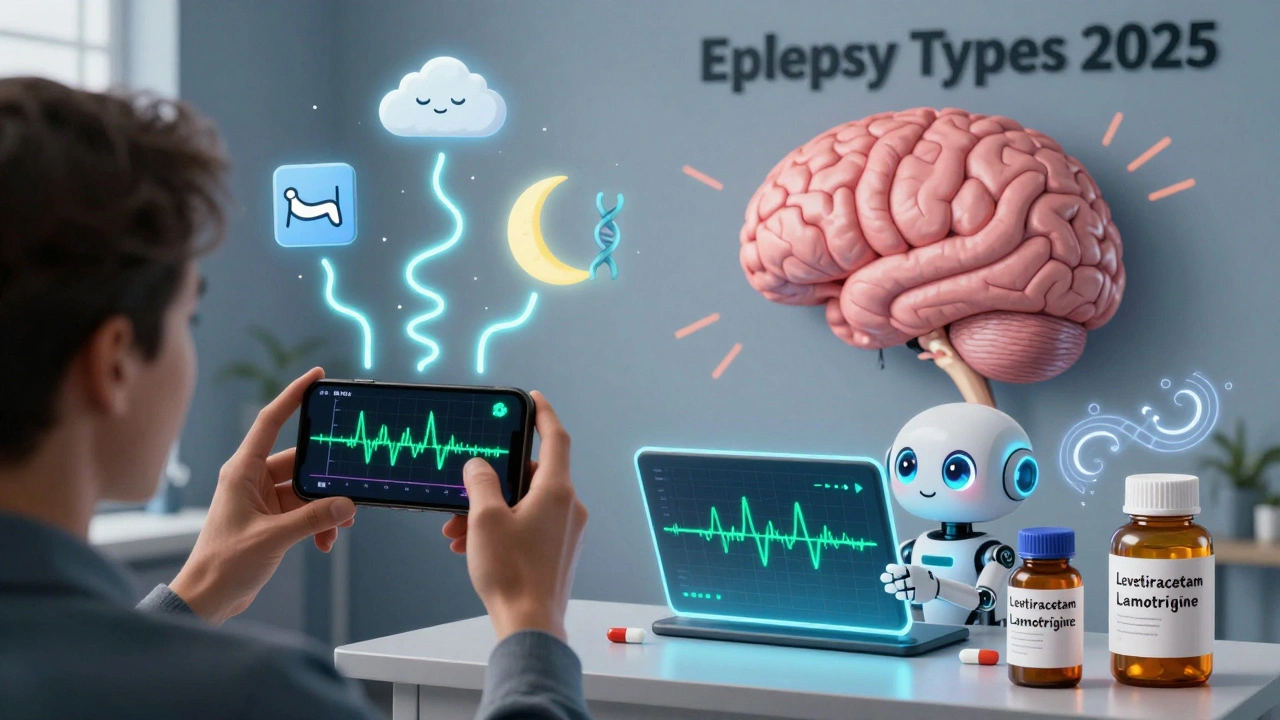
The 2025 update isn’t just about names. It’s about accuracy. The ILAE removed 42 seizure types that were too rare or too vague. Now there are just 21. That’s helped doctors make faster, more confident diagnoses.
A new AI tool is being tested to help classify seizures from video recordings. Early results show it boosts accuracy by 18% for non-specialists. In places with no neurologists, this could be a game-changer.
Also, the ILAE is now pushing for genetic testing in cases where epilepsy starts in childhood or runs in families. About 30% of early-onset epilepsy has a genetic cause. Knowing that can change treatment - some drugs work better for specific gene mutations.
What Patients Say
People with epilepsy are tired of being confused by changing terms. One Reddit user wrote: ‘I’ve had epilepsy for 15 years, and I still don’t know if I have focal or generalized.’ That’s why patient education is now part of every major epilepsy center’s protocol.
When doctors use simple language and visuals - like showing a brain diagram with where the seizure starts - patients understand their condition better. And that leads to better results. A 2023 study found patients who understood their seizure type were 34% more likely to take their meds on time.
Still, 76% of patients say different doctors use different terms. One doctor says ‘focal aware,’ another says ‘simple partial.’ That inconsistency makes it harder to manage care, especially when switching providers.
What You Can Do
If you or someone you care about has seizures:
- Get a clear diagnosis - ask for EEG and brain imaging (MRI).
- Ask: ‘What type of seizure is this?’ and ‘What type of epilepsy do I have?’
- Keep a seizure diary - note time, duration, triggers, and what happened before and after.
- Record a video of a seizure if possible. Share it with your doctor.
- Don’t skip doses. Even one missed pill can trigger a seizure.
- Ask about genetic testing if epilepsy started in childhood or if there’s a family history.
It’s not about finding a cure. It’s about finding control. For many, that means fewer seizures, fewer side effects, and a life that doesn’t revolve around fear.
Can epilepsy go away on its own?
Yes, in some cases. About 70% of people with epilepsy eventually become seizure-free, either with medication or without. Children with certain syndromes, like childhood absence epilepsy, often outgrow seizures by adolescence. Adults who’ve been seizure-free for 2-5 years on medication may be able to stop under a doctor’s supervision. But never stop meds without medical guidance - that’s the leading cause of breakthrough seizures.
Are all seizures dangerous?
Not all are, but some carry serious risks. Tonic-clonic and atonic seizures can cause falls, head injuries, or drowning if they happen in water. Prolonged seizures (lasting more than 5 minutes) are medical emergencies called status epilepticus and can cause brain damage. Even brief seizures can be dangerous if they happen while driving, swimming, or operating machinery. That’s why safety planning - like avoiding swimming alone or wearing a helmet - is part of every treatment plan.
Can diet help control seizures?
Yes, for some. The ketogenic diet - high-fat, low-carb - has been shown to reduce seizures by 50% or more in 30-40% of children with drug-resistant epilepsy. It’s also used in adults with focal epilepsy. It’s not a cure, and it’s hard to follow, but it’s a proven option when meds fail. Other diets like the modified Atkins diet or low glycemic index diet are easier to follow and also help some people. Always work with a neurologist and dietitian if you try this approach.
Do antiepileptic drugs cause long-term damage?
Most don’t. Long-term use of older drugs like phenytoin or valproate can affect bone density, liver function, or cause weight gain. Newer drugs like levetiracetam and lamotrigine have better safety profiles. Regular blood tests and monitoring help catch problems early. The bigger risk isn’t the drugs - it’s uncontrolled seizures. Repeated seizures over years can affect memory, mood, and even brain structure. Treatment is about balancing risks - and for most, the benefits far outweigh the downsides.
What if medications don’t work?
About 30% of people have drug-resistant epilepsy. That doesn’t mean there’s nothing left to try. Surgery is an option if seizures start in one clear area of the brain - like the temporal lobe - and can be safely removed. About 60-70% of these patients become seizure-free after surgery. Other options include vagus nerve stimulation (VNS), responsive neurostimulation (RNS), and dietary therapies. Clinical trials for new drugs and gene therapies are also expanding. Never give up - there are more options now than ever before.
michael booth
December 4, 2025 AT 12:45Just wanted to say this post is incredibly helpful. I’ve been managing focal seizures for 8 years and the new classification makes so much more sense than the old ‘partial’ labels. My neurologist finally used the term ‘focal aware’ last month and it clicked for me like nothing before. Thanks for breaking it down so clearly.
Carolyn Ford
December 6, 2025 AT 10:26Oh please. ‘The 2025 update simplified things’? That’s what they said in 2017 too. Then they changed it again in 2022. Now they’re calling ‘complex partial’ something else? It’s all just bureaucratic noise. The truth? Most doctors still don’t know the difference between myoclonic and absence seizures-and they’re prescribing meds like they’re playing roulette.
Heidi Thomas
December 7, 2025 AT 16:58You're all missing the real issue. The real problem isn't the classification-it's that 76% of patients get conflicting terms from different doctors. That’s not a gap in knowledge-that’s a systemic failure. If your neurologist says 'focal aware' and your epileptologist says 'simple partial'-you’re being set up to fail. No amount of AI or new labels fixes that. You need standardized training. Period.
Alex Piddington
December 9, 2025 AT 07:56Thank you for sharing this. I’m a caregiver for my nephew who was diagnosed with Lennox-Gastaut syndrome at age 3. Clobazam helped, but the side effects were brutal. We’ve been on the ketogenic diet for 14 months now-his seizures are down 70%. It’s not easy, but it’s worth it. If anyone’s considering it, please consult a specialized dietitian. Don’t wing it. Also-please, please record videos of seizures. We recorded one on our phone during a drop attack and it changed everything for his care team. Thank you for mentioning that.
Libby Rees
December 10, 2025 AT 22:42I’ve worked in rural clinics for 12 years. Only 3 out of 10 patients get an EEG within a week. We rely on family members to describe seizures. One mother told me her son ‘stares off and blinks really fast for a few seconds’-that’s absence. But we didn’t have the tools to confirm. This article should be required reading for every primary care provider. Simple language. Clear categories. No jargon. This is how we fix the gap.
Dematteo Lasonya
December 12, 2025 AT 09:08I’ve had epilepsy since I was 12. I’m 32 now. I’ve been on five different meds. I’ve had two misdiagnoses. I still don’t know if I have focal or generalized. But this post? It’s the first time I felt like someone actually understood. I’m going to start a seizure diary tonight. And I’m going to ask my doctor about genetic testing. I’ve never thought to ask before. Thank you.