
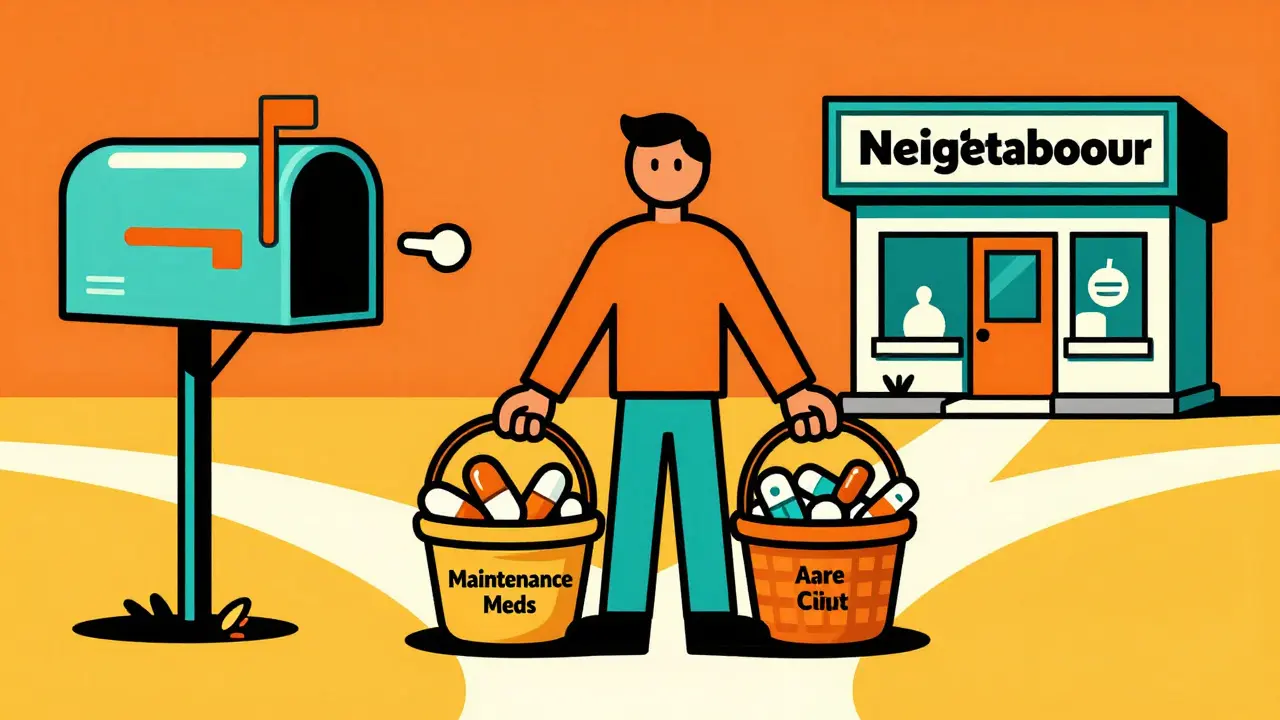
You pay for your prescriptions every month, but do you ever wonder if you are paying too much? Most people just grab their pill bottle at the nearest counter. It is fast. It is convenient. But it might also be costing you hundreds of dollars a year that you could keep. The secret to lowering these costs lies in mixing two different services: mail-order pharmacies and local retail pharmacies. By splitting your medications between these two channels based on what they are for, you can unlock significant discounts without sacrificing care.
This strategy is not about finding one magic shop. It is about playing the system smartly. Insurance companies design their plans with specific incentives. They want you to use mail-order for long-term drugs because it saves them administrative work. In return, they offer you lower prices. If you ignore this structure, you leave money on the table. Let’s look at how to set this up correctly so you save cash while staying healthy.
The Core Strategy: Bucketing Your Medications
The first step is to stop looking at all your pills as one big group. You need to sort them into three distinct buckets. This classification determines where each prescription should go.
- Maintenance Medications: These are drugs you take every day for chronic conditions like high blood pressure, diabetes, or high cholesterol. You likely will take these for years. They are stable. The dose rarely changes.
- Acute or Short-Term Medications: Think antibiotics for an infection, painkillers after a dental procedure, or steroids for a sudden flare-up. You need these now, and you only need them for a few days or weeks.
- Variable-Dose Medications: These are new prescriptions where your doctor might adjust the strength. Maybe you start on a low dose of antidepressants or thyroid medication and need to find the right level.
Dr. John Santa from Consumer Reports suggests keeping maintenance drugs in the mail-order bucket. He argues that local pharmacies are better for the other two categories. Why? Because mail-order takes time. It usually takes 7 to 14 business days to arrive. If you have a sore throat and need antibiotics today, waiting two weeks is not an option. For those urgent needs, your local store is the only choice. But for that blood pressure pill you take forever? That is prime real estate for mail-order savings.
Understanding the Math Behind the Savings
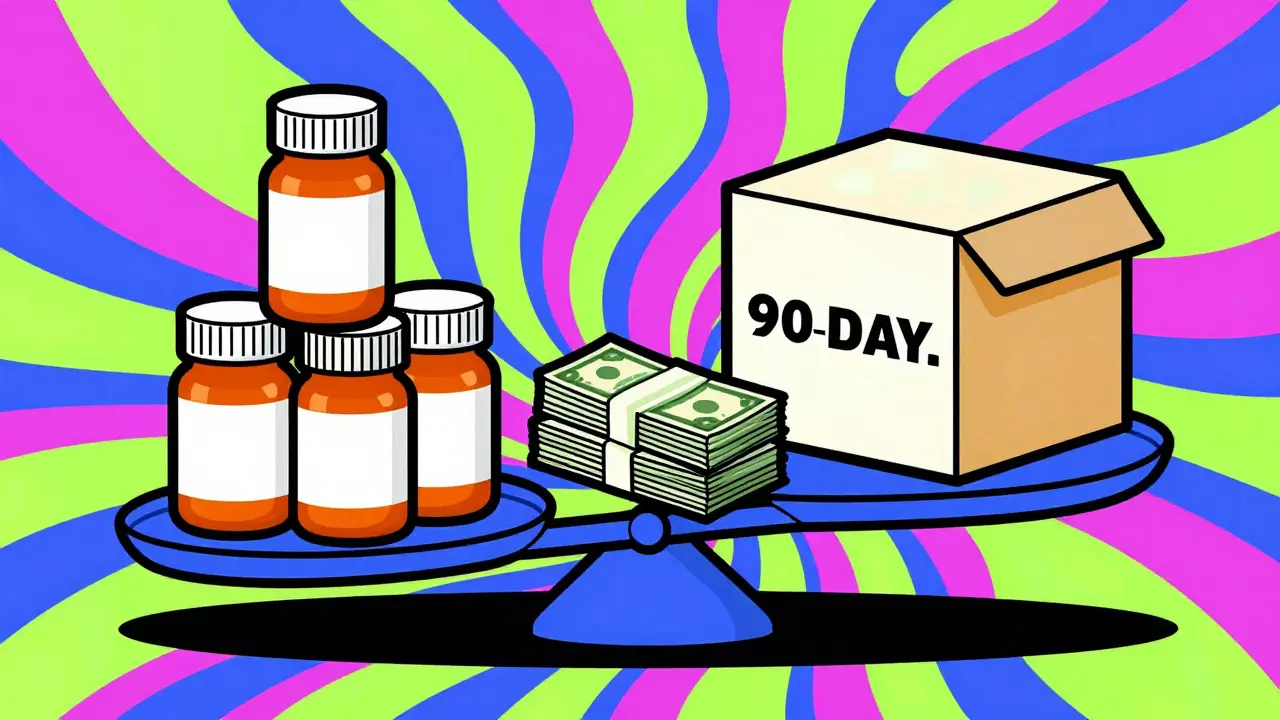
Why does mail-order cost less? It comes down to volume and administration. When you buy a 90-day supply through mail-order, the pharmacy processes one order instead of three separate 30-day orders. This reduces paperwork and shipping complexity. Insurance companies pass some of those savings back to you.
| Medication Type | Retail (30-Day Fill) | Mail-Order (90-Day Supply) | Estimated Annual Savings |
|---|---|---|---|
| Generic Statin (e.g., Atorvastatin) | $15 x 4 = $60 | $12.50 x 4 = $50 | $10 |
| Tier 3 Brand Name BP Med | $45 x 4 = $180 | $115 / 90 days x 4 = $115 | $65 |
| Insulin (Temperature Sensitive) | $50 (Local Pickup) | Avoid Mail-Order | N/A |
As you can see, the gap widens significantly with brand-name drugs. A study published in the Journal of Managed Care Pharmacy found that overall member costs were 29% lower for mail-order than community pharmacy across many therapeutic categories. For cardiovascular meds, that saving jumped to over 35%. However, do not assume every drug fits this model. Specialty medications or biologics often have different rules. Always check your specific plan.
There is also a hidden benefit here. Many large retailers like Walmart offer flat-rate pricing for generics. Their program allows 90-day supplies of generic meds for $10 without even using insurance. If your insurance copay is higher than $10 for a 90-day supply, you might skip both mail-order and insurance entirely and just use the retailer’s discount program. This is a crucial loophole many patients miss.
The Hidden Trap: Local Pharmacies Can Match Prices
Here is a piece of information that most insurance brochures hide in fine print: many local pharmacies can match mail-order prices for 90-day fills. According to data from GoodRx and various pharmacy benefit managers like Caremark, you often get the same low copay at your neighborhood CVS or Walgreens if you ask for a 90-day supply. Yet, 71% of consumers remain unaware of this option.
So why bother with mail-order at all? Convenience and automation. Mail-order services are built around auto-refills. They track your usage and send reminders before you run out. Local pharmacies require more manual effort. You have to call or walk in. If you are forgetful, mail-order ensures you never miss a dose. If you prefer human interaction and immediate pickup, asking your local pharmacist for a 90-day fill is a powerful middle ground. It gives you the bulk discount without the wait time.
What Should Never Go Through the Mail
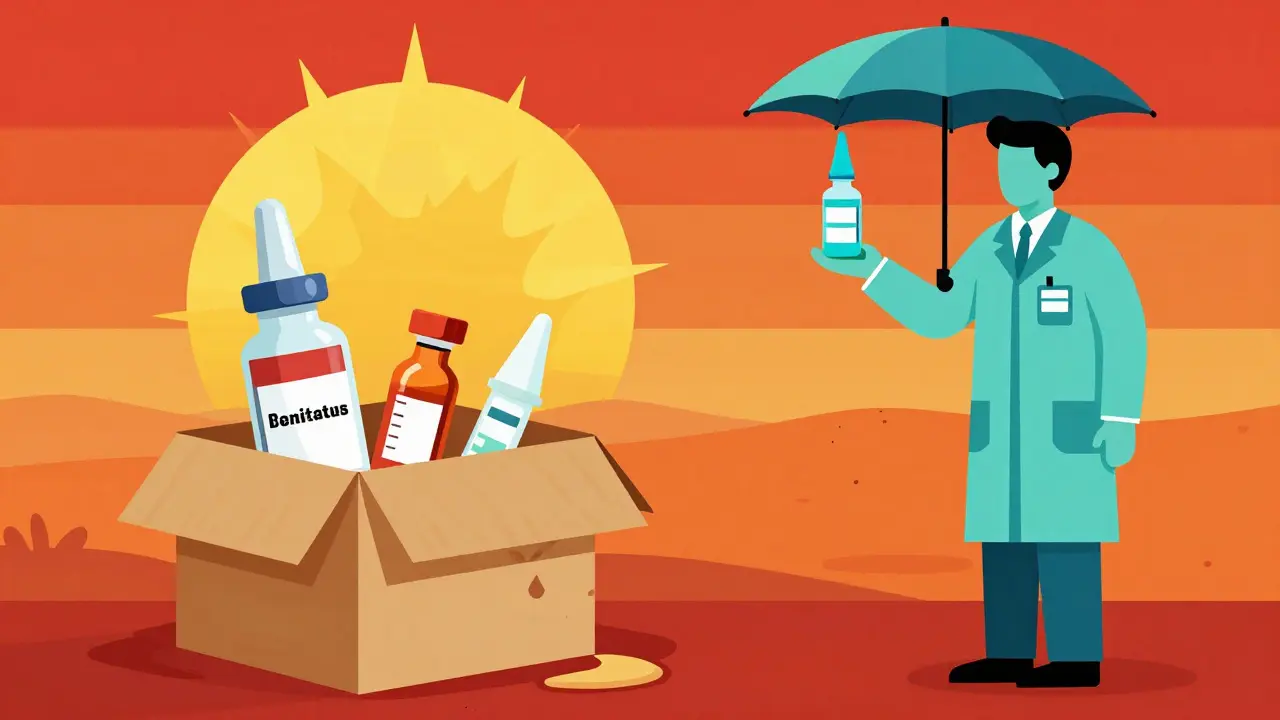
Not everything survives a journey across the country. Some medications are fragile. Insulin, certain injectables, and some eye drops are sensitive to temperature. The FDA warns that exposure to extreme heat or cold during shipping can degrade these drugs, making them less effective or even unsafe. If your medication requires refrigeration or strict temperature control, stick to local pickup. The risk of potency loss is not worth the small potential savings.
Also, avoid sending variable-dose medications via mail-order. Imagine your doctor decides to double your dosage next week. With a local pharmacy, you pick up the new script immediately. With mail-order, you might sit there waiting for a package containing the old, lower dose while your body needs more. One user on HealthUnlocked shared a frustrating story where their mail-order pharmacy kept sending the wrong strength of antidepressant for two months because their system didn’t sync with the doctor’s electronic health record. That delay caused unnecessary suffering and wasted money. Keep changing prescriptions local until they stabilize.
Step-by-Step Implementation Guide
Setting this up takes about 45 minutes initially. After that, it runs on autopilot. Follow these steps to coordinate your care effectively.
- Audit Your Current Meds: List every prescription you take. Mark them as Maintenance, Acute, or Variable. Be honest about which ones you take daily versus occasionally.
- Check Your Formulary Tiers: Log into your insurance portal. Look up each maintenance drug. Note the copay for a 30-day retail fill versus a 90-day mail-order fill. Calculate the annual difference. If the mail-order price is higher, do not use it. This happens with some specialty drugs.
- Contact Your Mail-Order Provider: Transfer your maintenance scripts. Ask about their delivery timeline. Most take 7-14 days. Set calendar reminders for 10 days before you expect to run out. This buffer prevents gaps in treatment.
- Visit Your Local Pharmacist: Bring your list. Ask them to review your acute and variable meds. Establish a relationship. Tell them, "I am using mail-order for my long-term stuff, but I want you to handle my short-term needs." This helps them manage your records better.
- Review Monthly Statements: Insurance plans change. Copays shift. Check your Explanation of Benefits (EOB) every month. If you see a charge that looks wrong, call immediately. Catching errors early prevents permanent billing issues.
Common Pitfalls to Avoid
Even with a good plan, things can go sideways. The biggest issue is coordination failure. Your doctor writes a new script, but your mail-order pharmacy still has the old one active. Or worse, your local pharmacy doesn’t know you switched to mail-order and tries to refill a med you no longer pick up there. This leads to confusion and duplicate charges.
To fix this, ensure all your providers-primary care, specialists, and dentists-are aware of your split strategy. Give them the phone number for your mail-order service. When they write a new maintenance prescription, tell them explicitly: "Please send this to my mail-order pharmacy, not the local one." Clarity is key.
Another pitfall is ignoring state regulations. Mail-order pharmacies must be licensed in your state. While major networks like Express Scripts or OptumPerks handle this automatically, smaller independent mail-order services might not. Using an unlicensed provider can void your insurance coverage. Stick to the pharmacies listed in your plan’s directory to stay safe.
Future Trends: Integrated Networks
The landscape is shifting. By 2026, we are seeing more integrated systems. UnitedHealthcare’s OptumPerks and similar programs aim to blend the speed of local access with the efficiency of mail-order. Epic Systems launched tools that automatically recommend the best channel for each refill based on your history. These digital assistants reduce the mental load on you. Instead of calculating costs manually, the app tells you: "Send this to mail-order, save $15." As these tools become standard, coordinating your meds will become easier, but understanding the underlying logic remains essential to verify the recommendations.
Don’t let convenience dictate your spending habits. Take control of your medication management. Split your prescriptions strategically. Use mail-order for the steady, long-term drugs to capture bulk discounts. Use local pharmacies for urgency, consultation, and temperature-sensitive items. This hybrid approach protects your wallet and your health simultaneously.
Does mail-order pharmacy always cost less than local pharmacy?
Not always. While mail-order typically offers lower copays for 90-day supplies of maintenance medications, some insurance plans charge higher rates for certain specialty drugs or brand-name items. Additionally, many local pharmacies can match mail-order prices for 90-day fills. You must compare the specific copays for your medications under your current plan to determine the true cheapest option.
Can I get a 90-day supply at my local pharmacy?
Yes, most local pharmacies can dispense 90-day supplies. However, your insurance plan may require prior authorization or may only cover the full 90-day amount if you use their designated mail-order service. Call your local pharmacist and your insurance provider to confirm if you can get the same mail-order discount at the counter.
Which medications should I avoid sending via mail-order?
Avoid mailing temperature-sensitive medications like insulin, certain injectables, and some eye drops, as they can degrade during shipping. Also, keep acute medications (like antibiotics) and variable-dose prescriptions local, as you may need them immediately or require frequent dosage adjustments that mail-order cannot accommodate quickly.
How long does it take for mail-order prescriptions to arrive?
Delivery typically takes 7 to 14 business days. Because of this lead time, it is crucial to set up automatic refills or calendar reminders to request your next shipment at least two weeks before you run out of medication. Do not rely on mail-order for emergencies.
Will my doctor know if I switch to mail-order?
Your doctor should be informed when you transfer a prescription to a new pharmacy. Provide them with the contact details for your mail-order service. This ensures that any future renewals or adjustments are sent to the correct location, preventing delays or lost prescriptions.