
What Is Diabetic Neuropathy?
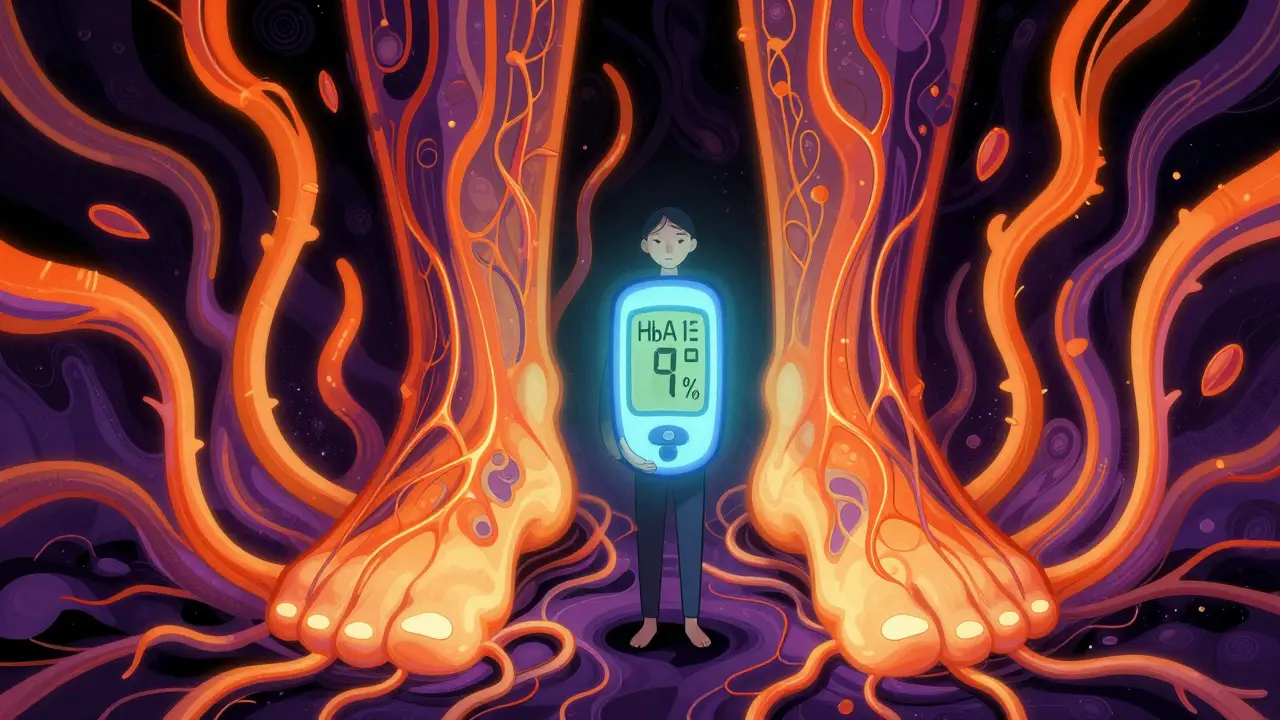
Diabetic neuropathy is nerve damage caused by years of high blood sugar. It’s not a single condition-it’s a group of nerve problems that happen when glucose levels stay too high for too long. The most common type is diabetic peripheral neuropathy, which starts in the feet and legs. You might feel tingling, burning, or sharp pain. Some people lose feeling entirely, which is dangerous because you won’t notice cuts or sores that could lead to infection.
It’s not rare. About 60 to 70% of people with diabetes will develop some form of nerve damage over time. Around one in five will have painful symptoms that disrupt sleep, walking, or daily life. The damage doesn’t happen overnight. It builds slowly, often over 10 to 20 years. That’s why early action matters.
Why Blood Sugar Control Is the Foundation
There’s no magic pill that fixes nerve damage if your blood sugar stays high. The single most effective way to stop diabetic neuropathy from getting worse is to keep your HbA1c below 7%. That’s not a suggestion-it’s backed by decades of research. The Diabetes Control and Complications Trial (DCCT) showed that tight control cut the risk of neuropathy by 60% compared to standard care.
What does that look like in practice? Aim for fasting blood sugar between 80 and 130 mg/dL, and under 180 mg/dL after meals. This isn’t about perfection. It’s about consistency. Even small improvements-like dropping from an HbA1c of 8.5% to 7.5%-make a real difference in nerve health.
And it’s not just about medication. Diet, movement, and sleep all play a role. A 2023 study found that people who combined medication with daily walking and a low-glycemic diet were 40% more likely to see reduced pain over 12 months than those who only took pills.
First-Line Medications for Pain Relief
When pain becomes unbearable, medications help-but not all are created equal. Only two drugs are FDA-approved specifically for diabetic nerve pain: duloxetine and pregabalin.
Duloxetine (Cymbalta) is an SNRI antidepressant. In clinical trials, about 35% of patients had at least 50% pain reduction. Side effects? Nausea, dry mouth, and drowsiness. It’s often avoided in older adults or those with liver issues.
Pregabalin (Lyrica) works by calming overactive nerves. About 30-40% of users get significant relief. Weight gain and dizziness are common complaints. Many patients say they feel “foggy” or unsteady, especially at higher doses.
Even though they’re not FDA-approved for this use, amitriptyline (a tricyclic antidepressant) is still widely prescribed. It’s cheaper and often more effective-up to 60% of users report pain relief. But it can cause dry mouth, constipation, and confusion in older people. It’s not first choice for seniors.
Second-Line Options and When to Use Them
If first-line drugs don’t work-or cause too many side effects-you move to second-line options. These aren’t as well-studied for neuropathy, but they’re used when needed.
Tramadol is a weak opioid. It helps about 40-50% of people, but it carries risks: tolerance builds quickly, and about 8-12% of long-term users develop dependence. The NHS warns it’s only for cases where other treatments have failed.
Tapentadol is similar but with fewer side effects than tramadol. In one trial, 35% of patients got 50% pain relief. Still, it’s not a long-term solution.
Don’t use ibuprofen or naproxen for nerve pain. They don’t work on neuropathic pain and can hurt your kidneys-something people with diabetes already struggle with. The FDA says long-term NSAID use increases kidney damage risk by up to 20% in diabetic patients.
Topical Treatments: Local Relief Without Systemic Side Effects
For pain that’s limited to your feet or hands, topical treatments can be a game-changer. They deliver relief without affecting your whole body.
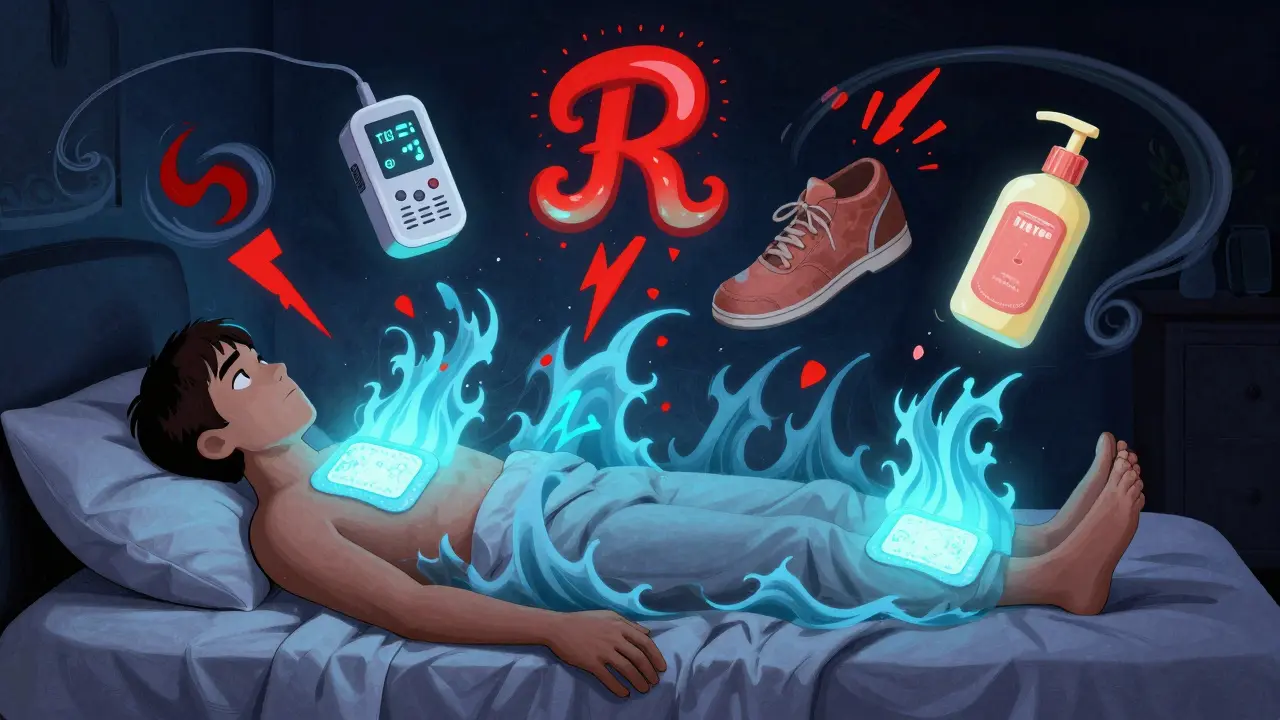
The capsaicin 8% patch (Qutenza) is applied once every 3 months by a doctor. It works by depleting substance P, the chemical that sends pain signals. In trials, 40% of users got at least 30% pain reduction. The downside? It burns during application-but only for 30 minutes.
Lidocaine 5% patches are available over the counter. They’re less powerful but safer for daily use. They’re great for localized burning or tingling, especially at night. No drowsiness. No weight gain. No interaction with other meds.
Many patients report that these patches are the only thing that lets them sleep through the night without painkillers.
Non-Drug Therapies That Actually Work
Medications aren’t the only path to relief. Some of the most effective tools are non-drug.
TENS (Transcutaneous Electrical Nerve Stimulation) uses small electrodes on your skin to deliver gentle pulses. One study found 83% of users had better pain scores after 6 weeks. It’s cheap, safe, and can be used at home. Many patients say it gives them back control.
Peripheral nerve stimulation involves a tiny device implanted near the affected nerve. It sends mild electrical signals that block pain. It’s for people who’ve tried everything else. Studies show 60-70% get lasting relief.
Spinal cord stimulation is newer and more advanced. It doesn’t just dull pain-it’s been shown to restore some sensation in people who’d been numb for years. One patient in a Maryland study said, “I could feel my toes again for the first time in 12 years.”
Exercise isn’t just good for blood sugar-it helps nerves heal. Walking 30 minutes a day, swimming, or cycling improves circulation to the feet. Yoga and tai chi reduce stress, which lowers pain sensitivity. A 2022 review found that people who exercised regularly had 30% less pain progression over two years.
What Doesn’t Work (And Why)
There’s a lot of noise out there. People swear by vitamin B12, alpha-lipoic acid, or acupuncture. Some of these might help a little-but none are proven to stop nerve damage or reliably reduce pain.
Alpha-lipoic acid showed promise in small studies, but larger trials found no significant benefit over placebo. Vitamin B12 only helps if you’re deficient-which most people with diabetes aren’t. Acupuncture might ease stress, but it doesn’t change nerve function.
And don’t rely on “natural” supplements. They’re not regulated. One product labeled “neuropathy relief” was found to contain hidden steroids. Always talk to your doctor before trying anything new.

Living With Neuropathy: Daily Habits That Make a Difference
Managing neuropathy isn’t just about pills and procedures. It’s about daily choices.
- Check your feet every day. Use a mirror or ask someone to help. Look for redness, swelling, cuts, or blisters. Numbness means you won’t feel injuries-and small wounds can turn into amputations.
- Wear proper shoes. Avoid flip-flops or tight socks. Go for wide, cushioned shoes with no seams that rub. Custom inserts can help if you have foot deformities.
- Keep your skin moisturized. Dry skin cracks. Cracks invite infection. Use fragrance-free lotion daily, but never between the toes-it traps moisture and causes fungal growth.
- Control your stress. Chronic stress raises blood sugar and makes pain feel worse. Try 10 minutes of deep breathing or meditation each day. Apps like Calm or Headspace can guide you.
- Quit smoking. Smoking narrows blood vessels. That cuts off oxygen to your nerves and feet. Smokers with diabetes are 3x more likely to need an amputation.
When to See a Specialist
If you’ve tried two or three medications with no relief, or if your pain is getting worse, it’s time to see a pain specialist or neurologist. Don’t wait until you can’t walk.
Also, see a specialist if you notice:
- Loss of balance or frequent falls
- Digestive problems like nausea, bloating, or constipation
- Sexual dysfunction
- Low blood pressure when standing up
These can be signs of autonomic neuropathy-affecting internal organs. It’s serious, but treatable if caught early.
What the Future Holds
Research is moving fast. Scientists are testing drugs that target specific pain channels in nerves, like Nav 1.7 blockers. Others are exploring nerve growth factors and antibodies that could actually repair damaged nerves-not just mask pain.
One big hope: disease-modifying therapies. Right now, we can only slow damage. In the next 5 to 10 years, we may have treatments that reverse it. Clinical trials are already showing nerve regeneration in animal models. Human trials are coming.
For now, the best thing you can do is protect your nerves by controlling your blood sugar, staying active, and using proven treatments. You can’t undo years of damage overnight-but you can stop it from getting worse. And that’s more than enough to reclaim your life.
Can diabetic neuropathy be reversed?
Mild to moderate nerve damage from diabetes can improve with strict blood sugar control. Studies show symptoms like numbness and tingling may fade within a year if HbA1c drops below 7%. But severe damage-like complete loss of sensation or muscle wasting-is usually permanent. The goal is to stop progression and manage pain, not to fully restore nerves.
What’s the best medication for diabetic nerve pain?
There’s no single best drug. Duloxetine and pregabalin are FDA-approved and work well for many. Amitriptyline is often more effective but has more side effects. Topical capsaicin or lidocaine patches are excellent for localized pain with fewer risks. The right choice depends on your age, other health conditions, and how your body reacts. Trial and error under a doctor’s care is normal.
Can I use over-the-counter painkillers like ibuprofen?
No. Ibuprofen and other NSAIDs don’t treat nerve pain-they only help with inflammation. For people with diabetes, they raise the risk of kidney damage and heart problems. Even short-term use can be dangerous if you already have early kidney disease. Stick to medications proven for neuropathy.
How long does it take for nerve pain to improve after better blood sugar control?
Some people notice less pain within 3 to 6 months of improving their HbA1c. Others take up to a year. Nerve healing is slow. The key is consistency-not perfection. Even small, steady improvements in blood sugar lead to measurable relief over time.
Is exercise safe if my feet are numb?
Yes-but choose wisely. Walking, swimming, cycling, and seated exercises are safe. Avoid high-impact activities like running or jumping if you have foot numbness. Always wear protective shoes. Check your feet before and after exercise for redness or blisters. Exercise improves circulation and helps nerves heal, so it’s essential-not something to avoid.
josh plum
January 5, 2026 AT 19:00John Ross
January 5, 2026 AT 19:47Ashley Viñas
January 7, 2026 AT 12:02Brendan F. Cochran
January 8, 2026 AT 02:12Connor Hale
January 9, 2026 AT 20:56Roshan Aryal
January 10, 2026 AT 01:41Catherine HARDY
January 10, 2026 AT 21:35bob bob
January 12, 2026 AT 03:42Vicki Yuan
January 12, 2026 AT 23:13en Max
January 14, 2026 AT 08:47Angie Rehe
January 16, 2026 AT 00:28Enrique González
January 17, 2026 AT 03:29Aaron Mercado
January 17, 2026 AT 14:55