
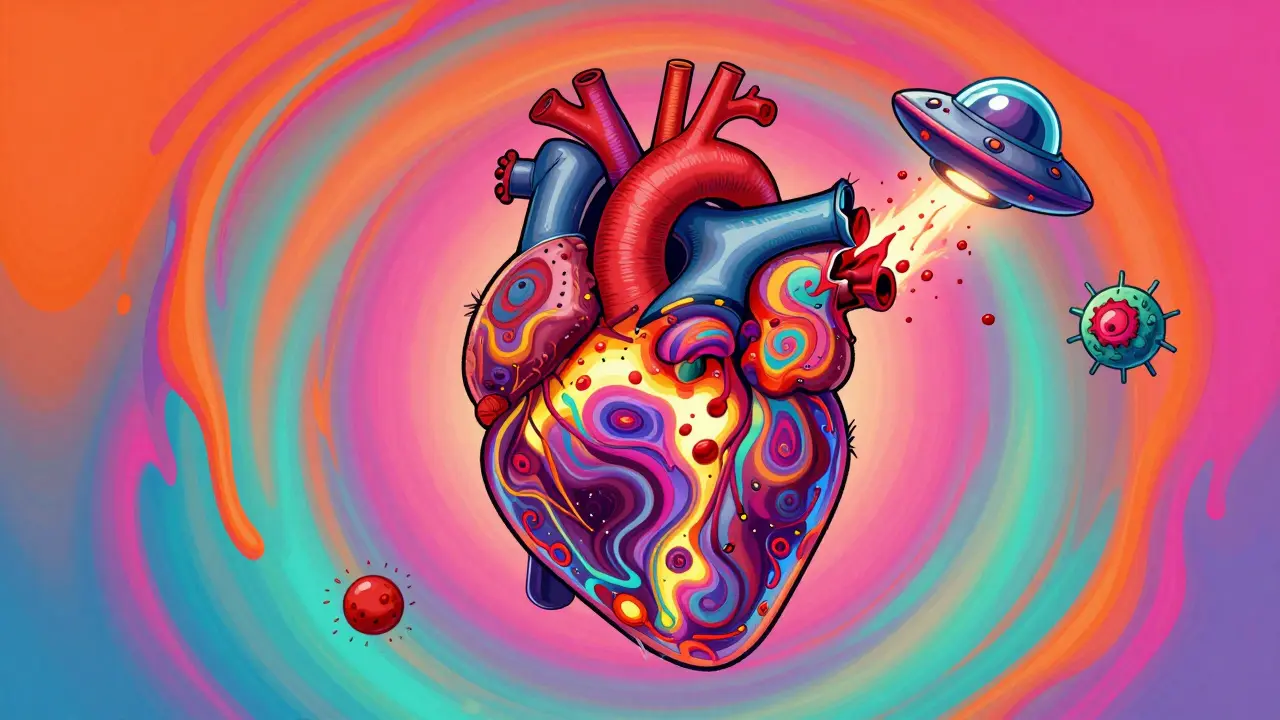
Coronary artery disease (CAD) isn't just a buzzword in medical reports-it’s the number one killer worldwide. More people die from it each year than from cancer, accidents, or stroke combined. At its core, CAD is caused by atherosclerosis, a slow, silent process where fatty deposits clog the arteries that feed your heart. You might not feel a thing for years. Then, suddenly, your body sends a warning: chest pain, shortness of breath, or worse-a heart attack.
What Exactly Is Atherosclerosis?
Atherosclerosis is the root of most heart problems. It starts when bad cholesterol (LDL) slips into the wall of your coronary arteries. Your body sees it as an invader and sends immune cells to clean it up. But instead of fixing the problem, these cells turn into foam cells, clumping together with calcium and other debris to form plaques. Over time, these plaques harden and narrow the artery. Not all plaques are the same. Some are stable-thick, fibrous, and slow-growing. They might block 70% of the artery, causing predictable chest pain during exercise. Others are unstable: soft, full of fat, with a thin outer shell. These are the real danger. They don’t need to block much of the artery to be deadly. A tiny crack in the plaque can trigger a blood clot, completely blocking blood flow-and that’s when a heart attack happens. This is why doctors now focus less on how much an artery is narrowed and more on what the plaque is made of. A 40% blockage from an unstable plaque is riskier than a 75% blockage from a stable one.Who’s at Risk? The Real Culprits Behind CAD
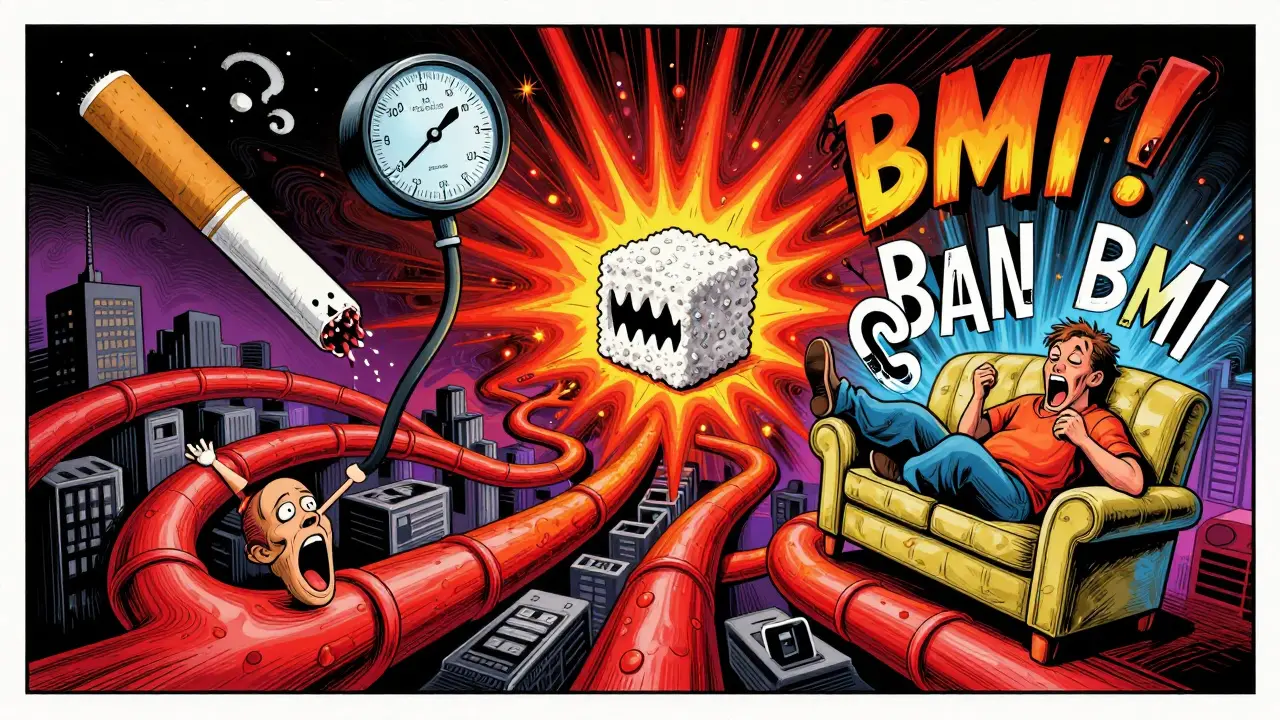
You can’t change your age or genetics, but you can control most of what leads to CAD. The biggest risk factors aren’t what most people think.- High blood pressure: Constantly high pressure damages artery walls, making them easier targets for plaque buildup.
- High LDL cholesterol: The main ingredient in arterial plaque. Levels above 160 mg/dL dramatically raise your risk.
- Smoking: Just one pack a day can triple your chance of CAD. It damages the lining of arteries and makes blood stickier.
- Diabetes: High blood sugar corrodes blood vessels. People with diabetes are two to four times more likely to develop heart disease.
- Obesity: Especially belly fat. A BMI over 30 isn’t just a number-it’s a signal your body is in chronic inflammation mode.
- Physical inactivity: Sitting for long periods slows circulation and worsens cholesterol levels.
- Family history: If a close relative had a heart attack before age 55 (men) or 65 (women), your risk goes up.
How Is CAD Diagnosed?
Many people don’t know they have CAD until they have a heart attack. That’s why early detection matters.- Electrocardiogram (ECG): This simple test records your heart’s electrical activity. It can show if your heart has been starved of oxygen.
- Stress test: You walk on a treadmill while your heart is monitored. If your heart doesn’t respond well under pressure, it’s a red flag.
- Coronary angiography: The gold standard. A thin tube is threaded into your artery, dye is injected, and X-rays show exactly where blockages are. It’s invasive, but it gives a clear map.
- CT calcium scan: A non-invasive way to measure calcium in your coronary arteries. More calcium = more plaque. A score above 100 means you’re at increased risk.
- Ankle-Brachial Index (ABI): Measures blood pressure in your ankle vs. arm. A low ratio suggests blockages elsewhere-which often means your heart arteries are affected too.
Treatment: Beyond Just Pills
There’s no magic bullet for CAD. But there’s a proven path forward: lifestyle, medication, and procedures-used together. Lifestyle changes are the foundation. No pill works as well as quitting smoking, eating real food, and moving daily. The DASH diet (rich in vegetables, whole grains, lean protein, and low-fat dairy) lowers blood pressure and cholesterol better than most drugs. Aim for 150 minutes of brisk walking a week. Even losing 5-10% of your body weight cuts your risk significantly. Medications are non-negotiable for most. Here’s what’s commonly prescribed:- Statins: Lower LDL cholesterol by 30-50%. They also stabilize plaques, making them less likely to rupture.
- Aspirin or other antiplatelets: Prevent blood clots. Not for everyone-only if your risk is high.
- Beta-blockers: Slow your heart rate, reduce blood pressure, and ease chest pain.
- ACE inhibitors or ARBs: Protect your heart, especially if you’ve had a heart attack or have diabetes.
- PCSK9 inhibitors: Newer injectable drugs for people who can’t get LDL low enough with statins alone.
- Percutaneous Coronary Intervention (PCI): A balloon is inflated in the blocked artery, and a stent is placed to keep it open. It’s quick, often done the same day as diagnosis.
- Coronary Artery Bypass Grafting (CABG): Surgeons take a healthy vessel from your leg or chest and reroute blood around the blocked artery. Used when multiple arteries are clogged or the left main artery is affected.
The New Frontier: Cardio-Oncology and Personalized Care
More people are surviving cancer. More are surviving heart disease. But now, many are surviving both. That’s where cardio-oncology comes in. Cancer treatments like chemotherapy and radiation can damage the heart. Some drugs raise blood pressure or cause irregular rhythms. If you’re a cancer patient with CAD, your care team now includes a cardiologist-not just an oncologist. They work together to pick treatments that protect both your heart and your chances of beating cancer. This is the future: precision medicine. Genetic testing, advanced imaging, and AI tools are helping doctors predict who’s most likely to have a plaque rupture. Instead of treating everyone the same, we’re learning who needs a stent, who needs stronger drugs, and who just needs better lifestyle support.
Iona Jane
January 15, 2026 AT 10:38Jaspreet Kaur Chana
January 16, 2026 AT 19:08Tom Doan
January 17, 2026 AT 21:11Sohan Jindal
January 18, 2026 AT 00:02Frank Geurts
January 19, 2026 AT 22:34Annie Choi
January 20, 2026 AT 13:36Arjun Seth
January 22, 2026 AT 03:35Mike Berrange
January 22, 2026 AT 16:41Amy Vickberg
January 22, 2026 AT 21:17Ayush Pareek
January 24, 2026 AT 01:02Nishant Garg
January 25, 2026 AT 14:26Nicholas Urmaza
January 26, 2026 AT 10:51Diane Hendriks
January 27, 2026 AT 13:38ellen adamina
January 29, 2026 AT 08:13