
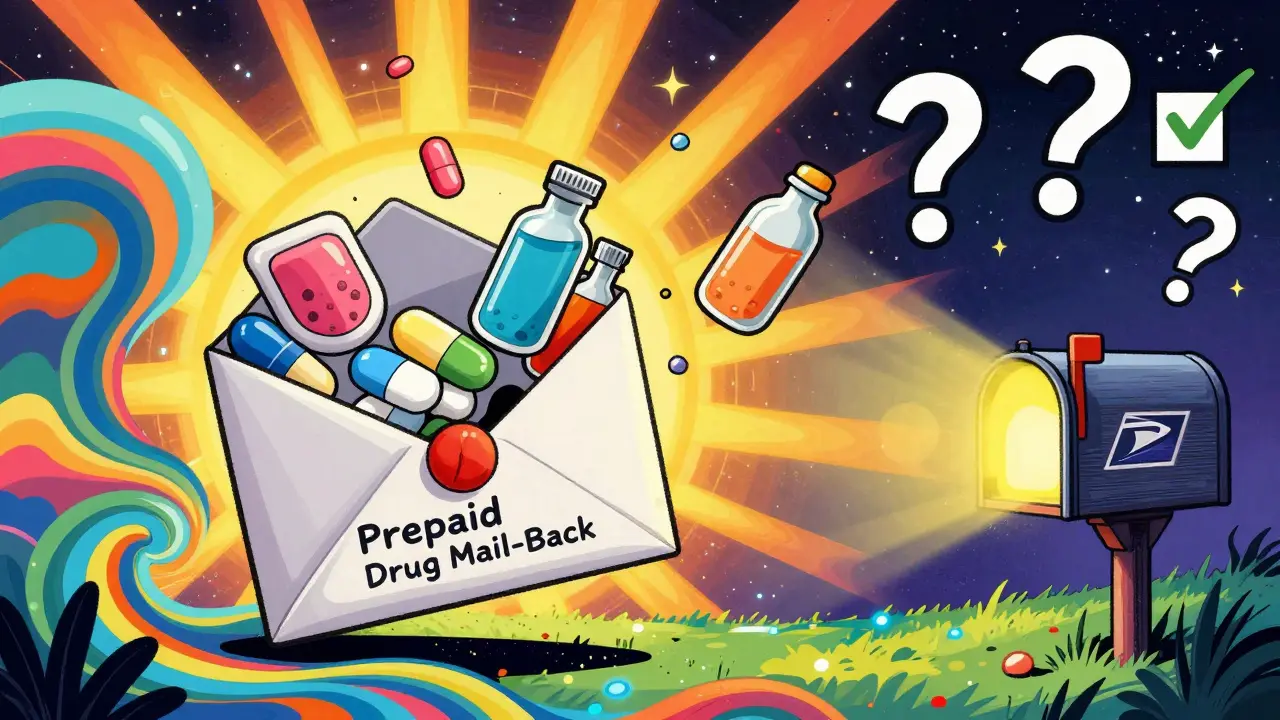
Every year, millions of unused or expired pills sit in bathroom cabinets, kitchen drawers, and medicine chests across the U.S. Many people don’t know what to do with them-so they flush them, toss them in the trash, or just leave them there. But here’s the truth: medication disposal isn’t just a household chore. It’s a public health and environmental issue.
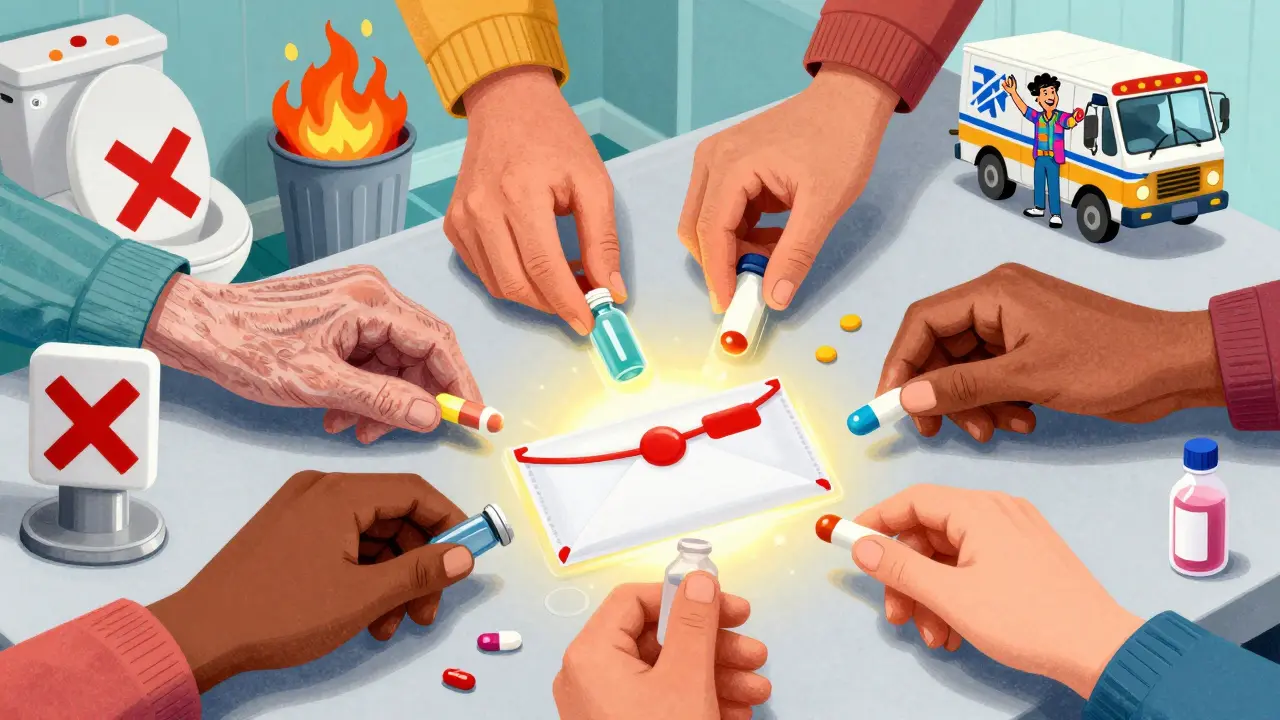
Flushing meds can contaminate water supplies. Throwing them in the trash leaves them vulnerable to theft, accidental poisoning, or environmental harm. That’s where prepaid drug mail-back envelopes come in. They’re not a new idea, but they’re becoming the most reliable, safe, and simple way to get rid of unwanted medications. And as of March 31, 2025, a major government-backed program will expand access even further.
How Prepaid Drug Mail-Back Envelopes Work
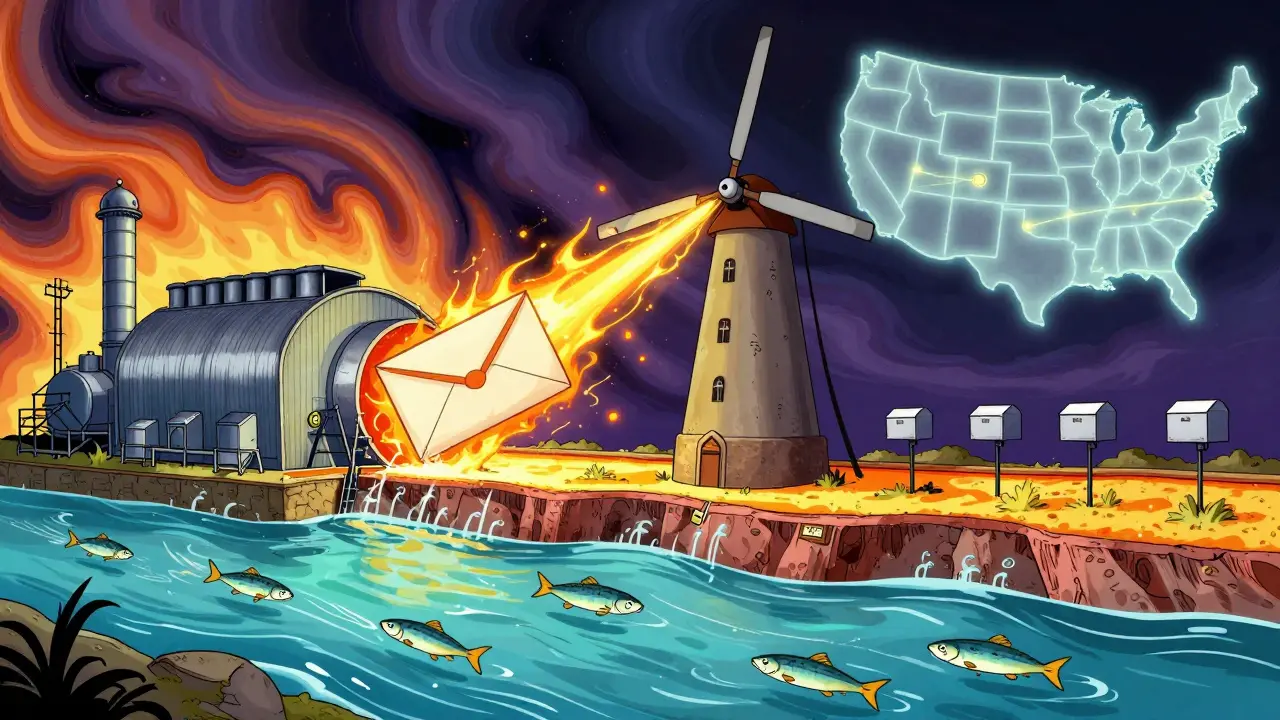
These envelopes are simple: you get one, fill it with old or unused medications, seal it, and drop it in any U.S. Postal Service mailbox. That’s it. No trips to a pharmacy, no waiting in line, no need to find a drop-off location. The envelope is prepaid, so you don’t pay postage. It’s also tamper-evident, meaning once sealed, it can’t be opened without leaving clear signs. The contents are then shipped to a DEA-registered facility and destroyed by high-temperature incineration-no landfills, no recycling, no risk of reuse.
Most providers follow the same four-step process:
- Order your envelope-online or from a participating pharmacy.
- Fill it-add expired pills, liquids, patches, or over-the-counter meds (within limits).
- Seal and mail-use the provided adhesive strip and drop it in a USPS box.
- Track it-some services let you check online when it was received and destroyed.
The whole thing takes less than five minutes. No special tools. No training. Just a sealed envelope and a mailbox.
What You Can and Can’t Put In
Not everything goes in these envelopes. The rules are strict for safety and legal reasons.
Accepted items:
- Expired or unused prescription drugs (including opioids, antibiotics, painkillers)
- Over-the-counter meds (ibuprofen, antacids, cold medicine)
- Pet medications
- Medication samples
- Liquids and lotions (up to 4 ounces total)
- Patches (like nicotine or fentanyl patches)
What’s NOT allowed:
- Needles, syringes, or sharps (these require special disposal containers)
- Aerosols or inhalers (they’re pressurized and can explode)
- Illicit drugs (like heroin or meth)
- Controlled substances not prescribed to you
- Non-medical items (bottles, packaging, batteries, alcohol)
If you have sharps or inhalers, you’ll need separate programs. Some states, like California, offer special mail-back kits for inhalers. But for regular pills and liquids? The standard envelope works.
Why This Method Is Better Than the Alternatives
People used to flush meds because it felt easy. But the EPA estimates that over 90% of pharmaceuticals in waterways come from improper disposal. Even small amounts of antibiotics, hormones, or antidepressants can disrupt aquatic life and make their way into drinking water.
Throwing meds in the trash is risky too. Trash collectors, kids, pets, or even people looking for drugs can find them. The DEA reports that nearly half of misused prescription drugs come from home medicine cabinets.
Mail-back envelopes solve both problems. They’re secure, anonymous, and environmentally sound. The incineration process destroys the drugs completely and captures energy-some providers even partner with waste-to-energy facilities that turn the waste into electricity.
The FDA calls mail-back programs “one of the best ways to safely dispose of unused or expired prescription and nonprescription medicines.” That’s not marketing-it’s federal guidance.
Who Offers These Envelopes?
There are several companies running these programs, each with slight differences:
- Mail Back Meds sells 3-pack, 50-pack, and 250-pack options. Their website lets you track your envelope from mailing to destruction.
- Stericycle’s Seal&Send focuses on organizations-pharmacies, clinics, nursing homes. They offer reporting tools to show how many envelopes were collected and destroyed.
- American Rx Group emphasizes waste-to-energy conversion and says their process is legal in all 50 states with no hidden fees.
- The Opioid Analgesic REMS Program (launching March 31, 2025) will provide free envelopes specifically for opioid painkillers. Pharmacies that fill these prescriptions will be required to offer them.
You can buy these envelopes online, or pick them up at some pharmacies. Not every pharmacy participates yet, so it’s worth asking your pharmacist. The Drug Takeback Solutions Foundation has a searchable map to help you find nearby sources.
What to Do Before You Mail It
A few small steps make the process smoother and safer:
- Remove pills from their original bottles. The bottle labels have your name, address, and prescription details. Put the pills directly into the envelope.
- If you leave them in the bottle, scratch out all personal information with a marker or razor. The FDA recommends this as an extra precaution.
- Don’t mix different types of meds in one envelope if you’re using multiple envelopes-just keep it simple.
- Never take a filled envelope to a pharmacy, police station, or hospital. Those places don’t accept them. Only the USPS does.
Some services provide special orange tape to seal the envelope. Use it. Don’t use duct tape or regular tape. The tamper-evident seal only works if you use what’s provided.
Why This Matters for Public Health
Every year, the DEA collects over a million pounds of unused drugs during National Prescription Drug Take Back Days. That’s just one event. Mail-back envelopes make disposal possible year-round, for people who can’t drive to a drop-off site, don’t have time, or live in rural areas.
For seniors, people with mobility issues, or families with young children, this system is a lifeline. It removes the risk of accidental overdose or addiction from old prescriptions. It also helps prevent drug diversion-when someone steals pills from a neighbor’s medicine cabinet.
And environmentally? It’s a win. The EPA says proper disposal prevents pharmaceutical pollution. That means cleaner water, healthier fish, and less risk of drug residues entering our food and drinking water.
Limitations and Challenges
It’s not perfect. Not every pharmacy offers envelopes. Some rural areas have limited access. And while the envelopes are cheap (often under $5 each), they’re not always free-unless you’re getting one through the new opioid program.
There’s also confusion about what can go in. A lot of people try to put in inhalers or needles. Those require separate handling. If you’re unsure, check the provider’s website before you pack.
And while the system works nationwide, there’s no single federal standard yet. Different companies use different packaging, tracking, and disposal methods. That’s changing, but it’s still something to be aware of.
What’s Coming Next
Starting March 31, 2025, every pharmacy that prescribes opioid painkillers will be required to offer free mail-back envelopes. That’s a game-changer. It means millions more people will have access to safe disposal without even having to ask.
Some companies are already expanding. Sharps Inc. and DisposeRx are developing specialized envelopes for inhalers and injectables. The goal is to make disposal as easy for every type of medication as it is for pills.
Eventually, this could become standard practice-like recycling. Imagine a future where you get a mail-back envelope every time you fill a new prescription. It’s not far off.
Final Thoughts
Prepaid drug mail-back envelopes aren’t magic. But they’re one of the few solutions that actually work. They’re safe, simple, legal, and effective. You don’t need to be an expert to use them. You don’t need to drive anywhere. You just need to take five minutes and drop a sealed envelope in the mailbox.
If you have old meds sitting around, don’t ignore them. Don’t flush them. Don’t toss them. Use a mail-back envelope. It’s the right thing to do-for your family, your community, and the environment.
Can I use a prepaid mail-back envelope for any type of medication?
Yes-for most prescription and over-the-counter pills, liquids, and patches. You can include pet meds and medication samples too. But you cannot put in needles, inhalers, aerosols, illegal drugs, or non-medical items. Always check the provider’s guidelines before packing.
Do I need to remove pills from their original bottles?
It’s strongly recommended. Original bottles have your name, address, and prescription details. Removing pills and placing them directly in the envelope protects your privacy. If you leave them in the bottle, scratch out all personal info with a permanent marker.
Can I drop off a filled envelope at my pharmacy?
No. Pharmacies, police stations, and hospitals do not accept filled mail-back envelopes. These are designed to be mailed through the U.S. Postal Service. Taking them to a local location can cause delays or rejection. Only use a USPS mailbox.
How much medication can I put in one envelope?
Most envelopes allow up to 8 ounces (about half a pound) of medication. Liquids and lotions are limited to 4 ounces total. If you have more than that, use a second envelope. Don’t overfill-it can break the seal.
Are these envelopes free?
They usually cost a few dollars each if you buy them online. But starting March 31, 2025, pharmacies will offer free envelopes specifically for opioid painkillers as part of a federal program. Some organizations and pharmacies may also give them away for free-ask your pharmacist.
What happens to the meds after I mail them?
The envelope is shipped to a DEA-registered facility and destroyed by high-temperature incineration. This ensures the drugs are completely eliminated and never end up in landfills or water supplies. Some providers partner with waste-to-energy plants that turn the process into electricity.
Is this service available in every state?
Yes. The mail-back system is legal and operational in all 50 states. You can use any U.S. Postal Service mailbox regardless of where you live. However, not every pharmacy stocks the envelopes, so you may need to order them online if your local pharmacy doesn’t offer them.
Can I use these envelopes for expired vitamins or supplements?
Yes. Most programs accept over-the-counter supplements, including vitamins, minerals, and herbal products-as long as they’re not in liquid form beyond the 4-ounce limit. Always check the provider’s list of accepted items if you’re unsure.
Sam Dickison
February 7, 2026 AT 15:38Just used one of these envelopes last week-my grandma’s stash of leftover oxycodone was sitting in her drawer for 3 years. Didn’t even know this was a thing until my pharmacist handed me a free one. Took 30 seconds. Mailbox. Done. No more guilt about flushing pills. This should be standard issue with every Rx.
Karianne Jackson
February 8, 2026 AT 17:14OMG I JUST REALIZED I’VE BEEN THROWING AWAY MY EXPIRED MEDS IN THE TRASH FOR 10 YEARS 😱
Tom Forwood
February 10, 2026 AT 01:04Y’all need to chill. This ain’t rocket science. I live in rural Alabama, no pharmacy within 40 miles, but I ordered a 5-pack online for $12. Got ‘em in 3 days. Dropped ‘em in the mailbox like a postcard. Boom. Done. And yeah, I put my cat’s flea meds in there too. No one’s judging. The system works. Stop overthinking it.
Jacob den Hollander
February 11, 2026 AT 06:50I just want to say… thank you. Seriously. My mom’s a senior with arthritis, and she used to cry because she couldn’t drive to a drop-off site. This envelope? It’s dignity. It’s safety. It’s peace of mind. I’ve sent three so far. Each one felt like I was doing something real. And yeah, I scratched out every label like they said. Little things matter. This is one of those.
Andrew Jackson
February 11, 2026 AT 10:36While the logistical utility of this system is undeniable, one must consider the broader philosophical implications: the normalization of pharmaceutical dependency, the commodification of health, and the erosion of personal responsibility through institutionalized disposal mechanisms. This is not progress-it is institutionalized surrender to pharmacological culture. The state now facilitates the safe disposal of dependency rather than addressing its root causes.
Frank Baumann
February 12, 2026 AT 09:44Look, I’ve been in this game for 20 years-pharmacist, ER tech, you name it-and I’ve seen what happens when people flush meds or leave them lying around. I’ve pulled kids out of comas because their grandpa’s painkillers were in a candy jar. I’ve seen fish with tumors in rivers downstream from hospitals. This envelope? It’s not sexy. But it’s the only thing that actually works. And don’t even get me started on people trying to put inhalers in them-NO. Just no. You need a separate kit. I’ve written letters to the FDA about this. It’s a mess. But this? This is a start. A damn good start.
Tasha Lake
February 14, 2026 AT 09:08Quick question for the experts: if I have a 3-month supply of a controlled substance and only used 20% of it, is it still okay to mail it back? Or does the DEA care about the quantity? I’m just trying to avoid any legal gray zones. Also, can I combine my husband’s unused antidepressants with mine in the same envelope? I don’t want to overfill it but also don’t want to waste envelopes.
Brett Pouser
February 16, 2026 AT 04:50My cousin in Alaska used this last winter. Snow was 3 feet deep. No way she was driving 80 miles to a drop-off. She ordered the envelope, stuffed it with her dad’s old blood pressure meds, and mailed it from her porch. Took 5 days. Got a confirmation email. She said it felt like a tiny act of rebellion against the system. I love that. We need more of this. Simple. Quiet. Effective.
Andy Cortez
February 16, 2026 AT 17:31Y’all are acting like this is some revolutionary breakthrough. Newsflash: this is just the government’s way of making you feel better about hoarding pills. They don’t care if you flush ‘em-they just want you to think you’re doing the right thing. And don’t even get me started on the waste-to-energy BS. Incineration emits dioxins. You think that’s clean? Nah. This is greenwashing with a USPS stamp.
Joseph Charles Colin
February 17, 2026 AT 22:19For those asking about quantities: the envelopes are rated for up to 8 oz by weight, not volume. A typical bottle of 30 10mg pills weighs ~1.2 oz. So you can fit 5-6 bottles easily. Liquids are the real bottleneck-4 oz max total. That’s like two 2oz bottles. And yes, you can mix meds from different people in one envelope. The DEA doesn’t track ownership-only the total mass and destruction certification. Just don’t overpack. The seal breaks. And no, vitamins are fine. They’re not drugs under the Controlled Substances Act. Check the provider’s FAQ. They usually list it.
Elan Ricarte
February 18, 2026 AT 11:03Let’s be real: this whole system exists because Big Pharma got caught red-handed dumping millions of pills into landfills. They didn’t want to take responsibility, so they lobbied for this ‘convenient’ solution. Now they make money selling the envelopes. The government’s happy because they look proactive. Meanwhile, the real issue-overprescribing, insurance loopholes, price gouging-is still sitting on the shelf. This is a Band-Aid on a hemorrhage. But hey, at least we’re not flushing anymore. Progress? Maybe. But don’t call it justice.
Scott Conner
February 20, 2026 AT 03:10so uhhh i just mailed one but i forgot to take the pills outta the bottle… is that bad? like can they still read my info? should i call someone? i feel so dumb