
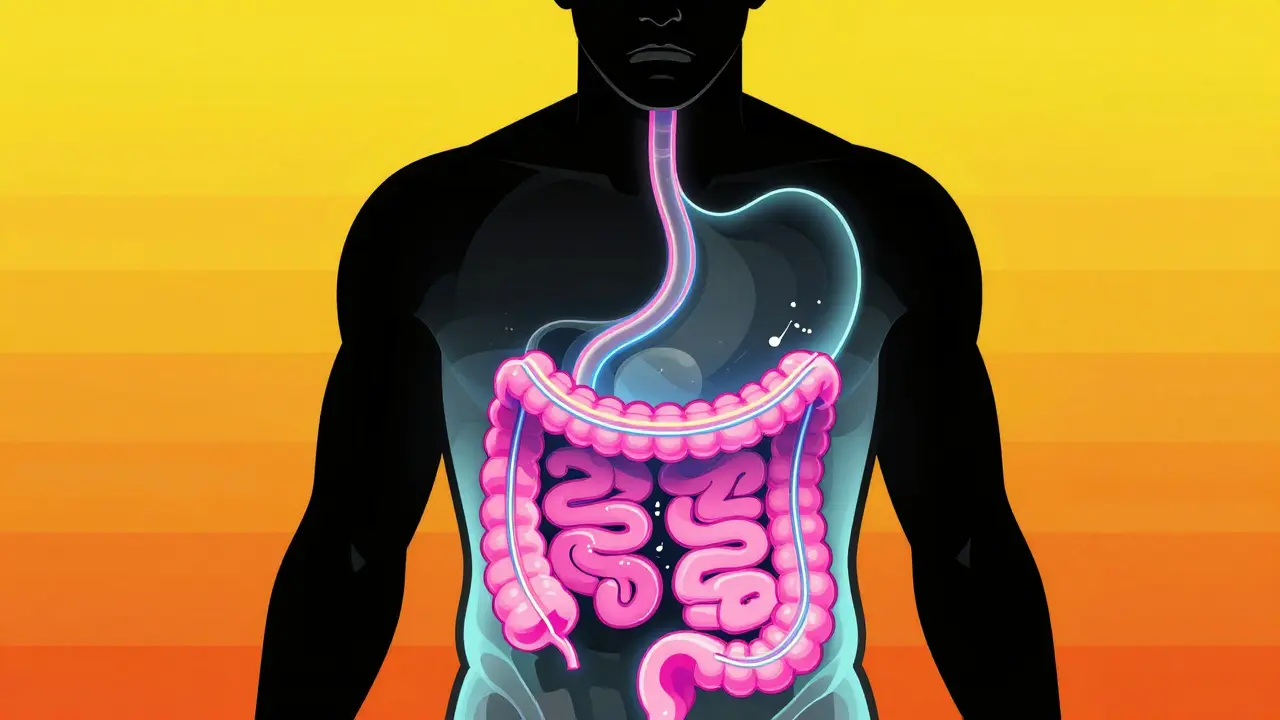
Have you ever felt like your body is holding onto something it desperately needs to let go? You aren't alone. Constipation is a common gastrointestinal condition characterized by difficult, infrequent, or incomplete bowel movements, typically defined as fewer than three stools per week. It’s not just an annoyance; for millions of people, it’s a daily struggle that affects quality of life, energy levels, and even mental health. In the United States alone, over 2.5 million people seek medical care annually for this issue. But here’s the thing most people miss: constipation isn’t one single problem. It’s a symptom with multiple underlying causes, ranging from simple dietary gaps to complex neurological disorders. Understanding which type you have is the first step to fixing it permanently.
Understanding What’s Happening Inside Your Gut
To manage constipation effectively, you need to understand why it happens. Normally, waste moves through your colon in 24 to 72 hours. During this time, your colon absorbs water from the waste. If things move too slowly, too much water gets absorbed. The result? Hard, dry, painful stools. This delay can happen because your colon muscles aren’t contracting properly (slow transit), because your pelvic floor muscles are fighting against you during evacuation (defecatory disorder), or simply because your diet lacks the bulk needed to push things along (functional constipation).
Medical professionals categorize these issues to determine the right treatment. For instance, normal transit constipation accounts for about 60% of chronic cases. These patients have normal movement speed but still struggle with straining or hard stools. On the other hand, slow transit constipation involves actual delays in colonic movement, taking longer than 72 hours. Then there are defecatory disorders, where the coordination between your rectum and pelvic floor muscles breaks down. Imagine trying to open a door while someone else is pulling it shut-that’s what happens when pelvic floor muscles don’t relax correctly during a bowel movement.
The Real Culprits Behind Constipation
Most people blame their lack of fiber, and while that’s often part of the puzzle, it’s rarely the whole story. Constipation is multifactorial, meaning several factors usually combine to create the problem. Let’s look at the primary drivers.
- Dietary Shortfalls: The average adult consumes only 15g of fiber daily, far below the recommended 25-30g. Fiber acts like a sponge, holding water and adding bulk to stool. Without it, stool becomes small and hard.
- Dehydration: Water is essential for softening stool. If you increase fiber without increasing water intake, you can actually make constipation worse. Aim for 1.5 to 2 liters of water daily, plus an extra 250-500ml for every 5g of supplemental fiber.
- Medications: Many common drugs cause constipation as a side effect. Opioids are notorious, causing issues in 40-95% of users. Calcium channel blockers (like nifedipine) affect 10-20% of users, and tricyclic antidepressants impact 20-30%. Even antacids containing aluminum or calcium can slow things down.
- Medical Conditions: Diabetes affects nearly 60% of patients with constipation due to nerve damage affecting gut motility. Hypothyroidism slows metabolism and gut movement. Neurological conditions like Parkinson’s disease (affecting 50-80% of patients) and Multiple Sclerosis also severely impact bowel function.
- Lifestyle Factors: Ignoring the urge to go weakens the natural reflexes of your bowel. Over time, your rectum becomes less sensitive to the presence of stool. Lack of physical activity also reduces intestinal muscle tone.
Risk factors also play a significant role. Women are more likely to experience constipation than men, partly due to hormonal fluctuations and pelvic anatomy. Age is another factor; prevalence increases by about 1.5% per year after age 60. Chronic conditions like renal failure, COPD, and ischemic heart disease also raise the odds significantly.

Navigating the World of Laxatives
When lifestyle changes aren’t enough, laxatives become necessary. However, not all laxatives work the same way, and using the wrong one can lead to dependency or worsening symptoms. Here is a breakdown of the five main types, how they work, and who they’re best for.
| Type | Mechanism of Action | Examples | Best For | Risks/Side Effects |
|---|---|---|---|---|
| Bulk-Forming | Absorbs water to increase stool bulk and stimulate peristalsis | Psyllium, Methylcellulose | Normal transit constipation, long-term maintenance | Bloating if not taken with enough water; risk of obstruction |
| Osmotic | Draws water into the colon to soften stool | Polyethylene glycol (PEG 3350), Lactulose, Magnesium Hydroxide | First-line treatment for most types; safe for long-term use | Mild bloating, gas; electrolyte imbalance with excessive use |
| Stimulant | Increases intestinal muscle contractions | Senna, Bisacodyl | Short-term relief (2-3 weeks); occasional use | Cramping, diarrhea; risk of cathartic colon with prolonged use |
| Stool Softeners | Lowers surface tension of stool to allow water absorption | Docusate Sodium | Patients who should avoid straining (e.g., post-surgery) | Limited efficacy; often no better than placebo |
| Prescription Secretagogues | Activates chloride channels to increase fluid secretion | Lubiprostone, Linaclotide, Plecanatide | Refractory cases, IBS-C | Diarrhea, abdominal pain; higher cost |
Bulk-forming laxatives like psyllium are often the first recommendation. They work naturally by mimicking fiber. However, they require patience and plenty of water. If you take them with a sip of juice, you might create a blockage instead of relieving one. Drink at least 8 ounces of water with each dose.
Osmotic laxatives, particularly Polyethylene Glycol (PEG 3350), are considered the gold standard for first-line treatment. They draw water into the colon without stimulating nerves, making them gentle and effective for 65-75% of users. A typical dose is 17g daily. They are safe for long-term use, unlike stimulants.
Stimulant laxatives such as senna or bisacodyl force the intestines to contract. While effective for quick relief (70-80% response rate), they carry risks. Using them for more than 12 weeks can lead to "cathartic colon," a condition where the colon loses its ability to move stool on its own. Use these sparingly.
Prescription medications like lubiprostone (Amitiza) and linaclotide (Linzess) are reserved for refractory cases. They work by increasing fluid secretion in the intestines through specific ion channels. These are highly effective for Irritable Bowel Syndrome with Constipation (IBS-C) but come with a higher price tag and potential side effects like diarrhea.
Building a Sustainable Long-Term Management Plan
Taking a laxative once doesn’t fix the root cause. Long-term management requires a holistic approach that addresses diet, behavior, and potentially specialized therapy. Here is a step-by-step protocol to regain control.
1. Optimize Your Diet Gradually
Don’t jump from 15g to 30g of fiber overnight. Rapid increases cause bloating in 30-40% of patients. Instead, add 5g of fiber every 3-4 days. Focus on soluble fiber sources like oats, beans, apples, and psyllium husk. Soluble fiber forms a gel-like substance that softens stool more effectively than insoluble fiber alone.
2. Master Hydration
Fiber without water is like concrete without sand-it hardens. Ensure you are drinking 1.5 to 2 liters of water daily. If you are supplementing with fiber, add an extra 250-500ml for every 5g of added fiber. Herbal teas and soups count toward this total.
3. Leverage Behavioral Habits
Your body has natural rhythms. The gastrocolonic reflex is strongest after meals, especially breakfast. Try sitting on the toilet for 10-15 minutes after breakfast, regardless of whether you feel the urge immediately. This trains your body to respond to the signal.
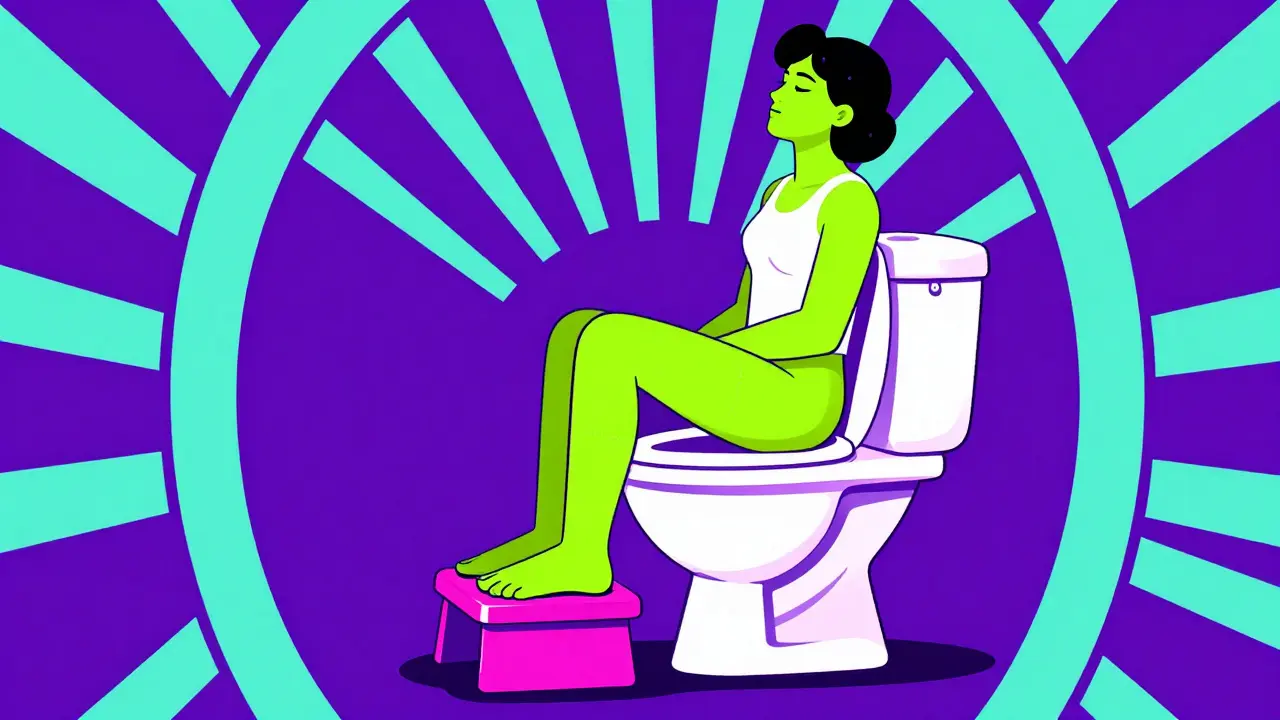
Position matters immensely. Most modern toilets place your hips at a 90-degree angle, which kinks the rectum. Using a small footstool to elevate your feet allows your hips to flex to 35 degrees, straightening the anal canal and reducing straining by up to 60%. This simple change can be game-changing.
4. Consider Biofeedback Therapy
If you have pelvic floor dyssynergia (where muscles tighten instead of relaxing), laxatives won’t solve the core issue. Biofeedback therapy uses sensors to teach you how to coordinate your pelvic floor muscles. Studies show success rates of 70-80% after 6-8 weekly sessions. It’s non-invasive and highly effective for defecatory disorders.
5. Medication Adherence and Expectations
Be realistic about timelines. Osmotic laxatives take 48-72 hours to work fully. Don’t double the dose because nothing happened in 24 hours. Consistency is key. Only 45% of patients consistently take prescribed laxatives, leading to recurring flare-ups. Set reminders and treat it like any other medication.
When to See a Doctor
While constipation is common, certain signs indicate a more serious underlying issue. The American College of Gastroenterology recommends immediate investigation if you experience:
- Unintentional weight loss of 10 pounds or more
- Rectal bleeding or blood in the stool
- Change in bowel habits lasting more than 6 weeks
- Family history of colorectal cancer
- Severe abdominal pain or vomiting
If you fall into these categories, do not self-treat. You may need diagnostic testing such as colonoscopy, anorectal manometry, or colonic transit studies to rule out structural abnormalities, tumors, or severe motility disorders.
Future Directions and Emerging Treatments
Science is catching up with our struggles. Recent FDA approvals include tenapanor (Ibsrela), which shows a 45% adequate relief rate for IBS-C. Researchers are also diving into the microbiome. The Microbiome Constipation Project, funded by the NIH, has found that Bacteroides uniformis bacteria are depleted in 68% of constipation patients. This opens the door for targeted probiotic therapies rather than broad-spectrum solutions.
Additionally, AI-powered analytics are emerging. Apps that analyze defecation patterns via smartphone cameras can now identify pelvic floor dysfunction with 85% accuracy. This democratizes access to specialized diagnostics, allowing earlier intervention before chronic issues set in.
Managing constipation isn’t about finding a magic pill. It’s about understanding your unique physiology, adjusting your lifestyle with precision, and knowing when to seek professional help. With the right combination of fiber, hydration, posture, and possibly targeted medication, regularity is absolutely achievable.
How long does it take for osmotic laxatives to work?
Osmotic laxatives like PEG 3350 typically take 48 to 72 hours to produce a full bowel movement. They work by drawing water into the colon, which is a gradual process. Do not increase the dose if you do not see results within 24 hours, as this can lead to diarrhea and cramping later.
Can laxatives cause dependency?
Yes, specifically stimulant laxatives (like senna or bisacodyl) can lead to dependency if used for more than 12 weeks. This condition, known as cathartic colon, means the colon loses its natural ability to contract. Bulk-forming and osmotic laxatives are generally safe for long-term use and do not cause dependency.
What is the best position for bowel movements?
The optimal position is squatting, which achieves a 35-degree hip flexion. Since most toilets sit you at 90 degrees, use a footstool to elevate your feet. This straightens the anorectal angle, reducing the need to strain and allowing gravity to assist in evacuation.
Why does my doctor recommend biofeedback therapy?
Biofeedback is recommended if you have pelvic floor dyssynergia, a condition where your pelvic floor muscles tighten instead of relaxing during defecation. Laxatives cannot fix this mechanical issue. Biofeedback teaches you to coordinate these muscles, with success rates of 70-80% after 6-8 sessions.
Are prescription laxatives like Linzess worth the cost?
For patients with refractory constipation or IBS-C who haven’t responded to standard treatments, yes. Drugs like linaclotide (Linzess) and lubiprostone (Amitiza) target specific cellular mechanisms to increase fluid secretion. They offer significant relief for 40-60% of patients but are expensive and usually covered by insurance only after other options fail.
How much fiber should I eat daily?
Adults should aim for 25-30 grams of fiber daily. Increase your intake gradually by 5 grams every few days to avoid bloating. Focus on soluble fiber sources like oats, beans, and fruits, which are more effective at softening stool than insoluble fiber alone.
Spencer Farrell
May 4, 2026 AT 19:34It is fundamentally imperative to understand that the physiological mechanisms governing defecatory disorders are often misinterpreted by the layperson. The distinction between slow-transit constipation and dyssynergic defecation is not merely semantic; it is clinically distinct. When one fails to differentiate these two, treatment becomes not only ineffective but potentially counterproductive. Biofeedback therapy, for instance, is irrelevant for those with primary motility issues, yet it remains the gold standard for pelvic floor dyssynergia. One must approach this subject with the rigor of a scientific inquiry rather than the casual dismissal typical of internet discourse.
Mikaela -anonymous 😏
May 6, 2026 AT 07:53Oh, look at you, Spencer, playing doctor again! 🙄 You really think we care about your 'scientific inquiry' when half the population is just trying to survive the day without exploding? It’s so dramatic how you treat a bowel movement like it’s the final exam for medical school. Newsflash: some of us just want to know if eating an apple will fix our lives or if we need to buy a $50 footstool from Amazon. Keep breathing through that nose while you type your little essays. 😏
Kelly Feehely
May 7, 2026 AT 17:11You people are being fed lies by the pharmaceutical industry! They want you on Linzess because they own the FDA. I’ve seen the documents. The real cure is alkaline water and avoiding all processed foods, which are laced with toxins designed to shut down your gut flora. Don’t let them tell you biofeedback works; it’s just another way to keep you compliant and weak. Wake up!
princess lovearies
May 7, 2026 AT 21:14I feel like we’re all just looking for a bit of peace in our bodies, honestly. It’s wild how much stress we put ourselves over something as natural as this. Maybe instead of fighting it, we can try to listen to what our bodies are saying? Like, seriously, just sitting there with a footstool sounds kind of zen if you think about it. Let’s be gentle with ourselves, okay?
Allison Maier
May 8, 2026 AT 02:10this article is too long nobody reads this lol :/
kelvin villa saab
May 9, 2026 AT 06:13i dont get why everyone is so stressed about poop. its just waste. maybe if u drank more water and ate less trash it would go away. but nooo, gotta have fancy pills and special chairs. rich people problems. i just squat in the woods and its fine. why cant u do that? its simple really. stop overthinking it.
Kartik Agarwal
May 9, 2026 AT 17:50Let us collectively acknowledge the critical role of microbiome modulation in addressing refractory cases of functional constipation. While dietary fiber is foundational, the specific depletion of Bacteroides uniformis suggests a targeted probiotic intervention may be superior to broad-spectrum approaches. We must encourage our community to engage in informed dialogue regarding osmotic laxatives versus stimulant dependency. It is essential to foster an environment where individuals feel empowered to discuss their gastrointestinal health without stigma. Let us support each other in optimizing our digestive wellness through evidence-based practices.
Jimmy Crocker
May 11, 2026 AT 01:34The sheer audacity of suggesting that modern toilet design is flawed is quite amusing, coming from those who likely spend more time scrolling than actually reading. The ergonomic implications of the 35-degree hip flexion are well-documented in biomechanical literature, yet here we are, debating the merits of a footstool as if it were a philosophical treatise on liberty. One might argue that the complexity of human physiology demands a more nuanced approach than simply 'eating more beans,' but apparently, nuance is lost on the masses. It is a tragedy of intellectual decline.
Robert Cowley
May 12, 2026 AT 22:48Honestly? This whole post is garbage. You’re telling me I need to sit on a stool for 15 minutes after breakfast? What am I, a robot? And don’t get me started on the 'biofeedback' nonsense. That’s just snake oil for people who can’t afford surgery. I took senna for three years and I’m fine, thanks. Your 'expert' advice is just fear-mongering to sell ads. Typical. 👎
Ken Baldridge
May 14, 2026 AT 22:22Whoa, easy there, Robert. Let’s not throw stones before we build bridges. The data on cathartic colon is pretty solid, man. It’s not about scaring anyone; it’s about understanding the neurogastroenterology behind it. If you’ve been using stimulants long-term, your enteric nervous system might actually be desensitized. Have you considered switching to PEG 3350? It’s a game-changer for many. Let’s keep the conversation constructive, yeah?
Bradley Gusick
May 15, 2026 AT 07:21This is exactly what happens when you outsource your health to bureaucrats and foreign drug companies. Our ancestors didn’t have constipation because they lived correctly. Now we have 'IBS-C' and 'dyssynergia'-made-up diseases to keep us dependent on the system. The government wants you sick so you can’t fight back. Get off the meds, eat meat, and stop letting the elites dictate your biology. It’s a conspiracy against natural freedom.
Leah Sentz
May 15, 2026 AT 10:31Ugh, Bradley, always with the doom and gloom! 😡 Can’t we just talk about pooping without bringing up the government?! I hate how aggressive you are. It ruins my vibe. I just want to know if psyllium husk tastes bad or not. Stop yelling at the comments section. It’s giving major anxiety vibes. 🤬🚫
Sarah Mifsud
May 17, 2026 AT 08:16I totally get where everyone is coming from. It’s confusing out there. For me, adding the footstool helped a ton, even though it felt silly at first. Also, drinking more water is key, but make sure you add salt too, otherwise you just pee it out. Hope this helps someone! Sorry for typos, typing fast. 💕