
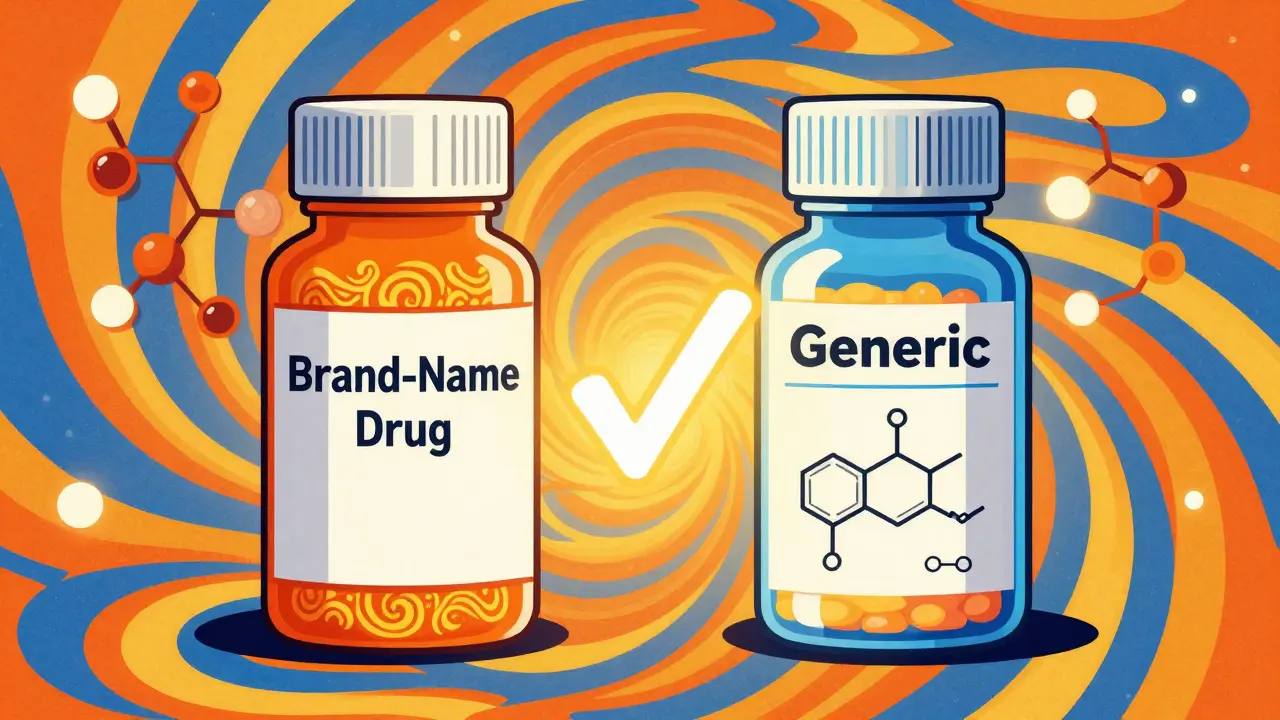
When your doctor talks about switching from a brand-name drug to a cheaper version, you might hear the words generic or biosimilar. At first glance, they sound the same-both are cheaper, both are approved, both are supposed to work just as well. But they’re not the same. And understanding the difference could save you money, reduce side effects, or even keep your treatment on track.
What’s the real difference between generics and biosimilars?
Generics are copies of small-molecule drugs-think pills like metformin for diabetes or atorvastatin for cholesterol. These drugs are made from simple chemical compounds. Because the chemistry is straightforward, scientists can recreate them exactly. A generic version of Lipitor isn’t just similar-it’s chemically identical to the original. The FDA requires proof that it delivers the same amount of medicine into your bloodstream at the same rate. That’s called bioequivalence.
Biosimilars, on the other hand, are copies of biologic drugs-large, complex proteins made from living cells. Think of drugs like Humira for rheumatoid arthritis, Enbrel for psoriasis, or Herceptin for breast cancer. These aren’t made in a lab with chemicals. They’re grown in bioreactors using living cells, like Chinese hamster ovary cells. Even tiny changes in temperature, nutrients, or handling during production can alter the final product. That’s why a biosimilar isn’t identical to the original. It’s highly similar, with no clinically meaningful differences in safety or effectiveness.
That’s the core distinction: generics are exact copies. Biosimilars are near-identical twins.
Why does this matter for your treatment?
Cost is the biggest reason both exist. Generics cut prices by 80-85% compared to brand-name drugs. If you’re paying $300 a month for a brand-name statin, the generic might cost $20. That’s huge.
Biosimilars don’t save as much-typically 15-20% off the price of the original biologic. But here’s the catch: those original biologics can cost $10,000 to $20,000 a year. A 20% discount on $15,000 is still $3,000 saved. That’s life-changing for people on long-term treatments.
But cost isn’t the only factor. Some drugs don’t have generics at all because they’re too complex. That’s where biosimilars step in. You can’t make a generic version of a biologic like Humira-it’s not a molecule you can mix in a beaker. You need a living system to produce it. That’s why biosimilars are the only affordable option for millions of people with autoimmune diseases or cancer.
Can you switch between them safely?
Switching from a brand-name drug to a generic is routine. In 49 U.S. states, pharmacists can swap them automatically unless the doctor says “dispense as written.” No extra approval. No paperwork. You just get a cheaper pill with the same effect.
Switching to a biosimilar? It’s more complicated. Only biosimilars labeled as “interchangeable” can be swapped at the pharmacy without the doctor’s permission. As of early 2026, only a handful of biosimilars have that status-like Semglee (an interchangeable insulin) and Cyltezo (for Humira). Even then, 28 states require the pharmacist to notify your doctor within 72 hours.
And here’s something patients often worry about: switching back and forth between the original and the biosimilar. Does that increase side effects? A 2022 review of 128 studies involving over 38,000 patients found no increase in adverse events when switching between reference infliximab and its biosimilar. The FDA’s own safety data shows biosimilars have nearly identical side effect rates to the originals.
Still, some patients feel uneasy. One rheumatoid arthritis patient on PatientsLikeMe wrote: “I was scared to switch. My doctor spent 20 minutes explaining how it’s made. That made all the difference.” Education matters.
Which one is right for your condition?
Not all conditions have both options. Here’s how to think about it:
- If you’re taking a pill for high blood pressure, diabetes, or depression-chances are, there’s a generic. Go with it. No reason not to.
- If you’re getting an injection for rheumatoid arthritis, Crohn’s disease, or psoriasis-you’re likely on a biologic. Your affordable option is a biosimilar, not a generic.
- If you’re getting chemotherapy for breast cancer or colon cancer, biosimilars like trastuzumab or bevacizumab are now widely used. A 2023 study found patients on biosimilar Herceptin had the same tumor response rates as those on the brand-name version.
There’s no benefit to sticking with a brand-name drug if a generic or biosimilar is available and approved for your condition. The science says they work the same.
What about storage, handling, and side effects?
Generics are usually stable at room temperature. You can keep them in your medicine cabinet. Biosimilars? Most need refrigeration (2-8°C). That’s why you’ll see them shipped in cold packs. If you’re traveling, you need to plan ahead.
Side effects? For generics, the risk profile is identical to the brand. For biosimilars, the main concern has been immunogenicity-your body reacting to the drug as if it’s foreign. But real-world data shows this risk is extremely low. The FDA’s adverse event database shows biosimilar infliximab had 0.12 adverse events per 100 patient-years. The original? 0.15. The difference is statistically meaningless.
One practical issue: biosimilar pens or auto-injectors sometimes look different from the original. A Reddit user in r/Pharmacy shared: “My grandma switched to Basaglar (insulin biosimilar). The pen was smaller. She kept loading it wrong. We had to go back to the pharmacy for a demo.” Device design matters. Always ask for a training session if your delivery method changes.
Why aren’t more people using biosimilars?
Despite the savings, adoption is still slow. In Europe, 65% of patients on biologics use biosimilars. In the U.S., it’s only 35%. Why?
- Patient fear: A 2022 survey found 42% of patients worried biosimilars wouldn’t work as well.
- Doctor unfamiliarity: Only 58% of non-specialist doctors felt confident prescribing them, according to the American Medical Association.
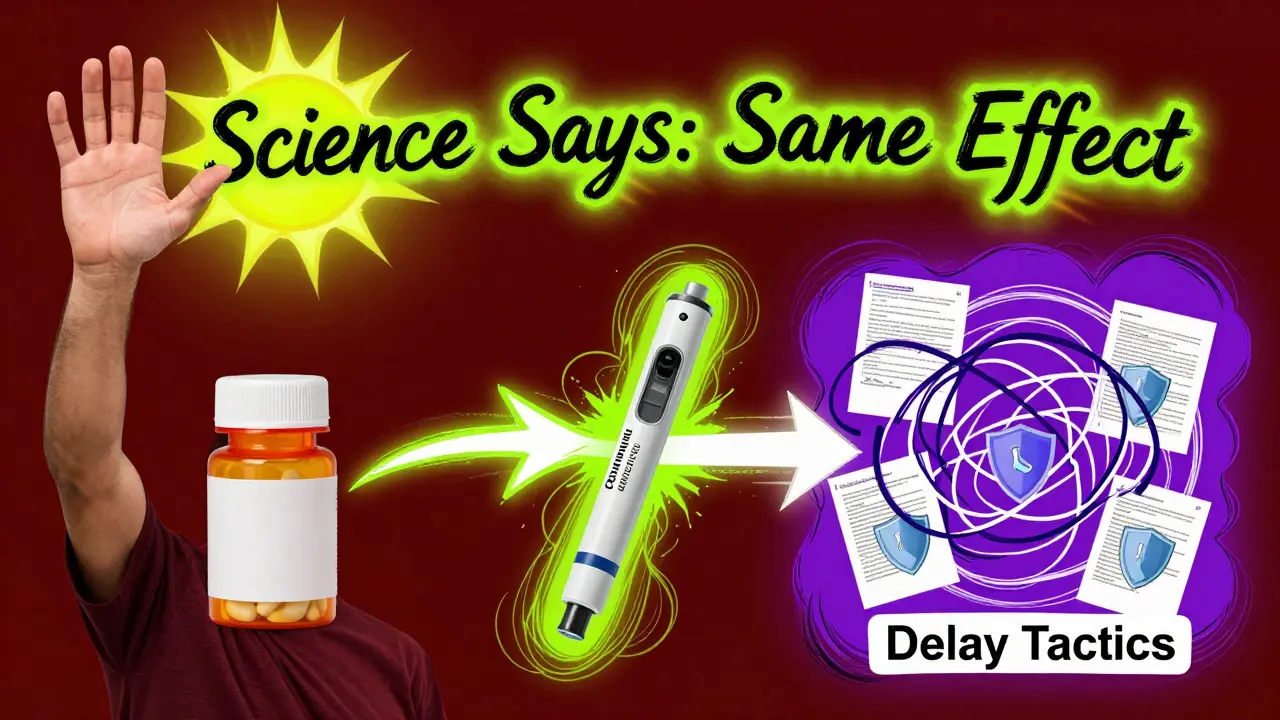
- Patent delays: Drugmakers use legal tactics to block biosimilars. A 2023 FTC report found an average of 144 patents filed per biologic drug-many of them trivial or repetitive-to delay competition.
- Insurance hurdles: Some insurers still require prior authorization for biosimilars, even when they’re approved. One oncology clinic reported 67% of biosimilar requests needed extra paperwork, compared to 42% for generics.
But things are changing. The Inflation Reduction Act of 2022 removed financial penalties for doctors who prescribe biosimilars in Medicare. That’s already boosting use. And by 2027, experts predict biosimilars will make up 45% of all biologic prescriptions-up from 22% today.
What should you do next?
Don’t assume your doctor knows all the options. Ask these questions:
- Is there a generic version of my current medication?
- If I’m on a biologic, is there an approved biosimilar?
- Is the biosimilar interchangeable? Can my pharmacist switch me without calling you?
- Will my insurance cover it? What’s my out-of-pocket cost?
- Will the delivery device be different? Can I get trained on it?
Don’t be afraid to ask for a printed summary of the differences. Many manufacturers-like Amgen and Pfizer-offer free educational materials for patients. The FDA’s Purple Book (for biosimilars) and Orange Book (for generics) are public resources too.
Bottom line: if a generic or biosimilar is available, it’s safe, effective, and worth considering. The science is solid. The savings are real. And with more options coming every year, you have more control over your care than ever before.
Janice Williams
February 3, 2026 AT 16:13While this article presents itself as an objective guide, I must point out that the FDA's definition of 'no clinically meaningful differences' is a legal loophole, not a scientific absolute. Biosimilars are not identical-they are approximations. And approximations in biologics can trigger immune responses that are not captured in short-term trials. I've seen patients develop neutralizing antibodies after switching, leading to complete loss of efficacy. This is not paranoia; it's documented in peer-reviewed journals. The pharmaceutical industry has a vested interest in promoting biosimilars to cut costs, not to ensure long-term safety.
Roshan Gudhe
February 4, 2026 AT 04:02There's a deeper philosophical question here: when we reduce complex biological systems to cost-saving equations, what are we truly optimizing? Life is not a chemistry lab. A cell line grown in a bioreactor is not a machine-it's a living, evolving system. Even if the final product passes regulatory benchmarks, the journey to get there is inherently variable. Perhaps the real issue isn't whether biosimilars work-but whether we've normalized a system that treats human biology as interchangeable parts. We need humility, not just data.
Rachel Kipps
February 5, 2026 AT 15:54i just wanted to say thank you for this clear explaination. i was so confused about the diffrence between generic and biosimilar. my doc just said 'its cheaper so we switch' and i was scared. now i feel a little better. also i noticed a typo in the 3rd paragraph 'bioreactors using living cells, like Chinese hamster ovary cells.' should be 'like chinese hamster ovary cells' (lowercase c). just sayin' 😅
Prajwal Manjunath Shanthappa
February 7, 2026 AT 12:20Wendy Lamb
February 8, 2026 AT 20:52Ed Mackey
February 10, 2026 AT 18:03my insurance denied my biosimilar because they said 'it's not interchangeable' even though the drug was listed as approved. had to call 3 times, send 2 letters, and finally my rheumatologist had to write a 5-page letter. i'm not mad, just exhausted. this system is broken. why does paperwork have to be harder than the science?
Alex LaVey
February 12, 2026 AT 18:00It's heartening to see how much progress has been made in making biologics accessible. I work with patients who travel 3 hours for their infusions, and the cost savings from biosimilars have meant they can now afford transportation, childcare, or even groceries. Science doesn't just live in labs-it lives in the lives of people who can now breathe easier, literally. Keep pushing for access. The data is clear. The humanity? Even clearer.
caroline hernandez
February 13, 2026 AT 03:54From a clinical pharmacology standpoint, the immunogenicity profile of biosimilars is a non-issue at the population level. The FDA's post-marketing surveillance systems-FAERS and Sentinel-have demonstrated equivalence in adverse event rates, with no signal for increased anti-drug antibody formation. The real barrier isn't safety-it's inertia. Providers and patients alike default to brand familiarity, even when evidence doesn't support it. Education isn't optional-it's a therapeutic intervention.
Jhoantan Moreira
February 13, 2026 AT 05:12As someone from the UK who's been on biosimilars for 6 years, I can say this: the fear is real, but the outcome? Usually neutral or better. My clinic in Manchester switched everyone over. No flare-ups. No hospitalizations. Just lower bills and same quality of life. Maybe we need to stop framing this as 'us vs them'-brand vs biosimilar-and start seeing it as 'patient vs cost.' We're all on the same side.
Daz Leonheart
February 14, 2026 AT 02:49i know this is gonna sound crazy but what if the biosimilar works better? like maybe the manufacturing process is cleaner? or the storage is more stable? i read a study once where patients on a biosimilar reported fewer side effects. maybe its not just about matching the original. maybe its about improving it. just a thought.
Kunal Kaushik
February 15, 2026 AT 22:20My cousin in Delhi is on a biosimilar for Crohn's. She pays $10/month instead of $1,500. She’s back to teaching yoga. No drama. No panic. Just a quiet win. This isn’t about politics or patents. It’s about someone who can finally hug their kid without pain. That’s the real metric.
Caleb Sutton
February 16, 2026 AT 00:25They say biosimilars are safe. But what about the 0.01% who develop a rare autoimmune reaction? Who gets compensated? Who tracks them? The FDA doesn't track long-term outcomes. They just approve based on 6-month trials. And don't get me started on the 'interchangeable' label-why does a pharmacist have the power to swap my life-saving drug without my doctor's say-so? This isn't progress. It's a Trojan horse.