
Red Yeast Rice & Statin Interaction Checker
Medication Profile
Why This Matters
Red Yeast Rice contains monacolin K, which is chemically identical to the prescription drug lovastatin. Taking both simultaneously creates "duplicate therapy," potentially doubling your dose without your knowledge. This significantly increases the risk of muscle damage and kidney failure.
Symptom Self-Check
Select any symptoms you are currently experiencing to check for signs of myopathy or rhabdomyolysis.
Imagine taking a prescription drug for high cholesterol, then adding a "natural" supplement to boost the effect. It sounds like a smart move, right? You get double the protection with half the side effects. But in the world of cardiovascular health, this logic can be deadly. Combining red yeast rice with prescription statins is not just ineffective; it creates a dangerous situation known as duplicate therapy. This means you are essentially doubling up on the same medication without realizing it, pushing your body into a zone of severe toxicity.
This isn't a hypothetical scenario. It’s a growing public health concern. Millions of people turn to red yeast rice because they want a natural alternative or believe it will work better than their prescribed meds. What many don’t realize is that red yeast rice contains the exact same active ingredient as some of the most common statin drugs. When you mix them, you aren't getting a synergistic benefit. You are risking muscle damage, kidney failure, and even liver injury. Let’s break down why this combination is so risky and what you need to know to stay safe.
What Is Red Yeast Rice, Really?
To understand the danger, we first have to look at what red yeast rice actually is. For centuries, traditional Chinese medicine used fermented rice produced by the mold Monascus purpureus to aid digestion and improve blood circulation. It wasn't until 1979 that Japanese scientist Akira Endo isolated a compound called monacolin K from this fermented rice. He discovered something shocking: monacolin K is chemically identical to lovastatin, the first commercially available statin drug.
This discovery changed everything. It meant that red yeast rice wasn't just a vague herbal remedy; it was a source of a potent pharmaceutical agent. The primary way statins work is by inhibiting an enzyme called HMG-CoA reductase, which your liver uses to make cholesterol. Monacolin K does the exact same thing. So, when you take a capsule of red yeast rice, you are effectively taking a low-dose statin. The problem arises because unlike prescription drugs, red yeast rice is sold as a dietary supplement. This means there is no strict regulation on how much monacolin K is in each pill. One brand might have a tiny amount, while another could have a dose strong enough to cause serious side effects.
The Trap of Duplicate Therapy
Duplicate therapy happens when two different products contain the same active ingredient, leading to an accidental overdose. In the case of red yeast rice and statins, the risk is compounded by the fact that patients often hide their supplement use from doctors. A 2021 study at the Mayo Clinic found that nearly half of the patients (45%) did not disclose that they were taking supplements alongside their prescriptions. Doctors prescribe statins based on the assumption that nothing else is affecting cholesterol levels. When a patient adds red yeast rice on top of that, the doctor has no idea the total dose has skyrocketed.
The consequences are not minor. The American Heart Association explicitly warns against combining these two. Their 2022 Scientific Statement states that concomitant use should be avoided due to the increased risk of myopathy (muscle disease) and rhabdomyolysis. Rhabdomyolysis is a condition where damaged muscle tissue breaks down rapidly, releasing proteins into the blood that can clog the kidneys and lead to acute kidney failure. Dr. Michael Blaha from Johns Hopkins notes that the risk of myopathy increases exponentially when you combine two HMG-CoA reductase inhibitors. We’ve seen case reports where creatine kinase (CK) levels-a marker for muscle damage-shot past 10,000 U/L, requiring emergency hospitalization.
| Feature | Prescription Statins | Red Yeast Rice Supplements |
|---|---|---|
| Active Ingredient | Standardized synthetic compounds (e.g., Atorvastatin) | Natural monacolins (variable amounts) |
| Dosing Precision | High (exact mg per pill) | Low (can vary widely between batches) |
| Regulatory Oversight | FDA approved, rigorous testing | Supplement status, minimal pre-market testing |
| Primary Risk | Muscle pain, liver enzyme elevation | Citrinin contamination, unpredictable dosing |
| Cost (Monthly) | $0 - $50 (generics) | $15 - $30 |
Why Variability Makes It Dangerous
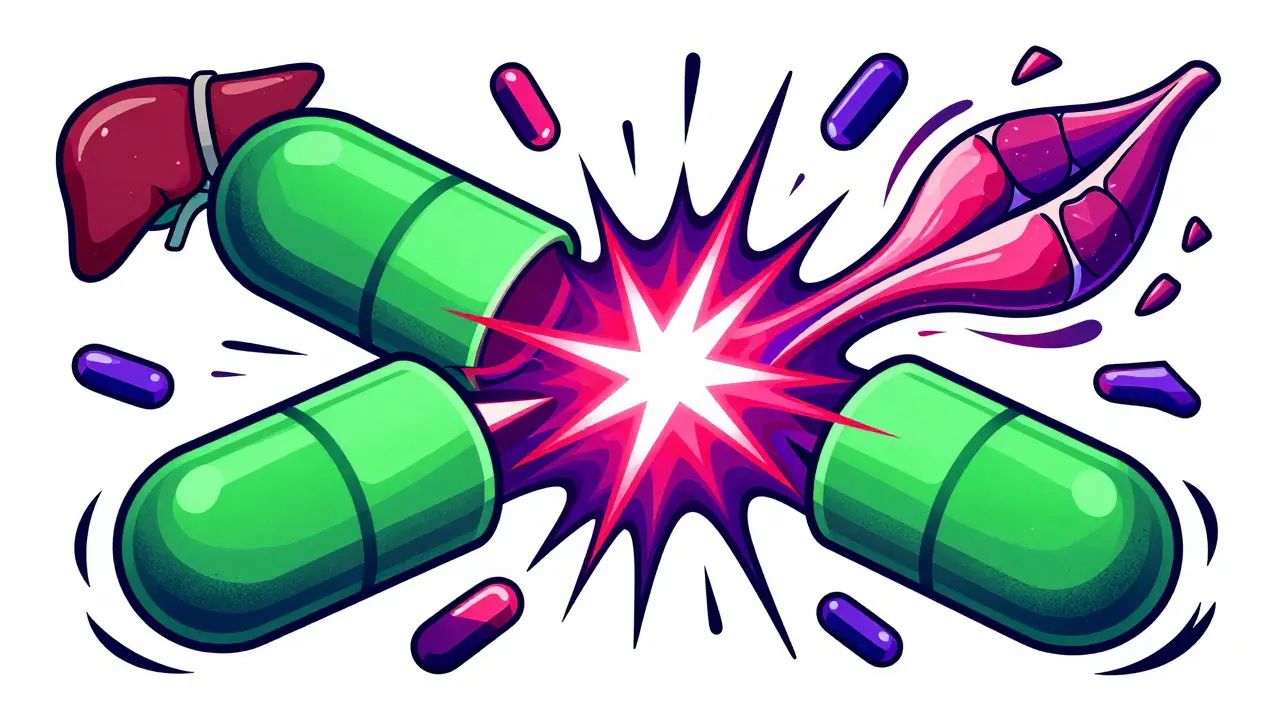
If red yeast rice were regulated like a drug, duplicate therapy might still be manageable but risky. However, the real issue is variability. According to research published in PMC (article 6500871), the amount of monacolin K in red yeast rice powder can range from undetectable to 34 mg per gram. That is a massive difference. One batch of supplements might do nothing, while the next could deliver a therapeutic dose equivalent to 20 mg of lovastatin.
On top of the dosing issues, there is the problem of contaminants. Red yeast rice fermentation can produce citrinin, a toxic substance that damages the kidneys. A 2017 report from the European Food Safety Authority found that 25-30% of commercial red yeast rice products contained citrinin. While prescription statins undergo rigorous purification processes to remove such toxins, supplements often skip these steps. So, when you add red yeast rice to your statin regimen, you aren't just doubling the cholesterol-lowering effect; you might also be introducing nephrotoxic agents that strain your kidneys further.
Who Uses Red Yeast Rice and Why?
Despite the risks, red yeast rice remains popular. In 2022, about 3.2 million American adults used it, according to NHANES data. Most of these users (68%) were former statin users who switched because they experienced side effects like muscle pain or brain fog. For these individuals, red yeast rice offers a lifeline. Studies show that about 60% of statin-intolerant patients can tolerate red yeast rice at a dose of 1,800 mg daily. It lowers LDL cholesterol by 21-30%, which is comparable to low-dose statin therapy.
However, the mistake happens when people try to "boost" their current statin dose instead of replacing it. They think, "If the statin isn't working perfectly, maybe this natural stuff will help." This is where the duplicate therapy trap springs shut. There is no clinical evidence supporting the safety or efficacy of combining the two. In fact, the opposite is true. The FDA has issued warning letters to multiple manufacturers since 2008 because red yeast rice products contain active pharmaceutical ingredients, making them unapproved new drugs. Yet, the market persists, driven by a desire for "natural" solutions and a lack of awareness about the chemical identity of monacolin K.
Safety Guidelines and Medical Supervision
If you are considering red yeast rice, or if you are already taking it, transparency with your healthcare provider is non-negotiable. The American College of Cardiology recommends baseline liver function tests and CK levels before starting any cholesterol-lowering therapy, including red yeast rice. Follow-up testing should happen every three months initially. These protocols exist because both statins and red yeast rice can elevate liver enzymes and cause muscle damage.
Here are some practical steps to minimize risk:
- Never combine them: Do not take red yeast rice and a prescription statin at the same time unless explicitly directed and monitored by a specialist who understands the risks.
- Choose verified brands: If you must use red yeast rice as a monotherapy (alone), look for products verified by third-party organizations like USP (United States Pharmacopeia). Only about 15% of the market meets these standards, but they ensure lower levels of citrinin and more consistent monacolin content.
- Watch for symptoms: Be alert for unexplained muscle pain, tenderness, weakness, or dark urine. These are signs of myopathy or rhabdomyolysis. Seek immediate medical attention if they occur.
- Avoid grapefruit juice: Both statins and red yeast rice are metabolized by the CYP3A4 enzyme system. Grapefruit juice inhibits this enzyme, causing higher levels of the drug to build up in your blood, increasing the risk of side effects.
It is also crucial to understand that red yeast rice is not a magic bullet. While it can lower cholesterol, it does not stabilize plaque in arteries as effectively as high-intensity statins in high-risk patients. For those with established heart disease, skipping a proven statin for an unregulated supplement can have dire long-term consequences. The 2023 JAMA Cardiology study showed benefits for statin-intolerant patients using red yeast rice alone, but it explicitly excluded anyone on combination therapy.
The Future of Regulation
The regulatory landscape for red yeast rice is shifting. The FDA considers products containing monacolin K to be unapproved new drugs, yet enforcement has been inconsistent due to the Dietary Supplement Health and Education Act of 1994. This law places the burden on the FDA to prove a product is unsafe after it hits the market, rather than requiring proof of safety before sale. Recent draft guidance in 2023 aims to create pathways for standardized botanical drugs, which could eventually lead to pharmaceutical-grade red yeast rice with consistent dosing. Until then, consumers are left navigating a gray area where "natural" does not mean "safe," especially when mixed with prescription medications.
The bottom line is clear: red yeast rice and statins are too similar to be used together. The potential for duplicate therapy leads to predictable and preventable harm. If you are struggling with statin side effects, talk to your doctor about alternatives like ezetimibe or PCSK9 inhibitors, or discuss a supervised transition to red yeast rice monotherapy. But never assume that adding more is always better. In cardiovascular health, precision saves lives.
Can I take red yeast rice and atorvastatin together?
No, you should not take red yeast rice and atorvastatin together without explicit medical supervision. Both substances inhibit the HMG-CoA reductase enzyme, leading to duplicate therapy. This significantly increases the risk of myopathy, rhabdomyolysis, and liver damage. The American Heart Association advises against this combination.
Is red yeast rice safer than statins?
Red yeast rice is not inherently safer than statins because its active ingredient, monacolin K, is chemically identical to lovastatin. However, it may be better tolerated by some patients who experience side effects from prescription statins. The main safety concern with red yeast rice is its lack of standardization and potential contamination with citrinin, a kidney toxin.
What are the symptoms of duplicate therapy with red yeast rice?
Symptoms of duplicate therapy include severe muscle pain, weakness, tenderness, fatigue, and dark-colored urine (a sign of rhabdomyolysis). Elevated liver enzymes and kidney dysfunction may also occur. If you experience these symptoms, seek immediate medical attention.
Does red yeast rice really lower cholesterol?
Yes, studies show that red yeast rice can reduce LDL cholesterol by 21-30%, which is comparable to low-dose statin therapy. However, the effectiveness varies greatly between brands due to inconsistent levels of monacolin K. It works best as a monotherapy for mild hyperlipidemia or for patients intolerant to prescription statins.
How do I choose a safe red yeast rice supplement?
Look for products that have been verified by third-party organizations like the USP (United States Pharmacopeia) or NSF International. These certifications ensure that the product contains the labeled amount of monacolin K and is free from harmful contaminants like citrinin. Always consult your doctor before starting any new supplement.