
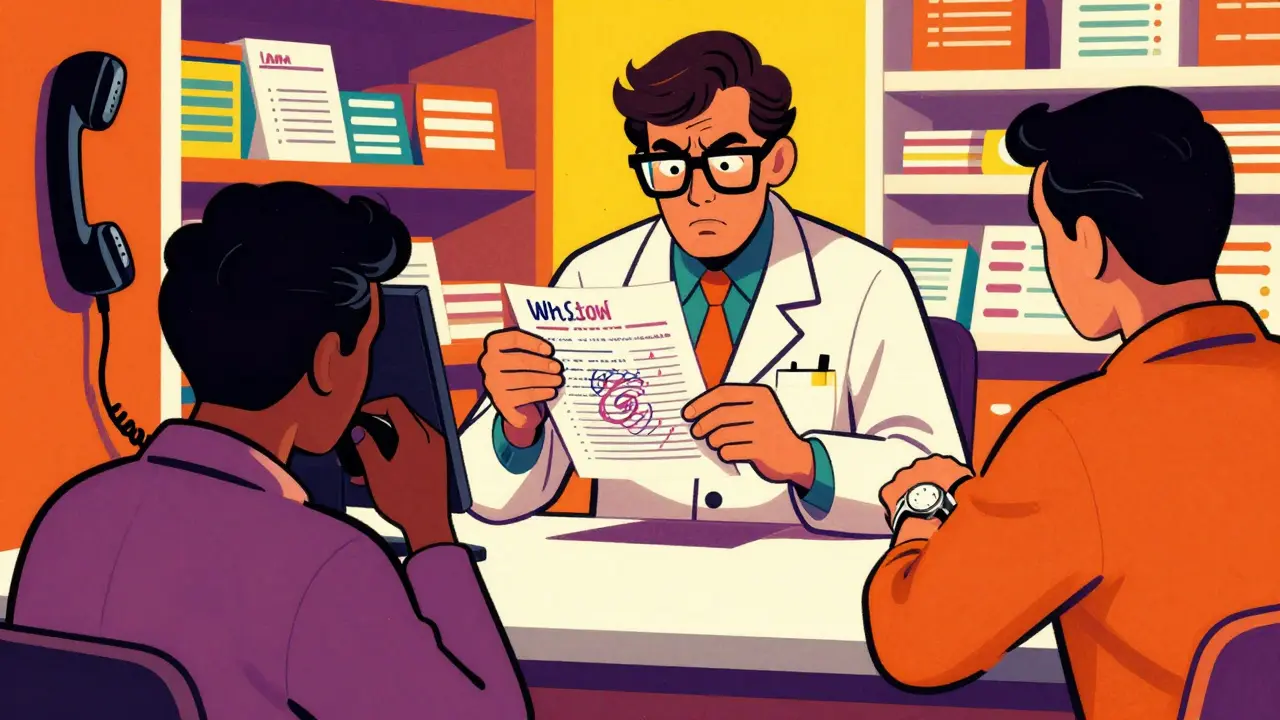
Imagine picking up your prescription from the pharmacy. The pharmacist stares at the paper, squinting. They call the doctor’s office. The line is busy. You wait. Then they call again. An hour later, you get your meds-but are they the right ones? This isn’t just an inconvenience; it’s a life-threatening gamble.
For decades, illegible handwriting on medical prescriptions has been one of healthcare’s most persistent and dangerous flaws. It is not merely a nuisance for pharmacists trying to decipher scribbles; it is a primary driver of dispensing errors that lead to preventable hospitalizations and deaths. Despite the digital revolution in almost every other industry, handwritten notes lingered in clinics far too long. Today, we know that poor penmanship accounts for thousands of fatalities annually. The solution lies not in better pens, but in systemic shifts toward electronic systems and rigorous safety protocols.
The Hidden Cost of Poor Penmanship
We often dismiss bad handwriting as a quirk of personality or a sign of haste. In medicine, however, it is a critical failure point. When a doctor writes quickly during a rushed appointment, the result can be ambiguous. Is that a '5' or an 'S'? Is the dosage '10mg' or '100mg'? These ambiguities force downstream professionals-pharmacists and nurses-to guess or verify, creating bottlenecks and risks.
The scale of this problem is staggering. According to data cited by the Institute of Medicine (IoM), medical errors cause between 44,000 and 98,000 preventable deaths in the United States each year. Of those, an estimated 7,000 deaths are directly attributable to illegible handwriting alone. That is nearly 20 people dying every day because a script was unreadable. Furthermore, the IoM estimates 1.5 million preventable Adverse Drug Events (ADEs) occur annually due to these communication breakdowns.
This isn't just a US issue. A study published in the MMS Journal (2022) revealed that 92% of medical students and doctors made prescription errors, averaging two errors per person. Another audit in a British hospital found that only 24% of operative notes were rated as 'excellent' or 'good' for legibility, while 37% were deemed 'poor' by nurses and physiotherapists who had to act on them. The human cost is measured in discomfort, incorrect dosages, unnecessary tests, and yes, death.
Why Do Doctors Still Write Illegibly?
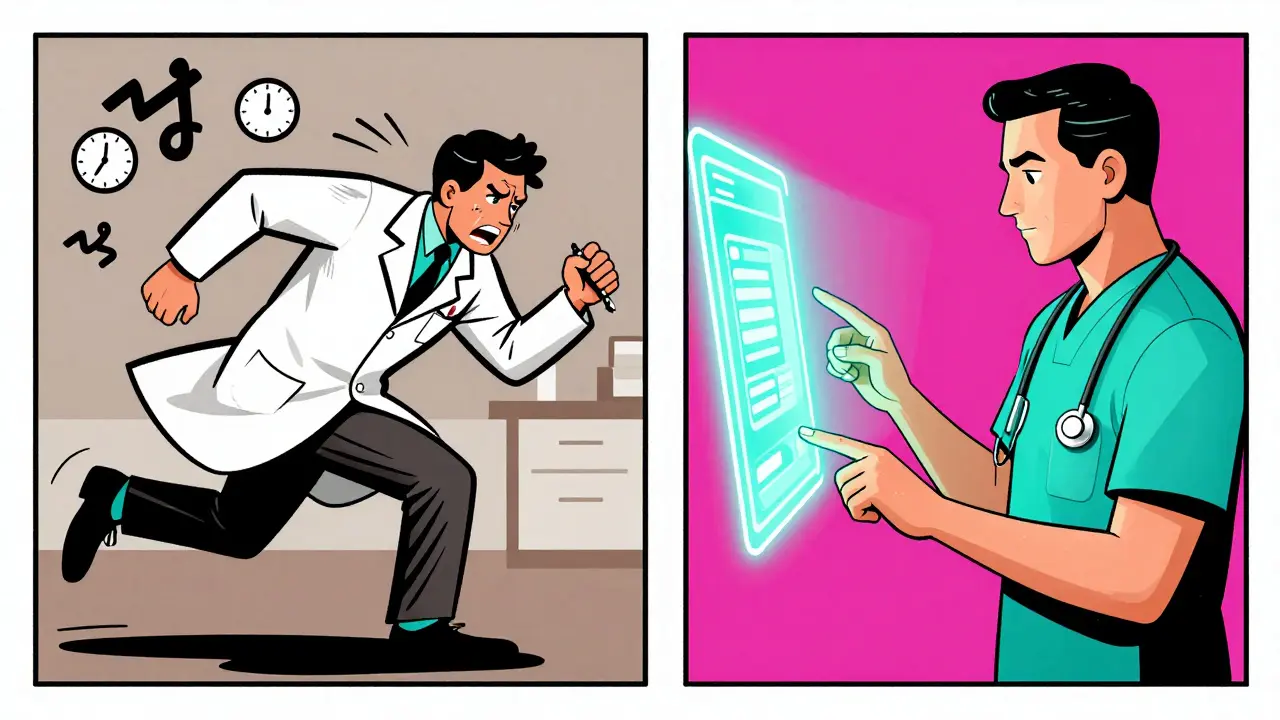
If the risks are so high, why does the practice persist? The answer lies in workflow pressure and habit. Physicians face immense time constraints. A typical clinic visit may last only 15 minutes. In that window, a doctor must examine the patient, diagnose the issue, decide on treatment, and document everything. Writing by hand is often perceived as faster than navigating complex software interfaces, especially if the electronic system is clunky or slow.
A 2017 study by Jadhav et al. highlighted this tension: 68% of medical trainees believed that improving their handwriting would take too much time during patient encounters. They recognized the safety risk but felt trapped by the clock. Additionally, there is a cultural inertia. For generations, the image of a doctor with a stethoscope and a pad of paper has been iconic. Changing that behavior requires more than just awareness; it requires structural support.
Moreover, some healthcare workers develop a dangerous complacency. The same MMS Journal study noted that while 78% of participants were concerned about poor handwriting, 22% admitted they would choose to ignore illegible writing rather than seek clarification. This attitude creates a silent pipeline for errors, where assumptions replace verification.
E-Prescribing: The Digital Lifeline
The most effective solution to this crisis is Electronic Prescribing (e-prescribing). Introduced widely around 2003, e-prescribing allows doctors to send prescriptions digitally directly to pharmacies. By removing the human element of interpretation, it eliminates ambiguity entirely. The drug name, dosage, frequency, and route are standardized fields that cannot be misread.
The data supporting this shift is overwhelming. Research published in JMIR (2025) showed that electronic prescriptions achieved an 80.8% accuracy rate in compliance with safety criteria. In stark contrast, handwritten prescriptions scored a dismal 8.5%. Even when electronic prescriptions were entered manually without templates, they still outperformed handwritten ones with a 56% accuracy rate. Veradigm, a major health information technology company, reports that e-prescribing reduces errors of illegibility by 97%.
| Feature | Handwritten Prescriptions | Electronic Prescriptions |
|---|---|---|
| Safety Compliance Rate | 8.5% | 80.8% |
| Reduction in Illegibility Errors | N/A (Baseline) | 97% Reduction |
| Pharmacist Verification Calls | High (150 million/year in US) | Negligible |
| Risk of Dosage Misinterpretation | High | Low (System-enforced checks) |
| Implementation Cost | Low (Pen/Paper) | $15,000-$25,000 per provider |
By 2019, adoption among office-based providers in the US reached 80%. The economic argument also holds water. Preventable medical errors cost the US healthcare system an estimated $20 billion annually. While implementing e-prescribing costs between $15,000 and $25,000 per provider initially, the savings from avoided errors and reduced administrative burden quickly offset this investment.
Challenges Beyond Legibility
However, switching to digital isn't a magic bullet that solves all problems. As researchers Osmani et al. noted in JMIR (2025), electronic systems introduce new challenges. One major issue is alert fatigue. Electronic Health Records (EHRs) often bombard clinicians with pop-up warnings about drug interactions, allergies, and dosages. If a doctor receives dozens of alerts daily, many of which are low-priority, they may begin to override important safety alerts automatically. This behavioral adaptation can negate some of the safety benefits of the system.
There is also the issue of workflow disruption. Clinicians report increased documentation time when using poorly designed EHR systems. If the interface is unintuitive, doctors may spend more time clicking through menus than talking to patients. This can lead to burnout and decreased job satisfaction. Therefore, the design of the electronic system is just as critical as its existence. It must streamline, not hinder, the clinical process.

Bridging the Gap: Best Practices for Transitional Settings
Not every healthcare setting has access to robust digital infrastructure. Resource-limited regions, small private practices, or emergency situations may still rely on paper. In these contexts, specific best practices can mitigate risk until full digitization is possible.
- Print, Don’t Cursive: Studies show that printed letters are significantly easier to read than cursive scripts. Encouraging staff to print their writing is a simple, zero-cost intervention.
- Avoid Dangerous Abbreviations: The Joint Commission maintains a 'Do Not Use' list of abbreviations that are frequently misinterpreted. For example, 'U' (unit) can look like '0' (zero) or 'cc' (cubic centimeter) can look like 'mL'. Never use these.
- Include All Required Elements: Every prescription must clearly state the patient’s name, drug name, exact dosage, frequency, route of administration, and prescriber information. Vague terms like 'take as needed' without specifying limits should be avoided.
- Use Feedback Loops: A study by Sendlhofer et al. (2019) demonstrated that using a 15-item checklist for self-assessment or external review could significantly decrease illegibility. Regular audits of handwritten orders can raise awareness and improve habits.
The Future of Prescription Safety
The trajectory is clear: handwritten prescriptions are becoming obsolete. Experts like Leape and Berwick declared them 'a dinosaur long overdue for extinction' as early as 2000. By 2030, experts predict handwritten prescriptions will be rare in developed healthcare systems. Emerging technologies, such as artificial intelligence-assisted handwriting recognition, offer transitional solutions for settings where full e-prescribing isn't yet feasible, with early studies showing 85-92% accuracy in interpreting common medication names.
Regulatory bodies continue to push this agenda. The Medicare Improvements for Patients and Providers Act of 2008 and the 21st Century Cures Act of 2016 established financial incentives and interoperability standards that accelerated adoption. The Centers for Medicare & Medicaid Services (CMS) continues to emphasize electronic health record meaningful use criteria, ensuring that digital prescribing remains the standard of care.
For patients, the takeaway is empowerment. If you receive a handwritten prescription, do not hesitate to ask questions. Verify the drug name and dosage with your pharmacist. If you suspect an error, speak up. Your voice is the final check in the chain of safety.
How many deaths are caused by illegible handwriting on prescriptions?
According to the Institute of Medicine, approximately 7,000 deaths annually in the United States are specifically attributable to illegible handwriting on medical prescriptions. This figure represents a subset of the broader 44,000-98,000 preventable deaths caused by medical errors each year.
What is the accuracy rate of e-prescribing compared to handwritten prescriptions?
Research published in JMIR (2025) indicates that electronic prescriptions have an 80.8% accuracy rate in compliance with safety criteria, whereas handwritten prescriptions have only an 8.5% accuracy rate. This demonstrates a significant improvement in patient safety with digital systems.
Why do doctors still use handwritten prescriptions despite the risks?
Doctors often cite time constraints and workflow pressures as reasons for continuing to write by hand. Many feel that navigating electronic systems takes longer than quick handwriting during short patient visits. Additionally, habitual behavior and lack of immediate feedback on errors contribute to the persistence of this practice.
What are the main challenges associated with e-prescribing?
While e-prescribing improves legibility, it introduces challenges such as alert fatigue, where clinicians may ignore important safety warnings due to excessive notifications. Other issues include initial implementation costs, required staff training, and potential workflow disruptions if the software is poorly designed.
What should patients do if they receive a handwritten prescription?
Patients should always verify the details of their prescription with the pharmacist. If any part of the instruction is unclear, ask for clarification before leaving the pharmacy. Do not assume the medication is correct based solely on the doctor's note; active engagement ensures safety.